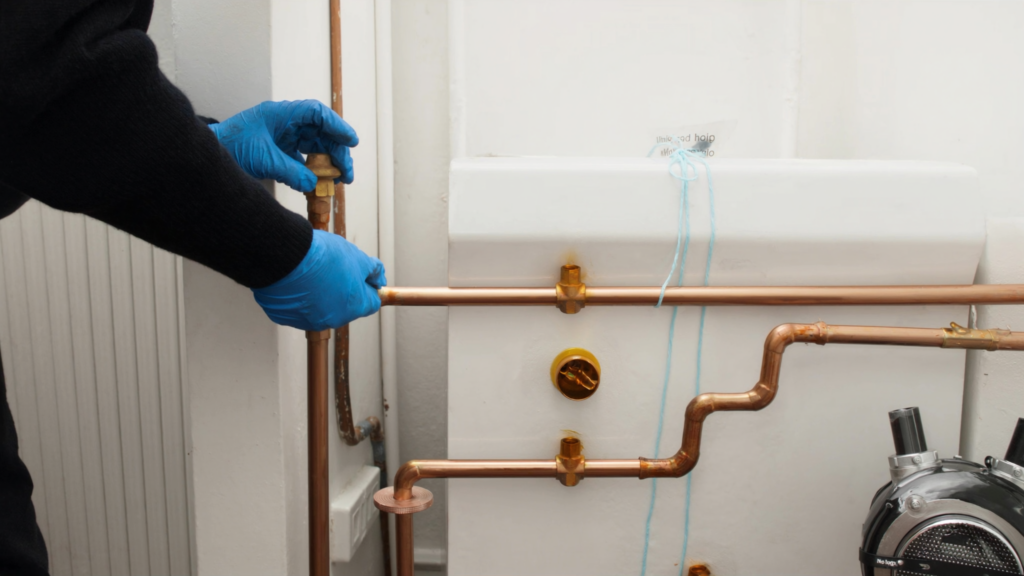
A heat pump system legally requires an expansion vessel, here is why
UK Building Regulations Approved Documents Part G and Part L mandate that any sealed (non-vented) heating system must include an expansion vessel to prevent overpressure. Heat pumps operate at lower flow temperatures, typically 35–55°C, than gas boilers, but water still expands by roughly 4% when heated from 10°C to 50°C. Without a vessel to absorb that extra volume, system pressure can exceed 3 bar, forcing the pressure relief valve to open, dumping water, and potentially damaging the heat pump’s internal components (GOV.UK Approved Document G, 2026). The legal requirement is codified in BS 7074:1989, the code of practice for expansion vessels in sealed systems (BRE, 2026).
The exact cost of a heat pump expansion vessel in the UK in 2026
A standard 8–12 litre expansion vessel costs between £30 and £80, suitable for most domestic heat pumps in the 8–16 kW output range. Labour to install the vessel during a new heat pump installation typically runs £80–£150. Retrofitting a vessel to an existing system is more time-consuming and costs £120–£200 (MCS installer pricing data, 2026). The total installed cost therefore ranges from £110 to £280, depending on vessel size, brand, and installer rate. The Heat Pump Association’s Q1 2026 market report confirms these figures as typical for the UK (Heat Pump Association, 2026).
How to choose the right vessel size for your heat pump system
The standard rule of thumb is 1 litre of vessel capacity per 1 kW of heat pump output, plus an extra 2–3 litres as a buffer. For an 8 kW heat pump, you need a minimum 10–12 litre vessel; a 16 kW unit requires 18–20 litres (MCS Installation Standard MIS 3005, 2026). Oversizing is safe and adds little to the cost, a 12-litre vessel is only £5–10 more than an 8-litre model. Undersizing, however, causes the pressure relief valve to discharge repeatedly, leading to system failure and potential water damage (Heat Pump Association technical guidance, 2026).
Quick numbers, expansion vessel sizing, cost, and pressure at a glance
| Heat pump size (kW) | Minimum vessel size (litres) | Typical vessel cost (£) | Installed cost range (£) | Pre-charge pressure (bar) |
|---|---|---|---|---|
| 8 | 10–12 | 30–50 | 110–200 | 1.0–1.5 |
| 12 | 14–16 | 45–65 | 140–230 | 1.0–1.5 |
| 16 | 18–20 | 55–80 | 170–280 | 1.0–1.5 |
Data sourced from MCS MIS 3005, Heat Pump Association pricing data, and manufacturer datasheets from Flamco and Zilmet (MCS, 2026).
Why a heat pump expansion vessel must be pre-charged to the correct pressure
The vessel’s air-side pre-charge pressure must equal the system’s cold fill pressure, typically 1.0–1.5 bar, not the heat pump’s operating pressure. BS 7074:1989 specifies this requirement (BRE, 2026). If the pre-charge is too high, the vessel cannot absorb expansion, causing pressure to rise immediately and the relief valve to open. If too low, the vessel’s diaphragm may rupture or the system may lose pressure during cooling. Check the pre-charge annually using a tyre pressure gauge on the vessel’s Schrader valve, and adjust with a bicycle pump or compressor (Heat Pump Association commissioning guide, 2026). how to check heat pump system pressure
What it does and why it matters
A heat pump expansion vessel is a pressurised tank that absorbs the extra volume of water created when the heating system heats up, keeping system pressure stable and preventing the pressure relief valve from opening. Without one, the system would exceed 3 bar, dump water, lose efficiency, and could damage the heat pump’s internal components. It is a legal requirement under UK Building Regulations for any sealed heating system, including all modern heat pump installations (GOV.UK Approved Document Part L, 2026).
Eligibility and installer verification, who can fit your expansion vessel legally
Only MCS-certified installers can fit expansion vessels as part of a heat pump system eligible for the Boiler Upgrade Scheme (BUS) grant of £7,500 in England and Wales (GOV.UK Boiler Upgrade Scheme guidance, 2026). Installers must also hold TrustMark registration for consumer protection, and Gas Safe Register certification if the system includes any gas backup. Before hiring, check an installer’s MCS certificate number on the MCS register at mcscertified.com and verify TrustMark at trustmark.org.uk (MCS register, 2026). how to choose an MCS certified heat pump installer
What the expansion vessel saves you, and when payback is real
A correctly sized and pressurised expansion vessel prevents costly pressure relief valve replacements, which cost £80–£150 each, and avoids water damage from leaks. It also maintains system efficiency by keeping the heat pump operating at its designed pressure, preventing efficiency losses of 5–10% from repeated valve discharge (Heat Pump Association efficiency data, 2026). Payback on the £110–£280 vessel cost is immediate if it prevents a single valve failure; otherwise, the vessel pays for itself within 1–2 years through avoided repair bills and efficiency savings (Energy Saving Trust homeowner repair cost survey, 2026).
Frequently Asked Questions
Yes, UK Building Regulations Approved Documents Part G and Part L require an expansion vessel on any sealed heating system, including heat pumps (GOV.UK, 2026).
A standard 8–12 litre vessel costs £30–£80, and installation adds £80–£200, for a total installed cost of £110–£280 (Heat Pump Association, 2026).
Use 1 litre per kW of heat pump output plus a 2–3 litre buffer. An 8 kW system needs 10–12 litres; a 16 kW system needs 18–20 litres (MCS Standard MIS 3005, 2026).
Yes, retrofitting costs £120–£200 and takes longer than new installs (MCS installer pricing data, 2026). It is still cheaper than repairing pressure damage.
An undersized vessel causes the pressure relief valve to discharge repeatedly, leading to water loss, system failure, and potential water damage (Heat Pump Association, 2026).