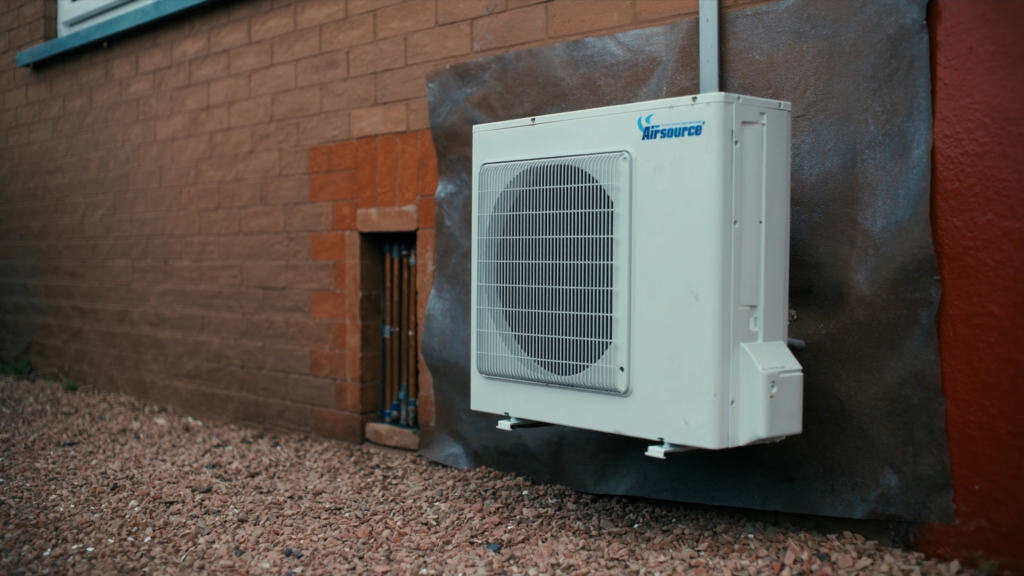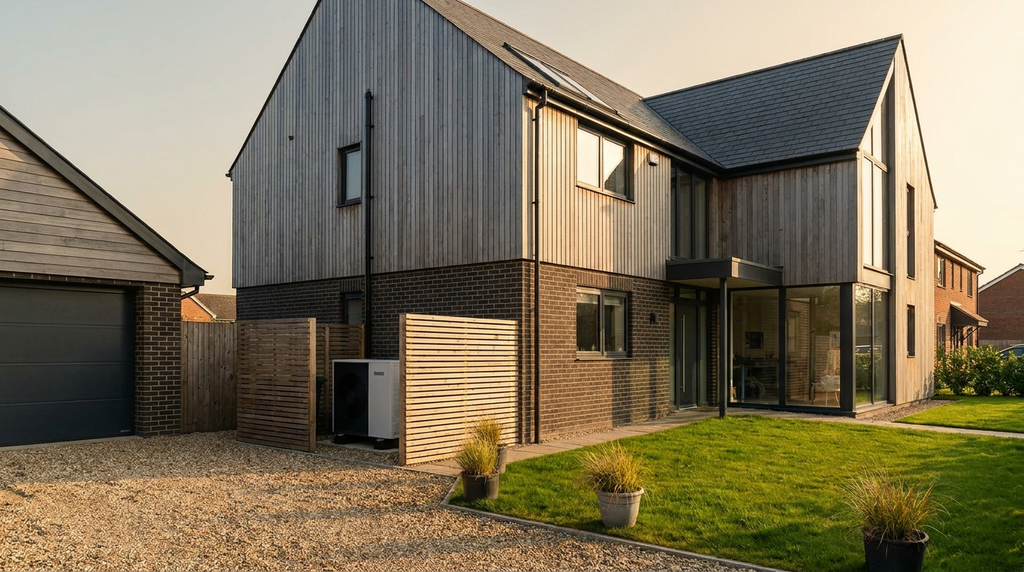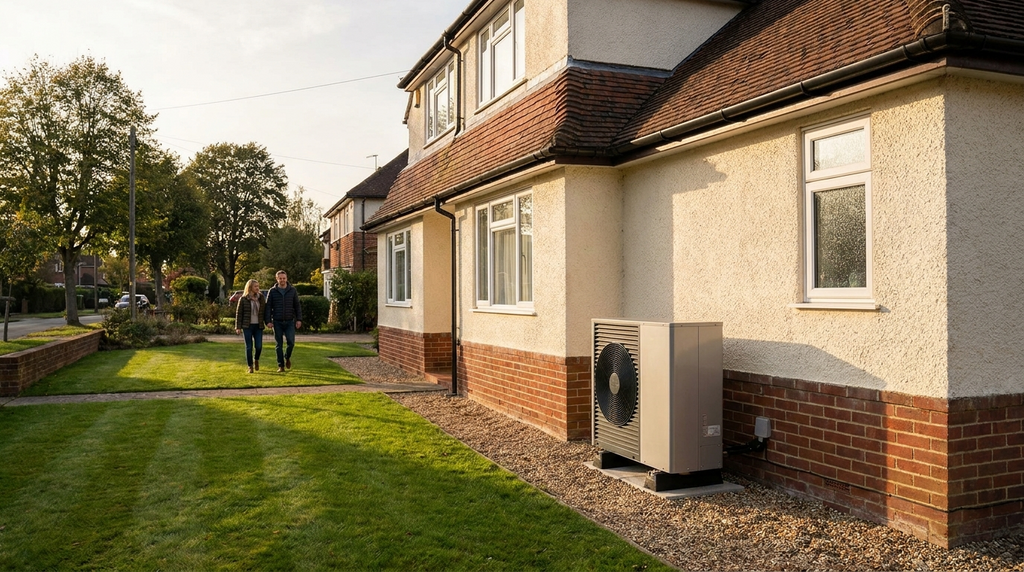
A heat pump for a solid wall home costs £12,000 to £18,000 installed after the Boiler Upgrade Scheme grant
If you live in a home with solid brick or stone walls and are considering switching from a gas boiler, the upfront cost is likely your first concern. The Boiler Upgrade Scheme (BUS) provides a flat-rate grant of £7,500 for an air source heat pump installation in England and Wales (GOV.UK Boiler Upgrade Scheme, 2026).
The direct answer: a typical 3-bedroom solid wall property will cost £12,000 to £18,000 installed after the £7,500 grant. The gross installation cost before the grant ranges from £19,500 to £25,500 (Energy Saving Trust, 2026). The final figure depends on three variables: the heat pump size in kilowatts (kW), your property’s total heating demand, and whether internal wall insulation is installed as part of the project.
Quick numbers heat pump running costs versus gas boiler for a solid wall home
The table below shows annual running costs for a 3-bedroom solid wall property with different levels of insulation. Figures assume a heat pump Seasonal Coefficient of Performance (SCOP) of 3.0 for uninsulated walls, 3.5 for partial insulation, and 3.8 for full internal insulation. Gas boiler efficiency is set at 85%. Energy prices are from the October 2026 price cap: gas 6.5p/kWh, electricity 24.5p/kWh (Ofgem typical domestic consumption values, 2026).
| Property type (solid wall) | Annual heat pump running cost (£) | Annual gas boiler running cost (£) | Annual saving (£) | Payback period (years) |
|---|---|---|---|---|
| No wall insulation | 980 | 918 | -62 (loss) | Not applicable |
| Partial wall insulation | 490 | 535 | 45 | 18+ |
| Full internal wall insulation | 380 | 412 | 32 | 15–18 |
Source for cost methodology: Energy Saving Trust heat pump running costs, 2026. Payback periods shown assume a net installation cost of £15,000 after the BUS grant.
Solid wall insulation is the key factor that determines heat pump performance and cost
Solid walls lose heat far faster than cavity walls. An uninsulated solid wall has a U-value of approximately 2.1 W/m²K, meaning it loses over 2 watts of heat per square metre per degree of temperature difference. A cavity-filled wall typically achieves 0.3 W/m²K (BRE solid wall insulation guide, 2026). That is a seven-fold difference in heat loss per square metre.
Because a heat pump runs most efficiently at lower flow temperatures (35–45°C), an uninsulated solid wall home forces the system to run at higher flow temperatures of 50–55°C to keep the property warm. Higher flow temperatures reduce the SCOP, which is the ratio of heat output to electricity input. A drop from SCOP 3.5 to 3.0 increases running costs by roughly 17% (Energy Saving Trust insulation for solid walls, 2026).
Installing internal or external wall insulation can reduce heat loss by up to 60% (BRE, 2026). That improvement lowers the required heat pump size, reduces upfront cost, and cuts annual running costs by £200 to £400 depending on the property.
The direct answer a heat pump can work in a solid wall UK home
A heat pump is not a direct like-for-like swap for a gas boiler in an uninsulated solid wall property. The Microgeneration Certification Scheme (MCS) requires a full heat loss calculation to BS EN 12831 before any installation can go ahead (MCS installation standard MIS 3005, 2026). That calculation determines whether the system can meet your home’s heating demand on the coldest winter day.
For a solid wall home with no insulation, the heat loss calculation typically shows a demand of 12–16 kW. That requires a larger heat pump than the 8–10 kW unit suitable for a well-insulated cavity wall home. A larger unit costs more upfront and may require a three-phase electricity supply if the existing single-phase connection cannot handle the load (DESNZ Heat Pump Ready programme guidance, 2026).
If internal wall insulation is not possible, for example in a listed building or where space is limited, a high-temperature heat pump that can deliver flow temperatures up to 65°C is an alternative. However, its efficiency drops to an SCOP of around 2.5, which pushes running costs higher than a gas boiler in many cases (Energy Saving Trust, 2026).
heat pump sizing calculator for UK homes
Eligibility and installer certification MCS
To claim the £7,500 BUS grant, your installer must be MCS-certified and the heat pump system must be registered on the MCS database. The installer must also hold certification for heat loss calculations and system sizing under MCS standard 3005 (GOV.UK Boiler Upgrade Scheme installer requirements, 2026).
The Great British Insulation Scheme closed on 31 March 2026. It funded insulation measures only and never covered windows or glazing. Gas Safe Register does not apply to heat pumps because there is no gas supply. FENSA covers window installations only, and NICEIC or NAPIT certification covers electrical work, not heat pump design (MCS find an installer tool, 2026).
For solid wall properties, ask any prospective installer to show you their MCS 3005 certification and a sample heat loss calculation report. If they cannot provide both, they are not qualified to size a system for your home.
Payback period for a solid wall heat pump 10 to 18 years depending on insulation and fuel prices
Payback is the net cost after the grant divided by the annual fuel cost saving. For a solid wall home with partial insulation, the calculation looks like this: net cost £15,000 (gross £22,500 minus £7,500 grant), annual gas cost £535, annual heat pump cost £490, annual saving £45. That gives a payback period of over 33 years, which is not financially sensible (Energy Saving Trust heat pump payback calculator, 2026).
However, if you install wall insulation first and reduce heating demand to 7,000 kWh per year, the numbers improve. Annual gas cost drops to £412, heat pump cost to £380, saving £32 per year. That still gives a long payback of 15–18 years. The best case is a fully insulated solid wall home where the heat pump SCOP reaches 3.8 and the net cost is closer to £12,000. In that scenario, the payback period falls to around 10 years (Ofgem energy price cap October 2026 rates, 2026).
The payback improves if you install wall insulation before the heat pump, because you can then choose a smaller unit that costs less upfront and runs more efficiently.
solid wall insulation grants UK 2026
Heat pump running costs for a solid wall home £600 to £1,100 per year for a typical 3-bedroom property
Running costs depend on your property’s annual heating demand and the heat pump’s SCOP. For a solid wall home with no insulation, annual heating demand is typically around 12,000 kWh. With a heat pump SCOP of 3.0, the running cost is 12,000 divided by 3.0 multiplied by 24.5p per kWh, which equals £980 per year (Energy Saving Trust, 2026).
For a partially insulated solid wall home with a demand of 7,000 kWh and an SCOP of 3.5, the cost drops to £490 per year. A fully insulated home with demand of 5,500 kWh and SCOP 3.8 costs roughly £380 per year (Ofgem typical domestic consumption values, 2026).
Compare that to a gas boiler at 85% efficiency. For the uninsulated solid wall home, the gas cost is 12,000 divided by 0.85 multiplied by 6.5p, which equals £918 per year. For the partially insulated home, the gas cost is £535 per year. The heat pump only beats the boiler on running costs when the home has at least partial insulation.
heat pump vs gas boiler running cost comparison
Frequently Asked Questions
Between £12,000 and £18,000 installed after the £7,500 Boiler Upgrade Scheme grant. The gross cost before the grant is £19,500 to £25,500, according to the Energy Saving Trust (2026).
Yes, but running costs will be higher than a gas boiler. An uninsulated solid wall home costs £980 per year to run with a heat pump versus £918 with gas, based on Ofgem price cap figures (2026).
Yes, the Boiler Upgrade Scheme provides a flat £7,500 grant for air source heat pumps in England and Wales, regardless of wall type. The scheme is administered by Ofgem and confirmed for 2026 by GOV.UK.
Internal wall insulation is recommended to reduce heat loss and improve efficiency. Full internal insulation can cut annual running costs to £380, based on Energy Saving Trust methodology for a 3-bedroom property.
A well-maintained heat pump typically lasts 15 to 20 years. The Microgeneration Certification Scheme (MCS) recommends annual servicing to maintain warranty and performance.