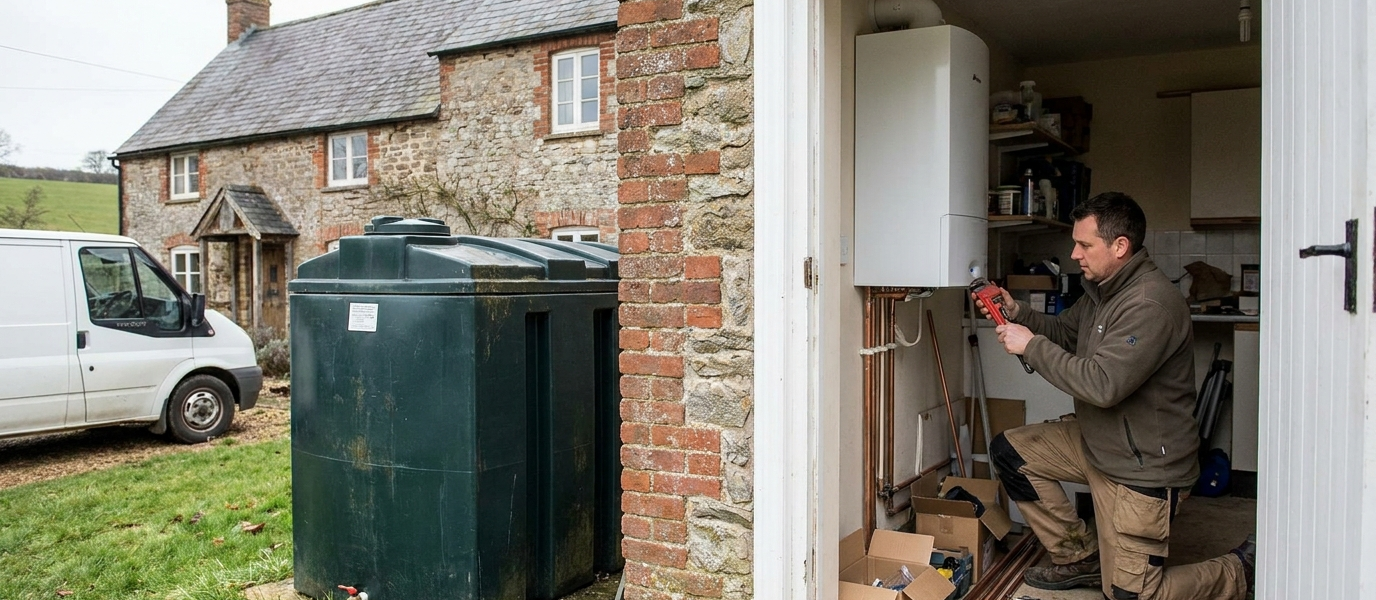
The Boiler Upgrade Scheme grant for replacing oil boilers with heat pumps has jumped by 50%, from £5,000 to £7,500, as heating oil prices continue to strain rural household budgets. The move, reported by The Independent, reflects a belated recognition that off-gas homes face the steepest decarbonisation costs and the highest fuel poverty rates.
As The Independent reports, the uplift is specifically for oil-to-heat-pump switches, not for gas boiler replacements, which remain at £5,000. The logic is straightforward: oil is roughly twice as carbon-intensive as gas, and rural homes typically have poorer insulation, meaning bigger heat loss and higher running costs.
Who qualifies, and who doesn’t
The £7,500 grant is available to households in England and Wales that currently use oil heating and are connected to the mains electricity grid. You must own the property (private landlords and social housing tenants are excluded) and the property must have a valid Energy Performance Certificate with no outstanding recommendations for loft or cavity wall insulation. The installer must be registered under the Microgeneration Certification Scheme (MCS).
The catch is volume. Ofgem, which administers the scheme, caps annual applications at 50,000 across all heat pump types. In 2023, fewer than 20,000 grants were issued, suggesting the cap is not yet binding. But if demand surges, and the grant rise is built to do exactly that, waiting times could stretch. The scheme runs until March 2027, so early applicants have the best chance.
What it costs a typical 3-bed semi
A typical air-source heat pump installation in a 3-bed semi with oil heating costs between £12,000 and £18,000, according to Energy Saving Trust estimates. That includes the heat pump unit, indoor cylinder, pipework, and radiator upgrades (oil systems often run at higher flow temperatures, so radiators may need swapping for larger ones).
With the new £7,500 grant, the homeowner pays £4,500–£10,500 upfront. Annual running costs depend on electricity tariffs and heat pump efficiency (measured by SCOP). At current price cap rates (24.5p/kWh for electricity, 6.5p/kWh for oil), a heat pump with SCOP 3.5 will cost about £750–£950 a year to run, compared with £1,100–£1,400 for oil. That’s a saving of £200–£400 annually. Over the heat pump’s 15-year lifespan, the net saving after installation could be £3,000–£6,000, but only if electricity prices don’t rise faster than oil.
But here’s the rub: electricity is still about four times the price of gas per kWh, and heat pumps need to be sized correctly. An undersized unit will struggle in January, relying on expensive resistive backup heaters. An oversized unit will short-cycle, reducing efficiency. The grant does nothing to fix installer quality, a persistent problem flagged by Which? and Citizens Advice.
EPC impact and resale value
Switching from oil to a heat pump typically lifts an EPC rating by one to two bands, from, say, D to C. That matters because from 2025, landlords in England and Wales cannot let properties with an EPC below C. For owner-occupiers, a better EPC can add 2–5% to property value, according to Nationwide. However, the EPC methodology currently penalises heat pumps for using electricity rather than gas, so the benefit is less than it should be. The government has promised to reform EPC calculations by 2026, but homeowners upgrading now should factor in that the EPC uplift may be modest until then.
What this misses is the insulation gap. A heat pump works best in a well-insulated home. The grant does not cover insulation, and many rural homes lack cavity walls or have solid walls that are expensive to insulate. The Energy Company Obligation (ECO4) scheme can fund insulation for low-income households, but eligibility is tight. For a typical 3-bed semi, external wall insulation costs £8,000–£14,000, far more than the heat pump grant covers.
What to do and by when
Households with an oil boiler built before 2010, roughly 1.2 million homes, should check eligibility now. The grant is first-come, first-served, and the scheme closes on 31 March 2027. To apply, find an MCS-certified installer through the MCS website, get a quote, and the installer will apply for the grant on your behalf. The grant is deducted from the invoice, so you pay the net amount.
For those who cannot afford the upfront cost, some installers offer 0% finance, and the government’s Clean Heat Market Mechanism (from April 2024) requires boiler manufacturers to sell a rising share of heat pumps, which should drive down prices over time. But waiting may mean missing the grant window. The decision is a bet on electricity prices, and on the government’s willingness to keep subsidising heat pumps beyond 2027.
One final note: if your oil boiler breaks down tomorrow, you can still claim the grant for a replacement heat pump, but only if you have not already ordered a new oil boiler. The grant cannot be combined with a like-for-like oil replacement. Plan ahead, and get at least three quotes.
Frequently Asked Questions
For a typical 3-bed semi-detached home with oil heating, an air-source heat pump installation costs between £12,000 and £18,000. After the increased Boiler Upgrade Scheme grant of £7,500, you'd pay £4,500 to £10,500 upfront.
You must own your property, currently use oil heating, and be connected to the mains electricity grid. Private landlords and social housing tenants are excluded, and your home needs a valid Energy Performance Certificate with no outstanding recommendations for loft or cavity wall insulation.
Yes, annual running costs for a heat pump with a SCOP of 3.5 are around £750–£950, versus £1,100–£1,400 for oil, saving £200–£400 per year. Over 15 years, net savings after installation could be £3,000–£6,000, but this depends on electricity prices not rising faster than oil.
Ofgem caps annual heat pump grant applications at 50,000 across all types, though only 20,000 grants were issued in 2023. The scheme runs until March 2027, so early applicants have the best chance of securing funding before demand potentially surges.
Yes, switching typically lifts your EPC rating by one to two bands, such as from D to C. This can improve your home's energy efficiency and resale value, though from 2025, rental properties may need a minimum C rating under proposed regulations.




