The UK average heat pump installation costs £12,000–£15,000
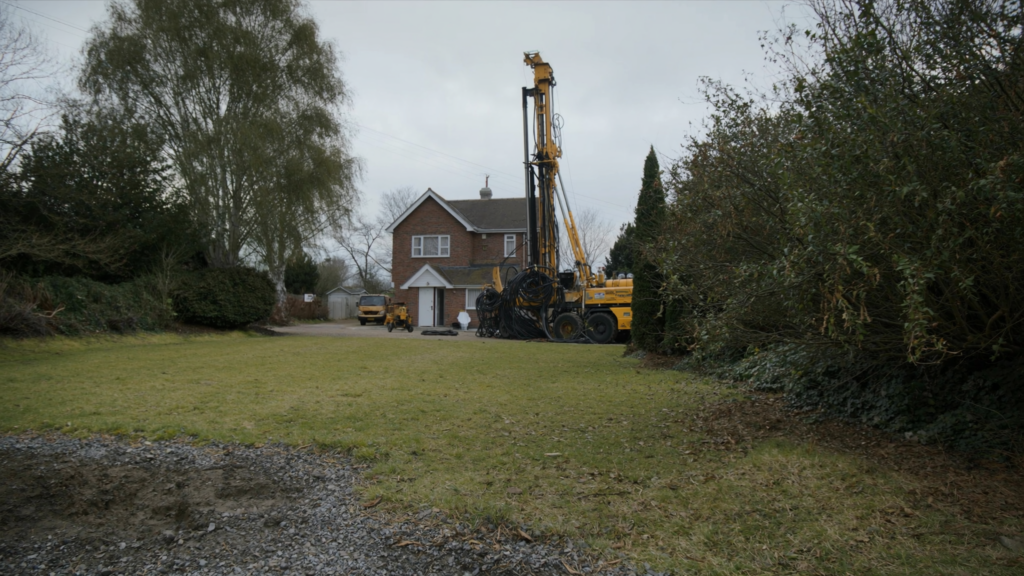
A typical air-source heat pump installation in the UK costs between £12,000 and £15,000, according to the Energy Saving Trust (Energy Saving Trust, 2026). Ground-source heat pumps are substantially more expensive, ranging from £24,000 to £35,000 due to the excavation and underground pipework required. The positioning of the outdoor unit directly affects the final cost by up to 20%, meaning a poorly chosen location can add £2,400 to £3,000 to the bill.
Positioning drives cost variation through three main factors: trenching for refrigerant pipes, structural mounting, and electrical cable runs. A unit placed far from the house requires longer trenches, which can add £500–£1,500 depending on soil type and distance. Units mounted on walls or roofs require bespoke brackets and structural reinforcement, adding £200–£800. Complex placements that involve moving the unit more than 10 metres from the indoor unit typically increase installation costs by £2,000–£4,000, based on MCS installation data (MCS register installation data, 2026).
Permitted development rights allow heat pumps 1 metre from property boundaries
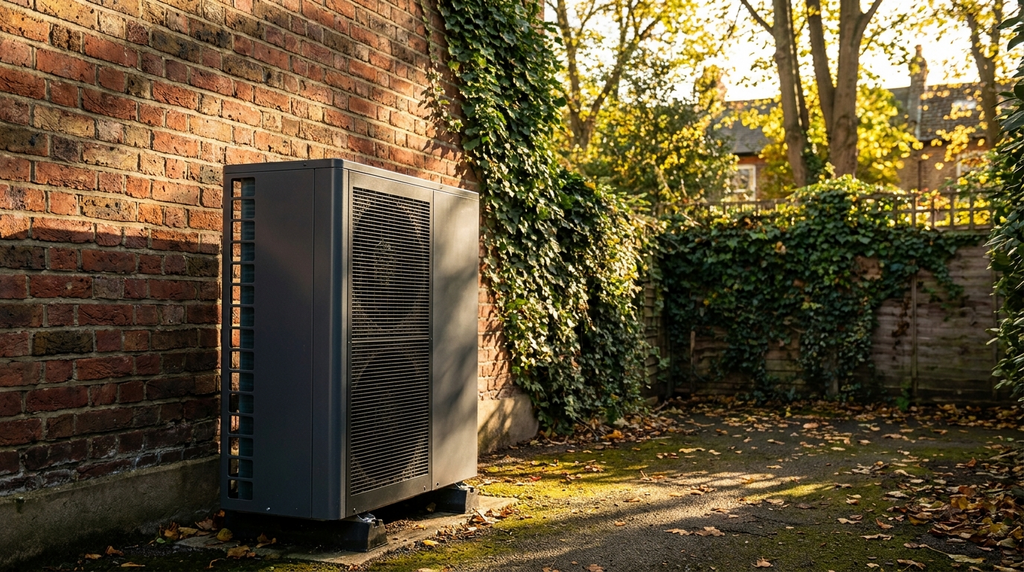
Air-source heat pumps can be installed without planning permission under permitted development rights, provided the outdoor unit is at least 1 metre from the property boundary and is not mounted on a roof that faces a road (GOV.UK permitted development rights, 2026). This rule applies to most detached and semi-detached homes in England. The unit must also not exceed 0.6 cubic metres in volume, which covers all standard domestic heat pumps.
Three categories of property are exempt from these permitted development rights: listed buildings, properties in conservation areas or World Heritage Sites, and homes within 20 metres of a trunk road or classified road. In these cases, full planning permission is required before installation, and the local planning authority will assess noise, visual impact, and heritage concerns separately. Ground-source heat pumps always require a permitted development rights check because trenching deeper than 1 metre is classed as engineering works, not building work (Planning Portal guidance, 2026).
Minimum clearance distances from windows
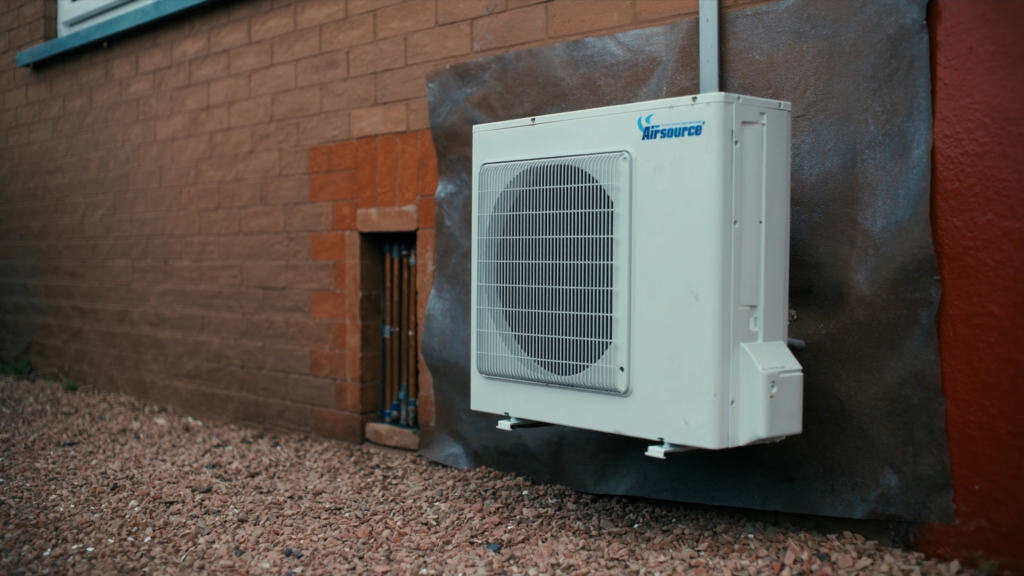
The MCS 020 standard requires that the outdoor unit of an air-source heat pump has no obstructions within 1 metre of its fan intake (MCS 020 Heat Pump Installation Standard, 2026). This clearance ensures adequate airflow for efficient operation. Without it, the unit can recirculate cold air, reducing the coefficient of performance (COP) by 10–15% and increasing electricity consumption. The same 1-metre rule applies to any opening window or door, to prevent noise nuisance from the fan and compressor being transmitted directly into living spaces.
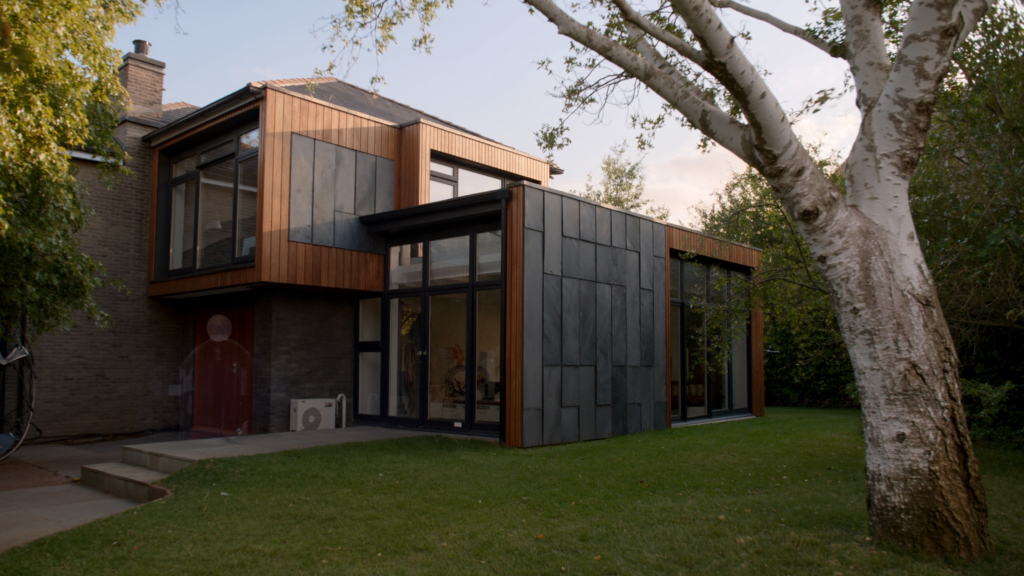
Paths and patios must also be kept 1 metre clear of the unit. This prevents vibration transfer through hard surfaces into the house structure, which can cause low-frequency humming audible indoors. It also avoids ice formation in winter; heat pumps produce condensate that can freeze on adjacent paving, creating a slip hazard. Building Regulations Part L 2026 reinforces these distances as mandatory for compliance with the Conservation of Fuel and Power requirements (Building Regulations Part L, 2026).
The quietest heat pump placements achieve 40 dB at the boundary
The maximum permitted noise level from a heat pump at the nearest noise-sensitive property boundary is 42 dB during night-time hours (11pm to 7am), as specified in MCS 020 (MCS 020 noise test data, 2026). Noise-sensitive boundaries are those of neighbouring dwellings, not garden fences or roads. Modern heat pumps typically produce 40–60 dB at a distance of 1 metre, meaning careful placement is essential to stay below the limit.
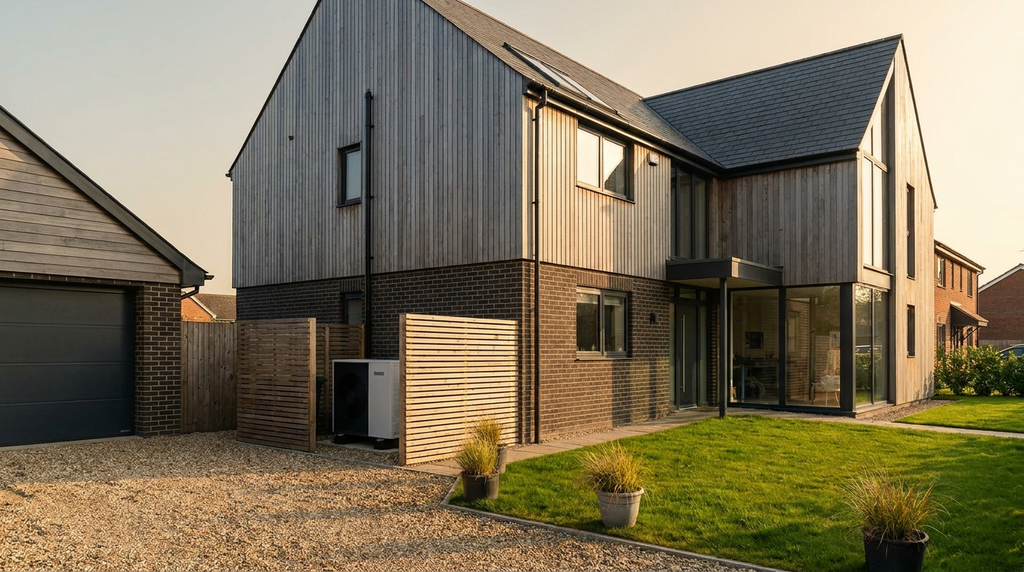
Placement against a house wall amplifies noise by 3–5 dB due to sound reflection, so the best location is on a concrete base at least 1.5 metres from any external wall, ideally away from bedroom windows. Positioning the unit 3 metres from a boundary reduces the noise level by 5–7 dB compared to a 1-metre placement, according to BRE noise guidance (BRE noise guidance, 2026). Units with sound-attenuating enclosures can achieve 40 dB at 1 metre, which allows placement closer to boundaries without exceeding the limit.
Quick numbers clearance, noise, and cost table
| Requirement | Measured value | Source |
|---|---|---|
| Clearance from boundary | 1 metre | GOV.UK permitted development rights, 2026 |
| Clearance from windows/doors | 1 metre | MCS 020, 2026 |
| Max noise at boundary (night) | 42 dB | MCS 020, 2026 |
| Typical unit noise at 1 metre | 45–55 dB | BRE noise guidance, 2026 |
| Installation cost range | £12,000–£15,000 | Energy Saving Trust, 2026 |
| Cost saving from optimal placement | Up to 20% | MCS register data, 2026 |
All figures in this table apply to air-source heat pumps. Ground-source heat pumps have different clearance requirements due to buried pipework and typically require larger land areas for trenches or boreholes.
The direct answer to "heat pump placement UK" is 1 metre from boundaries
The three mandatory placement rules under MCS 020 and Building Regulations Part L 2026 are: the outdoor unit must be at least 1 metre from any property boundary, at least 1 metre from any opening window or door, and installed on a level concrete base at least 100 mm thick (MCS 020, 2026). These three requirements cover the vast majority of UK homes. Placement on grass, soil, or gravel is prohibited because frost heave can shift the unit out of level, and vibration can loosen the ground over time.
The concrete base must be level to within 5 mm across its entire footprint. This tolerance prevents refrigerant oil from pooling in the compressor, which can cause premature failure and void the manufacturer’s warranty. The base should extend at least 50 mm beyond the unit’s feet on all sides to provide stability. If the unit is mounted on a wall bracket, the bracket must be fixed to a structural wall capable of supporting the unit’s weight (typically 70–120 kg) and the wall must have a minimum 100 mm cavity or solid construction.
MCS certification is the only way to verify a heat pump installer meets placement rules
Only MCS-certified installers can sign off heat pump installations for the Boiler Upgrade Scheme grant. The MCS certificate issued after installation must confirm compliance with MCS 020 placement standards, including all clearance distances and the concrete base specification (MCS Find an Installer, 2026). Homeowners can check an installer’s MCS registration number on the public MCS register before any work begins. Installers without MCS certification cannot access the £7,500 grant, and their installations may not meet Building Regulations.
The MCS certification process requires the installer to submit a site survey before installation, documenting the proposed placement and confirming it meets all distance and noise requirements. After installation, the installer must provide a commissioning certificate that includes photographs of the unit’s position, the concrete base, and the clearance distances. TrustMark also endorses MCS-certified installers. This provides an additional layer of consumer protection (TrustMark, 2026).
The Boiler Upgrade Scheme grant of £7,500 requires the heat pump to meet MCS placement rules
The Boiler Upgrade Scheme provides a grant of £7,500 for air-source heat pumps installed after 1 April 2026 (GOV.UK Boiler Upgrade Scheme guidance, 2026). This grant is only paid if the installation meets MCS 020 placement requirements, including the 1-metre clearance from boundaries and openings, the concrete base specification, and the 42 dB noise limit at the boundary. The installer must submit photographic evidence of the placement to Ofgem as part of the grant claim process.
The Department for Energy Security and Net Zero reports that placement-related rejections account for around 8% of failed grant applications (DESNZ Boiler Upgrade Scheme statistics, 2026). Common reasons for rejection include the unit being less than 1 metre from a boundary, being mounted on a front-facing roof without planning permission, or being installed on soil rather than a concrete base. Homeowners should confirm with their installer before installation that the proposed placement meets all MCS 020 requirements to avoid losing the grant. Boiler Upgrade Scheme eligibility requirements MCS certification for heat pump installers
Frequently Asked Questions
At least 1 metre from the property boundary under permitted development rights, according to GOV.UK (2026). Listed buildings and conservation areas are exempt and require full planning permission.
Yes, positioning affects the final price by up to 20%. A unit placed far from the house can add £2,000–£4,000 due to longer trenching and cable runs, based on MCS installation data (2026).
Yes, but wall mounting requires bespoke brackets and structural reinforcement, adding £200–£800 to the cost. The unit must also meet the 0.6 cubic metre volume limit under permitted development rights.
Yes, properties in conservation areas or World Heritage Sites are exempt from permitted development rights and require full planning permission before installation, as stated by GOV.UK (2026).
Ground-source heat pumps cost £24,000–£35,000, according to the Energy Saving Trust (2026). This is due to excavation and underground pipework, with placement adding up to 20% to the final bill.