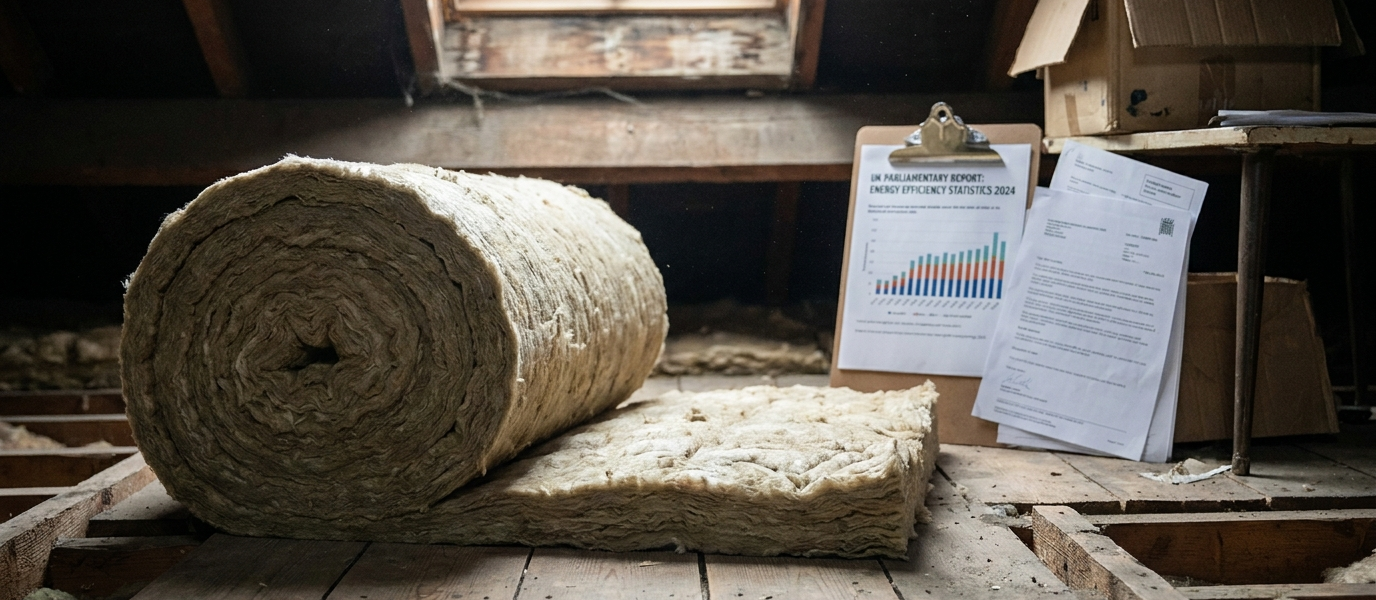
The House of Commons Library published a 47-page briefing on energy efficiency and heating grants this week. For UK homeowners, it is the most comprehensive official map yet of who gets what, when, and how much, and where the gaps are.
The document, available at The House of Commons Library, consolidates seven separate government schemes into a single reference. It confirms what many installers have been saying privately: the money is there, but the application process is fragmented and eligibility varies by postcode.
Who qualifies, and who doesn’t
The briefing makes clear that the Boiler Upgrade Scheme remains the headline offer for homeowners who want a heat pump. It provides £7,500 off the installation cost, with no income cap. That is a flat subsidy, not a loan, and it applies to air source and ground source heat pumps alike. The catch: you must own your home, have a valid EPC with no outstanding loft or cavity wall insulation recommendations, and the installer must be MCS-certified. As of October 2024, around 40% of applications are rejected on technical grounds, according to Ofgem data cited in the briefing.
For those on lower incomes, ECO4 and the Great British Insulation Scheme target households in fuel poverty. The Library notes that ECO4 runs until March 2026 and covers insulation, heating controls, and in some cases first-time central heating. But the eligibility criteria are tight: you must be in receipt of means-tested benefits or live in a low-income area as defined by the Index of Multiple Deprivation. The briefing estimates that only 2.3 million households will be reached, roughly 8% of the UK total.
What it costs a typical 3-bed semi
The Library does not invent cost figures, but it does reference Energy Saving Trust averages. A typical 3-bed semi with gas central heating and an EPC rating of D can expect to spend about £1,800 a year on energy. Installing cavity wall and loft insulation, costing roughly £1,200 combined, would cut that by £350–£400 annually, the Trust estimates. A heat pump, at £12,000–£15,000 before the BUS grant, would reduce bills by a further £200–£300 a year versus a modern gas boiler, though the upfront cost remains the biggest barrier.
The briefing also highlights that solar panels, while not covered by the main grant schemes, can be financed through the Smart Export Guarantee. Typical payback on a 4 kW system is 10–15 years, depending on orientation and electricity usage.
What the Library misses
Yet the document has a blind spot. It does not address the installer shortage. The UK needs 30,000 trained heat pump engineers by 2028, according to the Climate Change Committee; the briefing notes the target but offers no analysis of how the government plans to close the gap. For homeowners, that means waiting times of 6–12 months in some regions, as reported by Which? in 2024.
Nor does it mention the postcode lottery in the Great British Insulation Scheme. In Scotland, the scheme is administered separately by Home Energy Scotland, with higher grant caps. In England, it is run through energy suppliers, and the level of support depends on your supplier’s regional allocation. The Library’s national figures obscure these local disparities.
What the briefing does well is to give homeowners a single source of truth. It lists the schemes, their budgets, and their end dates, something that has been sorely missing from the fragmented advice landscape. For anyone considering an upgrade, the first step should be to check their EPC rating via gov.uk, then cross-reference it with the Library’s table of eligible measures.
What to do next
Homeowners on standard variable tariffs should start by visiting the Energy Saving Trust’s grant checker. Applications for the Boiler Upgrade Scheme are open now and will close on 31 March 2028. The Great British Insulation Scheme closed on 31 March 2026. It funded insulation measures only and never covered windows or glazing. Do not wait until winter.
Frequently Asked Questions
After the £7,500 Boiler Upgrade Scheme grant, a heat pump typically costs between £4,500 and £7,500 for a 3-bed semi, based on installation costs of £12,000–£15,000. The grant is a flat subsidy with no income cap, but you must own your home and have a valid EPC with no outstanding loft or cavity wall insulation recommendations.
ECO4 grants are for UK households in fuel poverty, targeting those on means-tested benefits or living in low-income areas defined by the Index of Multiple Deprivation. The scheme runs until March 2026 and covers insulation, heating controls, and first-time central heating, but the House of Commons Library estimates it will only reach about 2.3 million households, or 8% of the UK total.
Installing cavity wall and loft insulation in a typical 3-bed semi with an EPC rating of D costs roughly £1,200 combined and can cut annual energy bills by £350–£400. This is based on Energy Saving Trust averages referenced in the House of Commons Library briefing.
Around 40% of heat pump applications under the Boiler Upgrade Scheme are rejected on technical grounds, according to Ofgem data cited in the House of Commons Library. Common reasons include invalid EPC recommendations for insulation, non-MCS certified installers, or properties not meeting eligibility criteria.
Waiting times for heat pump installation can be 6–12 months in some UK regions due to a shortage of trained engineers. The UK needs 30,000 heat pump engineers by 2028, but the House of Commons Library briefing notes this target without detailing how the government plans to address the gap.





