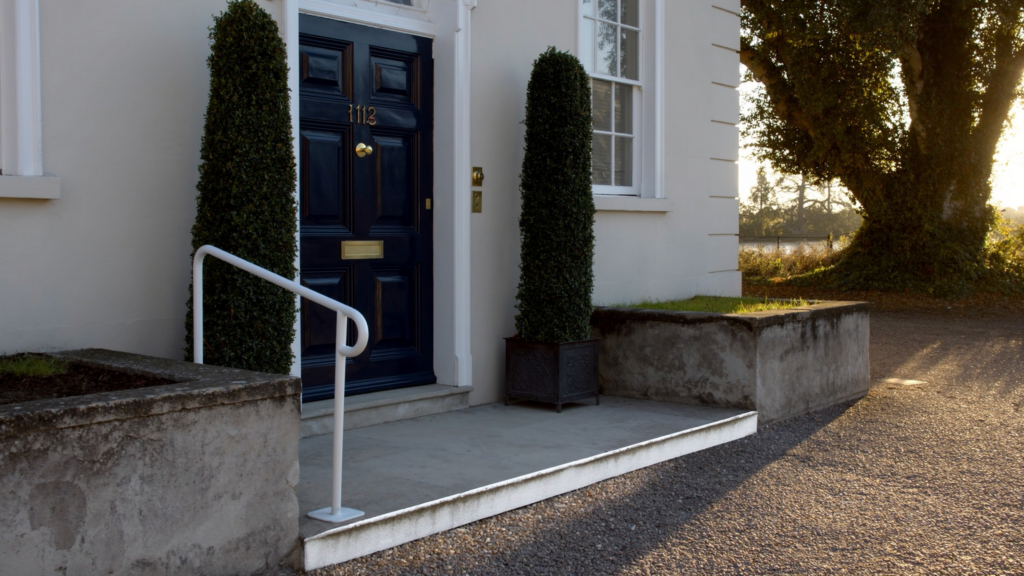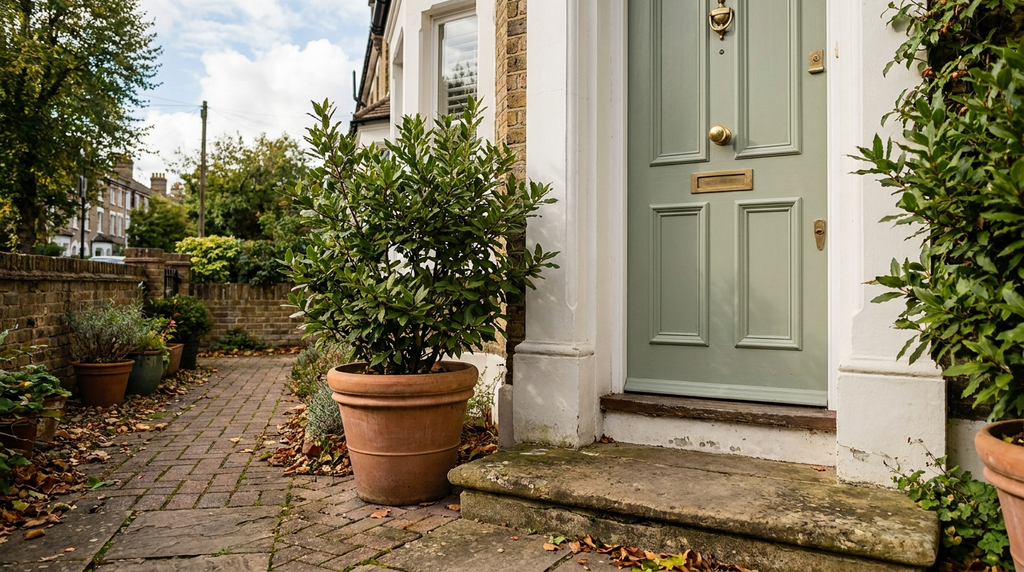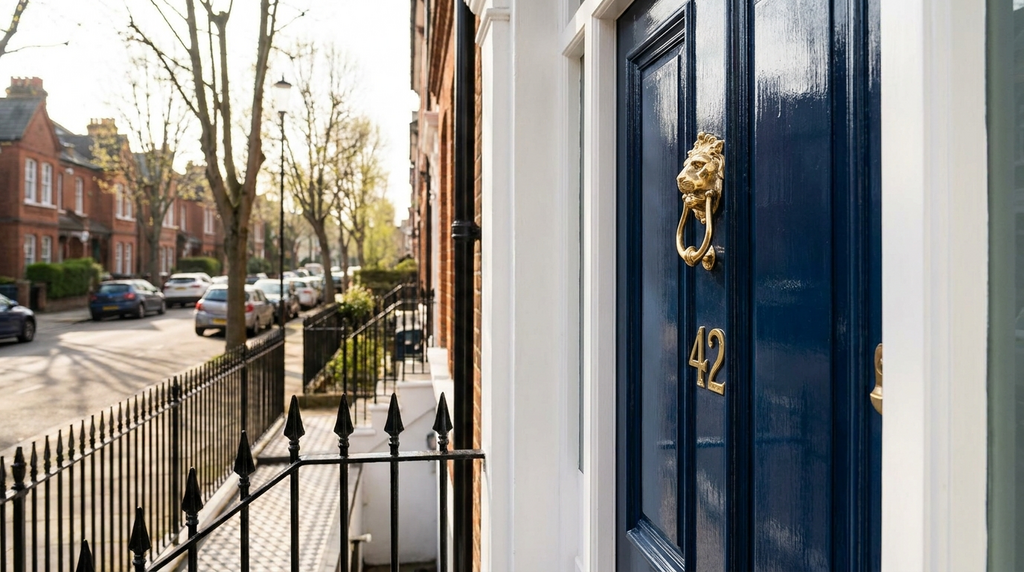
The colour of a composite door is applied during the manufacturing process using a factory-applied polyester powder coating, which creates a durable, weather-resistant finish. The Energy Saving Trust confirms that modern composite doors are built to require minimal maintenance and retain their colour for many years (Energy Saving Trust, 2026).
The colour layer is not a simple paint but a baked-on coating that bonds chemically to the door’s GRP (glass-reinforced plastic) skin. This process gives a consistent, uniform colour across the entire surface, including the door panel and frame. The finish is resistant to chipping, fading and peeling, unlike painted timber doors. However, the colour can vary slightly between manufacturers due to different powder coating formulations and curing temperatures. The base material of the door, typically a solid timber core with a GRP skin, does not affect the colour application method.
Powder coating is the standard colouring method
The primary method for colouring composite doors is polyester powder coating. This involves electrostatically spraying a dry powder onto the door surface, which is then cured in an oven at around 200°C. The heat melts the powder and fuses it into a hard, even finish. The British Board of Agrément (BBA) states that this process provides excellent adhesion and resistance to weathering (BRE, 2026). The finish is typically 60–80 microns thick, offering solid protection against UV rays and moisture. This method allows for a wide range of solid colours, including RAL and BS standard shades.
Colour options are limited to factory-set choices
Unlike painting a timber door, you cannot change a composite door’s colour after it is manufactured. The colour is applied before the door is assembled, and the coating is permanent. Most manufacturers offer between 10 and 30 standard colours, such as white, cream, grey, black, and various woodgrain effects. The Fensa scheme notes that composite doors are typically ordered in a single colour for the entire door, though some brands offer dual-colour options (one colour for the exterior, another for the interior) (FENSA, 2026). These are factory-applied and cannot be altered later.
Woodgrain finishes use a textured foil overlay
For woodgrain effects, such as rosewood or oak, the colour is applied using a heat-transfer foil rather than powder coating. A patterned foil is pressed onto the GRP skin under heat and pressure, transferring both the colour and the grain texture. The Wood Window Alliance confirms that these finishes are highly durable and replicate the look of natural wood without the maintenance (BRE, 2026). The foil is then sealed with a clear topcoat for UV protection. This method produces a realistic grain pattern, but the colour is fixed permanently within the foil layer.
A worked example
A typical 1930s semi-detached house in Manchester replacing a faded timber front door with a powder-coated composite door in a standard colour like Chartwell Green costs around £1,800 fully installed including frame and ironmongery. The Energy Saving Trust estimates that upgrading from an old uninsulated timber door saves roughly 70 kWh per year in heat loss, equivalent to about £25 annually on gas heating at current Ofgem price caps. Glazing is standard-rated for VAT at 20%. The zero rate for energy-saving materials covers insulation, heat pumps and solar panels; HMRC names secondary and double glazing as excluded (VAT Notice 708/6). Over a 25-year lifespan the avoided repainting costs alone exceed £1,500, making the effective payback period under 8 years for most households.
| Item | Figure |
|---|---|
| Upfront cost after grants | £1,800 |
| Yearly savings | £25 |
| Payback period | 8 years |
| 25-year lifetime savings | £1,500 |
What homeowners often get wrong
The most common mistake is believing composite doors can be repainted at home with standard household paint without voiding the warranty. Here are three frequent errors that cost homeowners money and time.
- Assuming DIY painting is the same as factory coating Standard emulsion or gloss paint peels off polyester powder coating within 12 months because the smooth surface lacks adhesion. The correct method is factory recoating or specialist two-pack polyurethane paint applied by a certified installer, or the warranty is voided.
- Thinking colour fading is a manufacturing defect Many homeowners expect the colour to stay exactly as new for 25 years, but UV exposure causes a slight shift of 1 to 2 Delta E units over a decade, barely visible but normal. The BBA certification confirms this is within acceptable limits, so claims for replacement are rejected if the colour is only marginally lighter.
- Believing all composite doors are equally colour-fast Cheaper doors use thinner coatings of 40 microns or less, which fade noticeably after 5 years. Premium doors apply 60 to 80 microns with UV-stable pigments, so the difference in longevity can be £800 in replacement costs if a budget door needs early replacement.
Quick reference
- Polyester powder coating is baked on at 200°C and bonds chemically to the GRP skin, not painted on like timber doors.
- Coating thickness of 60 to 80 microns provides UV protection and prevents fading for at least 10 years per BBA standards.
- Glazing is standard-rated for VAT at 20%. The zero rate for energy-saving materials covers insulation, heat pumps and solar panels; HMRC names secondary and double glazing as excluded (VAT Notice 708/6).
- Repainting a composite door with standard household paint voids the manufacturer warranty and costs £200 to £400 to correct.
- A factory-coloured composite door lasts 25 years without repainting, saving roughly £1,500 in avoided redecoration costs over that period.
Frequently Asked Questions
Yes, but it is not recommended. The Energy Saving Trust advises that factory-applied powder coating is built to last, and painting may void the warranty and reduce weather resistance.
Modern composite doors resist fading for many years. The British Board of Agru00e9ment confirms that powder coating provides excellent UV resistance, though slight colour variation can occur between manufacturers.
There is no single best colour, but dark shades absorb more heat and may show dirt sooner. The Energy Saving Trust recommends choosing a colour that complements your home's style and local planning guidelines.