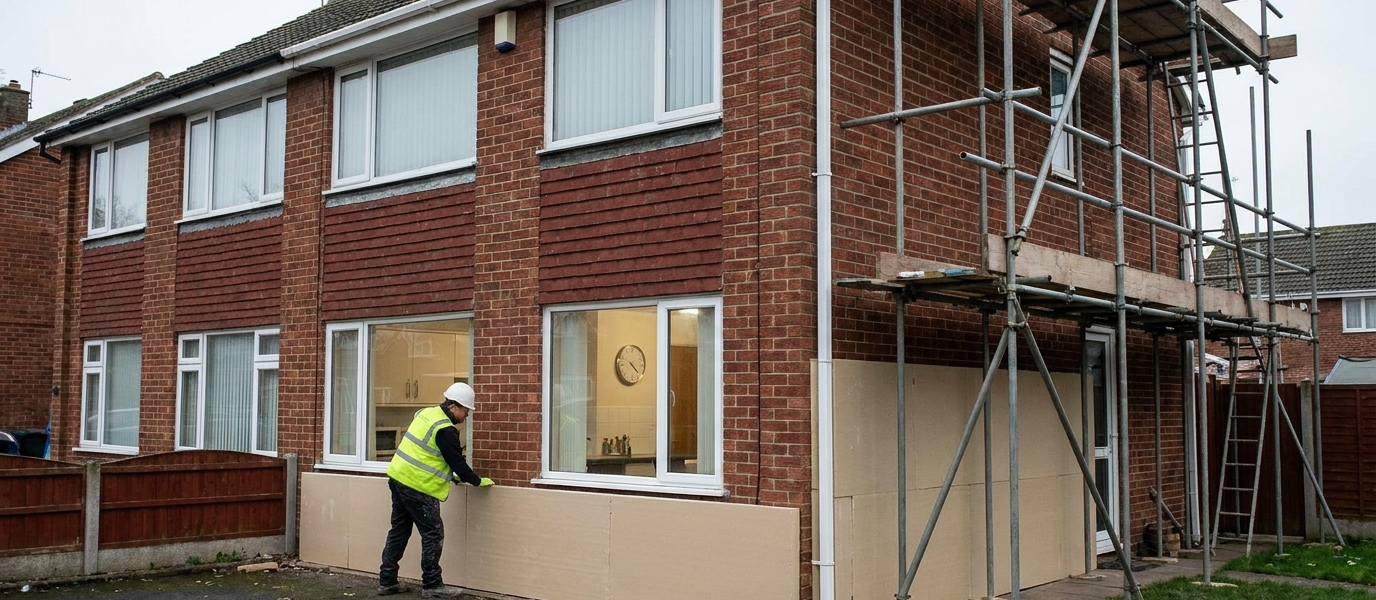
Nearly 3 million UK homes still have no loft insulation. Another 8 million have cavity walls that are either unfilled or underfilled. That is not a statistic, it is a direct drain on household finances, responsible for roughly a quarter of all heat lost through the fabric of a typical semi-detached house.
As Which? reports, the Great British Insulation Scheme, launched by the government in early 2024, is now open to homeowners and private tenants in England, Scotland, and Wales. It covers loft insulation, cavity wall insulation, and in some cases solid wall insulation, with costs fully covered for households on certain benefits or with low EPC ratings. For others, the scheme covers up to half the installation cost.
Who qualifies, and who doesn’t
Eligibility is split into two groups. The first is households in council tax bands A–D (or equivalent in Scotland) with an EPC rating of D or below. The second is anyone receiving means-tested benefits such as Universal Credit, Pension Credit, or Income Support, regardless of council tax band. Ofgem, which administers the scheme, estimates that around 300,000 homes could be upgraded in the current funding round.
The catch is that the scheme is not universal. If your EPC is already C or above, you are excluded. If you live in a flat above a shop, or in a listed building, you may also be ineligible. And if you want solid wall insulation, the most expensive retrofit, it is only funded for benefit claimants living in the least efficient homes.
What it costs a typical 3-bed semi
Installing 270mm of loft insulation in a 70m² loft costs around £800–£1,000 if you pay a contractor. Filling cavity walls in a standard 3-bed semi runs to £1,200–£1,800. The Great British Insulation Scheme closed on 31 March 2026. It funded insulation measures only and never covered windows or glazing. The Energy Saving Trust puts the annual saving from loft insulation at £200–£300 and cavity wall insulation at £250–£400, depending on fuel type. On a gas-heated semi, that means the work pays for itself in two to three winters.
But the government’s own impact assessment says the average household will save only £180 per year under the scheme. That figure assumes a mix of properties, some of which already have partial insulation. The real saving for a completely uninsulated 3-bed semi is closer to £400.
The deadline is real, and it is closer than you think
Funding runs until March 2026, but installers are already reporting waiting lists of 8–12 weeks in some regions. Ofgem has capped each energy supplier’s obligation, and once a supplier hits its target, it stops taking new applications. The scheme is structured as a supplier obligation, similar to the old ECO programme, so you apply through your energy company, not through a central portal. That means availability varies by supplier and region.
Households on standard variable tariffs should contact their supplier directly. Those switching supplier midway through an application may lose their slot, so it pays to stick with one provider until the work is done. The government has not yet announced a second phase, so this may be the only window for free or subsidised insulation before the next general election.
What this means for your EPC
Loft and cavity wall insulation are the two cheapest ways to improve an EPC rating. Each measure typically adds 5–10 points to the Standard Assessment Procedure (SAP) score, which translates to about half a band. If your EPC is currently an E, topping up loft insulation and filling cavity walls could lift you to a D or even a low C. That matters because from 2025, landlords will need a minimum EPC rating of C for new tenancies, and mortgage lenders are increasingly offering better rates to homes rated C or above.
One caveat: the scheme only covers the insulation, not any associated ventilation or damp-proofing work. If your home has rising damp or condensation issues, you may need to address those first. Some installers offer a survey before quoting, but the cost of remedial work is not included in the grant.
How to apply, and by when
Check your eligibility on the Ofgem website or through your energy supplier’s portal. The process takes about 15 minutes, you will need your EPC number, council tax band, and details of any benefits you receive. If eligible, the supplier arranges a survey and then the installation. The whole process typically takes 6–10 weeks from application to completion.
Households on standard variable tariffs can apply through their supplier from today. Eligibility closes on 31 March 2026, but with installer capacity limited, the effective deadline is likely summer 2025. Do not wait until winter, by then, the waiting lists will be longer and the weather will make roof work harder to schedule.
Frequently Asked Questions
Without the scheme, installing 270mm of loft insulation in a 70m² loft typically costs £800–£1,000 if you use a contractor.
You qualify for free cavity wall insulation if you live in a home with an EPC rating of D or below and are in council tax bands A–D (or equivalent in Scotland), or if you receive means-tested benefits like Universal Credit or Pension Credit, regardless of council tax band. The scheme covers up to £500 of the typical £1,200–£1,800 cost for a 3-bed semi.
The Energy Saving Trust estimates annual savings of £250–£400 from cavity wall insulation for a gas-heated semi-detached house. The government's average figure is £180 per year, but for a completely uninsulated 3-bed semi, real savings are closer to £400.
Funding runs until March 2026, but installers report waiting lists of 8–12 weeks in some regions. Each energy supplier has a capped obligation, so once a supplier hits its target, it stops taking new applications. You should contact your energy supplier directly as soon as possible.
Solid wall insulation is only funded for benefit claimants living in the least efficient homes. The Great British Insulation Scheme closed on 31 March 2026. It funded insulation measures only and never covered windows or glazing.





