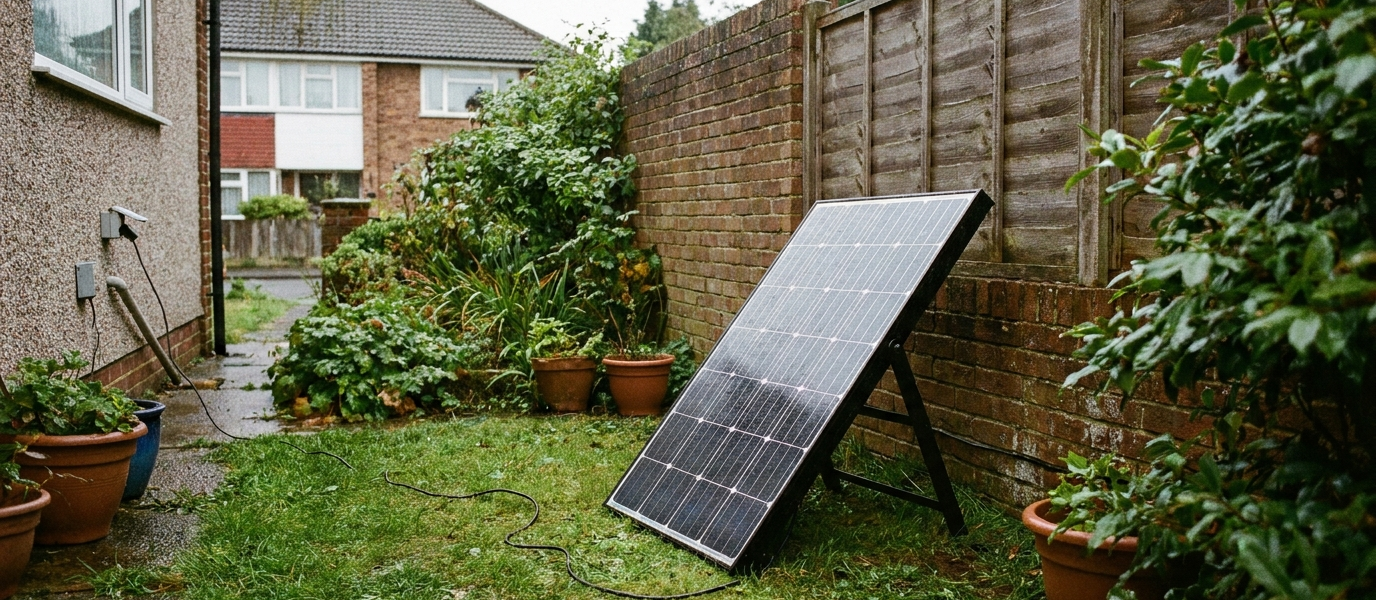
The price cap will rise by £63 in October, the third increase this year. Against that backdrop, Lidl’s decision to sell a £400 plug-in solar panel kit looks less like a gimmick and more like a lifeline. The German discounter is betting that cash-strapped households will trade a single supermarket trip for a chance to shave a chunk off their electricity bill.
As reported by The Independent, the kit includes a 300W solar panel, a microinverter, and a cable that plugs into a standard 3-pin socket. No electrician required, or so the marketing suggests. But the real story, as ever, is in the small print.
Who qualifies, and who doesn’t
Any household with a south-facing or east-west facing roof, balcony, or garden can technically install the panel. The 300W output means it generates roughly 250 kWh per year in the south of England, dropping to 200 kWh in Scotland. At the current price cap of 27p per kWh, that’s a saving of £54 to £68 a year. But the kit costs £400, so the payback period stretches to six or seven years, assuming electricity prices stay flat, which Ofgem’s forecasts suggest they won’t.
The catch is that plug-in panels are not eligible for the Smart Export Guarantee (SEG). Under SEG rules, only installations carried out by a Microgeneration Certification Scheme (MCS) accredited installer can sell surplus power back to the grid. Lidl’s kit, being self-installed, qualifies for nothing. So any excess generation is simply lost, or, more precisely, given away to the grid for free.
What it costs a typical 3-bed semi
A typical 3-bed semi using 2,900 kWh of electricity per year would see the panel cover about 8% of its annual consumption. That’s roughly £54 saved, not £150. The higher figure only applies if you run appliances like washing machines or tumble dryers during peak sunlight hours, a behavioural shift many households won’t manage. The Energy Saving Trust estimates that a 300W panel in Manchester generates 210 kWh annually; in Brighton, 270 kWh. The difference is stark.
Installation is straightforward: mount the panel, plug the cable into the microinverter, then into a socket. But here’s the rub: building regulations still apply. Any alteration to a dwelling’s electrical system, even a plug-in device, must comply with Part P of the Building Regulations in England and Wales. The manufacturer’s instructions may say no electrician needed, but a local authority building control officer might disagree. A qualified electrician charging £150 for a certificate could double the effective cost of the kit.
EPC impact, zero, unless you upgrade
Plug-in solar panels do not appear on an Energy Performance Certificate (EPC). The EPC methodology only recognises fixed, MCS-certified solar PV installations. So if you’re hoping to boost your home’s EPC rating from D to C to unlock cheaper mortgage rates or meet upcoming rental standards, this £400 panel won’t help. A full 3.5 kWp solar array costing £5,000–£7,000 would add 5–10 points to the EPC score; Lidl’s panel adds nothing.
Yet the kit has its uses. For renters or homeowners in flats with no roof access, it’s a practical way to offset a portion of bills without structural changes. It also is a low-risk trial: if you’re unsure whether solar works for your home, £400 is a cheaper education than £6,000. Just don’t expect to sell your surplus or improve your property’s official energy rating.
Households considering the purchase should check their fuse box capacity first. The microinverter draws up to 1.2 amps, which is fine for most modern consumer units, but older fuse boxes with 5-amp circuits may trip. Lidl’s website advises checking with a qualified electrician, a sensible caveat that undermines the “no professional needed” pitch. The kit goes on sale in mid-October. If you want one, set an alarm: Lidl’s limited-stock promotions sell out within hours.
Frequently Asked Questions
Lidl's plug-in solar panel kit costs £400 and includes a 300W solar panel, a microinverter, and a cable that plugs into a standard 3-pin socket. It's designed for DIY installation with no electrician required, but you may need a qualified electrician to certify compliance with Part P of UK Building Regulations, which could add £150 to the cost.
In the south of England, the panel generates about 250 kWh per year, saving roughly £68 annually at the current price cap of 27p per kWh. In Scotland, it drops to 200 kWh, saving about £54 per year. For a typical 3-bed semi using 2,900 kWh annually, that covers around 8% of consumption, so the payback period is six to seven years.
No, plug-in solar panels like Lidl's are not eligible for the Smart Export Guarantee (SEG). Only installations by MCS-accredited installers qualify, so any surplus power is given to the grid for free. You cannot earn money from exporting electricity with this kit.
The kit is marketed as DIY-friendly with no electrician required, but Part P of UK Building Regulations may apply. A local authority building control officer could require certification from a qualified electrician, costing around £150, which would double the effective cost of the kit. It's best to check with your local council.
No, plug-in solar panels do not appear on an Energy Performance Certificate (EPC). Only fixed, MCS-certified solar PV installations are recognised, so this £400 kit won't help boost your EPC rating from D to C for cheaper mortgages or rental standards. A full 3.5 kWp system costing £5,000–£7,000 would add 5–10 points.





