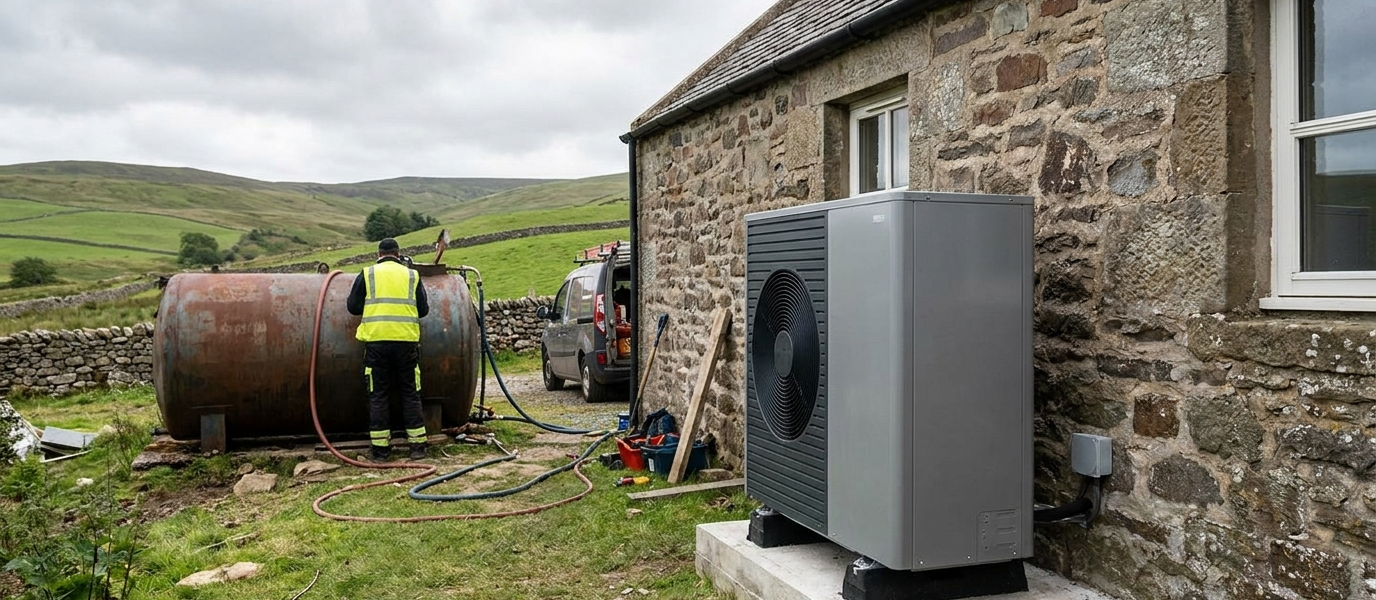
Off-grid households burning heating oil or LPG spend roughly £2,500–£3,500 a year on fuel – nearly double the typical gas-heated home. The End Fuel Poverty Coalition has now reported that these households will receive additional support to install heat pumps, as part of a broader push to decarbonise rural heating.
As reported by the End Fuel Poverty Coalition, the extra funding is built to close the gap between the cost of a heat pump installation and what oil or LPG users can afford. The existing Boiler Upgrade Scheme already offers £7,500 towards a heat pump, but off-grid installations often cost more due to larger radiators, hot water tanks, and sometimes underfloor heating.
Who qualifies – and who doesn’t
The support is aimed at households not connected to the gas grid – roughly 4 million homes in the UK, concentrated in Scotland, Wales, rural England, and Northern Ireland. Eligibility will likely follow the same rules as the Boiler Upgrade Scheme: you must own your home, have a valid EPC with no outstanding cavity wall or loft insulation recommendations, and replace an existing fossil-fuel heating system.
The catch is that the extra funding is not yet legislated. The End Fuel Poverty Coalition’s announcement is a policy recommendation, not a confirmed government scheme. Officials have not published a launch date or a final top-up amount. Homeowners should watch for a formal announcement from the Department for Energy Security and Net Zero, expected later this year.
What it costs a typical 3-bed semi
A heat pump installation for an off-grid 3-bed semi typically costs £10,000–£15,000 after the £7,500 BUS grant. The additional support could reduce that to £5,000–£8,000 – comparable to the cost of a new oil boiler. Running costs are lower: heat pumps deliver 3–4 kWh of heat for every 1 kWh of electricity, cutting annual heating bills by 30–50% compared to oil or LPG.
But the upfront saving depends on your property. Older, draughty homes may need insulation upgrades costing £2,000–£5,000 before a heat pump works efficiently. The Energy Saving Trust recommends a full home energy assessment before committing. Ofgem’s latest data shows average heat pump installations in rural areas take 5–8 days, with disruption similar to a boiler swap.
EPC impact and resale value
Switching from oil to a heat pump can lift an EPC rating from band D or E to B or C. This matters because from 2025, landlords cannot let properties below EPC band C. For owner-occupiers, a better EPC can increase a home’s value by 5–10%, according to recent analysis from Nationwide.
The government’s Heat and Buildings Strategy targets 600,000 heat pump installations per year by 2028. Off-grid homes are the low-hanging fruit – they have no gas infrastructure to replace, and their carbon savings per household are largest. Yet the pace has been slow: only 55,000 heat pumps were installed under the BUS in 2023–24.
What this misses is the installer bottleneck. Rural areas have fewer MCS-certified heat pump engineers. The extra grant is useless if you cannot find someone to do the work. The government’s heat pump training programme aims to train 10,000 new installers by 2025, but supply is still lagging demand.
Households on heating oil or LPG should start planning now. Check your EPC, book an insulation survey, and register interest with a local MCS installer. The formal application window for the top-up grant is expected to open in early 2025. Those who wait risk the usual scramble – and a longer wait for an installation slot.
Frequently Asked Questions
For a typical 3-bed semi-detached off-grid home, a heat pump installation costs £10,000–£15,000 after the £7,500 Boiler Upgrade Scheme grant. With additional proposed top-up funding, this could drop to £5,000–£8,000. That makes it comparable to a new oil boiler. However, older homes may need £2,000–£5,000 of insulation upgrades first.
The extra funding targets the roughly 4 million UK homes not connected to the gas grid, mainly in Scotland, Wales, rural England, and Northern Ireland. Eligibility follows Boiler Upgrade Scheme rules: you must own your home, have a valid EPC with no outstanding cavity wall or loft insulation recommendations, and replace an existing fossil-fuel heating system like oil or LPG.
Yes, switching from oil to a heat pump can lift your EPC rating from band D or E to B or C. This is important because from 2025, landlords cannot let properties below EPC band C, and for owner-occupiers, a better EPC can increase a home's value by 5–10% according to Nationwide analysis.
Heat pumps deliver 3–4 kWh of heat for every 1 kWh of electricity, cutting annual heating bills by 30–50% compared to oil or LPG. Given off-grid households currently spend £2,500–£3,500 a year on fuel, you could save £750–£1,750 annually, though savings depend on your home's insulation and efficiency.
The extra funding is currently a policy recommendation from the End Fuel Poverty Coalition, not a confirmed government scheme. Officials have not published a launch date or final top-up amount. Homeowners should watch for a formal announcement from the Department for Energy Security and Net Zero, expected later this year.




