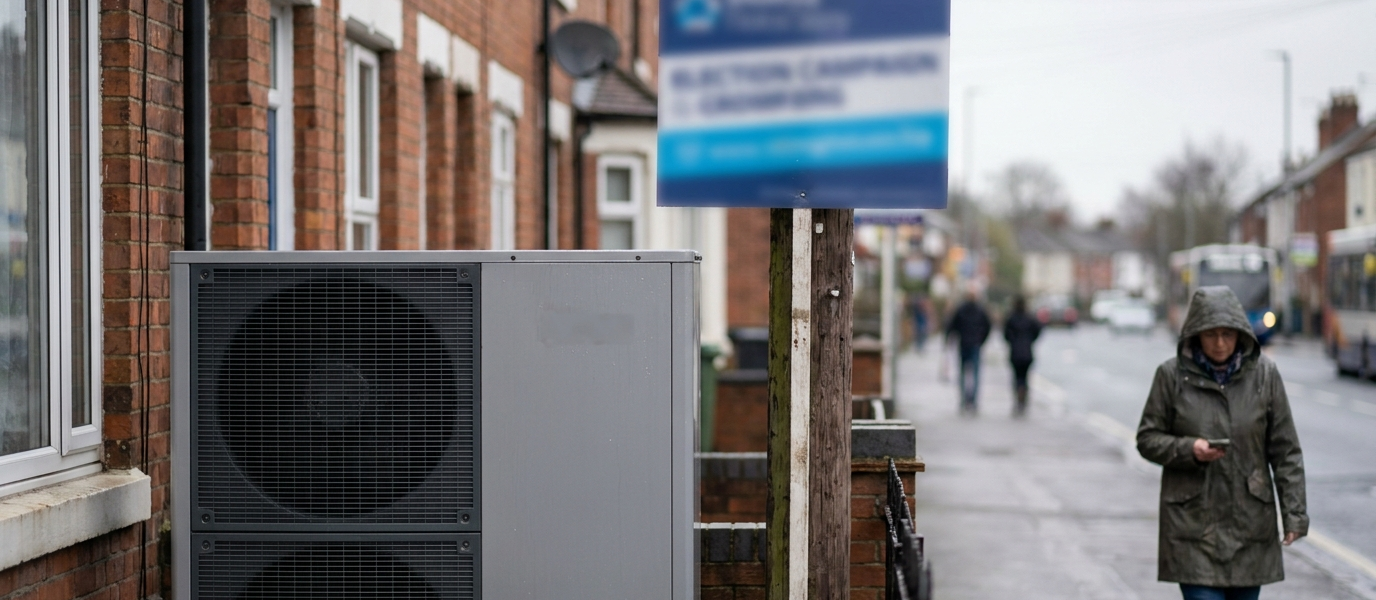
The Boiler Upgrade Scheme (BUS) pays £7,500 towards a heat pump, roughly a third of the typical installation cost. Reform UK’s pledge to scrap that grant would, overnight, make the greenest heating option unaffordable for most households. This is not an abstract policy debate. It is a direct hit on the wallet of every homeowner considering a heat pump in 2025.
As reported by the Energy & Climate Intelligence Unit, the proposal would remove the main financial lever that has driven a 50% increase in heat-pump installations since 2022. Without it, the UK risks falling further behind its target of 600,000 heat pumps a year by 2028, a figure the government itself admits is essential for energy security and net-zero.
Who pays the real cost
Scrapping the grant does not make heat pumps more expensive. It simply shifts the cost from the taxpayer to the homeowner. A typical air-source heat pump installation runs between £7,000 and £12,000, according to industry estimates. The BUS grant of £7,500 cuts that to roughly £2,500–£4,500, a figure many can finance through savings or a low-interest loan. Without it, the upfront cost becomes prohibitive for the 60% of UK households with less than £10,000 in savings, as ONS data shows.
The irony is that Reform frames this as a cost-saving measure. Yet households that cannot afford a heat pump will remain on gas boilers, and gas prices are forecast to stay 30% above pre-crisis levels through 2027, according to Ofgem’s latest projections. The grant saves the Treasury money in the long run by reducing gas imports and cutting carbon emissions. Ending it saves nothing; it just delays the transition.
What this means for your EPC rating
Homeowners in the market for a heat pump are often motivated by more than green credentials. An EPC band D or E property can lose £5,000–£10,000 in value compared with a C-rated equivalent, according to Nationwide’s 2023 analysis. Heat pumps, combined with good insulation, typically lift a home by one or two bands. The BUS grant currently makes that upgrade economically viable. Remove it, and the payback period on a heat pump stretches from 5–7 years to 10–15 years, beyond the horizon of most homeowners.
The catch is that the government’s own Future Homes Standard, due in 2025, will effectively ban gas boilers in new builds from 2026. Existing homes face no such mandate yet, but the direction of travel is clear. Reform’s policy would leave millions of homeowners stuck with fossil-fuel heating as the rest of the country moves on, and as carbon taxes on gas rise, that choice becomes increasingly expensive.
Alternatives that won’t break the bank
Without the BUS grant, homeowners could still access the Energy Company Obligation (ECO4) scheme, which funds insulation and heating upgrades for low-income households. But ECO4 is means-tested and covers only a fraction of installations. The Great British Insulation Scheme closed on 31 March 2026. It funded insulation measures only and never covered windows or glazing.
For those determined to go electric, the cheapest route would be a hybrid system, a heat pump paired with an existing gas boiler. These cost roughly £5,000–£7,000 and attract no grant, but they cut gas use by 60–80%. Or, households could wait: the government’s Clean Heat Market Mechanism, due in 2025, will force boiler manufacturers to sell a rising quota of heat pumps, which should drive down retail prices over time. Reform’s pledge, if enacted, would kill that market before it matures.
What to do now
Homeowners considering a heat pump should apply for the BUS grant before any policy change takes effect. The scheme is open until March 2027, but the next general election could accelerate Reform’s influence. Check eligibility on the Ofgem website, and get quotes from at least three MCS-certified installers. The grant is not means-tested, it is available to any homeowner in England and Wales who replaces a fossil-fuel heating system. Do not wait.
Frequently Asked Questions
After the £7,500 Boiler Upgrade Scheme grant, a typical air-source heat pump installation in the UK costs between £2,500 and £4,500, down from the full price of £7,000 to £12,000. This makes it a more affordable option for many homeowners.
Reform UK has pledged to scrap the £7,500 Boiler Upgrade Scheme grant, which could take effect in 2025 if implemented. This would make heat pumps unaffordable for most households, as the grant currently covers roughly a third of installation costs.
A heat pump, combined with good insulation, can lift your home’s EPC rating by one or two bands. For example, moving from a band D to a band C could increase your property’s value by £5,000 to £10,000, according to Nationwide’s 2023 analysis.
Without the BUS grant, low-income households can access the Energy Company Obligation (ECO4) scheme for insulation and heating upgrades, but it is means-tested. The Great British Insulation Scheme closed on 31 March 2026. It funded insulation measures only and never covered windows or glazing.
Without the £7,500 Boiler Upgrade Scheme grant, a typical air-source heat pump installation in the UK costs between £7,000 and £12,000. This upfront cost is prohibitive for 60% of UK households with less than £10,000 in savings, as per ONS data.