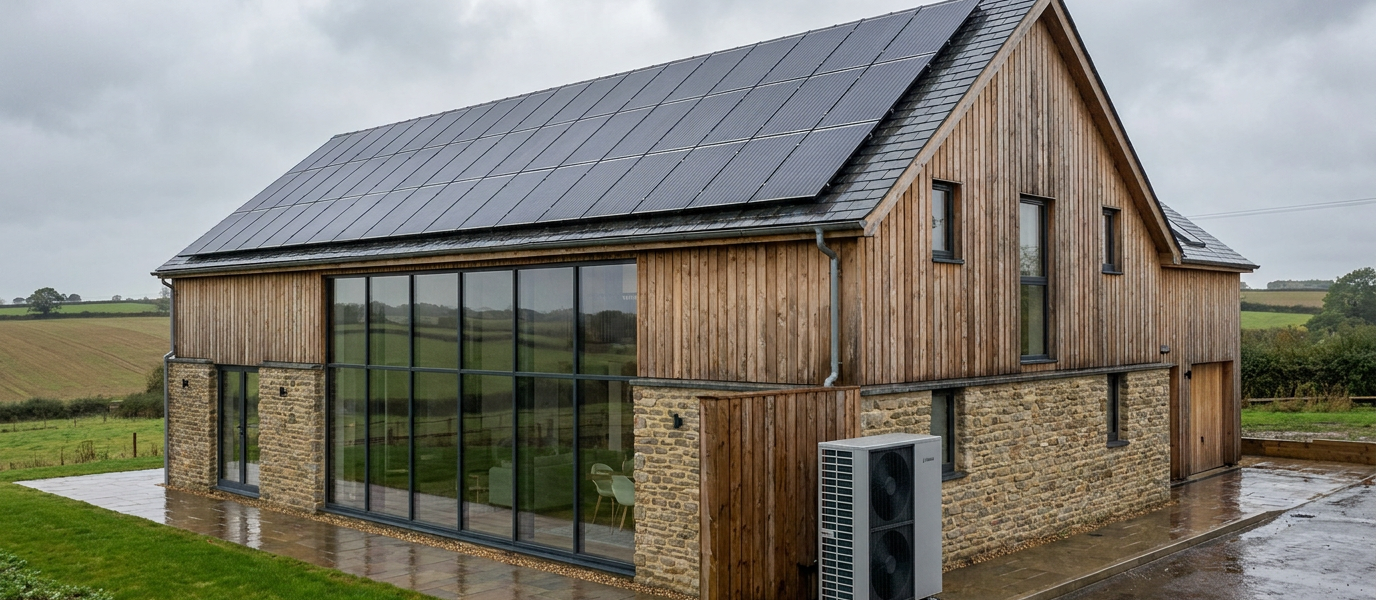
The price cap will rise by £63 in October, the third increase this year, pushing the average household bill to £1,923. Against that backdrop, a Norfolk couple’s plans for a barn-style ‘eco-home’ with a gym and cinema, as reported by the Eastern Daily Press, feel like a different species of news.
The couple’s design includes solar panels, a ground-source heat pump, and high levels of insulation, genuine green features. But the gym, cinema, and ‘barn-style’ aesthetic add an extra £150,000 to the build cost. For most UK homeowners, the word ‘eco’ has become a marketing badge for luxury, not a synonym for affordability.
Who qualifies, and who doesn’t
The typical UK home is a Victorian or 1960s semi with single glazing and a gas boiler. Ofgem data shows 23 million households are on standard variable tariffs, paying the full price cap. Only 1.2 million have a heat pump installed. The Norfolk couple’s ground-source system costs £25,000–£35,000 after the Boiler Upgrade Scheme grant of £7,500, a sum most households cannot spare.
The catch is that ‘eco-home’ planning applications often bypass local affordability checks. Developers pitch ‘sustainable’ as a premium product, not a mass-market solution. The couple’s plans include a home cinema that will require additional lighting and ventilation, potentially offsetting some of the energy savings from the heat pump.
What it costs a typical 3-bed semi
Energy Saving Trust figures show that a typical 3-bed semi using 12,000 kWh of gas and 3,000 kWh of electricity can save £310 a year by topping up loft insulation to 270 mm and £150 a year by cavity wall insulation. That’s £460 total, more than the £63 price cap rise. No cinema required.
Solar PV, at £6,000–£8,000 for a 4 kW system, cuts electricity bills by £300–£400 a year and can add £1,500 to a property’s EPC score. The Norfolk couple’s solar array is likely oversized for a single dwelling, but the principle holds: generation beats consumption every time.
What this misses
The real story is not about a single couple’s dream home. It’s about the 18 million UK homes with an EPC rating of D or below. Government figures show that bringing all homes to EPC C by 2035 would cost £35 billion, roughly £2,000 per household. The Norfolk couple’s gym alone costs more than that.
But the couple is not the problem. The problem is that ‘eco’ has become a luxury brand, not a baseline requirement. New-build homes are required to meet Part L of the Building Regulations, but the standard is weak: a new home can still be built with a gas boiler. The couple’s plans exceed regulations, but they are the exception, not the rule.
What to do and by when
Households on standard variable tariffs can apply for the Boiler Upgrade Scheme through gov.uk from 4 November. Eligibility closes on 31 March 2027. For those not ready for a heat pump, loft insulation grants are available via the Energy Company Obligation (ECO4) scheme, which runs until March 2026. Check your EPC rating on the gov.uk portal, if it’s below C, you may qualify for free or subsidised measures.
The Norfolk couple’s plans are aspirational, not actionable for most. The real eco-home upgrade is cheaper, simpler, and starts with a phone call to your energy supplier.
Frequently Asked Questions
A ground-source heat pump typically costs between £25,000 and £35,000 after the £7,500 Boiler Upgrade Scheme grant. This is still a significant sum for most UK households, and the scheme is available through gov.uk from 4 November until 31 March 2027.
Topping up loft insulation to 270 mm saves around £310 a year, and cavity wall insulation saves about £150 a year, totalling £460 annually. These cost-effective measures can offset energy bill rises like the £63 price cap increase in October 2024.
A 4 kW solar PV system costs between £6,000 and £8,000 in the UK, cutting electricity bills by £300 to £400 a year. It can also boost your property's EPC score by up to £1,500. That makes it a worthwhile investment for long-term savings.
Yes, loft insulation grants are available through the Energy Company Obligation (ECO4) scheme until March 2026. For heat pumps, the Boiler Upgrade Scheme offers £7,500 off ground-source systems, with applications open on gov.uk from 4 November until 31 March 2027.
The UK government aims to bring all homes to an EPC rating of C by 2035, which would cost an estimated £35 billion, roughly £2,000 per household. Currently, 18 million UK homes have an EPC rating of D or below, so checking your EPC on the gov.uk portal is a good first step.




