The single most important thing to know about boiler replacement timing
The question of when to replace a boiler is one of the most common dilemmas for UK homeowners. The answer depends on a combination of age, efficiency, and repair costs rather than a single fixed date.
The most efficient time to replace a boiler is when it is over 15 years old, as older models typically operate at less than 70% efficiency, costing significantly more to run. A new A-rated condensing boiler can achieve over 90% efficiency, reducing annual heating bills by up to £300 compared to a G-rated model, according to the Energy Saving Trust (Energy Saving Trust, 2026).
Replacing a boiler before it fails gives you control over the timing and installer choice, avoiding emergency call-out fees which can be £150–£300 higher than a planned replacement. The UK government’s Boiler Upgrade Scheme (BUS) offers grants for low-carbon heating, not for standard gas boiler replacements, meaning a like-for-like gas boiler swap is not subsidised (GOV.UK, 2026).
How boiler age and efficiency determine the right replacement year
The average lifespan of a modern condensing boiler is 10–15 years; after this point, efficiency drops and repair costs become more frequent and expensive. A boiler’s efficiency can be checked using its Seasonal Efficiency of Domestic Boilers in the UK (SEDBUK) rating, which is a standardised measure of how efficiently the boiler converts fuel into heat over a typical heating season. A rating below 80% indicates significant energy waste, meaning you are paying for more gas than necessary.
The Energy Saving Trust states that replacing a 15-year-old G-rated boiler with an A-rated one could save a typical semi-detached home around £300 per year on gas bills (Energy Saving Trust, 2026). Annual boiler servicing records should be reviewed; if repair costs exceed 50% of a new boiler’s price, replacement is more cost-effective than continued repairs. For example, if a new boiler installation costs £2,500 and you have spent £1,250 on repairs in the past two years, replacement is the financially sound choice.
ONS housing stock data shows that the average UK home uses around 12,000 kWh of gas per year for heating and hot water (ONS, 2026). A boiler running at 70% efficiency wastes 30% of that energy, equating to roughly 3,600 kWh of wasted gas annually.
Quick numbers, boiler replacement costs and savings at a glance
| Boiler age | Estimated annual running cost | Potential annual saving with new A-rated boiler |
|---|---|---|
| 5 years old | £850–£950 | £50–£100 |
| 10 years old | £950–£1,100 | £150–£200 |
| 15 years old | £1,100–£1,300 | £250–£300 |
| 20+ years old | £1,300–£1,500 | £350–£450 |
| Typical new boiler installation cost | £2,500–£4,000 (including installation and VAT) | |
Running cost estimates are based on the Energy Saving Trust’s heating and hot water cost tables for a typical 3-bedroom semi-detached home with gas central heating (Energy Saving Trust, 2026). The installation cost range comes from the Which? 2026 boiler installation survey. This reflects average quotes for a standard combi boiler swap in England and Wales.
how to compare boiler quotes effectively
Who qualifies for boiler replacement grants in 2026
The Boiler Upgrade Scheme (BUS) provides grants of £7,500 for heat pumps (air source or ground source), not for gas or oil boiler replacements, as confirmed by the GOV.UK BUS page (GOV.UK, 2026). The Great British Insulation Scheme closed on 31 March 2026. It funded insulation measures only and never covered windows or glazing.
Households on certain benefits (e.g., Pension Credit, Universal Credit) may qualify for the Energy Company Obligation (ECO4) scheme, which can fund a first-time central heating system or a boiler replacement in specific circumstances, per Ofgem’s ECO4 guidance (Ofgem, 2026). To check eligibility for ECO4, homeowners must contact their energy supplier or use the Ofgem ECO4 eligibility checker; private landlords and homeowners not on qualifying benefits are generally not eligible.
For most homeowners, there is no direct government grant for a standard gas boiler replacement in 2026. The financial incentive to replace a boiler comes from reduced running costs rather than upfront subsidies.
The direct answer to “when should I replace my boiler in the UK?”
Replace your boiler when it is over 15 years old, has a SEDBUK efficiency rating below 80%, or requires repairs costing more than half the price of a new installation. If your boiler is under 10 years old and has been serviced annually, replacement is rarely cost-effective unless it has a major, irreparable fault.
The Energy Saving Trust recommends considering replacement if your annual gas bill is more than 20% higher than the average for your home type and size, after accounting for insulation improvements (Energy Saving Trust, 2026). A boiler replacement is also advisable if you plan to install a heat pump in the next 2–3 years, as the BUS grant of £7,500 makes this a financially viable alternative to a gas boiler.
In practical terms, replace a boiler if it has failed completely and is over 10 years old, as repair costs for older models often exceed the value of the appliance. If the boiler is still working but over 15 years old, plan the replacement during spring or summer when installer availability is higher and emergency call-out risks are lower.
How to verify your installer, MCS, Gas Safe Register, and TrustMark
For any gas boiler replacement, the installer must be on the Gas Safe Register; this is a legal requirement in the UK, and homeowners should check the Gas Safe Register website for the installer’s ID card (Gas Safe Register, 2026). For heat pump installations (if considering the BUS grant), the installer and product must be certified under the Microgeneration Certification Scheme (MCS), as the grant application requires an MCS certificate (MCS, 2026).
TrustMark is a government-endorsed quality mark for tradespeople; using a TrustMark-registered installer provides consumer protection through the TrustMark dispute resolution process (TrustMark, 2026). Homeowners should obtain at least three quotes from Gas Safe registered installers and request references for recent similar work.
For heat pump installations, check that the installer holds both MCS certification and is registered with TrustMark to ensure eligibility for the BUS grant and access to consumer protection. MCS certification explained for homeowners
The role of the Boiler Upgrade Scheme in replacement timing decisions
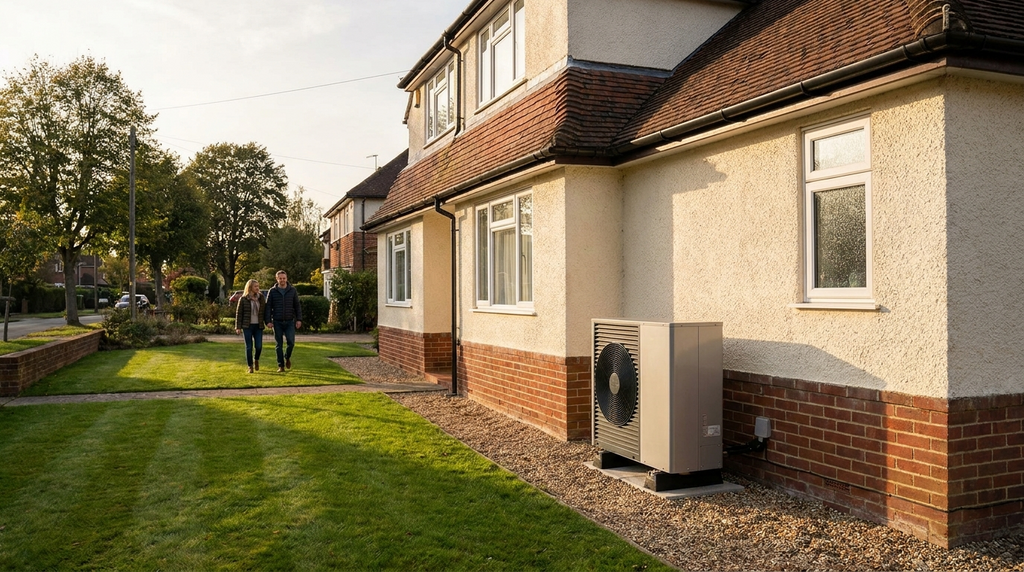
The BUS offers £7,500 grants for heat pumps. That makes them a financially competitive alternative to a new gas boiler, especially when the existing boiler is near the end of its life (GOV.UK, 2026). The grant is available to homeowners in England and Wales, and the application is made by the installer after the heat pump is fitted, as per GOV.UK guidance.
If a homeowner is considering a heat pump, the optimal time to replace the boiler is when the existing one is 10–15 years old, to avoid paying for both a new gas boiler and a heat pump within a short period. Homeowners should check if their property is suitable for a heat pump by reviewing the Energy Performance Certificate (EPC) and consulting an MCS-certified installer for a site survey.
The BUS grant effectively lowers the upfront cost of a heat pump to a level comparable with a new gas boiler, meaning the replacement timing decision shifts from “when does my boiler fail” to “when does my boiler become inefficient enough to justify switching fuel type.” heat pump vs gas boiler cost comparison
Frequently Asked Questions
Replace your boiler when it is over 15 years old or operating below 70% efficiency. The Energy Saving Trust states a new A-rated condensing boiler can save up to £300 per year on gas bills compared to a G-rated model.
A modern condensing boiler lasts 10–15 years on average. After this point, efficiency drops and repair costs increase, making replacement more cost-effective according to Ofgem guidelines.
Yes, replacing a 15-year-old boiler is typically worth it. The Energy Saving Trust says a new A-rated boiler can save around £300 annually on heating bills, and you avoid emergency call-out fees which are £150–£300 higher than planned replacements.
The Boiler Upgrade Scheme (BUS) offers grants for low-carbon heating like heat pumps, not for standard gas boiler replacements. GOV.UK confirms a like-for-like gas boiler swap is not subsidised under this scheme.
Check your boiler’s SEDBUK rating; below 80% indicates significant energy waste. Also look for rising gas bills, frequent repairs, or a boiler over 15 years old, which the Energy Saving Trust says typically operates below 70% efficiency.