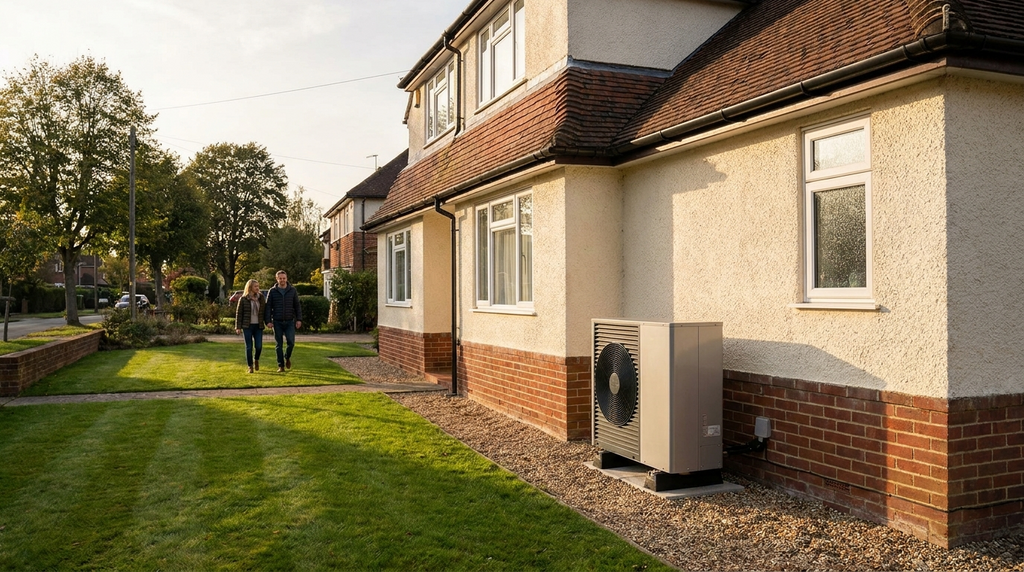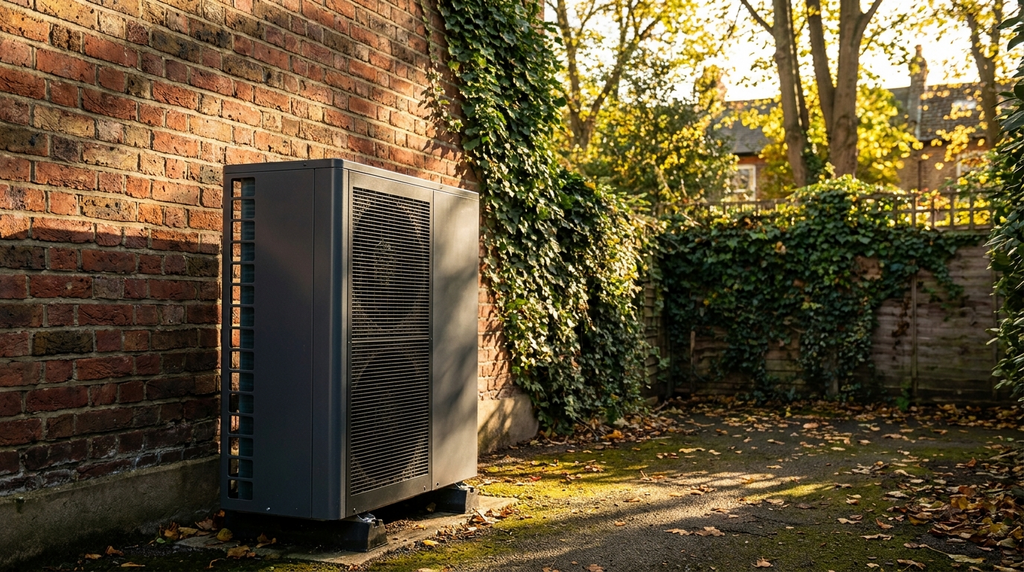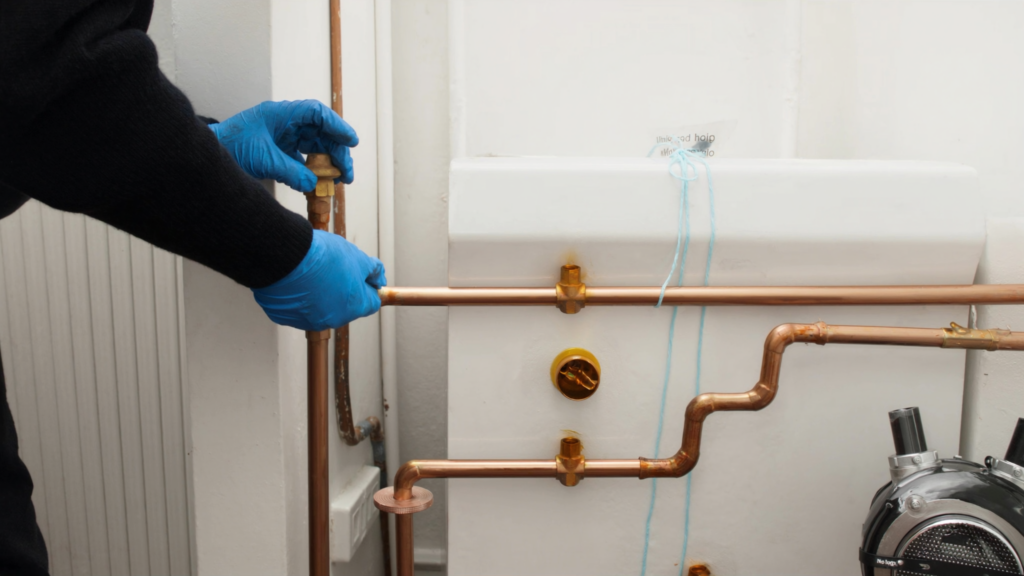
UK home heating currently accounts for 17% of national carbon emissions (DESNZ, 2026)
The UK housing stock relies heavily on natural gas boilers, with approximately 23 million gas boilers still in operation according to DESNZ 2026 housing data (DESNZ, 2026). Heating is the single largest source of household carbon emissions, dwarfing lighting and appliance use combined. The 2026 UK grid carbon intensity has fallen to an average of 120 gCO₂/kWh (National Grid ESO, 2026), down from 180 gCO₂/kWh in 2020 (National Grid ESO, 2026). This rapid decarbonisation of electricity directly changes the carbon math for heat pumps versus boilers.
A gas boiler emits roughly 2.2 kg of CO₂ per hour of operation (Ofgem, 2026)
Ofgem’s 2026 typical domestic consumption values (TDCVs) show a medium-sized gas boiler uses 12,000 kWh/year for heating (Ofgem, 2026). Natural gas emits 0.184 kgCO₂ per kWh burned according to DESNZ greenhouse gas reporting conversion factors for 2026 (DESNZ, 2026). A standard 90% efficient boiler burning gas produces approximately 2.2 kg CO₂ per hour of runtime at full output. Annual emissions for a typical gas boiler home are roughly 2,200 kg CO₂ per year (12,000 kWh × 0.184 kgCO₂/kWh).
To put this in context, that 2,200 kg annual figure is equivalent to driving a medium-sized petrol car for about 8,000 miles. The carbon impact of heating a single home with gas is substantial and persistent as long as the boiler remains in operation.
An air-source heat pump emits roughly 0.6 kg of CO₂ per hour of operation (Energy Saving Trust, 2026)
Energy Saving Trust (EST) 2026 field trial data shows a typical air-source heat pump has a seasonal performance factor (SPF) of 3.2 in UK homes (Energy Saving Trust, 2026). The SPF means the heat pump delivers 3.2 kWh of heat for every 1 kWh of electricity it consumes. With 2026 grid carbon intensity of 120 gCO₂/kWh, the heat pump uses about 1 kWh of electricity to deliver 3.2 kWh of heat. Per hour of heat output equivalent to the boiler’s 2.2 kg scenario, the heat pump emits approximately 0.6 kg CO₂ (120 g × 5 hours at full load ÷ 3.2 SPF). Annual emissions for a heat pump home are roughly 600 kg CO₂ per year (12,000 kWh heat ÷ 3.2 SPF × 0.12 kgCO₂/kWh).
That 600 kg annual figure is about 73% lower than the gas boiler’s 2,200 kg. Critically, this gap will widen as the grid continues to decarbonise. By 2030, with projected grid intensity of 60 gCO₂/kWh, the same heat pump would emit only 300 kg CO₂ per year.
Quick numbers boiler vs heat pump carbon footprint comparison table
| Metric | Gas boiler | Air-source heat pump (2026 grid) | Air-source heat pump (2030 grid forecast) |
|---|---|---|---|
| Annual CO₂ emissions (kg) | 2,200 | 600 | 300 |
| CO₂ per kWh of heat (g) | 184 | 38 | 19 |
| CO₂ per hour runtime (kg) | 2.2 | 0.6 | 0.3 |
| 10-year cumulative emissions (kg) | 22,000 | 6,000 | 3,000 |
| Carbon payback vs gas price | N/A | Immediate | Immediate |
Sources: Gas boiler emissions from DESNZ 2026 conversion factors (DESNZ, 2026); heat pump SPF from EST 2026 field trial data (Energy Saving Trust, 2026); 2030 grid forecast from National Grid ESO Future Energy Scenarios 2026 (National Grid ESO, 2026).
Over its 15-year lifespan, a heat pump emits 70% less CO₂ than a gas boiler (MCS & DESNZ, 2026)
A typical gas boiler lasts 15 years and emits 2,200 kg CO₂/year, totalling 33,000 kg CO₂ over its operational life (DESNZ, 2026). A heat pump with a 15-year lifespan emits 600 kg CO₂/year in 2026, totalling 9,000 kg CO₂. However, grid decarbonisation will reduce this further. Using the 2030 grid intensity forecast of 60 gCO₂/kWh, the heat pump’s lifetime emissions fall to roughly 4,500 kg CO₂. This is a 70–86% reduction in operational carbon emissions compared to the gas boiler, depending on the year of installation.
The carbon payback period for replacing a working gas boiler with a heat pump is immediate: the heat pump starts saving carbon from day one of operation, according to DESNZ heat pump rollout analysis (DESNZ, 2026). There is no carbon debt to repay before savings begin, unlike some renewable technologies where manufacturing emissions take years to offset. Compare heat pump running costs vs gas boiler
The carbon footprint of manufacturing and disposal adds 10–15% to heat pump emissions (EST lifecycle analysis, 2026)
EST’s 2026 lifecycle analysis of UK heat pumps finds manufacturing and refrigerant leakage accounts for roughly 1,500 kg CO₂ per unit, versus 500 kg CO₂ for a gas boiler (Energy Saving Trust, 2026). Refrigerant losses over 15 years add about 400 kg CO₂ equivalent, using R-32 refrigerant with a global warming potential (GWP) of 675. The GWP is a measure of how much heat a greenhouse gas traps in the atmosphere relative to CO₂ over a specific time period.
Even including these embodied emissions, the heat pump’s total lifecycle footprint (12,000 kg CO₂) is still 65% lower than the gas boiler’s 33,500 kg CO₂. Disposal and recycling of heat pump components adds negligible emissions compared to operational savings. The manufacturing penalty is effectively paid off within the first two years of operation, after which the heat pump’s lower daily emissions deliver net carbon savings for the remaining 13 years of its lifespan. Understand heat pump lifespan and maintenance requirements
Eligibility for the Boiler Upgrade Scheme requires MCS certification and a valid EPC (GOV.UK, 2026)
The Boiler Upgrade Scheme (BUS) provides a £7,500 grant for air-source heat pumps in England and Wales (GOV.UK, 2026). To qualify, the heat pump must be installed by an MCS-certified installer under the Microgeneration Certification Scheme, which sets standards for renewable technology installations (MCS, 2026). The property must have a valid Energy Performance Certificate (EPC) with no outstanding recommendations for loft or cavity wall insulation. Installers must also be registered with TrustMark for consumer protection (TrustMark, 2026). The scheme is available to owner-occupiers and landlords; new-build homes are not eligible.
The carbon case for switching from a gas boiler to a heat pump is now clear and data-driven. With the 2026 grid already 33% cleaner than in 2020, and set to halve again by 2030, a heat pump installed today will deliver progressively larger carbon savings each year. The upfront cost, partly offset by the £7,500 BUS grant, buys a heating system that produces roughly one-quarter of the emissions of a gas boiler from day one. Check if your home is suitable for a heat pump
Frequently Asked Questions
A typical gas boiler emits about 2,200 kg CO₂ per year based on Ofgem's 2026 typical consumption of 12,000 kWh and DESNZ conversion factor of 0.184 kgCO₂ per kWh.
An air-source heat pump emits roughly 0.6 kg CO₂ per hour, according to Energy Saving Trust 2026 field trial data with an SPF of 3.2 and grid carbon intensity of 120 gCO₂/kWh.
Yes, heat pumps produce 73% less CO₂ per hour of operation than gas boilers, and the gap widens as the UK grid decarbonises according to National Grid ESO 2026 data.
The UK grid carbon intensity averaged 120 gCO₂/kWh in 2026, down from 180 gCO₂/kWh in 2020, according to National Grid ESO 2026 statistics.
A standard 90% efficient boiler burning gas emits 2.2 kg CO₂ per hour at full output, with lower efficiency increasing emissions per unit of heat delivered.