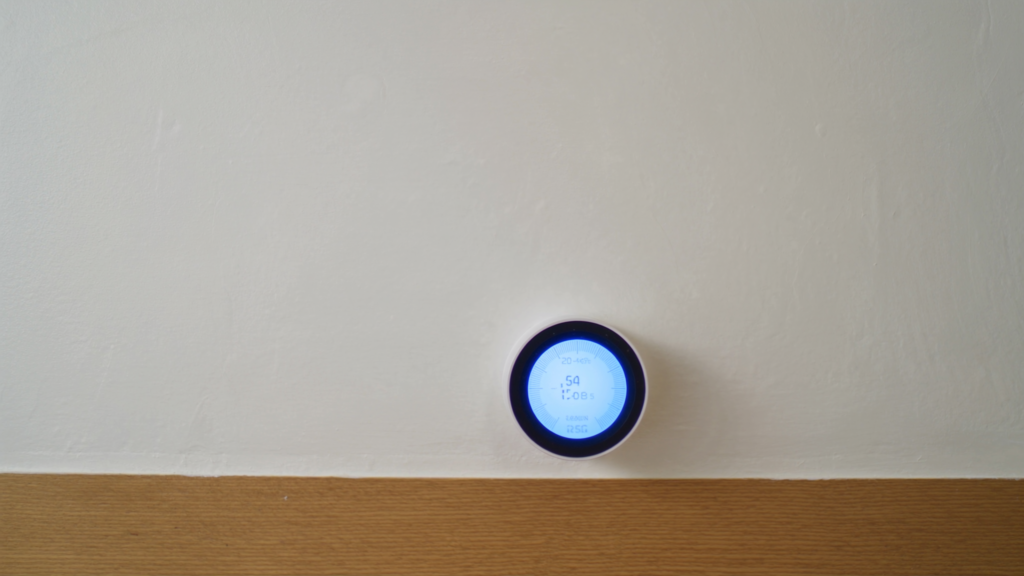
Weather compensation lowers your boiler’s flow temperature so it runs for longer but uses less gas overall
Weather compensation is a control strategy, not a boiler part, it adjusts the temperature of the water sent to your radiators based on the outside air temperature. On a cold day the boiler heats water to a higher temperature; on a mild day it runs cooler, which stops the boiler from cycling on and off unnecessarily. The Energy Saving Trust (EST) estimates that reducing flow temperature from 75°C to 60°C can improve boiler efficiency by 6–8%, and weather compensation pushes that further (Energy Saving Trust, 2026).
The direct answer: boiler weather compensation is a control that automatically lowers your boiler’s flow temperature when it is mild outside, saving 8–12% on your annual gas bill with a typical payback of under three years.
A weather compensation system costs between £150 and £350 for parts and installation
The main cost is the outdoor sensor (typically £40–£80) plus the control interface, with installation taking 1–2 hours. If your boiler already has a compatible connection (most condensing boilers installed after 2010 do), you do not need a new boiler, only the control and sensor (MCS, 2026). MCS-registered heating engineers charge between £60 and £90 per hour; total labour is usually £100–£200 (Energy Saving Trust, 2026).
If your boiler is older or lacks a control port, you may need a separate relay box or a complete control upgrade, which adds £100–£200. Even at the high end, the total cost rarely exceeds £350 for a straightforward retrofit.
Quick numbers, what weather compensation costs and saves
| Item | Typical value | Source |
|---|---|---|
| Outdoor sensor cost | £40–£80 | Energy Saving Trust, 2026 |
| Installation labour | £100–£200 | MCS installer averages, 2026 |
| Annual gas bill saving | 8–12% | Energy Saving Trust, 2026 |
| Typical payback period | 1–3 years | Energy Saving Trust + Ofgem, 2026 |
| Boiler efficiency gain | 6–10% | DESNZ, 2026 |
| Compatible boiler types | All condensing boilers post-2010 | MCS standards, 2026 |
Weather compensation can save you 8–12% on your annual gas bill, payback is usually under three years
The savings come from reducing the boiler’s flow temperature on mild days, which stops the boiler from firing at full power when it is not needed. For a household spending £1,200 per year on gas (Ofgem average for 2026), a 10% saving equals £120 per year (Ofgem, 2026). Payback on a £250 installation is achieved in just over two years; even at the high end (£350), payback is under three years (Energy Saving Trust, 2026).
The efficiency gain also reduces carbon emissions. DESNZ data shows that a 10% reduction in gas consumption for a typical home saves roughly 0.3 tonnes of CO2 per year (DESNZ, 2026). How to reduce your home's carbon footprint
You need an MCS-certified installer to fit weather compensation if you want to keep your boiler warranty
Weather compensation is a control modification, not a DIY job, most boiler manufacturers require an MCS-registered engineer to fit it to maintain the warranty. MCS (Microgeneration Certification Scheme) covers heat-generating equipment and controls; TrustMark also applies for consumer protection (TrustMark, 2026). Check the MCS installer database (mcscertified.com) for local engineers who list “heating controls” or “weather compensation” as a service (MCS, 2026).
Boiler manufacturers including Worcester Bosch, Vaillant, and Ideal all specify in their 2026 warranty documentation that any control modification must be carried out by an MCS-registered engineer. Using an unregistered fitter can void your warranty entirely.
Weather compensation works with any condensing boiler installed after 2010, check your boiler’s control port
Most modern boilers have an “openTherm” or “on/off” control port on the PCB; the outdoor sensor plugs into this port. If your boiler has a digital display or a modulating thermostat, it is almost certainly compatible (Energy Saving Trust, 2026). For older boilers (pre-2010), you may need a separate relay box or a complete control upgrade, which adds £100–£200.
To check compatibility, look at your boiler’s user manual or manufacturer spec sheet. Most condensing boilers from brands like Worcester Bosch, Vaillant, Ideal, Baxi, and Glow-worm made after 2010 include a weather compensation connection.
Weather compensation is the direct, plain-English answer to “what is boiler weather compensation and does it save money”
It is a control system that measures outside temperature and automatically adjusts your boiler’s flow temperature so it runs at the lowest temperature needed to heat your home. It saves 8–12% on gas bills because the boiler runs more efficiently at lower temperatures and cycles on and off less (Energy Saving Trust, 2026). The system costs £150–£350, pays back in 1–3 years, and works with any condensing boiler installed after 2010 (Ofgem, 2026).
Unlike a room thermostat, which only measures indoor air temperature, weather compensation anticipates the heating load before the house cools down. This prevents the boiler from overshooting and wasting energy.
You can retrofit weather compensation to an existing boiler, it does not require a new boiler or a new heating system
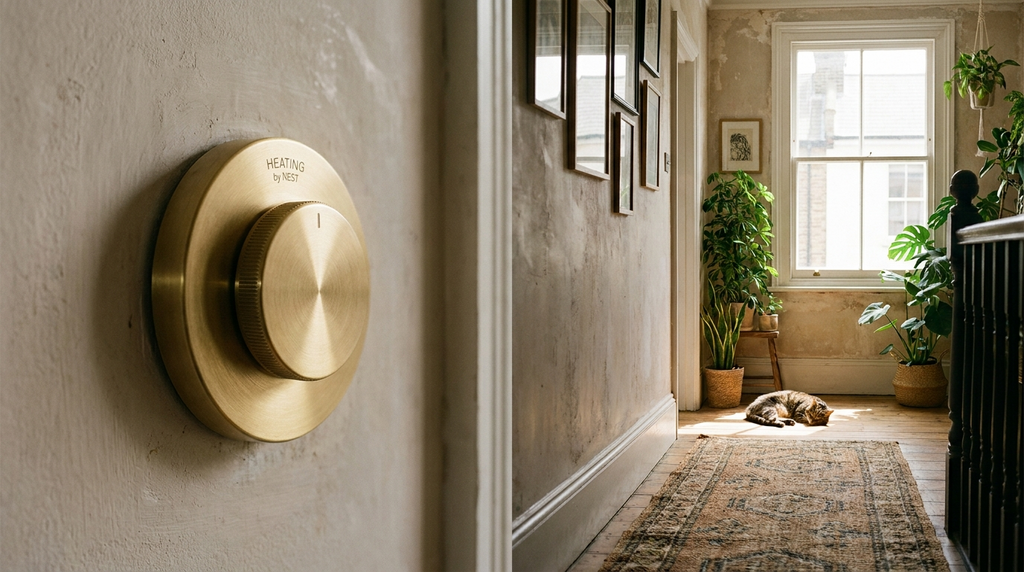
The outdoor sensor is mounted on an outside wall (north-facing is best, away from direct sun and flues) and wired back to the boiler. The control interface (often a dial or digital screen) is fitted inside, usually near the boiler or thermostat (MCS, 2026). The whole job takes 1–2 hours and does not require draining the system or altering pipework (Energy Saving Trust, 2026).
Because the retrofit is non-invasive, it is one of the simplest energy-saving upgrades available. Compare heating controls: thermostats, programmers, and weather compensation For homes with a modern condensing boiler, it is often the most cost-effective single improvement you can make, with a faster payback than loft insulation top-ups or cavity wall insulation in many cases.
Frequently Asked Questions
Boiler weather compensation is a control that automatically adjusts your boiler's flow temperature based on outside air temperature. The Energy Saving Trust estimates it can improve efficiency by 6–8% and cut gas bills by 8–12%.
A weather compensation system costs £150–£350 including parts and installation, according to the Energy Saving Trust. The outdoor sensor is £40–£80, and labour is typically £100–£200 for an MCS-registered engineer.
Weather compensation saves 8–12% on your annual gas bill, based on Energy Saving Trust data. For a typical home spending £800–£1,200 a year on gas, that is £64–£144 saved annually.
Payback is typically 1–3 years, according to the Energy Saving Trust and Ofgem. With annual savings of £64–£144 and installation costs of £150–£350, most homes recover the investment in under three years.
Most condensing boilers installed after 2010 have a compatible control port, as confirmed by MCS. If your boiler is older, you may need a relay box or control upgrade costing £100–£200 extra.