Why Ashington Homeowners Are Looking at Double Glazing Right Now
There’s a quiet revolution happening across Ashington’s streets right now. From the colliery-era terraces off Milburn Road to the semi-detached estates around Hirst and Bothal, homeowners are replacing draughty old windows at a faster rate than almost anywhere else in Northumberland, and it’s not hard to understand why.
Ashington sits in a part of England where winters genuinely bite. With heating degree days running between 1,800 and 2,200 per year, you’re burning significantly more gas to stay warm than homeowners in the Midlands or the South. The average Ashington household uses around 13,000 kWh of gas annually, roughly in line with the national median, but here that gas is working harder against colder outdoor temperatures. Any heat leaking through single-glazed or tired old double-glazed windows is money literally disappearing into the Northumberland air.
The town’s Band D EPC rating average tells an important story too. Most homes here have room to improve, and windows are often one of the most visible and impactful upgrades available. Add in the fact that the North East has the highest fuel poverty rates in England, and suddenly the financial case for decent double glazing becomes very personal for a lot of families in NE63.
There’s also a generational shift happening. Many of the original colliery houses around Ashington were built between the 1890s and 1950s, some still have their original window frames, or single-pane replacements fitted in the 1980s that are now well past their best. Those 40-year-old units have lost their gas fill, their seals have failed, and they’re essentially single glazing at this point. Replacing them in 2026 means accessing genuinely modern technology, triple glazing, argon-filled units, warm-edge spacer bars, that simply didn’t exist when the previous generation of windows was installed.
What Double Glazing Actually Involves for a Typical Ashington Home
Let’s talk about what the job actually looks like for the kinds of homes that make up most of Ashington’s housing stock. The town is overwhelmingly terraced and semi-detached, with a significant proportion of those properties being former colliery houses, solid, no-nonsense brick buildings that were built to last but weren’t exactly designed with thermal efficiency in mind.
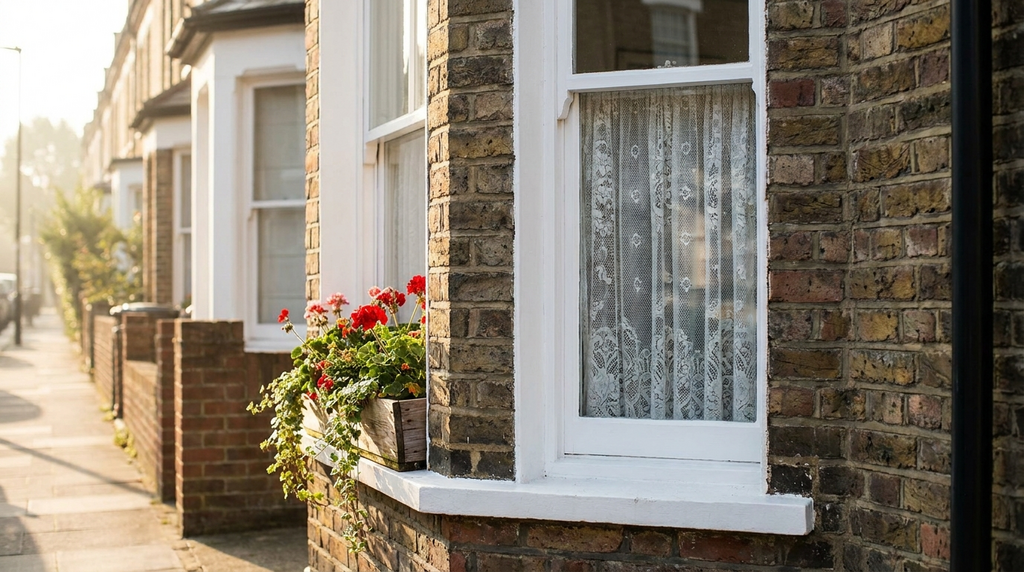
The classic Ashington colliery terrace typically has a front bay window or a simple flat-fronted façade, a rear kitchen window, and bedrooms above. These homes tend to have relatively standard window openings, which is actually good news, it keeps costs predictable and means most installers will quote confidently without needing a lengthy survey first.
Semi-detached properties on estates like Seaton Hirst, Woodhorn, and the areas around the former Wansbeck district tend to be 1960s to 1990s builds. Many of these already have double glazing fitted, but it may be original to the build, meaning 25 to 35 years old, well past the typical 20-year lifespan of sealed units. If your windows are misting up between the panes, that’s the tell-tale sign the seal has gone and the argon or air fill has been replaced by condensation.
A few specific things to keep in mind for Ashington properties:
- Brick reveals, older colliery terraces often have deep brick reveals around windows, which means installers need to use the right profile depth or add trims to achieve a neat finish
- Bay windows, common on pre-war terraces along Alexandra Road and similar streets, bays require angled frames and slightly more complex installation, adding cost
- Access, in tightly packed terraced streets, parking for an installer’s van and access to upper floor windows can be limited, occasionally requiring a small scaffold tower
- Lintel condition, in older properties, it’s worth having the lintel above windows checked before installation, particularly in homes built before 1930
- UPVC vs timber matching, if you’re in a conservation area or your property has existing timber frames, you may need to match profiles carefully
The good news is that Ashington has lower labour costs than most of England. The North East generally prices installation work 10 to 20% below the national average, which gives you good value even when jobs have a few complications.
How Much Double Glazing Costs in Ashington and the North East Area in 2026
Let’s get into the numbers, because vague estimates don’t help you budget. The figures below are based on typical Ashington property types, local labour rates, and current material costs as of 2026. They assume UPVC frames with A-rated double glazed units unless stated otherwise.
| Property Type | Windows Replaced | Ashington Cost (2026) | National Average | Notes |
|---|---|---|---|---|
| 2-bed colliery terrace | 4-5 windows | £2,800 – £3,800 | £3,200 – £4,500 | Standard flat-fronted, good access |
| 2-bed terrace with bay | 5-6 windows | £3,400 – £4,600 | £3,900 – £5,400 | Bay adds complexity and cost |
| 3-bed semi-detached | 6-8 windows | £3,800 – £5,200 | £4,500 – £6,200 | Typical 1960s-1990s estate home |
| 3-bed semi with conservatory | 7-9 windows + door | £4,500 – £6,400 | £5,200 – £7,500 | Common in Hirst and Woodhorn areas |
| Upgrade to triple glazing | Full house | Add £800 – £1,500 | Add £1,000 – £2,000 | Recommended for exposed aspects |
Ashington consistently prices around 12 to 18% below the national average for this kind of work, which puts it roughly in line with nearby Blyth and slightly cheaper than Morpeth (where higher property values push up trade prices). Cramlington and Whitley Bay tend to sit between the two.
Be cautious of very low quotes from installers who have driven a long way from outside the region, the travel overhead often comes back through hidden charges, and after-care is more difficult if something needs adjusting. Local installers who regularly work the Ashington-Blyth-Morpeth triangle typically offer better long-term support.
How Ashington’s Weather and Location Affect Your Double Glazing Choices
Ashington isn’t coastal in the way that Whitley Bay or Blyth are, but it’s close enough to the North Sea that winter weather here is noticeably harsher than, say, Hexham or Corbridge. Cold north-easterly winds track inland from the coast, and while Ashington doesn’t get the full salt-spray exposure of seafront properties, it does experience sustained cold spells and damp conditions that put real demands on window seals and frames.
Annual rainfall sits between 700 and 1,000mm, not extreme, but consistent throughout the year. That persistent moisture means frame quality matters a lot. Poorly fitted or low-quality UPVC can swell, warp slightly, and lose its seal over time if the installation isn’t done carefully. This is why getting warm-edge spacer bars rather than aluminium spacers is especially worthwhile here, aluminium conducts cold directly to the inner pane and promotes condensation on the glass edge, which accelerates seal degradation in damp climates.
Ashington’s sunshine hours are lower than the national average at 850 to 1,000 hours per year, which has a few implications:
- Solar gain through south-facing windows is a genuine winter bonus, don’t over-specify low solar-gain glass on south aspects
- North and east-facing rooms (the cold side of many Ashington terraces, often backing onto lanes or rear yards) benefit most from triple glazing or at minimum high-spec double
- Self-cleaning glass coatings are genuinely useful here, with less UV light to help dry moisture, north-facing panes can develop algae and grime quickly
Wind-driven rain is also a factor. Check that any installer you use quotes to BS 6375 standards for weather tightness, this British Standard covers exactly the kind of sustained wet and windy conditions Ashington experiences through autumn and winter.
The Products and Options That Actually Perform Well in Ashington
Generic advice says “get A-rated double glazing”, but here’s what actually makes sense for Ashington’s conditions and housing stock specifically.
For most colliery terraces and typical semi-detacheds: A 70mm UPVC profile with a five-chamber design, argon-filled double glazed units with a U-value of 1.2 W/m²K or better, and warm-edge spacer bars. This combination gives you solid thermal performance without over-engineering a home that doesn’t need it.
For north and east-facing aspects, or if your home is particularly exposed: Consider triple glazing on those elevations. A good triple-glazed unit achieves U-values of 0.6 to 0.8 W/m²K, roughly half the heat loss of standard double glazing. Given Ashington’s cold winters, the payback period on triple glazing is faster here than the national average calculations suggest.
Here are the product choices worth considering in detail:
- Frame material, UPVC remains the best value-for-money choice for Ashington’s housing stock. Timber is beautiful but requires more maintenance in wet climates; aluminium is premium and slim but loses heat faster unless it has a thermal break
- Glass specification, look for a Pilkington K Glass or equivalent low-E coating, which reflects heat back into the room rather than letting it escape
- Gas fill, argon is the standard; krypton-filled units offer better performance but are significantly more expensive and rarely worth it for most homes
- Spacer bars, Swisspacer or similar warm-edge options instead of aluminium, specifically to prevent edge condensation in damp conditions
- Energy Rating, aim for Window Energy Rating (WER) of A or A+ as a minimum; anything below B is a false economy given current energy prices
- Self-cleaning glass, worth the modest uplift cost for any north-facing windows, particularly on rear kitchen windows in Ashington’s back-to-back terrace layouts
How to Find a Trustworthy Double Glazing Installer Near Ashington
The double glazing industry has a complicated reputation, and not entirely unfairly. Here’s how to separate the genuinely good installers from the ones you’ll be calling back every six months.
The most important certification to check for is FENSA registration (or CERTASS as an alternative). All window installers in England are legally required to self-certify their installations meet Building Regulations, a FENSA or CERTASS registered installer does this automatically. If an installer isn’t registered with either, walk away, because you’ll need to pay for a separate Local Authority Building Control inspection yourself.
Beyond the legal minimum, look for:
- TrustMark accreditation, the government-endorsed quality scheme that covers installation standards and gives you dispute resolution if things go wrong
- Which? Trusted Trader status, useful additional signal of customer satisfaction
- Local references, any credible installer working the Ashington area should be able to point you to completed jobs in NE63, or nearby in Blyth or Morpeth
- Insurance-backed guarantees, the installer’s own guarantee is only as good as the installer. An insurance-backed guarantee (IBG) from a separate provider means you’re covered even if the company closes down
Most established installers in the Ashington area serve a cluster that covers Blyth, Morpeth, Cramlington, and sometimes out to Whitley Bay or Ponteland. This is normal and fine, it means they have enough local work to be sustainable. Be more cautious about national companies who send a closer depot’s team and have no real local presence.
Typical lead times in 2026 for the North East are 3 to 6 weeks from survey to installation. Anyone promising installation within a week should be questioned on whether stock is genuinely suitable for your property or just whatever they happen to have in the van.
Questions worth asking any installer:
- What is the U-value of the units you’re supplying
- Are the spacer bars warm-edge or aluminium
- Who manufactures your sealed units and where are they made
- What is your FENSA or CERTASS number
- Is the guarantee insurance-backed, and with which provider
- Can you provide two or three local references from the Ashington or Blyth area
Grants and Funding That Could Reduce Your Costs in 2026
This is where Ashington homeowners have a genuine advantage, the North East’s fuel poverty statistics, while concerning, have resulted in some of the most accessible retrofit funding in England. Here’s what’s available right now.
ECO4 (Energy Company Obligation, Phase 4), this is the big one. ECO4 requires large energy suppliers to fund energy efficiency improvements for lower-income and vulnerable households. Windows can be funded under ECO4, typically as part of a broader package of measures. You’re likely to qualify if you receive means-tested benefits (Universal Credit, Pension Credit, income-based ESA or JSA), or if your household income is under £31,000 and your home is EPC Band D or below, which covers a significant portion of Ashington homes. Apply through your energy supplier or via the government’s ECO4 referral route.
The Great British Insulation Scheme closed on 31 March 2026. It funded insulation measures only and never covered windows or glazing. It covers households in Council Tax bands A to D (which is most of Ashington), and focuses on single improvements rather than whole-house packages. Windows may qualify depending on your current EPC rating and the measures already in place.
Warm Homes: Local Grant, Northumberland County Council administers funding under the government’s Warm Homes programme, targeted specifically at fuel-poor households. Northumberland, given its rural pockets and former mining communities (Ashington very much included), has historically accessed strong allocations under predecessor schemes. Contact Northumberland County Council directly or check the council website for current eligibility, the scheme is income-linked and property-condition linked.
Warm Homes Fund (North East specific), the North East has several community and local authority-backed initiatives