Why Whitley Bay Homeowners Are Turning to Double Glazing Right Now
If you’ve walked along Whitley Bay’s seafront recently, you’ll know exactly what North Sea wind feels like cutting through a poorly insulated window. For the 36,000 people who call this part of Tyne and Wear home, energy efficiency isn’t an abstract concept, it’s the difference between a comfortable winter and a seriously expensive one.
Whitley Bay sits in one of England’s most fuel-poor regions. The North East consistently tops the national fuel poverty charts, and with average gas consumption here running at around 12,500 kWh per year, local households are spending more on heating than most of England. That’s pushing a lot of people to finally take action on draughty, single-glazed windows that have been on the to-do list for years.
There’s also a more immediate driver. The North Tyneside Council area has seen steady activity around retrofit programmes in recent years, and the conversation around EPC ratings is getting louder, especially for anyone thinking about selling or remortgaging. With most Whitley Bay homes sitting at Band D, double glazing is one of the most accessible upgrades you can make to nudge your rating upward and genuinely warm your home.
What Double Glazing Actually Involves for a Typical Whitley Bay Home
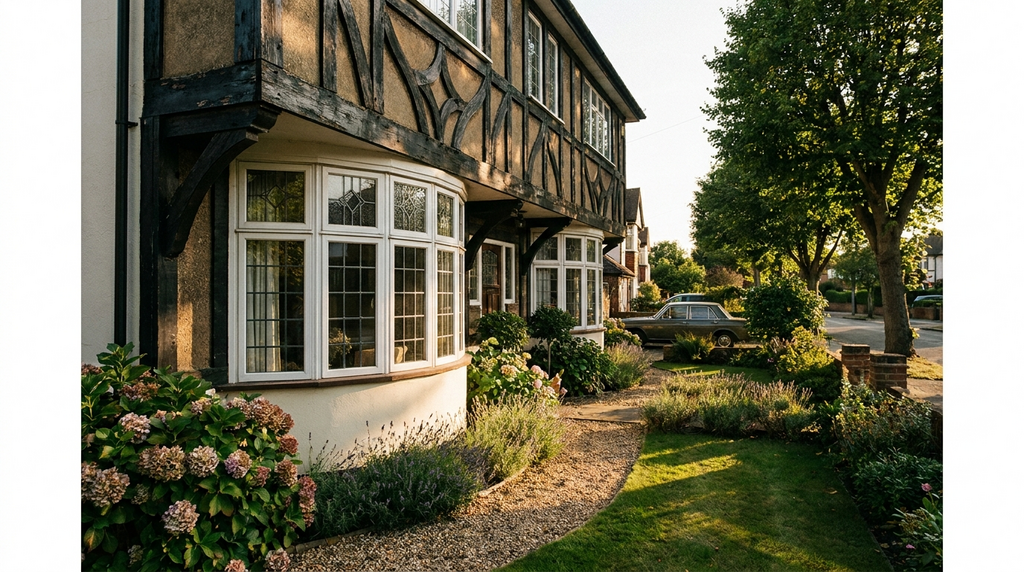
Whitley Bay’s housing stock tells its own story. Head inland from the coast and you’ll find long rows of Edwardian and inter-war terraces, the kind of solidly built brick properties that are brilliant in many ways but were never designed with thermal performance in mind. Around Rockcliffe Avenue, Hillheads Road, and the older streets near the town centre, bay windows, timber frames, and chunky reveals are the norm rather than the exception.
Semi-detached homes from the 1930s to 1960s dominate much of the residential spread further out, especially heading toward Monkseaton. These properties typically have standard-sized casement windows that are straightforward to replace, but the original timber frames may need attention before any new unit goes in. A good installer will always check the surrounding masonry and lintels, not just measure the opening.
For Edwardian terraces, the bigger challenge is often the bay window. These require specialist frames, usually a three-part or angled unit, and take considerably more time to survey and fit correctly. Don’t let anyone quote you on a bay window without coming to measure in person first.
A few practical things to know about Whitley Bay specifically:
- Access can be tight on older terraced streets, meaning installers occasionally need to carry frames through the house rather than crane or lift them over, factor in potential additional time costs
- Parking restrictions near the town centre and around the Metro station area can affect logistics for larger installation teams
- Older renders and pointing are common on 1920s–1940s properties here and may need repointing around new frames to prevent draughts getting in around the outside edge
- Sash windows appear in some of the older conservation-influenced streets, these need like-for-like or sympathetic replacements, not standard casements
How Much Double Glazing Costs in Whitley Bay and the North East in 2026
Good news first, labour costs in the North East are genuinely lower than the South East and London. You’re typically paying 10–15% less for the same job than someone in Surrey. Even so, the coastal location of Whitley Bay does have minor implications for material specifications (more on that in the next section), which can nudge costs upward slightly compared to an inland town like Cramlington or Blyth.
Here’s a realistic cost breakdown for common jobs in and around Whitley Bay in 2026:
| Window Type / Job | Whitley Bay Estimate | North East Average | National Average |
|---|---|---|---|
| Small casement window (single) | £380 – £520 | £360 – £500 | £420 – £600 |
| Standard casement window (single) | £480 – £680 | £460 – £650 | £520 – £750 |
| Bay window (three-panel) | £1,100 – £1,700 | £1,050 – £1,650 | £1,200 – £1,900 |
| Full house (terraced, 6–8 windows) | £3,200 – £4,800 | £3,000 – £4,600 | £3,500 – £5,500 |
| Full house (semi-detached, 8–10 windows) | £3,900 – £5,600 | £3,700 – £5,400 | £4,200 – £6,500 |
| Sash window replacement (single) | £750 – £1,100 | £720 – £1,050 | £850 – £1,300 |
| Tilt-and-turn window (single) | £520 – £750 | £500 – £720 | £580 – £850 |
These prices include supply, fitting, and removal of old frames. They do not include scaffolding if upper-floor access is complex, budget an extra £300–£600 if your installer flags this for first-floor work on taller Edwardian properties.
Always get three quotes. Installers based in Whitley Bay or nearby Tynemouth and North Shields will usually offer better value than a national chain with a Gateshead depot, simply because their travel time is shorter and they understand local housing stock.
How Whitley Bay’s Weather and Location Shape Your Window Choices
Whitley Bay is coastal in a very real way. Even if you don’t live on the seafront itself, properties within a mile or two of the North Sea coast experience noticeably higher salt-laden air exposure, stronger wind-driven rain events, and more dramatic temperature swings between seasons than somewhere like Cramlington or South Shields further inland.
This matters enormously when choosing window frames and hardware. Standard PVCu frames are generally fine, but opt for frames with reinforced steel inner sections (rather than lighter aluminium reinforcement) if you’re within 500 metres of the coast, the salt air can accelerate corrosion in cheaper hardware over time. Seals and gaskets also take more punishment here than in a sheltered town, so ask your installer about the warranty specifically covering coastal conditions.
The North East experiences around 1,800–2,200 heating degree days per year, that’s significantly more than the national average and means your windows spend a far longer portion of the year acting as the primary barrier against cold air. This makes the thermal performance of your glazing unit critically important, not just a nice-to-have.
Whitley Bay also gets its share of wind-driven rain. The prevailing south-westerlies combined with occasional north-easterly blasts mean windows on the east and north-east elevations of your home work particularly hard. Specify a minimum Weather Rating Class B3 or above (per EN 12211 standards) for any windows on your east-facing elevation, don’t just accept the standard specification without asking.
The flipside is that Whitley Bay gets reasonable summer sunshine, around 850–1,000 hours per year. This is actually useful context if you’re considering solar-control glazing for south-facing rooms, though for most properties here, the priority is unambiguously retaining heat rather than blocking it.
The Products and Specifications That Perform Best in Whitley Bay Conditions
Based on what actually works in coastal North East conditions, here are honest recommendations rather than a generic spec sheet:
Glazing Unit
Go for A-rated or A+-rated double glazing with a low-E coating and argon gas fill as your baseline. The low-emissivity coating reflects heat back into the room, this is the single most impactful upgrade over standard glazing in a cold climate like Whitley Bay’s. Don’t accept clear float glass without a low-E coating; it’s essentially being sold a product that underperforms from day one.
A centre-pane U-value of 1.0 W/m²K or below is what to aim for. Better units reach 0.7–0.8 W/m²K. Some installers will quote the glazing U-value, others the whole-window U-value, make sure you’re comparing like for like when getting quotes.
Frame Material
For the majority of Whitley Bay’s terrace and semi-detached stock, white PVCu with steel reinforcement is the practical choice, it’s thermally efficient, low maintenance, and suited to salty coastal air when properly specified. Avoid thin-walled or unbranded profiles from unknown manufacturers; they degrade faster in coastal conditions.
If you have an older property where appearance matters, particularly near the conservation influence of older Whitley Bay streets, woodgrain-effect PVCu in a grey or anthracite finish offers a more sympathetic look without the maintenance burden of actual timber.
Spacer Bars
This small detail makes a real difference in cold, damp conditions. Specify warm-edge spacer bars (often branded as Thermbar, Swisspacer, or similar) rather than the standard aluminium spacer. Aluminium conducts cold from the outside pane to the inside, warm-edge spacers dramatically reduce condensation around the edge of the glass and improve overall thermal performance.
Hardware and Seals
Stainless steel or chrome-plated ironmongery handles and hinges will outlast standard chrome in coastal air. It’s a small uplift in cost, typically £20–£40 per window, but worth every penny within a couple of hundred metres of the coast.
Finding a Trustworthy Double Glazing Installer Near Whitley Bay
The North East glazing market is busy, competitive, and, like anywhere, has both excellent local tradespeople and a handful of chancers. Here’s how to find the former and avoid the latter.
The Certifications That Actually Matter
- FENSA registration, this is non-negotiable for window replacements in England. FENSA-registered installers can self-certify compliance with Building Regulations, which means no separate council application needed. Always check the FENSA register online before booking anyone
- CERTASS, an alternative to FENSA, equally valid and widely used in the North East
- TrustMark, a government-endorsed quality scheme that adds another layer of accountability
- Which? Trusted Traders, genuinely useful for local installer vetting
Questions to Ask Before You Sign Anything
- Are you FENSA or CERTASS registered, and will you provide the certificate on completion
- What U-value are the glazing units, and do they include warm-edge spacers
- How do you handle disposal of old frames, is this included in the price
- What’s the warranty on frames, glass units, and hardware separately
- Can you provide two or three references from jobs completed locally in the past year
Coverage and Lead Times
Most quality installers operating in Whitley Bay also cover Tynemouth, North Shields, South Shields, and across to Blyth, this is a natural service cluster for the area. Lead times in the North East are currently running at 4–8 weeks for a full house job from a reputable installer, so don’t be pushed into a rushed decision by anyone claiming they can start next week.
Red flags to watch for: high-pressure same-day-only pricing, no physical business address, requests for more than 25–30% deposit upfront, or any resistance to putting specifications in writing before you sign.
Grants and Funding Available to Whitley Bay Residents in 2026
This is where living in the North East actually works in your favour. The region attracts disproportionate retrofit funding, and North Tyneside has been active in channelling this toward local homeowners.
ECO4 (Energy Company Obligation)
ECO4 can fund window upgrades as part of a broader energy efficiency package. To qualify, you typically need to be receiving a qualifying benefit (Universal Credit, Pension Credit, Child Tax Credit, and others) or have a low household income. Properties with an EPC of D or below, which covers most of Whitley Bay, are eligible. Contact North Tyneside Council’s energy advice team to check eligibility and get referred to an approved supplier.
Great British Insulation Scheme (GBIS)
The Great British Insulation Scheme closed on 31 March 2026. It funded insulation measures only and never covered windows or glazing. Eligibility criteria are similar to ECO4 but extend to a slightly broader income band. Again, North Tyneside Council is the starting point for applications via their Warm Homes service.
Warm Homes Plan (North East)
The North East Combined Authority has committed funding through the national Warm Homes Plan, administered locally. This is particularly relevant for owner-occupiers in fuel poverty and can contribute to window replacement costs as part of a whole-home assessment. Given the North East’s fuel poverty context, eligibility rates here are higher than the national average, it’s genuinely worth applying even if you’re not certain you qualify.
North Tyneside Council Assistance
North Tyneside Council runs periodic home improvement schemes and can direct you to the right referral pathway. Their warm homes and retrofit advice line is the best first call, they’ll assess your eligibility across multiple schemes simultaneously rather than making you apply for each one separately.
If you’re not eligible for grant funding, it’s still worth asking your installer about interest-free finance options, many reputable North East firms now offer 0% over 12–24 months, making a full-house upgrade more manageable.
Planning Permission and Regulations for Double Glazing in Whitley Bay
For most Whitley Bay homeowners, the straightforward answer is that you don’t need planning permission to replace your windows with double glazing. Under permitted development rights, like-for-like window replacements in standard residential properties are permitted without a formal application.
However, there are some important local nuances to know about:
Conservation Areas
Parts of Whitley Bay, particularly around some of the older streets and the Spanish City area, fall within conservation area designations or have Article 4 Directions that restrict permitted development rights. If your property is within a conservation area, you may need to apply for planning permission even for window replacements. North Tyneside Council’s planning portal lets you check your property address directly. The