Why Richmond Homeowners Are Turning to Double Glazing Right Now
There’s something particular happening in Richmond at the moment. With energy bills still biting and the borough’s housing market remaining one of the most competitive in Greater London, homeowners across Kew, Ham, Petersham and East Sheen are looking hard at what they can do to protect both their comfort and their property value. Double glazing sits squarely at the top of that list.
Richmond upon Thames is already ahead of the national average on energy efficiency, the average EPC rating here sits at Band C, which is genuinely impressive compared to much of England. But “ahead of average” doesn’t mean the job is done. If your home is still on single glazing, or you’ve got ageing double glazing from the 1990s that’s lost its argon fill and developed condensation between the panes, you’re leaving real money on the table. This is about going from good to great.
There’s also a very Richmond-specific driver here: the cold easterly winds that sweep across the Thames valley in winter. Because of Richmond’s position in south-west London, those easterly blasts hit exposed elevations hard, particularly on homes near Richmond Park, along the river at Twickenham, and on the open estates around Whitton. Poor glazing on east-facing windows lets that cold air transfer straight into your living rooms. Good double glazing, specified correctly, makes a dramatic difference.
What Double Glazing Actually Involves for a Typical Richmond Home
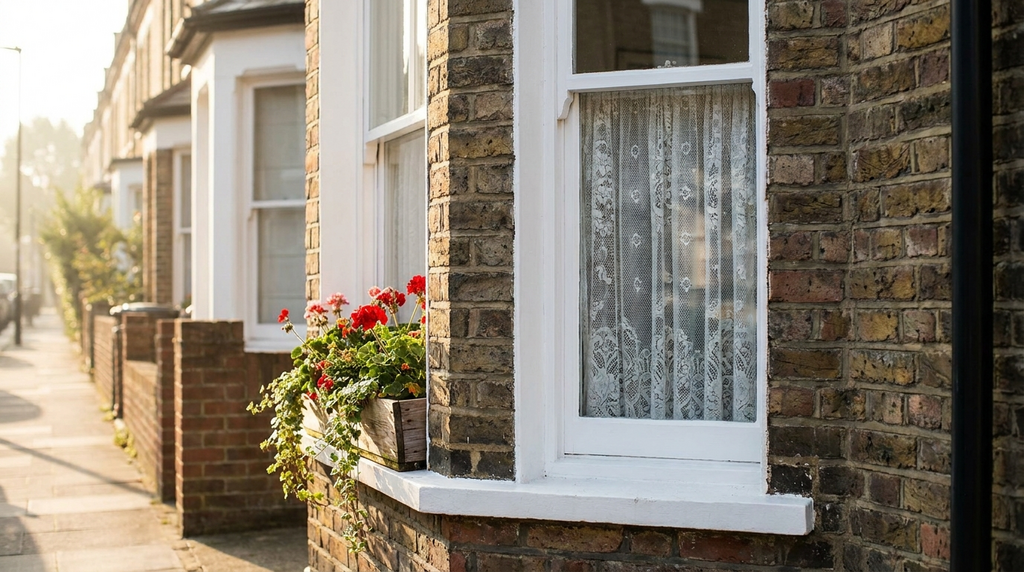
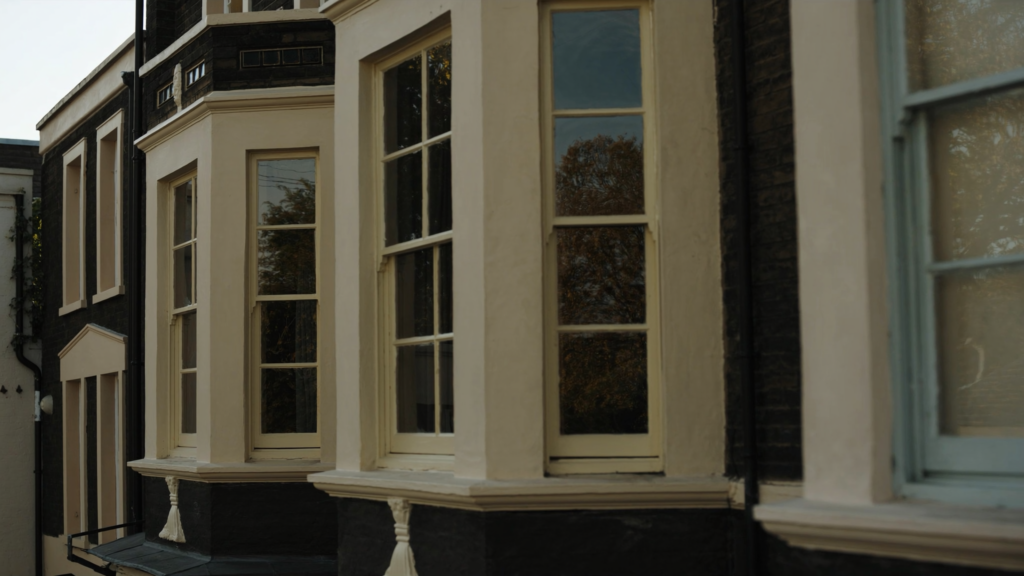
Richmond’s housing stock is dominated by semi-detached and detached homes, many of them built during the interwar period (1920s–1940s) and the post-war decades. You’ll see a lot of this in areas like North Sheen, Kew Gardens village, and the residential streets running off Richmond Hill. These properties typically have timber frames with larger bay windows, which creates both opportunity and complexity for double glazing installation.
Those bay windows are a case in point. A standard bay on a 1930s semi might involve three separate frames at different angles, and getting a proper draught-free seal around each one requires more skill than a straightforward rectangular casement. Not every installer gets this right. Make sure whoever you hire has specific experience with angled bays and timber subframes.
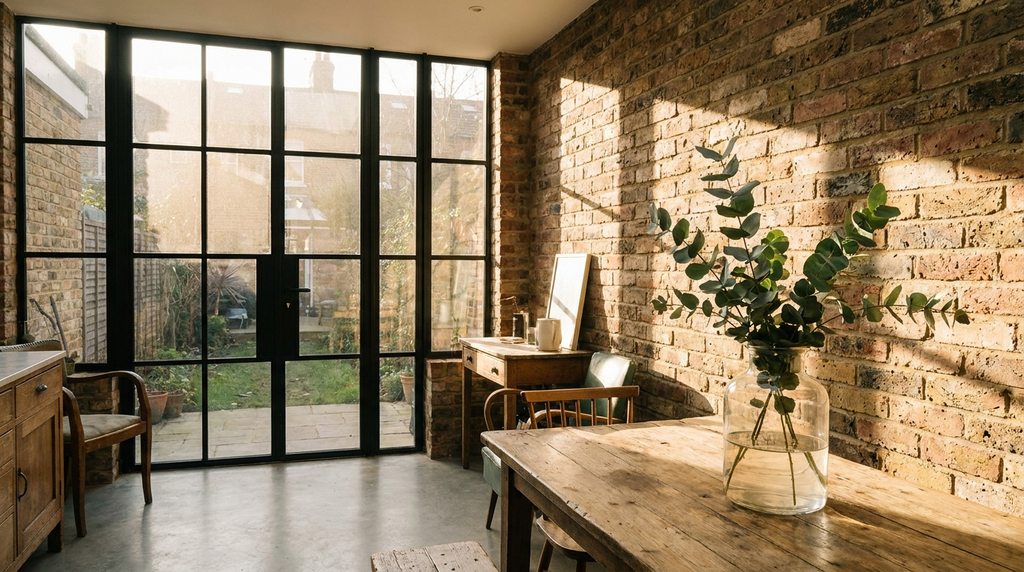
Detached homes in the Petersham and Ham areas often have original Crittall steel-framed windows, those slim, elegant metal frames that defined 1930s architecture. These are a specific challenge because the steel profiles are much narrower than modern uPVC, and any replacement needs to either match the profile closely or be approved by the local authority if you’re in or near a conservation area. More on that shortly.
Key installation challenges specific to Richmond:
- Bay window geometry on interwar semis requiring precision measuring and custom fabrication
- Crittall and steel frame originals common in detached properties
- Restricted parking and access on residential streets in East Sheen and Kew, adding time and cost
- Large proportion of properties within or adjacent to conservation areas
- ULEZ and congestion-adjacent routes affecting installer logistics and pricing
The good news is that Richmond has excellent installer coverage, local companies based here and in neighbouring Hounslow, Chiswick, and Ealing (all within six miles) compete for this market, which generally keeps quality standards up.
How Much Double Glazing Costs in Richmond and the London Area in 2026
Let’s be straight with you: double glazing in Richmond costs more than in most of England. London labour rates run 15–25% above the national average, parking fines and ULEZ charges get factored into quotes, and access on some of Richmond’s narrower residential roads means additional time on site. Here’s what you can realistically expect to pay.
| Property Type and Scope | Richmond / London Area | National Average | Difference |
|---|---|---|---|
| 2-bed semi, 6–8 windows (uPVC) | £3,800–£5,200 | £3,000–£4,200 | +20–25% |
| 3-bed semi, 8–10 windows (uPVC) | £5,000–£7,000 | £4,000–£5,800 | +20–22% |
| 4-bed detached, 10–14 windows (uPVC) | £7,000–£10,500 | £5,500–£8,500 | +18–25% |
| 3-bed semi, 8–10 windows (composite or aluminium) | £8,500–£13,000 | £7,000–£11,000 | +15–20% |
| Bay window replacement (per unit, uPVC) | £950–£1,600 | £750–£1,300 | +20–25% |
| Triple glazing upgrade (per window, additional cost) | +£150–£300 per window | +£100–£250 per window | +10–20% |
Compared to neighbouring Hounslow and Chiswick, Richmond tends to run slightly higher, not enormously, but installation teams factor in the parking difficulty around Richmond town centre and roads near Richmond Park. Ealing prices tend to be marginally lower due to better van access and less conservation area complexity.
One practical tip: installers based in Twickenham often cover Richmond as part of their local patch and tend to be very competitive compared to firms travelling in from further afield. Always get at least three quotes, and ask specifically whether the quote includes removal and disposal of existing frames.
How Richmond’s Weather and Location Shape Your Double Glazing Choices
Richmond sits in southern England with better-than-average sunshine, around 1,200–1,500 hours per year and solar irradiance of roughly 1,100–1,200 kWh per square metre annually. That’s the best solar resource in the UK. This matters for double glazing because it means south-facing windows in Richmond actually bring meaningful passive solar gain through winter, which can genuinely reduce your heating demand.
What this means practically is that you don’t necessarily want the most aggressively low solar gain glass on south-facing elevations. A moderate solar heat gain coefficient (SHGC) on south-facing windows lets the winter sun do useful work for you. Many installers default to the same spec regardless of orientation, push back on this and ask for orientation-specific recommendations.
The easterly wind exposure is the other major factor. Homes on exposed plots near Richmond Park, or on elevated ground above the Thames, see notably higher wind-driven infiltration in winter. Here, the quality of the seal and frame installation matters as much as the glass specification. A well-fitted uPVC frame with a proper perimeter seal will outperform a poorly fitted premium composite frame every time.
Richmond’s rainfall is actually relatively low at 500–700mm per year, drier than most of the UK. This is good news for frame longevity and means you’re less likely to see early seal failure or water ingress compared to wetter regions. It also means timber frames, if well maintained, can perform well here, though most homeowners replacing old windows opt for low-maintenance uPVC or aluminium.
The Products and Options That Actually Perform Well in Richmond Homes
Given everything above, the interwar housing stock, the solar potential, the easterly exposure, and the conservation area considerations, here’s an honest expert view on what to specify.
For most 1930s semis and post-war detached homes:
- White uPVC casement windows with a U-value of 1.2 W/m²K or better (current Building Regs require 1.4, but aim higher)
- Argon-filled units as standard, avoid any installer who tries to charge extra for argon as a “premium upgrade”
- Moderate solar gain glass (SHGC around 0.35–0.45) on south elevations, low-e hard coating on north and east-facing windows
- A-rated or A+-rated energy rating from the British Fenestration Rating Council (BFRC)
For properties in conservation areas or where aesthetics matter:
- Slim-profile aluminium frames that replicate the Crittall look, companies like Residence Collection or Selecta offer uPVC profiles that genuinely mimic traditional steel
- Flush casement designs rather than traditional ovolo profiles, which sit more sympathetically on interwar architecture
- Woodgrain foil finishes in charcoal or grey tones, which are extremely popular on Richmond’s period properties and hold their appearance well in this drier climate
Is triple glazing worth it in Richmond?
Honestly, for most Richmond homes, the answer is no, not as a standard upgrade. With milder winters averaging 1,200–1,500 heating degree days, the marginal improvement from triple over high-performance double glazing rarely justifies the extra £150–£300 per window. Triple glazing makes more sense on exposed north-facing elevations, in rooms with persistent condensation problems, or if you’re also adding a home extension and want to future-proof the specification.
How to Find a Trustworthy Double Glazing Installer Near Richmond
Richmond and the surrounding towns, Hounslow, Chiswick, Twickenham, Ealing, have a healthy ecosystem of glazing companies, which means you have genuine choice. But that also means variable quality. Here’s how to separate the good from the mediocre.
Certifications that actually matter:
- FENSA registration, legally required for window replacements in England. Without it, your installer can’t self-certify the work complies with Building Regulations, and you’ll have problems when you sell. Always verify this at fensa.org.uk before signing anything.
- TrustMark accreditation, the government-backed quality scheme. More meaningful than company-owned “approved” badges.
- Which? Trusted Trader, well-regarded for consumer protection and particularly useful for bigger jobs
Questions worth asking before you commit:
- Have you installed on properties in conservation areas in Richmond borough before, and can you show me examples?
- What U-values do your standard units achieve, and can I see the BFRC certificate?
- Is argon fill included as standard, and how is the unit sealed?
- What’s your warranty on both the glass unit and the frame separately?
- Do you handle the Building Regulations notification through FENSA yourself?
Lead times in London currently run 4–8 weeks from order to installation for most residential jobs. Avoid any company promising installation within two weeks on bespoke measured units, it’s a red flag for corners being cut on manufacturing.
Red flags to watch for: pressure to sign on the day, “today only” discounts, no physical address listed, and quotes that don’t break down materials versus labour. Legitimate installers in this market are busy enough that they don’t need high-pressure tactics.
Grants and Funding That Could Reduce Your Costs in 2026
Here’s the honest picture on grants for double glazing in Richmond right now.
ECO4 (Energy Company Obligation), This scheme funds energy efficiency improvements for low-income or vulnerable households. Double glazing can be covered, but only as part of a broader package of measures and typically only where the property is in a low EPC band (D or below). Given Richmond’s above-average Band C rating, most homeowners here won’t qualify, but if your home is Band D or lower, it’s absolutely worth checking eligibility through your energy supplier or Richmond Council’s referral route.
The Great British Insulation Scheme closed on 31 March 2026. It funded insulation measures only and never covered windows or glazing. Targeted at lower-income households and lower-rated properties. Contact Richmond upon Thames Council’s energy advice service for a referral assessment.
Glazing is standard-rated for VAT at 20%. The zero rate for energy-saving materials covers insulation, heat pumps and solar panels; HMRC names secondary and double glazing as excluded (VAT Notice 708/6).Glazing is standard-rated for VAT at 20%. The zero rate for energy-saving materials covers insulation, heat pumps and solar panels; HMRC names secondary and double glazing as excluded (VAT Notice 708/6). On a £6,000 job, that’s £1,200 you’re not paying. Make sure your installer applies this correctly on their quote.
London-specific support, The Mayor of London’s Warmer Homes scheme provides grants for eligible low-income Londoners for energy efficiency measures including glazing. Richmond upon Thames residents can apply through the council’s referral pathway. Eligibility is income-tested, and the process involves a home assessment, but grants of £5,000–£25,000 are available for qualifying properties.
Cashback and green mortgages, If you’re remortgaging, a growing number of lenders now offer green mortgage rates with cashback for improvements that raise your EPC rating. Upgrading from ageing single glazing to modern double glazing can contribute to an EPC band improvement, which unlocks these products.
Planning Permission and Local Regulations in Richmond Borough
For most semi-detached and detached homes in Richmond, replacing existing windows with double glazing is covered by permitted development rights, meaning no planning application is needed, provided you’re using similar materials and the frames are a like-for-like replacement in appearance and size.
However, Richmond upon Thames is notable even by London standards for the extent and strictness of its conservation area designations. Significant parts of Kew, Richmond Hill, Petersham, and Ham are designated conservation areas, and there are also numerous Article 4 directions in place that remove permitted development rights in specific streets and estates. In these areas, you will need planning permission for window replacements, and Richmond Council’s planning department takes a genuinely active interest in the materials and profiles used.
If your property is in a conservation area, you should:
- Check the Richmond upon Thames Council planning portal to confirm your street’s status before spending anything with an installer
- Speak to the council’s duty planning officer, they’re generally helpful and will tell you what profile and material will and won’t get approved
- Get a pre-application planning enquiry in writing if there’s any doubt
- Use an installer with specific prior experience of Richmond conservation area approvals
Listed buildings require listed building consent for any window replacements, full stop. If your home is listed (there are a significant number in Ham and Petersham), secondary glazing rather than replacement double glazing is often the only approved route, this is worth knowing upfront so you’re not quoting for work that won’t get permission.
For straightforward replacements outside conservation areas, your FENSA-registered installer handles the Building Regulations compliance notification automatically. You’ll receive a FENSA certificate within a few weeks of completion, which you keep with your property documents and present when you sell.
What You’ll Actually Save, Realistic Numbers for Richmond in 2026
With Richmond’s average gas usage at 10,500 kWh per year (close to the national median) and the typical home already at Band C, let’s be honest about what double glazing will and won’t do for your bills.