Why Chiswick Homeowners Are Turning to Double Glazing Right Now
There’s a particular kind of draughty misery that Chiswick residents know well. You’re sitting in your Victorian terrace off Turnham Green, the wind is coming in off the Thames from the east, and your single-glazed sash windows are doing approximately nothing to keep the cold out. It’s not dramatic weather, Chiswick rarely is, but that persistent chill costs you real money every winter.
What’s driving the surge in double glazing enquiries across W4 right now is a combination of factors that are very specific to this corner of west London. Energy bills remain stubbornly high, and while Chiswick homes already sit at a respectable average EPC Band C, a lot of that rating is propped up by good boilers and decent loft insulation. The windows, in many cases, are still where the heat quietly escapes.
The other big driver is noise. Chiswick sits sandwiched between the A4, the North Circular, and the Heathrow flight path. Acoustic double glazing is as much about sanity as it is about energy efficiency for many households here, particularly those in flats along the high road or near the Gunnersbury interchange.
Add to that the fact that Chiswick property values are among the highest outside Zone 1, and suddenly spending £8,000 on quality double glazing looks like a sound investment rather than an expense. Done well, it adds tangible value to homes that are already worth protecting.
What Double Glazing Actually Involves for a Typical Chiswick Home
Chiswick’s housing stock is overwhelmingly Victorian and Edwardian terraced housing, with a significant number of purpose-built flats from the interwar and postwar periods, particularly around Gunnersbury, Duke’s Meadows, and the developments near Chiswick Business Park. These different building types each come with their own double glazing quirks.
Victorian and Edwardian Terraces
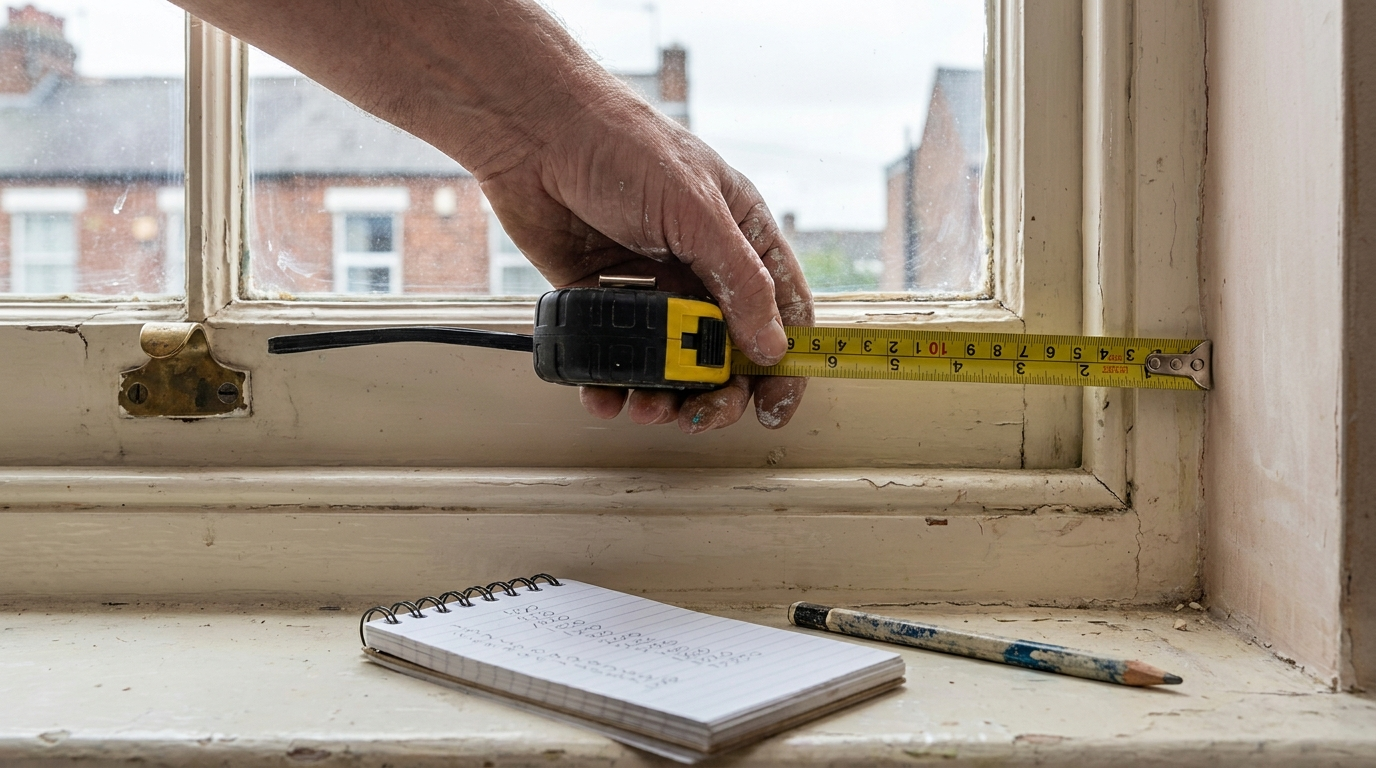
The classic Chiswick terrace, think the streets around Chiswick Common, or the roads running between the High Road and the river, typically has timber sash windows. These can be double glazed, but the approach matters enormously. Many original sash boxes are too narrow to accommodate a standard 28mm sealed unit, so installers often use a slimline 4-6-4mm profile instead. Done badly, this looks jarring. Done well, it’s virtually indistinguishable from the original.
Timber window replacement is slower and more skilled than swapping out standard frames, which is partly why Chiswick installation times tend to run a day or two longer than the national average. Expect four to six working days for a full house rather than the two to three days you might see quoted for a modern detached property.
Purpose-Built Flats
If you’re in a leasehold flat, which applies to a large chunk of Chiswick residents, you’ll need written consent from your freeholder before any windows can be replaced. This is a formal requirement. Some freeholders in Chiswick insist on specific frame colours or profiles to maintain visual uniformity across a block, and a few purpose-built blocks have restrictive covenants that slow things down considerably.
Ground-floor access is generally fine, but upper-floor flats in blocks without scaffolding provision can add meaningful cost. Always check whether your installer has experience working in managed blocks, it’s a different process from a standard house job.
Parking and Access, a Genuinely London-Specific Problem
This one gets underestimated constantly. Chiswick’s residential streets have limited parking, and installer vans often need to park within a few metres of your front door to offload glass units safely. Many installers will need to apply for a temporary parking suspension (around £80–£120 per day from Hounslow Council), and that cost typically gets passed on to you. Always ask about this upfront, it’s not a hidden cost if you ask, but it rarely appears in initial quotes.
How Much Double Glazing Costs in Chiswick and the London Area in 2026
London pricing for double glazing sits roughly 15–25% above the national average, and Chiswick is no exception. Access challenges, ULEZ compliance costs for installer vans, and the higher cost of skilled labour in this part of west London all contribute. Here’s what you can realistically expect to pay in 2026.
| Property Type | Number of Windows | Standard uPVC | Timber or Aluminium | Acoustic Upgrade |
|---|---|---|---|---|
| One-bedroom flat | 4–6 | £2,800–£3,800 | £4,200–£5,600 | Add £400–£600 |
| Two-bedroom flat | 6–8 | £3,600–£5,000 | £5,500–£7,200 | Add £600–£900 |
| Mid-terrace (3 bed) | 8–12 | £5,200–£7,500 | £7,800–£11,000 | Add £800–£1,400 |
| End-terrace (4 bed) | 12–16 | £7,000–£10,000 | £10,500–£15,000 | Add £1,200–£2,000 |
For comparison, the same mid-terrace job in Hammersmith typically comes in at similar prices due to the same labour market, while Ealing and Richmond can be very slightly cheaper simply due to easier parking and access. Prices across this cluster of boroughs are broadly comparable, but Chiswick’s conservation area streets (more on that below) can push costs higher due to the planning and product requirements involved.
Insider tip, get three quotes, and make sure at least one comes from an installer who regularly works in W4 specifically. An installer based in, say, outer Ealing may quote lower but charge more once they factor in parking suspensions and conservation area compliance they haven’t priced for.
How Chiswick’s Weather and Location Affect Your Double Glazing Choices
Chiswick’s climate is gentle by UK standards, milder winters than most of the country, decent sunshine hours (around 1,200–1,500 hours a year), and relatively low rainfall (500–700mm annually). You’re not fighting the elements the way someone in the Peak District is. But there are two specific local factors that should genuinely shape your product choices.
Cold Easterly Winds in Winter
Chiswick sits on a broadly east-west axis along the Thames, and in winter, cold easterly winds can be surprisingly biting. Properties on the eastern sides of houses, your rear extensions, your back bedrooms, face more direct cold air exposure than the national average for southern England would suggest. This makes the gap specification in your sealed units worth thinking about. A 16mm argon-filled gap outperforms the cheaper 12mm units in sustained cold wind conditions, and the price difference is modest (typically £30–£50 per window).
The Thames and Condensation Risk
Living this close to the river means ambient humidity is higher than you might think, particularly in the riverside wards near Duke’s Meadows and Strand-on-the-Green. High-quality warm-edge spacer bars in your sealed units are not optional here, they dramatically reduce the internal condensation that plagues cheaper units in humid conditions. Ask specifically whether your quote includes warm-edge spacers or standard aluminium spacers. The difference is visible within a few winters.
Solar Gain, an Underrated Bonus
Chiswick gets excellent solar irradiance for a UK location (around 1,100–1,200 kWh/m² per year). South-facing rooms in your terrace can benefit meaningfully from solar gain through double glazing in winter, reducing your heating demand passively. If your living room faces south, consider specifying glass with a slightly higher solar factor on those windows rather than defaulting to the lowest solar gain product across the board.
The Products and Options That Actually Perform Well Here
Given Chiswick’s mix of conservation aesthetics, acoustic needs, and riverside humidity, here’s what genuinely works rather than what looks impressive in a showroom brochure.
- Slimline double glazed sash windows in timber or engineered timber, for Victorian terraces, these are worth the premium. Accoya wood or engineered timber profiles hold their shape better in the variable humidity near the Thames and look right on period properties. Specify a U-value of 1.4 W/m²K or better.
- Acoustic laminated glass for road-facing windows, if you’re on or near the A4, Chiswick High Road, or under a flight path, a 6.8mm acoustic laminate on the inner pane makes a dramatic difference. This is not the same as simply adding extra thickness, look for a specialist acoustic interlayer.
- Argon-filled 16mm cavities with warm-edge spacers, the standard spec for Chiswick conditions. Achieves U-values of around 1.1–1.2 W/m²K for the unit itself.
- Anthracite grey or heritage green aluminium for newer flats, many postwar and more recent Chiswick flats look excellent with slim aluminium frames in contemporary colours. These perform well thermally if you specify thermally broken profiles.
- Triple glazing, worth discussing but not essential, given Chiswick’s relatively mild winters and already reasonable EPC ratings, triple glazing rarely delivers a payback period under 20 years on energy savings alone. It does help with acoustics though, so if noise is your main driver, it’s worth costing up.
How to Find a Trustworthy Double Glazing Installer Near Chiswick
The London double glazing market includes some excellent local companies and, frankly, some operators who rely on high-pressure tactics and vague guarantee terms. Here’s how to sort the good from the rest.
Certifications to Look For
- FENSA registration, this is the essential baseline. A FENSA-registered installer self-certifies that their work meets Building Regulations, saving you the hassle of a local authority inspection. Always check the FENSA register directly at fensa.org.uk rather than taking the installer’s word for it.
- TrustMark accreditation, government-endorsed quality scheme. More rigorous vetting than many alternatives.
- CERTASS, an alternative to FENSA, equally valid, less well-known but perfectly reputable.
Questions Worth Asking Before You Sign Anything
- Have you worked in Chiswick’s conservation areas before, and can you confirm whether my property needs planning permission
- What is your process for managing parking restrictions on my street
- What spacer bar specification are you quoting, warm-edge or aluminium
- Who manufactures your sealed units and what is the glass unit guarantee period
- Is your guarantee backed by an insurance-backed warranty scheme
Most reputable installers serving Chiswick will also cover Hammersmith, Ealing, Richmond, and Kensington, the typical coverage zone for a west London specialist. Installers who cover this cluster of boroughs tend to have better familiarity with conservation area requirements than those who occasionally venture in from further out.
Red flag to watch for, any quote that arrives without a site survey, or a salesperson who insists the special offer expires tonight. Reputable installers in this market do not operate like this.
Grants and Funding That Could Reduce Your Costs in Chiswick in 2026
The honest picture here is that double glazing as a standalone measure attracts less grant funding than measures like heat pumps or insulation. But there are legitimate routes to financial support worth exploring.
ECO4 Scheme
The Energy Company Obligation (ECO4) scheme can cover double glazing costs for eligible low-income households or those receiving certain means-tested benefits. Eligibility is based on household income and benefit status rather than geography. If your property is EPC Band D or below and you receive Universal Credit, Housing Benefit, or similar support, you may qualify for fully or partially funded glazing. Contact your energy supplier directly or use the government’s Simple Energy Advice service to check eligibility.
Great British Insulation Scheme (GBIS)
The Great British Insulation Scheme closed on 31 March 2026. It funded insulation measures only and never covered windows or glazing. Hounslow Council administers referrals locally, it’s worth contacting their energy efficiency team to see whether any live funding streams apply to your circumstances.
London-Specific Support
The Mayor of London’s Warmer Homes scheme offers grants of up to £10,000 for eligible households on low incomes to improve energy efficiency, including glazing as part of a broader improvement package. As of 2026, this scheme is operating through the London Energy Efficiency Fund delivered locally via Hounslow. Check the Mayor of London’s energy website and search under retrofit funding for the current application status.
Realistic Expectations
If you’re a homeowner on an average Chiswick income with a Band C-rated property, direct grant funding for double glazing alone is unlikely unless you fall into a low-income category. The better financial case here is the energy saving itself, and the property value argument, which in Chiswick’s market is genuinely compelling.
Planning Permission and Conservation Area Rules in Chiswick
This is where Chiswick gets genuinely complicated compared to many other London boroughs, and it’s worth understanding before you get too far into the process.
Chiswick falls within the London Borough of Hounslow. The borough has several designated conservation areas that directly affect double glazing installation, and Chiswick has more than its fair share of them. The Chiswick House and Gardens Conservation Area, the Bedford Park Conservation Area, the Strand-on-the-Green Conservation Area, and the Grove Park Conservation Area all apply restrictions that go beyond standard permitted development rights.
What This Means in Practice
- In most conservation areas in Chiswick, replacing windows that are already in the original style (such as traditional sash windows) with like-for-like equivalents in the same material and profile does not require planning permission, but changing the style, material, or opening mechanism typically does.
- If your property is a listed building (there are several in the Strand-on-the-Green and Bedford Park areas), Listed Building Consent is required for any window replacement, full stop. This is a separate and more involved process than standard planning permission.
- For flats within conservation areas, permitted development rights are more restricted than for houses. Any alteration to a flat’s external appearance, including windows, may require prior approval.
Always check with Hounslow’s planning portal before instructing an installer. A pre-application enquiry costs around £45 and could save you from a very expensive mistake. Good local installers will know the conservation area boundaries well, it’s a reasonable test of