Why Bedford Homeowners Are Looking at Double Glazing Right Now
There’s a particular kind of cold that settles over Bedford in January and February, not the damp, grey chill of the west coast, but a sharp, biting cold that sweeps in from the east across the flat Bedfordshire countryside. Those easterly winds cut straight through older single-glazed windows, and Bedford has plenty of those. With average EPC ratings sitting at Band D across the borough, thousands of homes here are losing heat through inefficient windows every single winter.
Warmth is a key factor, but there is also strong demand for double glazing installation across Bedford and its surrounding areas. Bedford has seen a steady wave of owner-occupiers upgrading Victorian and Edwardian terraces, particularly around the Poets quarter, Queens Park, and the older streets north of the town centre, as people move in, renovate, and want their period properties to actually perform well. Add to that the rising number of homeowners coming off fixed-rate mortgages and suddenly very aware of energy bills, and the demand for double glazing installation has been unusually strong across Bedford and its surrounding areas.
The good news is that Bedford sits in a sweet spot. Labour costs here are noticeably lower than in Cambridge or Milton Keynes, there’s solid installer coverage across the borough, and the local climate actually makes certain glazing solutions exceptionally effective. If you’ve been thinking about double glazing, the 2026 context makes it one of the smarter home improvement decisions you can make right now.
What Double Glazing Actually Involves for a Typical Bedford Home
Most Bedford homes fall into one of two categories, the interwar and Victorian semis that stretch across areas like Kempston, Brickhill, and Newnham, or the post-war terraces and estates built in the 1950s through to the 1980s that make up large parts of the town’s suburban spread. Each type has its own installation quirks.
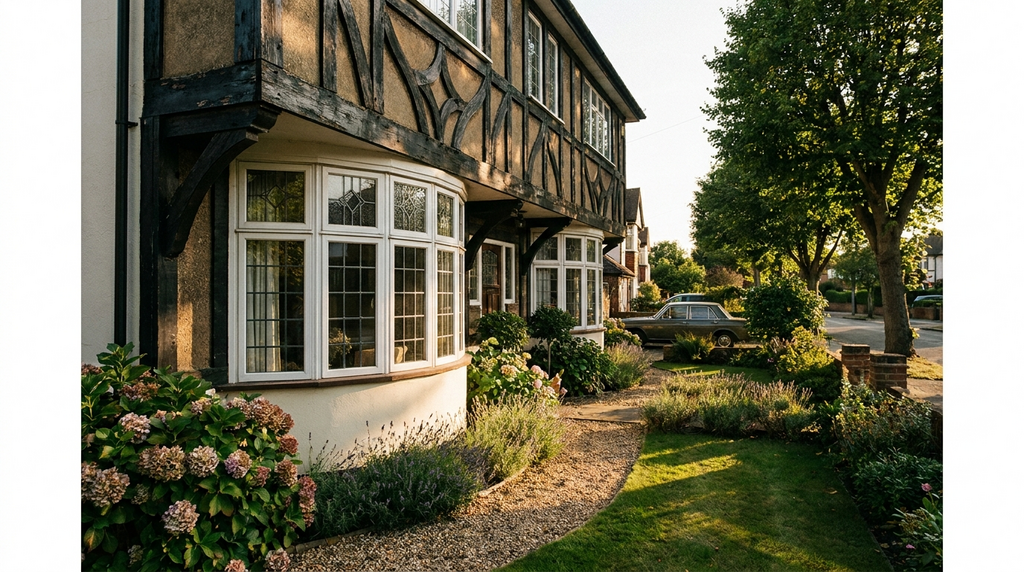
Victorian and Edwardian properties, common in Queens Park and the streets running off Kimbolton Road, typically have bay windows, sash windows, and deep reveals in solid brick walls. These require more careful measurement, often bespoke frame sizes, and sometimes specialist sash-style double glazed units if you want to maintain the character of the property. Don’t let anyone tell you this is straightforward, it takes a skilled installer who’s worked on this era of housing.
The 1930s semis that are so prevalent around Putnoe and Goldington tend to have steel Crittall-style windows or later timber frames, often with a mix of front bay and side casement windows. These respond well to standard uPVC replacement but do benefit from careful draught-sealing around the reveals, especially where older plasterwork has moved over the decades.
Post-war estates, think the housing around Wootton and the outer Kempston estates, often already have some form of double glazing that’s now 20 or more years old. First-generation sealed units from the late 1990s and early 2000s lose their gas fill over time and can develop failed seals with visible misting. Replacing these with modern A-rated or A+ rated units makes a genuinely significant difference to both heat retention and noise reduction.
One practical consideration specific to Bedford’s denser neighbourhoods is access and parking. On narrower terraced streets in the town centre, installers need to plan for skips, vans, and material deliveries, which can add time and occasionally a small logistics surcharge to your quote. It’s worth flagging this when you call for estimates.
How Much Double Glazing Costs in Bedford and the East of England Area in 2026
Bedford sits roughly in the middle of the regional cost spectrum, cheaper than Cambridge and the southern commuter towns, slightly more expensive than Wellingborough or Corby. Here’s a realistic breakdown of what you should expect to pay in 2026:
| Property Type | Number of Windows | Standard uPVC (A-rated) | Premium uPVC or Composite | Timber or Aluminium |
|---|---|---|---|---|
| Mid-terrace (Bedford town) | 6–8 | £3,200–£4,800 | £5,000–£6,500 | £6,500–£9,000 |
| Semi-detached (3-bed) | 8–10 | £4,500–£6,200 | £6,500–£8,500 | £8,500–£12,000 |
| Semi-detached with bay | 9–12 | £5,200–£7,000 | £7,500–£10,000 | £10,000–£14,000 |
| Detached (4-bed) | 12–15 | £6,500–£9,000 | £9,500–£13,000 | £13,000–£18,000 |
| Single window replacement | 1 | £400–£700 | £700–£1,100 | £900–£1,600 |
These figures include supply, installation, and VAT at the current 20% rate. They assume standard-access properties, if your home is in a conservation area requiring specific frame styles or colours, budget an additional 15–25% for the extra specification and lead time.
Compared to Cambridge-based installers, Bedford prices typically run around 8–12% lower for equivalent work. Compared to Hitchin and Letchworth, which have their own premium for conservation-sensitive work, Bedford is noticeably more competitive. Milton Keynes installers occasionally quote for Bedford jobs, but the travel surcharge can eat into those savings, so a locally based Bedford installer usually comes out ahead on total cost.
Insider tip: Many Bedford installers are quieter between October and early December before the pre-Christmas rush. Getting quotes in autumn and booking January or February installs sometimes unlocks a 5–8% discount, worth asking about directly.
How Bedford’s Weather and Location Affect Your Double Glazing Choices
Bedford’s climate is genuinely different from what most generic glazing guides describe, and it matters when choosing products. Sitting inland in the East of England, you get lower rainfall than most of the UK, around 550–650mm per year, but you’re directly in the path of cold easterly and north-easterly winds that funnel across from the Continent in winter. Those winds are dry and penetrating, and they expose any thermal weak point in your window envelope.
This means the U-value of your glazing unit matters more in Bedford than the condensation resistance. Look for units rated at 1.2 W/m²K or better, ideally below 1.0 W/m²K, with warm-edge spacer bars rather than the old aluminium spacers that act as cold bridges around the edge of the glass. Warm-edge spacers reduce the risk of condensation on the inner frame in those cold easterly spells and make a measurable difference to your overall heat loss calculations.
On the solar side, Bedford benefits enormously. With 1,200–1,500 sunshine hours per year and solar irradiance reaching 1,100–1,200 kWh/m² annually, south-facing double-glazed windows can contribute real passive solar heat gain through winter. This is actually worth factoring into your decision, don’t choose a solar control glass coating for south-facing windows unless you have a specific overheating problem, as you’ll be blocking useful free heat. Save the solar control glass for large east or west-facing units where summer afternoon glare is an issue.
The relatively dry conditions also mean external condensation on high-performance glass is common in Bedford on clear autumn mornings, you’ll notice it most on the outside face of your new windows. This is actually a sign the glass is performing well, not a defect. It means the outer pane is staying cool because so little heat is escaping through it. Worth knowing before you call your installer in a panic.
The Products and Options That Work Best Here
Given Bedford’s housing stock and climate profile, here’s what genuinely performs well rather than just what’s popular in marketing brochures:
- uPVC casement windows with A+ energy ratings, the default choice for most Bedford semis and terraces. Look for multi-chamber frames (at least 5 chambers) and argon-filled units with a centre-pane U-value of 1.0 W/m²K or below. Brands like Rehau, Deceuninck, and Veka are well represented by local installers.
- Warm-edge spacer bars, essential given those cold easterlies. Super Spacer or Swisspacer are the ones to ask for by name.
- Sash-style double glazed units for Poets quarter and Queens Park Victorian properties, modern tilt-and-clean timber sash replacements or high-quality uPVC vertical sliders preserve the character while delivering thermal performance. Genuine sliding sash replacement typically costs £700–£1,100 per window but is worth every penny if you’re in a property where it matters aesthetically.
- Triple glazing for north-facing elevations, if your bedroom windows face north or north-east, triple glazing at U-values around 0.7 W/m²K can be worth the 20–30% premium over double. Not necessary across the whole house, but targeted use makes good financial sense.
- Laminated inner panes on ground floor windows, adds a meaningful security upgrade. Relevant on terraced streets in the town centre where ground-floor access is easier.
One product combination that’s been gaining traction on Bedford’s interwar semis is aluminium-clad timber frames, timber on the inside for warmth and character, aluminium on the outside for low maintenance. They cost more (expect £900–£1,400 per window) but they suit those 1930s properties beautifully and last significantly longer than standard uPVC in full sun exposure.
How to Find a Trustworthy Double Glazing Installer Near Bedford
Bedford has good installer coverage. You’re not going to struggle to find quotes, but you do need to know who to trust. The installers you want are registered with FENSA (the glazing industry’s competent persons scheme), this matters because a FENSA-registered installer self-certifies that your windows comply with Building Regulations and issues the certificate, which your conveyancer will ask for if you ever sell. Without it, you’d need a retrospective building regulations application costing several hundred pounds.
Ask every installer the following before you sign anything:
- Are you FENSA or CERTASS registered (and can you show your current registration number)?
- Will you provide a FENSA installation certificate on completion?
- What guarantee do you offer on frames and sealed units separately?
- Who manufactures your sealed units, are they made locally or imported?
- Can you provide three recent local references, ideally in Bedford itself?
Watch out for pressure-selling tactics, the “this price is only valid today” approach is a red flag in this industry. Reputable Bedford installers are busy enough that they don’t need to pressure you into a same-day decision.
Many installers operating in Bedford also cover the Milton Keynes, Hitchin, Wellingborough, and Letchworth cluster, which means their diaries and scheduling sometimes run across a wide area. This can affect lead times. In 2026, a typical wait from signed contract to installation day is 4–8 weeks for standard jobs, rising to 10–14 weeks if you need bespoke sash windows or a conservation-area specification.
TrustMark registration is worth looking for too, it indicates the installer has passed a quality vetting process and you get some additional consumer protection if things go wrong.
Grants and Funding That Could Reduce Your Costs in 2026
The funding landscape for double glazing has evolved considerably, and it’s worth understanding what’s actually available to Bedford residents rather than relying on outdated information.
ECO4 (Energy Company Obligation) remains the most accessible route to subsidised glazing for eligible households. If you’re in receipt of qualifying benefits, including Universal Credit, Pension Credit, or certain disability benefits, and your home is rated EPC Band D or below (which most Bedford homes are), you may qualify for fully funded or heavily subsidised glazing as part of a wider retrofit package. Bedford Borough Council works with local energy advice services to refer eligible residents. Contact the council’s housing team or call the national ECO4 helpline to check eligibility.
The Great British Insulation Scheme closed on 31 March 2026. It funded insulation measures only and never covered windows or glazing. The scheme targets Band D–G properties, which puts a large chunk of Bedford’s housing stock right in the eligibility zone.
Bedford Borough Council’s own retrofit support, the council has run targeted home energy improvement initiatives, and it’s worth checking their current energy advice pages or contacting them directly, as local programmes can open and close throughout the year. The East of England has seen several local authority retrofit programmes funded through the UK Shared Prosperity Fund.
For most Bedford homeowners who don’t qualify for means-tested schemes, the practical route is self-funded installation with the savings accruing over the payback period. Some local installers offer 0% finance over 12–24 months, always check the total cost carefully, but it can help spread the capital outlay sensibly.
Planning Permission and Regulations in Bedford
Here’s the reassuring news for most Bedford homeowners, replacing existing windows with double glazing generally falls under Permitted Development rights and does not require planning permission, provided you’re not in a conservation area and your property isn’t listed.
However, Bedford does have designated conservation areas that you need to be aware of. The town centre conservation area and parts of the Newnham area have restrictions on the appearance of replacement windows. In these zones, Bedford Borough Council typically requires that replacements match the original window style, so uPVC with Georgian bars stuck onto the glass won’t cut it. You’ll need authentic-style frames, often in timber or high-quality aluminium, in a colour and profile that matches the original.
If your property is in a conservation area, always contact Bedford Borough Council’s planning department before ordering. The duty planning officer can advise you quickly, usually within a few days, and some conservation area works can be done under a Lawful Development Certificate rather than a full planning application, which is faster and cheaper.
Listed buildings are a separate category entirely. If your home is listed (there are Grade II listed properties scattered across older Bedford streets), you’ll need Listed Building Consent before replacing any windows, and secondary glazing, fitted inside the existing window, is often the preferred approach to avoid altering the original fabric.
Regardless of planning status, all replacement double glazing must comply with current Building Regulations Part L (energy efficiency) and Part K (safety glazing in critical locations like low-level panels and near doors). Your FENSA-registered installer handles this compliance automatically, another reason that FENSA registration isn’t optional, it’s essential.
What You Will Actually Save, Honest Numbers for Bedford Homes
Let’s work with Bedford’s actual energy data rather than the optimistic figures that glazing salespeople sometimes cite. Your average annual gas usage of 10,800 kWh puts you slightly below the national median, Bedford homes generally aren’t massive energy gluttons, which is actually relevant to your savings calculation.
Windows typically account for around 18–25% of a home’s total heat loss. Upgrading from single glazing to modern A-rated double glazing can reduce that window heat loss by around 50–60%. For a typical 3-bed Bedford semi