Why Luton Homeowners Are Turning to Double Glazing in Bigger Numbers Than Ever
Something is shifting in Luton right now. With energy bills still biting hard and the town’s housing stock, much of it built between the 1930s and 1970s, still running on single-glazed or tired old double-glazed windows, more and more homeowners are getting serious about upgrading. The average Luton home sits at EPC Band D, which means there’s real, measurable room for improvement.
Luton’s position also makes double glazing a particularly smart move. Those cold easterly winds that sweep across the town in winter, especially noticeable on the more exposed parts of Stopsley, Lewsey, and the estates out towards Sundon Park, cut straight through poorly insulated windows. Combined with gas bills running close to the national median at 11,000 kWh per year, the financial case for upgrading is hard to ignore.
There’s also the property value angle. Luton sits firmly in South East England, where property values are among the highest in the country outside London. Any improvement that boosts your EPC rating has an outsized effect on resale value here compared to, say, the Midlands. That makes double glazing not just a comfort upgrade, it’s a genuine investment.
What Double Glazing Actually Involves for a Typical Luton Home
Let’s be honest about what you’re looking at practically. The most common property types in Luton are terraced and semi-detached houses, with large concentrations of 1930s to 1950s bay-fronted semis in areas like Round Green, Stopsley, and Limbury, and dense terraced rows in Bury Park, Biscot, and the streets around the town centre. The challenges these homes present are specific and worth knowing upfront.
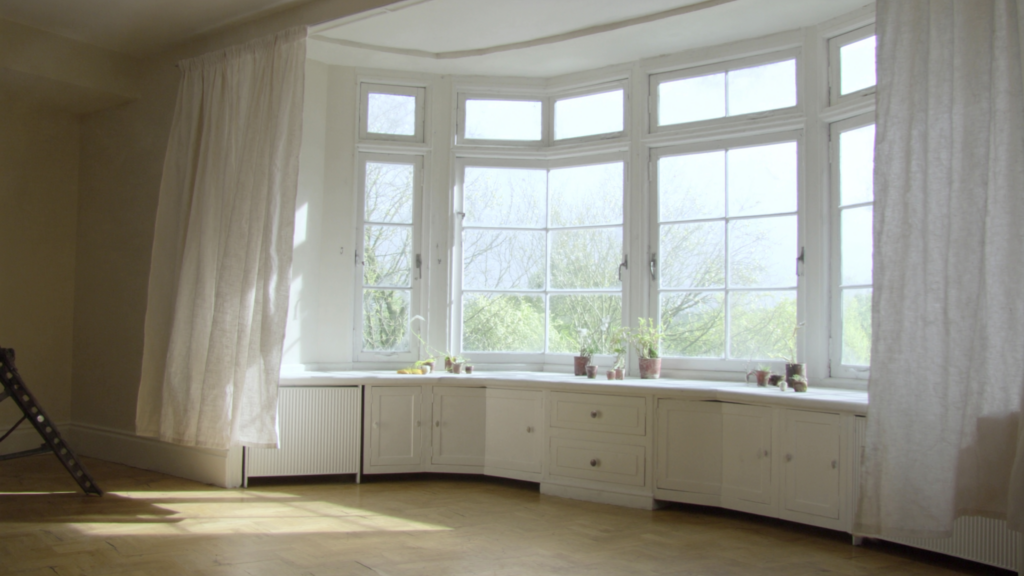
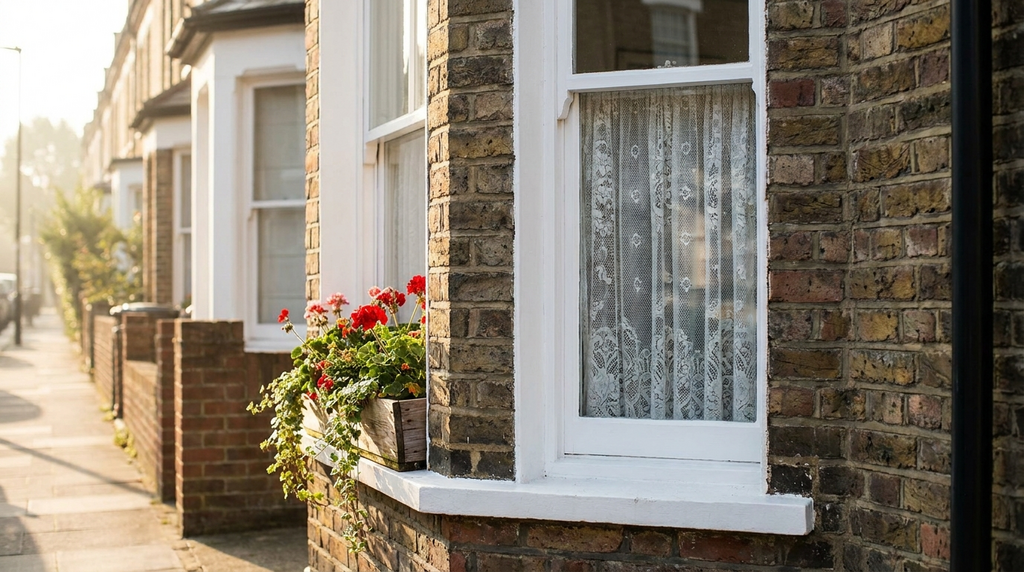
Older bay windows are the single biggest complication. Many 1930s and 1950s Luton semis have projecting angled bays at the front, and fitting double glazing into these requires either custom-made frames or careful adaptation of standard sizes. This pushes costs up and means you should be particularly wary of any installer quoting rock-bottom prices, they may be planning to fit ill-fitting units or use substandard seals.
Access is another real-world issue in Luton. The terraced streets around Bury Park and the older parts of Dunstable Road have very limited front access and often no side passage. Installers need to plan carefully for how frames and glass get in and out, and in some cases scaffold or platform towers are needed for upper floors. This is less of an issue in more spaciously laid out estates like Wigmore or Barnfield, but it’s worth raising with any installer before they quote.
- 1930s–1950s semis, Bay windows common, often timber frames needing careful measurement, soffit and lintel checks needed
- 1960s–1970s local authority stock, Often larger standard openings, easier to fit, but may have steel or concrete surrounds requiring specialist fixings
- Victorian terraces, Sash-style openings are common in older streets; replacing these with double-glazed sash units or casements may require planning consideration
- 1980s–1990s estates, Most likely to already have some double glazing, but seals and gas fills may have degraded and replacement units are often cost-effective
One insider tip, if your home has original timber frames, don’t automatically assume they need replacing. A good installer will assess whether the frames are structurally sound enough to accept new double-glazed units, which can save you significant money.
How Much Double Glazing Costs in Luton and the South East Area in 2026
Prices in Luton sit slightly above the national average. This reflects South East labour rates and the higher cost of doing business in a major urban centre. Installers working out of Luton typically also cover Hitchin, Hemel Hempstead, St Albans, and Stevenage, and their pricing reflects that wider market. Here’s what you should realistically be budgeting.
| Property Type and Scope | Luton Typical Cost | South East Average | National Average |
|---|---|---|---|
| Single casement window (replacement) | £550 – £750 | £500 – £700 | £400 – £600 |
| Full terraced house (6–8 windows) | £3,800 – £5,500 | £3,500 – £5,200 | £2,800 – £4,500 |
| Semi-detached with bay (8–10 windows) | £4,500 – £7,000 | £4,200 – £6,500 | £3,400 – £5,500 |
| Full detached house (10–14 windows) | £6,500 – £10,000 | £6,000 – £9,500 | £5,000 – £8,000 |
| French doors (double) | £1,800 – £2,800 | £1,700 – £2,600 | £1,400 – £2,200 |
| Bay window unit (three-panel) | £1,500 – £2,500 | £1,400 – £2,300 | £1,100 – £2,000 |
A few things push costs up locally. Parking charges and restrictions in central Luton and Bury Park add to installer overhead. Conservation area requirements (more on those below) can mean higher-spec frames are needed. And if your home needs any lintel or structural work to the window openings, budget an additional £200 to £500 per window. Always get three quotes, the gap between the cheapest and most expensive quote in this market can be over £2,000 on a full house job.
How Luton’s Weather and Location Shape the Double Glazing You Should Choose
Luton’s climate is genuinely distinctive, and it matters when you’re choosing glazing specifications. Sitting in the eastern part of the South East, the town gets significantly less rainfall than western areas, typically 500 to 700mm per year, but it is exposed to cold easterly winds that funnel across from continental Europe in winter. That east-facing exposure is something a lot of generic glazing advice simply doesn’t account for.
What this means practically is that you should prioritise thermal performance over weather resistance. In a wetter, windier west-facing town, weather sealing is the primary concern. In Luton, your biggest enemy is the dry, penetrating cold from the east, especially on front elevations of east-facing properties in Stopsley and the higher ground around Warden Hills, which catches the worst of those winter winds.
The good news is the solar side of the equation. Luton enjoys excellent solar irradiance, around 1,100 to 1,200 kWh per square metre per year, some of the best in the UK. South-facing windows in particular have real potential for passive solar gain, which can meaningfully offset heating costs. This means that on south-facing elevations, you don’t necessarily want to specify the most heavily solar-reflective glass, you want glazing that lets warmth in during winter while still providing insulation.
Triple glazing is increasingly discussed, but for Luton’s relatively mild winters (heating degree days of 1,200 to 1,500, below the national average), the extra cost of triple glazing often doesn’t deliver a proportionate return. Good-quality A-rated double glazing with a low-e coating and argon fill will serve most Luton homes well. Triple glazing makes more sense if you’re on a particularly exposed hilltop plot or have a north-facing room that struggles with cold.
The Products and Specs That Actually Perform Well in Luton Homes
Based on the local housing stock and climate, here’s an honest expert view on what works, not a generic list of what manufacturers want you to buy.
For most terraced and semi-detached homes in Luton, a uPVC casement window with a U-value of 1.2 W/m²K or better, low-emissivity (low-e) glass, and argon gas fill is the sweet spot. It delivers genuine thermal improvement, is competitively priced, and requires minimal maintenance, important given that many Luton terraces have limited access for ongoing upkeep.
For the bay windows on 1930s semis, look for polyester powder-coated aluminium frames if you want a period-appropriate slim sightline, or high-quality uPVC in a coloured finish. Avoid cheap white uPVC on Victorian and Edwardian properties, it looks wrong and can actually affect resale values in more desirable streets.
- Recommended U-value, 1.2 W/m²K or below for the whole window unit
- Glass specification, 4mm low-e outer, 16mm argon-filled cavity, 4mm inner pane as a baseline
- Frame materials, uPVC for most homes; timber or aluminium where aesthetics or conservation requirements apply
- Energy rating, Look for BFRC Window Energy Rating of A or A+ for best all-round performance
- South-facing rooms, Consider a glass with slightly higher solar transmittance to maximise passive gain in winter
- Noise reduction, If you’re near Luton Airport flight paths or the M1 corridor, ask about acoustic laminated glass as an inner pane upgrade, it makes a significant difference
That last point about noise is genuinely important for a significant number of Luton homes. The flight path approach to Luton Airport cuts over areas including Stopsley, Wigmore, and parts of Harpenden Road. Acoustic glass specification costs roughly £80 to £150 more per window but the comfort improvement in affected areas is dramatic.
How to Find a Trustworthy Double Glazing Installer Near Luton
Luton has a decent number of local and regional installers, but as with any large urban area, the market includes some less scrupulous operators. Here’s how to protect yourself.
The non-negotiable certification for double glazing installation is FENSA registration. FENSA-registered installers are authorised to self-certify their work complies with Building Regulations, and they issue a certificate that’s recorded on a national database, essential when you come to sell your home. Without this, you’ll need a Local Authority Building Notice, adding cost and hassle. Always ask for the installer’s FENSA registration number and verify it on the FENSA website.
TrustMark registration is an additional quality indicator worth looking for. It covers broader standards of trading practice, not just the technical work. For installers, also check for membership of the Glass and Glazing Federation (GGF) or the British Fenestration Rating Council (BFRC).
Installer coverage in this area tends to be regional, most Luton-based companies will cover the cluster of surrounding towns including Hitchin, Hemel Hempstead, St Albans, and Stevenage. This is useful because it means you can compare quotes from installers whose primary market is slightly different and who may have different cost structures. An installer based in St Albans or Hitchin quoting on a Luton job isn’t unusual and can sometimes come in more competitively.
Red flags to watch for
- Pressure to sign on the day with a “discount that expires tonight”
- No physical business address or landline number
- Quotes that don’t specify U-values or energy ratings in writing
- No mention of FENSA certification in the quote
- Vague payment terms, legitimate installers don’t ask for more than 25% upfront
Lead times in the South East are typically 4 to 8 weeks from survey to installation. Unusually short lead times can indicate a company cutting corners on manufacturing; unusually long ones might suggest they’re overstretched.
Grants and Funding Available to Luton Residents in 2026
Double glazing sits in an interesting position with grants, it’s less generously supported than insulation or heat pumps, but there are still routes to reduce your costs if you know where to look.
ECO4 (Energy Company Obligation), This is the most significant route for many Luton homeowners. If you’re on qualifying means-tested benefits (including Universal Credit, Pension Credit, or income-based JSA), your energy company may be obligated to fund or heavily subsidise double glazing as part of a wider package of home improvements. Luton Council actively engages with the ECO4 scheme, so contacting the council’s housing energy team is a good first step. The key condition is that glazing is usually funded as part of a package rather than in isolation.
Great British Insulation Scheme (GBIS), Primarily aimed at insulation measures, but homes in lower EPC bands can sometimes have glazing included as part of a broader retrofit package. Worth checking eligibility via the government’s official scheme portal.
Luton Council Retrofit Programmes, Luton Borough Council has climate and retrofit commitments as part of its sustainability strategy. The council periodically runs or supports area-based schemes that can include glazing upgrades, particularly in priority neighbourhoods. Glazing is standard-rated for VAT at 20%. The zero rate for energy-saving materials covers insulation, heat pumps and solar panels; HMRC names secondary and double glazing as excluded from it (VAT Notice 708/6, checked August 2026). The strongest financial case without grant support is still the long-term savings and EPC improvement. But if you are on qualifying benefits, ECO4 can cover a substantial portion of costs, and it’s absolutely worth pursuing.
Planning Permission and Local Regulations for Luton Windows
For most Luton homeowners, replacing windows doesn’t require planning permission. Under Permitted Development rights, you can replace windows with double glazed units without needing to apply, provided the replacement windows are similar in appearance to what they replace and the work meets Building Regulations (which FENSA certification covers).
However, there are important exceptions specific to Luton that you need to know about.
Conservation areas, Parts of Luton have conservation area designation, including sections of Old Bedford Road and some of the older residential streets near the town centre. If your home is in a conservation area, you will need to apply for planning permission before replacing windows. Luton Borough Council’s planning department can confirm your property’s status. In conservation areas, councils typically require windows that closely match the original character, this often means timber-look frames or genuine timber, and may preclude standard white uPVC.
Listed buildings, If your property is listed, you need Listed Building Consent for any window changes, regardless of what the change is. This is a separate requirement from planning permission and applies even for like-