Why Aylesbury Homeowners Are Looking at Double Glazing Right Now
There’s something quietly pressing happening in Aylesbury’s residential streets at the moment. With energy bills still stubbornly high and the town’s housing stock heavily weighted towards older semi-detached and terraced properties, many built between the 1930s and 1970s, a significant chunk of homes are still losing heat through single-glazed or aged double-glazed windows that are long overdue a replacement.
Aylesbury sits in an interesting position for home energy improvements. The town’s average EPC rating is Band D, which puts it right at the national average. That means there’s a real, tangible upgrade opportunity for most homeowners here, especially when you look at how much of the housing in areas like Walton Court, Quarrendon, and Bedgrove dates back to decades when glazing technology was far behind where it is today.
There’s also the property value angle. The South East consistently commands the highest property prices outside London, and Aylesbury is no exception. Upgrading your glazing improves warmth and comfort, and it is a genuine investment in a home that’s likely worth considerably more than the national average. A well-documented double glazing installation can meaningfully improve your EPC rating, which increasingly affects mortgage rates, rental values, and buyer appeal.
Add to that the fact that Aylesbury sits within a well-served installer corridor, companies regularly cover the triangle between Aylesbury, High Wycombe (21km away), Milton Keynes (25km), and Hemel Hempstead (24km), and you have a market where competitive pricing and reasonable availability are genuinely on your side right now.
What Double Glazing Actually Involves for a Typical Aylesbury Home
Most Aylesbury homes fall into two broad camps for double glazing installation, and knowing which one you’re in makes a big difference to how your project will unfold.
The first group covers post-war semis and terraces, particularly the council-built estates from the 1950s and 60s, and the privately developed homes that followed through the 1970s and 80s. Think streets in Southcourt, Elmhurst, and parts of Aston Clinton Road. These homes often have standard brick reveals, straightforward rectangular openings, and relatively accessible window positions. Installation here is generally clean and uncomplicated.
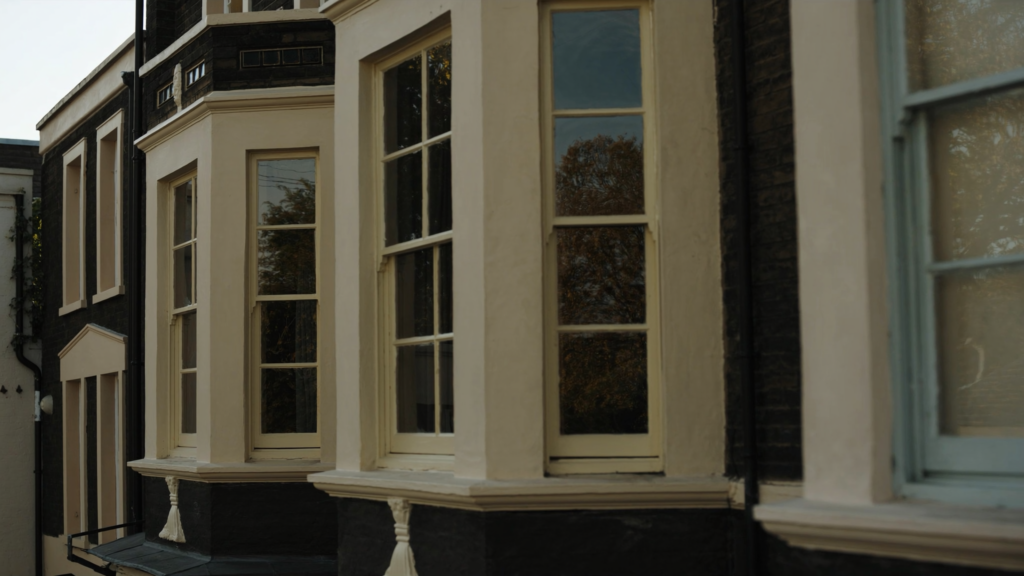
The second group is trickier, Victorian and Edwardian terraces, particularly around the town centre and older neighbourhoods closer to the Vale of Aylesbury. These homes often have bay windows, decorative brickwork, taller and narrower window proportions, and original timber frames that require careful survey work before any installer prices the job accurately.
Key things to think through for a typical Aylesbury installation:
- Bay windows, extremely common on Edwardian terraces and some interwar semis; these require specialist bay frames and add to both cost and installation time
- Cavity wall access, older homes may have original plasterwork that needs protecting during installation; good installers will flag this in the survey
- Timber versus uPVC, if you’re in a conservation area or near a listed building, your options narrow considerably (more on this below)
- Parking and access, in tighter terraced streets near the town centre, skip hire or material delivery can be more logistically involved than in more spacious suburban locations
- Existing frames, many homes built before 1995 still have older double glazing that’s misted, draughty, or failing at the seals; replacing like-for-like is often quicker than a full window-type change
One thing worth knowing, Aylesbury’s housing mix is genuinely diverse for a town of 74,000. You might find a 1930s Wates-built semi next door to a 1990s infill development. Always get a proper survey rather than relying on rough quotes, because two neighbouring properties can have quite different installation challenges.
How Much Double Glazing Costs in Aylesbury and the South East Area in 2026
Let’s talk actual numbers. The South East commands a premium over the national average for most trades, typically running 10–15% higher than the Midlands or North. Aylesbury is no exception, though the competitive installer market across the High Wycombe–Milton Keynes corridor does help keep prices honest.
| Property Type | Number of Windows | Standard uPVC A-Rated | Premium uPVC A++ Rated | Aluminium or Timber |
|---|---|---|---|---|
| Mid-terrace (2 bed) | 6–8 | £3,200–£4,400 | £4,500–£5,800 | £6,500–£9,000 |
| Semi-detached (3 bed) | 9–12 | £4,800–£6,500 | £6,500–£8,500 | £9,500–£14,000 |
| Detached (4 bed) | 13–16 | £7,000–£9,500 | £9,500–£12,500 | £14,000–£20,000 |
| Bay window (add per bay) | 1 bay | £800–£1,200 | £1,100–£1,600 | £1,800–£3,000 |
| Single replacement window | 1 | £450–£750 | £650–£950 | £900–£1,800 |
Prices in Aylesbury are roughly 8–12% above the UK national average for uPVC installations, primarily because of the South East labour premium. However, they tend to sit slightly below what you’d pay in High Wycombe or Marlow, where installer demand from affluent buyers pushes prices higher. Milton Keynes, being a larger market, is broadly comparable.
What can push your costs up specifically in Aylesbury:
- Conservation area requirements forcing timber or specialist finishes
- Bay window configurations on Victorian and Edwardian properties
- Tight access streets requiring materials to be hand-carried from further away
- Older homes needing lintel checks or reveal repairs as part of the installation
- Triple glazing uplifts (add roughly 20–30% over standard double glazing prices)
How Aylesbury’s Weather and Location Affect Your Double Glazing Choices
Aylesbury’s climate is genuinely helpful when making glazing decisions, but you need to understand it rather than just assume you live in a “standard” UK setting.
The town benefits from a relatively sheltered inland position. Unlike coastal towns in Kent or Sussex, you’re not dealing with severe wind-driven rain or salt-laden air accelerating frame degradation. That’s good news, it means uPVC frames will hold up well over time without the weathering concerns you’d face closer to the coast.
What Aylesbury does have is the Vale of Aylesbury bowl effect. The town sits in a relatively low-lying position surrounded by the Chiltern Hills to the south-east. In winter, cold air pooling in the Vale means overnight temperatures can dip noticeably lower than surrounding hilltop villages, so your windows are working harder on those cold, still nights than you might expect from a southern town. This makes the thermal performance of your glazing units genuinely important, not just a marketing consideration.
The good news on sunshine, Aylesbury enjoys some of the best solar irradiance in the UK at around 1,100–1,200 kWh per square metre per year. This means south and south-west facing windows can contribute meaningfully to passive solar gain in winter. Choosing glazing with a higher solar factor (g-value) for south-facing rooms can actually reduce your heating demand rather than just slowing heat loss.
Rainfall is moderate at 700–900mm annually, manageable, but enough that drainage details around window reveals and sill flashings matter. Poor installation on older Aylesbury terraces can allow water ingress at the frame-to-brickwork junction, so make sure your installer specifies the correct external sealant and weatherproof mastic as standard.
The Products and Options That Work Best Here
Given everything above about Aylesbury’s climate and housing stock, here’s what an experienced local installer would typically recommend:
For Most Aylesbury Semis and Terraces, uPVC A++ Double Glazing
Standard A-rated windows are fine, but for Aylesbury’s cold winter nights in the Vale, stepping up to A++ rated units with a centre-pane U-value of 1.0 W/m²K or better gives you noticeably better performance. Look for units with warm-edge spacer bars (these prevent the cold edging effect you get with older aluminium-spaced units) and argon or krypton gas filling.
For South-Facing Rooms, Consider Solar Control Glass Carefully
Some suppliers push solar control glass as a blanket recommendation. In Aylesbury, given the good solar irradiance and the fact that winters here are cold enough to benefit from passive gain, you generally want to avoid solar control glass on south and south-west facing windows. Save it for west-facing rooms that overheat in summer, if that’s genuinely a problem in your home.
For Conservation Areas and Period Properties, Slim-Profile Double Glazing or Secondary Glazing
In Aylesbury’s older areas, particularly around the town centre conservation zones, standard chunky uPVC profiles often won’t get planning approval. Slim-profile timber double glazing that replicates original Georgian bar patterns is the right call here. Alternatively, high-quality secondary glazing is often permitted development even in conservation areas and delivers surprisingly good thermal and acoustic performance.
Triple Glazing, Worth It Here?
Triple glazing makes the most sense in very exposed or very cold locations. Aylesbury’s climate is mild enough that the payback on triple glazing over premium double glazing is long, typically 15–20 years versus 8–12 for good double glazing. Even so, if you’re building a high-spec renovation or doing a full extension, specifying triple glazing from the outset makes sense for future-proofing.
Recommended Specification Summary
- Frame, uPVC multi-chambered profile (70mm+) for standard properties; slim timber for conservation/period homes
- Glass unit, Low-E coated inner pane, argon-filled, warm-edge spacer bar
- U-value, Aim for 1.2 W/m²K overall window (not just centre-pane) for a solid upgrade
- Energy rating, BFRC Window Energy Rating A++ for best performance
- Security, PAS 24 certification as standard (required under Building Regulations anyway)
How to Find a Trustworthy Double Glazing Installer Near Aylesbury
The good news is that Aylesbury sits in a well-served installation market. Companies operating across the High Wycombe, Milton Keynes, Hemel Hempstead, and Aylesbury patch have enough volume to stay competitive, and the cluster of towns means you’re unlikely to struggle for choice. The challenge is knowing how to separate the genuine professionals from the high-pressure sales operations.
Start with these certifications:
- FENSA or CERTASS registration, legally, your installer must be registered with a competent person scheme for replacement windows. This is not optional. FENSA registration means they self-certify compliance with Building Regulations and issue you a certificate without needing council sign-off
- TrustMark, the government-endorsed quality mark; useful additional reassurance
- Which? Trusted Trader or similar, independently vetted reviews are worth more than testimonials on an installer’s own website
Questions worth asking any Aylesbury installer before you commit:
- Are you FENSA or CERTASS registered, and will you provide the certificate on completion?
- Who manufactures your frame profiles and glass units, and can you provide technical data sheets?
- Is your installation team directly employed, or are you subcontracting?
- What is your guarantee structure, and who backs it if your company ceases trading?
- Have you worked on properties in Aylesbury’s conservation areas before?
Red flags to watch for, any company pushing you to sign on the same day with a “today only” discount, unusually vague written quotes that lack specific product specifications, or installers who can’t answer basic questions about their BFRC energy ratings. Lead times across the South East currently run 4–8 weeks for most installations, so be wary of anyone claiming they can start next week, that sometimes signals a company taking shortcuts on survey and manufacturing quality.
Grants and Funding That Could Reduce Your Costs in 2026
This is where it pays to do your homework, because Aylesbury residents have access to several funding routes, though eligibility criteria are specific.
ECO4 Scheme
The Energy Company Obligation (ECO4) scheme funds energy efficiency upgrades for lower-income households and those in less efficient homes. If your property is EPC Band D or below (which describes a large proportion of Aylesbury’s housing stock) and you receive qualifying benefits, including Universal Credit, Pension Credit, or certain disability benefits, you may qualify for fully or significantly subsidised window upgrades. The scheme runs through obligated energy suppliers, so apply via the government’s Simple Energy Advice service or directly through the major suppliers.
Great British Insulation Scheme (GBIS)
The Great British Insulation Scheme closed on 31 March 2026. It funded insulation measures only and never covered windows or glazing. Given Aylesbury’s Band D average, a meaningful number of local homeowners fall into the eligible zone. It’s worth checking eligibility even if you don’t receive benefits, there is a general group element of the scheme not tied solely to income.
Buckinghamshire Council Retrofit Schemes
Buckinghamshire Council, as the unitary authority covering Aylesbury since 2020, periodically administers additional retrofit funding for local residents. It’s worth checking directly with the council’s housing and energy team for any active local schemes, as these can change through the year and are sometimes underutilised simply because residents don’t know they exist.
Warm Homes Plan (England)
The government’s Warm Homes Plan, being rolled out through 2026, provides grants and low-interest loans for home energy upgrades including windows. Eligibility is income and EPC-linked. Check the current figures via Simple Energy Advice, as the grant amounts and rules have been updated this year.
Important, double glazing alone is rarely funded as a standalone measure under most schemes; it’s usually required as part of a broader package of