Why Watford Homeowners Are Turning to Double Glazing Right Now
There’s something of a quiet revolution happening across Watford’s suburban streets at the moment. From the Edwardian terraces around Nascot Wood to the post-war semis on Leggatts Estate, homeowners are booking double glazing surveys in greater numbers than they have for years, and there are very good reasons for it.
Watford sits in an interesting position. With an average EPC rating of Band D across the town, there’s a huge amount of untapped energy efficiency potential in the local housing stock. Many homes still have original single-glazed windows or early double glazing units that are now well past their best. The cold easterly winds that sweep across Hertfordshire in winter, less dramatic than up north, but persistent and draining on your heating bills, make poorly performing windows a genuine problem even in our milder southern climate.
The town’s proximity to London also plays a role. Watford’s transport links mean there’s no shortage of working families here who spend a lot of time at home and notice every cold draught. Road noise from the A41, the M1 corridor, and the busy routes through Oxhey and Bushey makes acoustic performance just as important as thermal performance for many residents. Double glazing solves both problems at once, which is a big part of why demand is so strong right now.
What Double Glazing Actually Involves for a Typical Watford Home
Let’s talk about what installation actually looks like on your street, not some theoretical average UK home, but the real mix of properties you see across Watford every day.
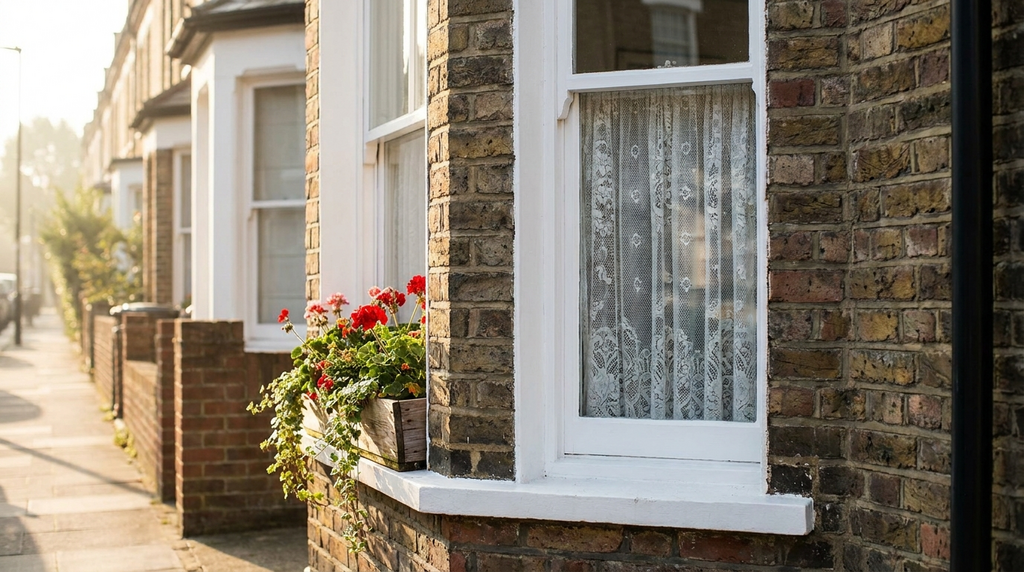
The most common housing types here are semi-detached and terraced properties, many of them built between the 1920s and 1960s. These homes often have larger-than-average bay windows at the front, a classic feature of inter-war Watford builds, and these require more careful measuring and sometimes bespoke frames to get right. Don’t let any installer give you a quick quote without actually measuring the bays properly.
Victorian and Edwardian terraces, particularly around the Cassiobury Park edges and central Watford conservation zones, present their own challenges. Original timber window frames in these properties can be in surprisingly good condition, which means you’ll need to decide whether to replace the whole frame or look at secondary glazing as an alternative that preserves the original character.
Key practical points for Watford homes include
- Bay windows, extremely common on 1930s semis and require specialist fitting; expect to pay a premium of around £300–£500 over standard casements
- Parking and access, many terraced streets in central Watford have limited kerb access; installers may need to carry frames further, which can add time and occasionally cost
- Side-return access, semi-detached homes often have narrow side passages that need to be negotiated for rear window installations
- Party wall considerations, in terraces, any structural work near shared walls should be handled with care, though standard window replacement rarely triggers Party Wall Act requirements
- Conservation area restrictions, parts of Watford town centre and Cassiobury have stricter rules (more on this later)
The good news is that a typical Watford semi or terrace is genuinely well-suited to a straightforward double glazing replacement. Most jobs here are completed in one to two days, with minimal scaffolding needed since the majority of these properties are two storeys and accessible from ladders.
How Much Double Glazing Costs in Watford and the East of England Area in 2026
Watford sits in a mid-range position for installation costs. You’re cheaper than inner London by a meaningful margin, but slightly pricier than rural Hertfordshire towns further out. Labour rates here are moderate, higher than somewhere like Hemel Hempstead (about 12km away), but significantly below what you’d pay across the borough boundary into Harrow or Brent.
Here’s a realistic 2026 pricing guide for Watford properties
| Property Type / Scope | Budget Option (PVCu) | Mid-Range (PVCu A-rated) | Premium (Timber or Composite) |
|---|---|---|---|
| 2-bed terrace (6–8 windows) | £2,800–£3,500 | £3,800–£5,000 | £6,500–£9,000 |
| 3-bed semi-detached (8–10 windows) | £3,500–£4,500 | £4,800–£6,500 | £8,000–£12,000 |
| 4-bed detached (10–14 windows) | £4,500–£6,000 | £6,500–£9,000 | £11,000–£16,000 |
| Bay window (single, standalone) | £900–£1,300 | £1,400–£2,000 | £2,500–£4,500 |
| Front door (composite) | £900–£1,200 | £1,300–£1,800 | £2,200–£3,500 |
These figures include VAT at 20%. Note that double glazing for residential retrofits does not attract the reduced 5% VAT rate, that applies to other energy efficiency measures. Always get a written quote specifying exactly what’s included, removal and disposal of old frames should be included as standard, but some budget installers charge extra for this.
Compared to the East of England regional average, Watford prices run roughly 5–8% higher. This reflects the proximity to London and the higher cost of operating here. St Albans, 12km away, tends to be similar or very slightly higher. Hemel Hempstead typically comes in 3–6% cheaper for the same job.
How Watford’s Weather and Location Affect Your Double Glazing Choices
Watford’s climate is genuinely distinct from much of the UK, and it changes what you should prioritise when choosing your glazing specification. This is not marketing fluff; getting this right makes a real difference to your comfort and your bills.
The winters here are milder than the UK average, with roughly 1,200 to 1,500 heating degree days per year. That means your heating demand is below the national median. But the cold easterly winds that hit Hertfordshire, particularly from February through March, can make south and east-facing rooms feel much colder than the thermostat suggests. Draught sealing and quality frame profiles matter as much as the glass specification for these orientations.
Here’s where Watford’s location becomes a genuine advantage. The town benefits from some of the best solar irradiance in the UK, around 1,100 to 1,200 kWh per square metre per year. That means south-facing rooms receive meaningful passive solar gain, especially in spring and autumn. The right glazing can work with this rather than against it.
Practical implications for Watford homeowners
- South and west-facing windows, look for glass with a higher solar gain coefficient (g-value of 0.6 or above) to capture winter sun and reduce heating load naturally
- North and east-facing windows, prioritise low U-values (1.2 W/m²K or below) to minimise heat loss to cold easterly winds
- Condensation, Watford’s drier eastern climate (500–700mm annual rainfall) means external condensation on high-performance glass is actually a positive sign of performance, not a fault; good to know before your neighbours start asking questions
- Noise reduction, if you’re within earshot of the A41, the M25 approach roads, or the Watford Junction rail lines, consider acoustic laminated glass in your specification
The Products and Options That Actually Perform Best in Watford
Given everything above, here’s an honest expert view on what works best for the typical Watford home, not just whatever carries the highest margin for the installer.
For most Watford terraces and semis, a PVCu A-rated double glazed unit with argon fill is the sweet spot. You get a U-value of around 1.2–1.4 W/m²K, solid draught performance, and a payback period that actually makes sense. Triple glazing is worth considering for north or east-facing rooms if your budget stretches, but for most south-west facing Victorian and Edwardian properties here, the passive solar gain from a well-specified double unit will outperform triple glazing in practice.
Specific recommendations by property type
- 1930s and 1950s semis (Leggatts, Oxhey, Garston), white PVCu casements suit the original aesthetics well; look for 28mm sealed units with warm-edge spacer bars to reduce cold-edge condensation
- Victorian terraces (central Watford, Nascot Wood), where character is important, consider sculptured PVCu in heritage colours or timber-effect finishes; secondary glazing is a legitimate alternative if the frames are original and in good condition
- Conservation area properties, slim-profile double glazing units (sometimes called “slimline” or “heritage” double glazing at around 14–20mm total unit thickness) can replicate the look of single glazing while delivering meaningful thermal improvement
- Noise-sensitive locations, acoustic glass with an inner laminated pane (e.g., 6.4mm laminated inner, 12mm argon cavity, 4mm outer) reduces road and rail noise significantly more than standard units
On energy ratings, look for units rated at least Window Energy Rating (WER) Band A as a minimum, and ask for the specific centre-pane U-value (not just the overall window U-value, which includes the frame and flatters the performance figure). A whole-window U-value of 1.4 W/m²K is a reasonable minimum benchmark for a new installation in 2026.
How to Find a Trustworthy Double Glazing Installer Near Watford
The Watford area is reasonably well-served by installers, with local companies operating across the town itself and the surrounding cluster including St Albans, Hemel Hempstead, Harrow, and Brent. This means you have genuine choice, which is a good thing, but also means you need to be discerning.
The certification to look for first is FENSA (Fenestration Self-Assessment Scheme) registration. Any company replacing windows or doors in England must be either FENSA-registered or submit a building regulations application through your local authority (Watford Borough Council). FENSA-registered installers self-certify their work and issue you a certificate that you’ll need when you sell your home. Check the FENSA register at fensa.org.uk before signing anything.
Other quality indicators worth checking
- TrustMark registration, a government-endorsed quality scheme that covers the full installation process
- Which? Trusted Trader, particularly useful for checking local Hertfordshire-based companies
- Deposit protection, reputable installers will be members of the Glass and Glazing Federation (GGF) or similar, offering deposit protection insurance
- Insurance-backed guarantees, a 10-year product guarantee is standard; make sure it’s backed by an independent insurer, not just the company itself
Red flags to watch for in the Watford market specifically include pressure selling with “today only” pricing, quotes given without physical measurement, and any company that can’t show you a completed local job reference. Lead times for reputable installers in the Watford area currently run around 4–8 weeks from survey to installation, if someone can start next week, ask why.
Many of the best local firms serve the whole arc from Harrow through Watford to St Albans and Hemel Hempstead. Getting three quotes from companies covering this area is realistic and gives you meaningful comparison data.
Grants and Funding That Could Reduce Your Costs in 2026
This is where it’s important to be honest rather than optimistic. Double glazing is not as generously funded as insulation or heat pumps under current national schemes, but there are routes to support depending on your circumstances.
ECO4 (Energy Company Obligation) is the main national route for lower-income households. If you receive qualifying means-tested benefits (including Universal Credit, Pension Credit, or certain disability payments) and your home is EPC Band D or below, you may qualify for fully or heavily subsidised window upgrades. Watford Borough Council works with ECO4 referral schemes, contact them directly or use the government’s ECO4 helpline to check eligibility. The key point is that ECO4 pays for window improvements as part of a whole-house package, not windows alone.
Great British Insulation Scheme (GBIS) can in some cases include glazing improvements as part of a broader package, again subject to income and EPC criteria. Properties in Band D (Watford’s average) sit right on the eligibility threshold for some elements of this scheme.
Hertfordshire’s Warm Homes scheme, administered with support from Hertfordshire County Council, periodically runs retrofit programmes for eligible households. It’s worth checking with Watford Borough Council’s housing team for the current status of any local authority-administered top-up funding, as these schemes open and close throughout the year.
For most Watford homeowners who don’t meet means-tested criteria, the realistic position is that you’ll be funding double glazing yourself. However, the VAT relief worth noting is that if you’re having double glazing installed as part of a broader energy efficiency retrofit package (including insulation work in the same project), some elements may attract reduced VAT, worth asking your installer or an accountant about before committing.
There is also a practical funding route through some mortgage lenders, green improvement additions to remortgage products are increasingly common and worth exploring if you’re approaching a remortgage anyway.
Planning Permission and Regulations in Watford, What You Actually Need to Know
For the majority of Watford homeowners, double glazing replacement falls under permitted development rights, meaning no planning permission is required. You can replace windows like-for-like without notifying Watford Borough Council, as long as you’re not in a designated area.
However, there are important exceptions in Watford
- Conservation areas, parts of Watford town centre and areas around Cassiobury Park fall within conservation area designations. In these zones, permitted development rights for window replacement are more restricted. You may need to apply for planning permission if the replacement windows would materially alter the appearance of the property, particularly on street-facing elevations. Always check with Watford Borough Council’s planning department before ordering
- Listed buildings, if your property is listed (there are several listed buildings within Watford’s older neighbourhoods), you will need Listed Building Consent for any window work, and standard double glazing may not be approved at all
- Flats and maisonettes, if you own a flat, permitted development rights may not apply; you