Why Hillingdon Homeowners Are Looking at Double Glazing Right Now
Hillingdon is one of those boroughs that sits at a fascinating crossroads, literally and figuratively. With Heathrow Airport on your doorstep, the M40 and M25 carving through the borough, and the Piccadilly and Elizabeth lines running through Hayes, Uxbridge, and West Drayton, noise is a daily reality for hundreds of thousands of residents here. For many homeowners in Hillingdon, double glazing provides warmth, but its primary purpose is shutting out the constant hum of aircraft, motorway traffic, and rail noise.
Then there’s the energy cost picture. Hillingdon’s housing stock sits at an average EPC Band D, which means most homes here are losing more heat, and spending more money, than they need to. With gas usage averaging around 10,800 kWh per year across the borough, the savings from quality double glazing are real and measurable.
There’s also a generational shift happening. Huge swathes of Hillingdon, think the inter-war semis of Ruislip, Eastcote, and Ickenham, the Victorian terraces of Hayes and Southall-border areas, and the postwar estates around Northwood Hills, still have original single-glazed windows or ageing 1990s double glazing that’s well past its best. If your sealed units have gone cloudy, your frames are draughty, or your heating bill feels disproportionate to your home’s size, you’re in good company in this borough.
What Double Glazing Actually Involves for a Typical Hillingdon Home
The most common property types in Hillingdon are semi-detached and terraced houses, most built between the 1920s and 1960s. That era of construction brings specific considerations that a generic double glazing guide won’t tell you about.
Those inter-war semis in Ruislip, Eastcote, and Pinner Road-adjacent areas were typically built with timber casement or sash windows. If yours still have the original frames, or later timber replacements, you’ll need to decide whether to go like-for-like with timber-look uPVC (common and cost-effective), genuine engineered timber (premium, but often preferred in smarter areas), or aluminium (slim-profile, increasingly popular with homeowners doing modernisation projects).
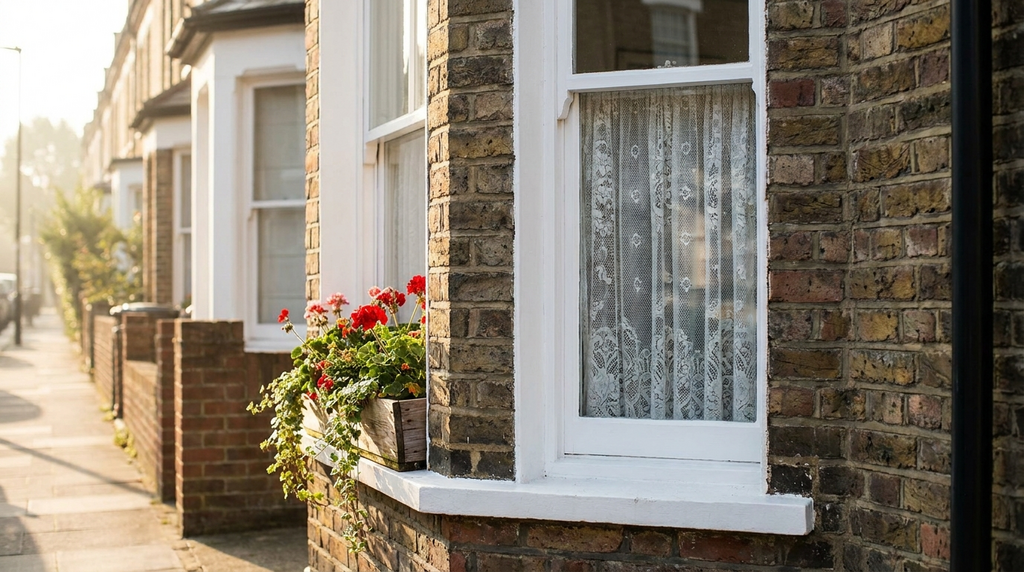
For the terraced streets around Hayes, Yiewsley, and West Drayton, the story is slightly different. These homes are often narrower-fronted with smaller windows, which actually works in your favour on cost. However, terrace access can be tricky, installer vans need somewhere to park, and on some streets in these areas, that means paying for a parking suspension permit from the London Borough of Hillingdon, which typically adds £50–£150 to your project costs.
A few other practical realities for Hillingdon properties:
- Cavity wall homes from the 1930s onwards usually have straightforward window reveals, but some older solid-wall properties in the Victorian pockets near Uxbridge town centre have deeper reveals that need wider sill boards
- Many 1950s and 1960s council-built homes in Hillingdon have non-standard window openings, always get a measured survey before accepting any quote
- If your property is ex-local authority (and there are thousands in this borough), check whether the freeholder has any restrictions if you’re a leaseholder
- Homes near the Colne Valley, particularly around Harefield, Denham, and West Drayton, can experience higher ground moisture levels, so frame quality and drainage installation matter more than average
How Much Double Glazing Costs in Hillingdon and the London Area in 2026
Here’s the honest answer: you will pay more in Hillingdon than you would in, say, Swindon or Coventry. London labour rates run 15–25% above the national average, parking and access logistics add friction, and ULEZ compliance costs are now baked into installer pricing. Even so, Hillingdon sits on the western fringe of the city, so you benefit from competition, installers from Slough, Harrow, Hounslow, and Gerrards Cross all operate here, which keeps pricing more competitive than inner-London boroughs.
| Property Type | Window Count | uPVC Double Glazing | Aluminium Double Glazing | Triple Glazing Upgrade |
|---|---|---|---|---|
| 2-bed terraced (Hayes/West Drayton) | 6–8 windows | £3,200–£4,800 | £5,500–£7,500 | Add £800–£1,400 |
| 3-bed semi-detached (Ruislip/Eastcote) | 9–12 windows | £4,500–£6,500 | £7,500–£10,500 | Add £1,200–£2,000 |
| 4-bed detached (Northwood/Ickenham) | 13–16 windows | £6,500–£9,500 | £10,500–£15,000 | Add £1,800–£3,000 |
| Flat (apartment, single floor) | 3–5 windows | £1,800–£3,000 | £3,200–£5,000 | Add £500–£900 |
| Victorian terrace with sash windows | 8–10 windows | £5,500–£8,000 (sash-style) | £8,000–£12,000 | Limited suitability |
For comparison, the same 3-bed semi job in Slough or Harrow might come in £400–£800 cheaper. In central London boroughs like Ealing or Hammersmith, you’d pay £500–£1,500 more. Hillingdon sits in a reasonable middle ground.
Insider tip, always ask installers quoting in Hillingdon whether their price includes parking costs, ULEZ surcharges, and frame disposal. Some quote low and add these separately. A good quote should be fully itemised.
How Hillingdon’s Weather and Location Affect Your Double Glazing Choices
Hillingdon has a weather profile that’s genuinely worth understanding before you spend thousands on windows. The borough sits in the drier eastern side of Southern England, with annual rainfall of around 500–700mm, lower than you might expect for London. That matters because lower moisture exposure means uPVC frames are less prone to the green algae growth and swelling issues you’d see in, say, the Welsh borders or the north-west.
However, the eastern exposure brings something else, cold easterly winds in winter. This is the wind that funnels across the flat Thames Valley and the Colne Valley, hitting the western suburbs hard between January and March. Eastcote, Ruislip, and Northwood Hills, sitting slightly elevated compared to the valley floor, feel this particularly. For these homes, U-value performance becomes genuinely important, a window with a U-value of 1.2 W/m²K or better will make a noticeable difference on those cold east-wind days versus older glazing at 2.8+ W/m²K.
Then there’s the Heathrow noise factor, and this is where Hillingdon double glazing decisions genuinely diverge from most of the UK. If your home is under one of the main flight paths (broadly speaking, the Harmondsworth, Sipson, Harlington, Hayes, Heston, and Cranford corridors), acoustic performance of your glazing matters as much as thermal performance, sometimes more.
- Standard 4-12-4 double glazing reduces noise by approximately 30–32 dB
- Acoustic double glazing (using laminated glass, typically 6.4mm or 6.8mm on one pane) achieves 38–42 dB reduction
- Triple glazing adds mass but doesn’t always beat acoustic double glazing on sound, ask specifically about Rw ratings if noise is your priority
Hillingdon also benefits from some of the best solar irradiance in the UK at around 1,100–1,200 kWh/m² per year. South-facing rooms in your Ruislip semi or Hayes terrace receive meaningful passive solar gain, which is a good reason not to over-spec low-solar-gain glass on south-facing elevations, as this can actually make your home colder in winter.
The Products and Options That Work Best in Hillingdon’s Housing Stock
Based on what Hillingdon’s homes actually look like and the conditions they face, here are the honest recommendations, not a menu of everything available, but what genuinely suits this borough.
For inter-war semis in Ruislip, Eastcote, and Ickenham, Flush casement uPVC in a woodgrain foil finish (Rosewood or Irish Oak) tends to look proportionate and appropriate. Look for a U-value of 1.2 W/m²K or better, argon-filled units, and warm-edge spacer bars rather than aluminium spacers (which cause cold bridging at the unit edge).
For Victorian and Edwardian terraces near Uxbridge and the older parts of Hayes, Sliding sash uPVC windows are the practical choice for most homeowners. Spring-balance sashes that tilt for cleaning are worth the small extra cost. If you’re in or near a conservation area, check the approved colour and style before ordering.
For homes under flight paths, Specify acoustic laminated glazing as standard. The 6.4/12/4 or 6.8/12/4 configurations are the sweet spot of cost versus performance. Ensure your installer quotes an Rw rating of at least 38 dB for affected elevations.
For modern or renovated homes in Northwood, Harefield, or the smarter parts of Ickenham, Aluminium slim-sightline frames in anthracite grey or black have become popular and suit these properties well. They’re more expensive but genuinely durable and require almost no maintenance.
Energy ratings to look for across all Hillingdon properties
- BFRC Window Energy Rating of A or A-plus
- Centre-pane U-value of 1.0 W/m²K or better
- Overall window U-value of 1.4 W/m²K or better
- Argon or krypton gas fill (argon is standard; krypton is premium and worthwhile in narrower units)
- Warm-edge spacer bar (look for ThermoBar, Swisspacer, or equivalent)
How to Find a Trustworthy Double Glazing Installer Near Hillingdon
The good news about Hillingdon’s location is that you have genuine installer competition. Companies based in Uxbridge, Hayes, Harrow, Hounslow, and Slough all actively quote in this borough, and national firms covering the M25 western corridor also operate here. That means you can and should get three quotes.
The certifications that actually matter for double glazing:
- FENSA registered, This is non-negotiable. FENSA installers self-certify that replacement windows comply with Building Regulations, saving you from having to notify the council separately. Always verify FENSA registration at fensa.org.uk, don’t just take a sticker as proof
- TrustMark registered, Government-endorsed quality scheme; useful additional reassurance
- GGF membership, Glass and Glazing Federation membership indicates a company that subscribes to industry standards and a deposit protection scheme, which matters given some larger deposits asked in this market
Questions worth asking any installer quoting in Hillingdon:
- Are you FENSA registered and will you provide the FENSA certificate on completion
- What is your lead time currently (in 2026 this is typically 4–8 weeks for most products)
- Does your quote include parking permits, skip hire for old frame disposal, and ULEZ costs
- What is the exact U-value of the glazing you’re quoting
- Do you offer a 10-year guarantee on both frames and sealed units separately
Red flags specific to this market, Be cautious of companies quoting very low to win business and then applying high-pressure finance upselling at survey stage. This has been a particular pattern with some of the larger national brands operating in the London suburbs. If a salesperson quotes you a dramatically different figure at survey than over the phone, walk away.
Grants and Funding That Could Reduce Your Costs in 2026
Double glazing isn’t as generously funded as heat pumps or insulation, but there are genuine routes to financial support available to Hillingdon residents in 2026.
ECO4 (Energy Company Obligation 4), If your household receives qualifying benefits (including Universal Credit, Pension Credit, or certain disability benefits) and your home is EPC Band D or below, you may qualify for fully or partially funded double glazing under ECO4. Hillingdon sits at Band D on average, so a significant portion of the housing stock is eligible on EPC grounds. Apply via the energy company directly or through a registered ECO4 broker, the London Borough of Hillingdon’s housing energy team can point you to verified brokers.
Great British Insulation Scheme (GBIS), Window upgrades can sometimes be included as a complementary measure alongside primary insulation work under GBIS. This is not a standalone double glazing grant but worth asking about if you’re also considering cavity wall or loft insulation at the same time.
Warm Homes: Local Grant, The government’s Warm Homes Local Grant, rolling out through local authorities in 2026, directs funding to lower-income households in EPC Band D and below. Hillingdon Council has been allocated funding, contact the council’s housing team or check the Hillingdon.gov.uk energy efficiency pages for current eligibility and application details.
Heathrow-specific noise insulation schemes, This is unique to Hillingdon and a few neighbouring boroughs. Heathrow Airport runs insulation grant schemes for homes in certain noise-affected zones, and these can include acoustic glazing. The schemes operate in cycles, check Heathrow’s community noise site for current eligibility by postcode. For homes in Harmondsworth, Sipson, Harlington, and parts of Hayes, this is absolutely worth investigating before spending your own money on acoustic glazing.
Planning Permission and Regulations in Hillingdon
For most Hillingdon homeowners, replacing windows with double glazing does not require planning permission under Permitted Development Rights, but there are important exceptions you need to know about.
Standard rules for semi-detached and