Why Sidmouth Homeowners Are Finally Taking Double Glazing Seriously
There’s something quietly significant happening in Sidmouth right now. Energy bills have bitten hard across East Devon, and homeowners here, many of them retired or on fixed incomes, are looking at every practical way to cut costs without sacrificing comfort. Double glazing sits right at the top of that list, and for good reason.
Sidmouth’s housing stock is a fascinating mix. You’ve got grand Victorian and Edwardian villas climbing the hillsides above the seafront, 1950s and 1960s semis in the residential streets inland, and plenty of detached bungalows that were built quickly with single-glazed windows that are now leaking heat and letting in noise. Many of these homes are sitting at EPC Band D, the national average, which means there’s real, measurable room for improvement.
The coastal setting adds another layer of urgency. Salt-laden air off the English Channel accelerates corrosion on metal frames faster than most homeowners expect. If your current windows have steel or standard aluminium frames, they may already be showing signs of deterioration. Replacing them with properly specified marine-grade products is an upgrade, and for many Sidmouth homes, it’s a genuinely pressing maintenance issue.
With Honiton, Exmouth, and Exeter all within 21 kilometres, installer coverage here is reasonably good, and competition between companies keeps prices competitive. That’s a genuine advantage for Sidmouth residents compared to more isolated parts of Devon.
What Double Glazing Actually Involves for a Typical Sidmouth Home
Let’s get practical. Most double glazing installations in Sidmouth involve replacing existing single-glazed or older double-glazed sealed units with modern A-rated or A+-rated units, typically featuring warm-edge spacer bars and low-emissivity (low-E) coatings. The frames can be uPVC, aluminium, or timber, and the choice matters more here than in many inland towns.
For the detached and semi-detached homes that dominate Sidmouth’s residential streets, a typical full-house replacement covers between 8 and 15 window openings plus one or two external doors. Access is generally manageable, most streets in Sidmouth have reasonable frontage, though narrow lanes around the older core of town can complicate delivery and scaffold positioning for upper-floor work.
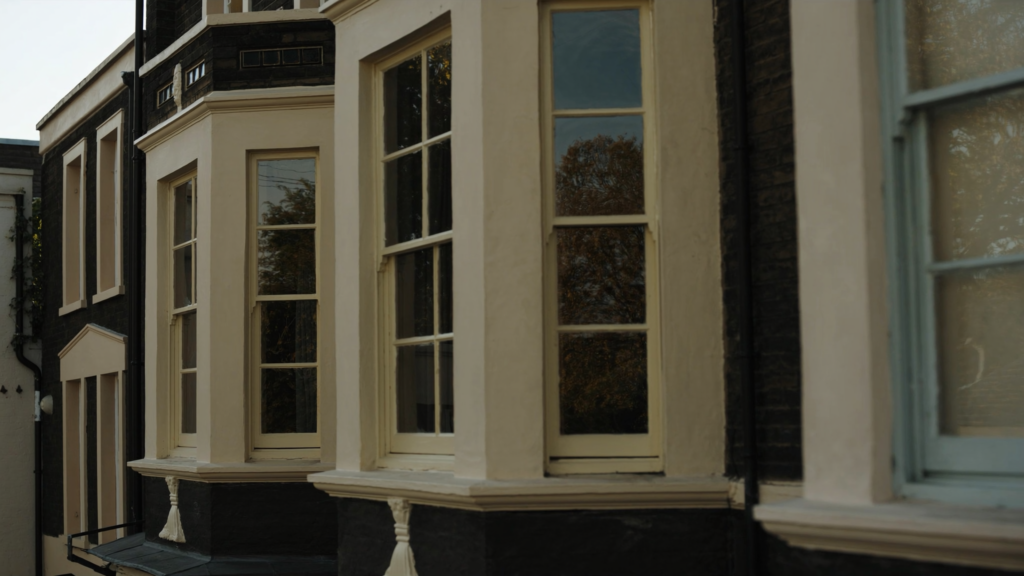
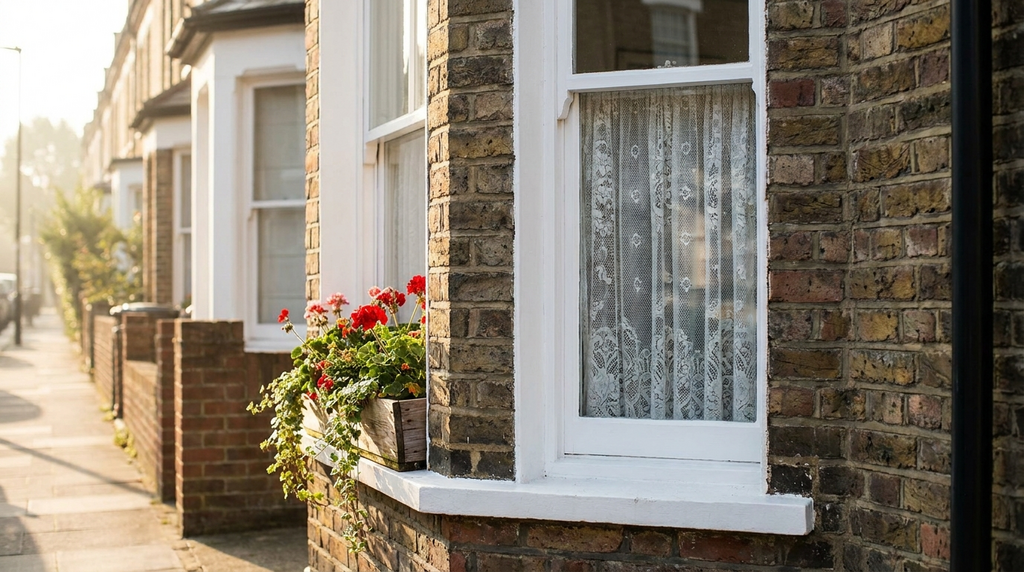
Victorian and Edwardian Properties
These are common throughout Sidmouth, particularly in the streets closer to the seafront and Salcombe Hill. Older properties often have non-standard window openings, slightly irregular sizes that don’t correspond to modern off-the-shelf units. That means bespoke manufacturing, which adds both cost and lead time. It’s worth measuring carefully before getting quotes, and a good installer will survey in person rather than working from rough measurements.
Post-War Semis and Bungalows
The 1950s and 1960s builds found in areas like Sid Road and the residential streets north of the town centre tend to have more standardised openings. These are often the most straightforward installations, good access, predictable sizing, and cavity walls that pair well with double glazing upgrades as part of a wider energy efficiency project.
The Coastal Challenge
Any property within a kilometre or so of the seafront faces accelerated salt air exposure. Standard uPVC handles this reasonably well, but any aluminium or steel components, hinges, handles, locking mechanisms, need to be marine-grade or stainless steel as a minimum. Ask your installer specifically about hardware specifications. This isn’t a minor detail; cheaper fittings can corrode visibly within two or three years this close to the sea.
How Much Double Glazing Costs in Sidmouth and the South West in 2026
Here’s what you actually want to know. Costs in Sidmouth sit slightly above the national average, mainly because of the small-town location and the specialist considerations for coastal properties. Installers travelling from Exeter or Exmouth typically don’t charge a significant travel premium, but it does affect scheduling, you may find yourself fitting around their wider East Devon run.
| Property Type | Number of Windows | Standard uPVC | Premium uPVC / Flush Sash | Aluminium (Marine-Grade) |
|---|---|---|---|---|
| 2-bed semi-detached | 8–10 | £3,800–£5,200 | £5,500–£7,500 | £7,000–£9,500 |
| 3-bed semi-detached | 10–12 | £4,500–£6,200 | £6,500–£9,000 | £8,500–£12,000 |
| 3-bed detached | 12–14 | £5,500–£7,500 | £8,000–£11,500 | £10,500–£15,000 |
| 4-bed detached | 14–18 | £7,000–£9,500 | £10,500–£15,000 | £14,000–£20,000 |
| Individual window (single unit) | 1 | £400–£650 | £700–£1,100 | £900–£1,600 |
For context, the South West average runs about 5–8% above the national UK figure, and Sidmouth sits near the top of that regional band due to the coastal specification requirements. Neighbouring Honiton tends to come in slightly cheaper (more standardised inland properties, easier access), while Exmouth is comparable given its own coastal exposure.
Insider tip, getting three quotes and specifying marine-grade hardware on each quote sheet means you’re comparing like for like. Some installers will drop hardware quality to sharpen a headline price, which only becomes obvious when hinges start rusting two years later.
How Sidmouth’s Weather and Location Shape Your Best Options
Sidmouth sits in a sheltered valley where the River Sid meets the sea, that geography actually works in your favour compared to more exposed coastal towns. The red sandstone cliffs provide some protection from the prevailing south-westerly winds, so wind-driven rain isn’t quite as severe here as it is in, say, coastal Cornwall. But “some protection” doesn’t mean “no exposure”, and the salt air factor remains significant year-round.
Winters here are genuinely mild by UK standards, heating degree days of around 1,200 to 1,500 per year put Sidmouth firmly in the lower-demand band nationally. You’re not fighting the same brutal heat loss as a home in Yorkshire or the Pennines. That actually changes the calculus on double glazing payback, savings from reduced heating costs are real but more modest than they’d be further north. The comfort improvement and draughtproofing often matter as much to Sidmouth homeowners as the bill reduction.
Where Sidmouth genuinely punches above its weight is in solar gain. The South West enjoys the best solar irradiance in the UK, 1,100 to 1,200 kWh per square metre per year, and well-specified double glazing with appropriate solar control glass can help manage passive heat gain in south-facing rooms during the long, bright summers. Getting this balance right (maximising winter heat retention while not creating a greenhouse effect in July) is something a good local installer should be able to advise on specifically for your property’s orientation.
Rainfall is moderate, 700 to 1,000mm per year, and frame sealing and drainage channels in window profiles matter more here than in drier parts of the UK. Make sure your installer demonstrates proper water management design, particularly on bay windows and ground-floor openings.
The Products That Actually Perform Well in Sidmouth Conditions
Not all double glazing is equal, and for a coastal East Devon location, these are the specifications genuinely worth prioritising.
- Low-E glass with argon fill, A minimum standard for any new installation. Look for a U-value of 1.2 W/m²K or better for the whole window (not just the glass). The best units now achieve 0.8–1.0 W/m²K.
- Warm-edge spacer bars, These replace the old aluminium spacers that created cold bridges around the edge of the glass. They measurably reduce condensation on the inner pane and improve thermal performance. Brands like Swisspacer and TGI spacer bars are well-regarded.
- Marine-grade hardware, For anything within sight of the seafront, stainless steel or marine-grade handles, hinges, and locking mechanisms are non-negotiable. Ask for it explicitly in writing.
- uPVC with sculptured or chamfered profiles, For Victorian and Edwardian properties, flush-sash uPVC or timber-effect profiles look far more appropriate than standard bubbly white uPVC. There’s a real difference in appearance on period homes.
- Solar control glass for south-facing rooms, If you have large south or south-west facing windows, a light solar control coating (something like Planitherm or Pilkington Optifloat range) can reduce summer overheating without sacrificing winter heat gain.
- Triple glazing, Worth considering for north-facing windows or if you have a room that’s consistently cold. It’s roughly 20–30% more expensive than double glazing but delivers U-values around 0.6–0.7 W/m²K. In Sidmouth’s mild climate, it rarely offers a financial payback advantage over double glazing, but it does deliver superior comfort and noise reduction.
Finding a Trustworthy Double Glazing Installer Near Sidmouth
Sidmouth is a small town, there may not be a dedicated double glazing company based on the high street, and that’s fine. The installer ecosystem here works well. Companies based in Exmouth, Honiton, Exeter, and Tiverton all serve East Devon regularly, and a good installer will factor Sidmouth into their weekly run without charging you a premium.
Certifications to Look For
- FENSA registration, This is the most important one for windows and doors. FENSA-registered installers self-certify that their work complies with Building Regulations, saving you the hassle of applying for a Building Regulations certificate separately. Always ask for the FENSA certificate on completion.
- TrustMark accreditation, Government-endorsed quality scheme. Useful for verifying general standards.
- Glass and Glazing Federation (GGF) membership, Industry body membership that indicates professional standards and provides dispute resolution.
- Certass registration, An alternative to FENSA for self-certification. Either is valid.
Questions Worth Asking Before Signing Anything
- What U-values are you quoting for the whole window unit, not just the glass panel?
- What hardware specification do you use for coastal properties, is it marine-grade stainless steel?
- Are you FENSA or Certass registered, and will I receive a certificate?
- What does your guarantee cover and for how long, frames, sealed units, and hardware separately?
- Do you handle the planning application if it turns out one is needed?
Red flags, pressure to sign on the day, a quote that never mentions U-values, no physical survey visit before quoting, guarantees that are backed only by the installer company rather than a third-party insurance scheme. Lead times in the South West currently run at around 4 to 8 weeks from order to installation for most products.
Grants and Funding That Could Cut Your Costs in 2026
Funding for double glazing specifically is more limited than for insulation or heat pumps, but there are genuine options worth exploring for Sidmouth residents.
ECO4 Scheme
The Energy Company Obligation scheme (ECO4) provides fully or substantially funded energy efficiency upgrades for households on qualifying means-tested benefits, or for properties in lower EPC bands. Double glazing can be funded under ECO4 when it forms part of a broader package of measures. Given that many Sidmouth homes sit at Band D, eligibility is possible, contact East Devon District Council’s energy advice service or a local ECO4 assessor to check. Income thresholds apply.
Great British Insulation Scheme (GBIS)
The Great British Insulation Scheme closed on 31 March 2026. It funded insulation measures only and never covered windows or glazing. While the focus is on insulation, window upgrades can qualify as a supporting measure in certain assessments. Worth checking your eligibility at gov.uk or through East Devon District Council.
Devon and South West Retrofit Programmes
Devon has run specific retrofit pilot programmes aimed at older and harder-to-treat properties, particularly relevant for Sidmouth’s Victorian and Edwardian housing stock. These programmes often include funding or subsidised assessments for a package of measures including glazing. Contact Devon County Council’s energy team for the current status of available support.
VAT on Double Glazing
Glazing is standard-rated for VAT at 20%. The zero rate for energy-saving materials covers insulation, heat pumps and solar panels; HMRC names secondary and double glazing as excluded (VAT Notice 708/6). Make sure quotes are presented inclusive of VAT at 0% and that the installer confirms this in writing.
Realistic note, direct grant funding that covers double glazing alone as a standalone measure is rare. The best funding opportunities come when glazing is part of a broader retrofit project assessed holistically. An EPC assessment is a sensible starting point; it costs around £80–£120 and will show exactly what measures qualify.
Planning Permission and Conservation Rules in Sidmouth
Sidmouth has a notable conservation area covering much of the town centre and seafront, one of the most extensive in East Devon. This reflects the town’s unusually well-preserved Regency and Victorian character. This has direct implications for double glazing.
Under permitted development rights, most homeowners can replace windows without planning permission as long as the replacement is like-for-like in appearance, materials, and configuration. For standard residential streets away from the conservation area, this covers the majority of Sidmouth homes without any planning involvement.
However, if your property is within the conservation area, which includes large parts of the town, or is a listed building, you need to check with East Devon District Council before proceeding. The conservation area designation doesn’t automatically prevent double glazing, but the council will typically require that replacements match the original window design closely. That often means:
- Timber frames or high-quality timber-effect uPVC rather than standard white uPVC
- Slim sightlines to replicate original glazing bar patterns
- Matching original opening styles (sash, casement, etc.)
- Potentially secondary glazing as an alternative for listed buildings where the original windows must be retained
East Devon District Council’s planning portal allows you to check whether your property sits within the conservation area