Why Stafford Homeowners Are Seriously Considering Double Glazing Right Now
There’s a quiet revolution happening across Stafford’s residential streets, from the Victorian terraces tucked behind the town centre to the post-war semis lining the roads out towards Weeping Cross and Wildwood. More and more homeowners are finally getting around to replacing those draughty single-glazed windows or ageing early-generation double glazing that’s well past its best.
The timing makes sense. Energy bills in Stafford remain stubbornly high despite the town’s relatively moderate climate, and with the average local property sitting at EPC Band D, there’s real headroom for improvement. Double glazing is often the most visible, tangible upgrade you can make, and unlike loft insulation hidden above your ceiling, you actually see and feel the difference every single day.
Stafford also has a surprisingly large proportion of pre-1980 housing stock. Many of these homes were built when single glazing was simply the standard, and while some have had windows updated piecemeal over the years, a full, properly specified replacement is often overdue. Add to that Stafford Borough Council’s increasing focus on improving residential energy efficiency across the town, and it’s clear why installers serving this area are reporting a significant uptick in enquiries.
One more thing worth noting, Stafford sits at an interesting crossroads. It’s within easy reach of major installer networks covering Cannock, Stoke-on-Trent, Lichfield, and Wolverhampton, which means healthy local competition and, frankly, better pricing than you might expect for a market town of 69,000 people.
What Double Glazing Actually Involves for a Typical Stafford Home
Let’s talk about what this actually looks like on the ground, specifically for the kinds of homes you find across Stafford’s neighbourhoods.
The most common property types here are semi-detached and terraced houses, many of them built between the 1930s and 1970s. Homes in areas like Holmcroft, Rowley Park, and Rising Brook often feature original timber frames or early UPVC that’s started to yellow, warp, or lose its seal. These properties typically have standard casement windows and a fairly predictable opening arrangement, which is good news, because it keeps installation straightforward and costs manageable.
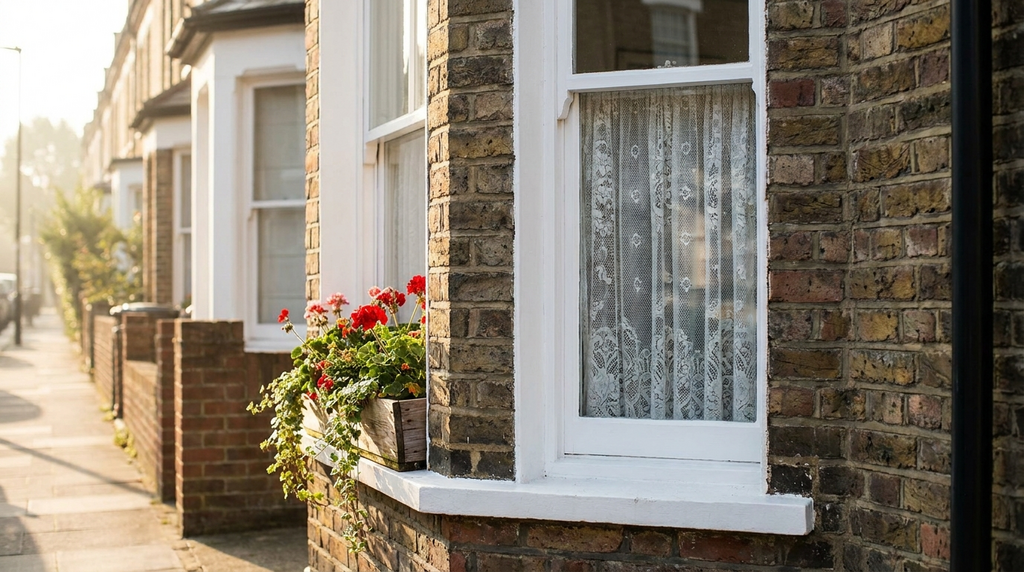
The Victorian and Edwardian terraces closer to the town centre and around the Castle Church area are a different story. These homes often have larger, taller sash-style windows with more complex profiles. Replacing them requires more care, more time, and often a conversation with the council if you’re near a conservation zone (more on that below). Timber-to-UPVC conversions are common here, though many heritage-conscious owners are choosing composite or timber-effect frames to maintain the character of their homes.
Practically speaking, a typical semi-detached installation in Stafford involves replacing eight to ten windows plus a front door, usually completed over one or two days. Access is generally good on Stafford’s residential streets, though some of the tighter terraced rows near the town centre can make van parking and equipment handling trickier. This rarely adds much cost, but it’s worth mentioning to your installer upfront so they can plan accordingly.
- 1930s–1950s semis, Typically have side-hung casements, sometimes with a decorative leaded top light. Standard replacement UPVC works well; some owners upgrade to flush casements for a period-appropriate look
- 1960s–1970s estates, Often have larger picture windows with slim frames. Modern slim-profile UPVC or aluminium is a good match
- Victorian and Edwardian terraces, Sash windows require specialist replacement; timber or timber-effect UPVC recommended near conservation areas
- 1980s–1990s new builds, May already have double glazing that simply needs upgrading to modern A-rated or A+ units
One practical tip, if your home has cavity walls (very common in the post-war stock across Stafford), it’s worth considering cavity wall insulation at the same time as your glazing upgrade. The two work together brilliantly, and having both done in sequence often means better combined quotes from contractors.
How Much Double Glazing Costs in Stafford and the West Midlands Area in 2026
Let’s get into numbers, because vague “prices from £X” estimates are genuinely unhelpful when you’re trying to budget. The figures below reflect what Stafford homeowners are actually paying in 2026, based on typical property sizes and specifications common to this area.
| Property Type | Number of Windows | Standard UPVC Double Glazing | A-Rated UPVC (Triple Glazing Option) | Aluminium Slim-Profile |
|---|---|---|---|---|
| Mid-terrace (2 bed) | 5–7 windows | £2,800 – £3,800 | £3,600 – £5,000 | £4,500 – £6,200 |
| Semi-detached (3 bed) | 8–10 windows | £4,200 – £5,500 | £5,500 – £7,200 | £7,000 – £9,500 |
| Semi-detached (4 bed) | 10–13 windows | £5,500 – £7,000 | £7,000 – £9,500 | £9,000 – £12,500 |
| Detached (3–4 bed) | 12–16 windows | £6,500 – £9,000 | £8,500 – £12,000 | £11,000 – £16,000 |
These prices include supply, installation, and disposal of old frames. They do not include front or back doors, which typically add £900 – £1,800 per door depending on specification.
Compared to the national average, Stafford sits slightly below the UK median, roughly 5–10% cheaper than equivalent work in London or the South East. Labour costs here are moderate, in line with the wider West Midlands picture. You’ll generally find better prices here than in Lichfield (which commands a small premium due to its conservation area density) but similar rates to Cannock or the residential parts of Wolverhampton.
Factors that can push your quote higher in Stafford specifically include restricted access on narrow terraced streets, bay window configurations (common in the 1930s stock), and any requirement for specialist heritage profiles if you’re near a listed building or conservation zone.
How Stafford’s Weather and Location Shape the Right Double Glazing Choice
Stafford sits in the centre of central England, and that geography matters more than people realise when choosing glazing. You’re sheltered from the battering coastal winds that make life difficult for homeowners in, say, Aberystwyth or Scarborough, but you’re not in a mild southern bubble either.
The town records around 1,500 to 1,800 heating degree days annually, which is close to the national average but notable for its consistency. Unlike areas with milder winters, Stafford homeowners genuinely feel the cold from November through to March. You’re also getting 700–1,000mm of rainfall per year, spread fairly evenly across the seasons. That means good-quality seals and drainage channels in your window frames aren’t a luxury, they’re essential for preventing water ingress over the long term.
Sunshine hours here run at around 1,000–1,200 per year, lower than the south coast but perfectly respectable. This is worth factoring into your glazing specification. South-facing rooms in Stafford homes can benefit meaningfully from solar gain through well-specified glass, helping to reduce heating demand in spring and autumn without the overheating risk you’d face further south.
What this all means practically is that Stafford is a town where mid-range thermal performance delivers excellent value. You don’t need to go to the premium end of triple glazing for every window, but you should absolutely not be cutting corners on U-values either. A window centre U-value of 1.0 W/m²K or better is the sweet spot for homes in this climate zone.
The Products and Options That Actually Perform Well in Stafford Homes
Given everything above, here’s an honest expert take on what works best for Stafford’s housing stock, not a generic brochure rundown, but specific guidance for the types of homes and conditions you’re dealing with here.
For 1930s–1960s Semis (the Holmcroft, Wildwood, Highfields Belt)
White or cream UPVC flush casements with a 28mm double-glazed unit (argon-filled, low-E coating) hit the performance sweet spot without over-specifying. Look for units with a centre-pane U-value of 1.0–1.1 W/m²K and a whole-window U-value around 1.4–1.6 W/m²K. This is your best cost-to-performance ratio for the volume of windows in a typical 3-bed semi.
For Victorian and Edwardian Terraces Near the Town Centre
Timber-effect UPVC or genuine engineered timber frames with slim double-glazed units (typically 24mm) are the way to go. These maintain the visual proportions of the original windows without sacrificing modern thermal performance. If you’re in or adjacent to a conservation area, get written confirmation from Stafford Borough Council’s planning team before ordering, it saves significant headaches.
Triple Glazing, Worth It in Stafford?
Triple glazing makes strong sense for north-facing rooms and any bedroom that faces a busy road (think the A34 or the areas around Stafford station). The noise reduction benefit alone justifies the premium in many cases. For south and west-facing aspects, standard high-performance double glazing is more cost-effective and allows slightly better passive solar gain.
- Minimum specification recommended, A-rated window energy rating, argon-filled, low-E glass, whole-window U-value 1.6 W/m²K or better
- Best-value upgrade, 28mm argon-filled double glazed units in UPVC frames
- Premium choice, Triple glazed units with warm-edge spacer bars and timber-effect profiles
- Avoid, Any unit with air-fill rather than argon, a false economy that costs little to upgrade but makes a real performance difference
How to Find a Trustworthy Double Glazing Installer Near Stafford
The good news is that Stafford is well-served by installer networks. Because the town sits between major centres like Wolverhampton (24km), Stoke-on-Trent (22km), Lichfield (24km), and Cannock (16km), most established regional firms will cover Stafford as part of their regular operating area. That means genuine competition, and that’s good for you.
The key certifications to look for are FENSA registration (this is the big one for replacement windows, it means your installation will be self-certified to building regulations without you needing a separate council inspection) and TrustMark accreditation. Both should be verifiable online before you sign anything.
Questions worth asking any installer before you commit
- Are you FENSA-registered, and will you provide the certificate after installation
- Who manufactures your frames and sealed units, are they UK-made
- What is the warranty on the sealed unit (look for 10 years minimum) and the frame (should be 20+ years)
- Do you carry your own public liability insurance
- Can you provide references from jobs done in Stafford specifically
Red flags to watch for include very high-pressure sales tactics, quotes that require a decision “today only,” unusually low prices that seem too good to be true, and any reluctance to provide written warranties. Lead times across the West Midlands currently run at 4–8 weeks from survey to installation for most reputable firms, be wary of anyone promising work in under two weeks unless it’s a very small job.
Getting three quotes is the standard advice, but make sure at least one is from a company that primarily operates in the Stafford area rather than a large national franchise. Local firms often have better knowledge of the specific planning requirements around Stafford’s conservation zones and tend to be more responsive if something needs adjusting after installation.
Grants and Funding That Could Cut Your Costs in 2026
This is where things get genuinely exciting for some Stafford homeowners, because the funding landscape in 2026 means a significant chunk of your double glazing costs could be covered if you meet certain criteria.
ECO4 (Energy Company Obligation)
ECO4 remains active and is the most accessible route for many Stafford residents. If your household receives qualifying benefits (including Universal Credit, Pension Credit, or Income Support) and your property is EPC Band D or below, which covers the majority of Stafford’s housing stock, you may be eligible for fully funded or heavily subsidised double glazing. Apply through your energy supplier or a registered ECO4 installer. This scheme has a finite budget, so earlier is better.
Great British Insulation Scheme (GBIS)
The Great British Insulation Scheme closed on 31 March 2026. It funded insulation measures only and never covered windows or glazing. Even if you’re not on benefits, if your property is EPC Band D or below and you’re in a lower Council Tax band, you may qualify for a contribution toward glazing and insulation measures. Stafford Borough Council can signpost you to registered local assessors who will check your eligibility at no charge.
Warm Homes – Local Grant
Delivered through local authorities, this scheme targets fuel-poor households in England. Stafford Borough Council has been involved in previous waves of similar schemes, check directly with the council’s housing team for the current status of local allocations, as funding rounds open and close periodically throughout the year.
West Midlands Combined Authority Retrofit Programme
Although Stafford is in Staffordshire rather than the WMCA’s direct area, some border schemes and installer networks do extend coverage. It’s worth checking whether any WMCA-funded programmes have eligibility for Staffordshire residents, particularly for social housing or low-income households, the boundaries are occasionally more flexible than the name suggests.
VAT on Energy-Saving Products
Glazing is standard-rated for VAT at 20%. The zero rate for energy-saving materials covers insulation, heat pumps and solar panels; HMRC names secondary and double glazing as excluded (VAT Notice 708/6). This represents an immediate 20% saving versus what you’d pay for a standard home renovation. Make sure your installer applies this correctly; it should appear clearly on your quote and invoice.
Planning Permission and Regulations in Stafford, What You Actually Need to Know
For most Stafford homeowners, the good news is that replacing windows with double glazing falls under Permitted Development rights, meaning you don’t need to apply for planning permission. However, there are important exceptions you need to be aware of before ordering anything.
Stafford Borough Council maintains several designated conservation areas where additional rules apply. The Stafford Town Centre Conservation Area, parts of the Castle Church district, and several village settings within the borough all have restrictions on the type and style of windows that can be fitted without prior approval. In these areas, you typically need to submit a householder application if the replacement windows differ materially from the originals in terms