Why Warminster Homeowners Are Paying Attention to Double Glazing Right Now
There’s something quietly happening on the residential streets of Warminster, from the Victorian terraces near the town centre to the post-war semis spreading out towards Bishopstrow and Boreham. Homeowners are looking at their windows with fresh eyes, and for good reason.
Warminster sits in a bit of an interesting position. The town’s average EPC rating is Band D, which puts it right in the middle of the national pack, not the worst, but with plenty of room to improve. A significant chunk of the housing stock here dates from the late Victorian era through to the 1970s, and a lot of those properties are still running on their original single-glazed or very early double-glazed units that are well past their best.
Add to that the fact that Wiltshire’s energy costs have tracked the national rises closely over the past few years, and suddenly replacing draughty old windows feels less like a luxury and more like a sensible household decision. With gas usage in Warminster households averaging around 10,800 kWh per year, there’s a genuine opportunity to take a bite out of your heating bills.
And here’s something that doesn’t get mentioned enough, Warminster enjoys some of the best solar irradiance in the UK, sitting in the South West’s sweet spot with around 1,100 to 1,200 kWh per square metre per year. That means south-facing double-glazed windows with the right specification can actually help warm your home passively during the winter months, working with your heating system rather than against it.
What Double Glazing Actually Involves for a Typical Warminster Home
If you live in one of Warminster’s semi-detached or terraced houses, and statistically, there’s a fair chance you do, the installation process is pretty straightforward in most cases, but there are a few Warminster-specific quirks worth knowing about.
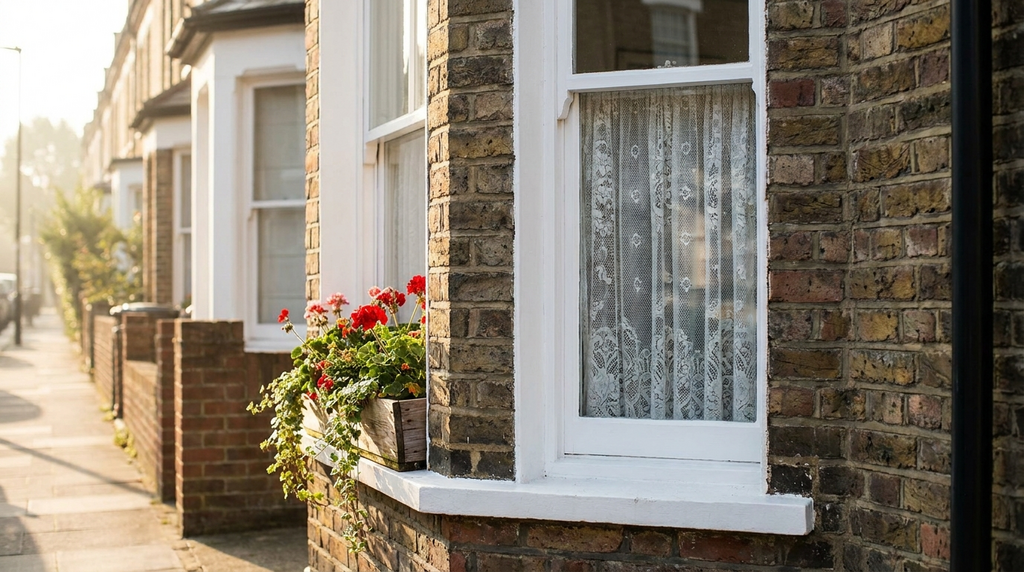
The terraced streets close to the town centre, particularly around George Street and the older parts near the High Street, often feature Victorian-era bay windows and sash windows. These need more careful measuring and specialist frames than a standard modern casement replacement. It’s not necessarily more expensive, but it does require an installer who knows what they’re doing with period properties.
Post-war semis, which you’ll find in good numbers across areas like Imber Road, Weymouth Street, and the estates towards Warminster Common, tend to be much more straightforward. Standard casement windows, predictable brick cavities, and accessible frontages make these relatively quick installations.
A few practical points that are specific to Warminster properties:
- Parking and access, Many of the older terraced streets have tight access and on-street parking. Installers will need to plan for this, and it can occasionally add a small charge or require an early start to secure the space.
- Lime mortar surrounds, On pre-1920 properties, the window surrounds may be set in lime mortar rather than modern sand and cement. This requires more care during removal to avoid damage to the surrounding masonry.
- Wiltshire stone and rendered façades, Some of the older properties in and around the town use local stone or render finishes. Making good after installation needs a finisher who understands these materials.
- Conservation considerations, Parts of central Warminster fall within the Warminster Conservation Area, managed by Wiltshire Council. More on this in the planning section below.
The typical installation for a three-bedroom semi in Warminster takes one to two days depending on the number of windows. Most installers working in the BA12 postcode area come out of larger nearby centres, Trowbridge, Frome, or Bath, so scheduling is usually done in clusters for the area.
How Much Double Glazing Costs in Warminster and the South West in 2026
Let’s get into the numbers you actually need. Prices in Warminster sit broadly in line with the South West average, though you’ll typically pay a small premium over central urban areas like Trowbridge simply because most specialist installers are travelling from those towns to reach you.
| Property Type | Number of Windows | Standard uPVC Double Glazing | Timber-Effect uPVC | Aluminium Frames |
|---|---|---|---|---|
| One-bed terraced flat | 4 to 5 | £2,800 to £3,500 | £3,200 to £4,200 | £4,000 to £5,200 |
| Two-bed terraced house | 6 to 8 | £3,800 to £4,800 | £4,500 to £5,800 | £5,500 to £7,200 |
| Three-bed semi-detached | 8 to 10 | £4,800 to £6,200 | £5,800 to £7,500 | £7,000 to £9,500 |
| Four-bed detached | 12 to 14 | £6,500 to £8,500 | £8,000 to £10,500 | £9,500 to £13,000 |
| Conservation area (like-for-like timber) | Per window | N/A | £600 to £900 | N/A |
These figures include supply, fitting, and VAT at 20%. They assume standard access and no structural remedial work. If your property needs lintel repairs, making-good in lime render, or specialist heritage glazing, expect to add £200 to £800 depending on the scope.
Compared to Bath (roughly 23km away), you’ll typically save 5 to 10% on installation costs in Warminster, Bath’s listed building density and parking costs push prices up there. Compared to Trowbridge or Frome, you’re broadly level, maybe marginally higher due to travel time.
The South West average for a full three-bed semi replacement runs around £5,200 to £5,800 in uPVC, which puts Warminster right in that zone.
How Warminster’s Weather and Location Shape the Right Glazing Choices
Warminster doesn’t get the battering that coastal towns in Cornwall or Somerset take. Sitting inland in the Wylye Valley, sheltered by the surrounding chalk downland and the edge of Salisbury Plain to the east, it enjoys a relatively benign climate. Winters are mild by UK standards, heating degree days run between 1,200 and 1,500 annually, which is meaningfully lower than northern England.
What this means practically is that you’re not selecting windows to withstand gale-force Atlantic storms. But you do face a few specific conditions worth factoring in:
- Moderate annual rainfall of 700 to 1,000mm, Sealing quality matters. Look for frames with a proven track record on drainage channels and gasket longevity. Cheaper units can let water track into sills over time.
- Occasional overnight frost on the Plain, Properties on the eastern fringe of Warminster, closer to the Military Training Area, can experience sharper frosts than the sheltered town centre. A low-E glass coating is worthwhile here.
- South-facing solar gain, This is genuinely worth thinking about for Warminster. With over 1,100 kWh/m² of solar irradiance annually, south-facing windows with a solar control glass specification can reduce winter heating load noticeably. Don’t over-specify solar control on north-facing windows though, you’ll block useful gain without much benefit.
- Condensation management, The Wylye Valley can trap morning mist and damp air. Warm-edge spacer bars (often called “super spacers”) in double glazed units significantly reduce internal condensation on cold mornings.
The upshot is that Warminster is actually a great environment for double glazing to perform well, not extreme enough to stress the products, but with enough solar resource to make a well-specified installation genuinely rewarding.
The Products and Specifications That Actually Perform Well Here
Given Warminster’s housing mix and climate, here’s what genuinely makes sense rather than what salespeople tend to push:
For Victorian and Edwardian Terraces
Timber-effect uPVC with a run-through mechanical joint (rather than welded corners) gives the most authentic appearance on period homes and satisfies most conservation area requirements without the maintenance burden of real timber. Aim for a U-value of 1.2 W/m²K or below on the overall window unit.
For Post-War Semis
Standard white uPVC casement windows with A++ energy ratings are perfectly suited here and give you the best value for money. Argon-filled sealed units with warm-edge spacers and a low-E coating (such as Pilkington K Glass or Saint-Gobain equivalent) are the sweet spot for this climate.
Glazing Specification to Ask For
- Frame U-value, Below 1.4 W/m²K for frames
- Centre pane U-value, 1.0 W/m²K or better
- Overall window U-value, 1.2 W/m²K or below (this is what really matters)
- Gas fill, Argon as standard; krypton if you want to push performance further
- Spacer bars, Warm-edge, not aluminium (aluminium spacers create cold bridging)
- Solar factor (g-value), Around 0.6 on south-facing windows to maximise passive heat gain in winter
Triple glazing is available but rarely the right choice for Warminster’s mild climate. The cost premium (typically 20 to 30% above double) rarely pays back within a sensible timeframe here. It makes more sense in colder northern locations. Spend the price difference on getting the double glazing specification absolutely right instead.
How to Find a Trustworthy Double Glazing Installer Near Warminster
Warminster doesn’t have a large local double glazing trade of its own, the town’s size means most reputable installers are based out of Trowbridge, Frome, Bath, or occasionally Devizes, and cover the BA12 postcode area as part of their regional patch. That’s not a problem, but it’s worth knowing so you can set expectations on response times and scheduling.
Here’s what to look for when shortlisting:
- FENSA registration, This is the essential one for double glazing. FENSA-registered installers self-certify that your new windows comply with Building Regulations, which matters when you come to sell your home.
- TrustMark accreditation, Backed by the government, this is a useful additional quality mark, particularly for older properties.
- Which? Trusted Trader or similar review verification, Ask for references specifically from properties in the BA12 area or nearby Frome and Trowbridge.
- Conservation area experience, If your home is in or adjacent to the Warminster Conservation Area, ask directly whether they’ve completed installations in Wiltshire Council conservation areas before. Ask to see examples.
Questions worth asking every installer you invite to quote:
- Are you FENSA registered and will you provide a FENSA certificate on completion?
- What U-value will the installed windows achieve, overall unit, not just centre pane?
- Do you use warm-edge spacer bars as standard or only on upgrade?
- How do you handle making-good of lime mortar or rendered surrounds?
- What is your current lead time for installations in the Warminster area?
Lead times across the South West in 2026 are running at approximately four to eight weeks for most residential installations. Be cautious of anyone who can start in under a week, this often signals they’re using subcontracted labour they’ve not worked with before.
A firm red flag is any installer who pressures you to sign on the day of the quote, citing a “special price” that expires immediately. Reputable companies working the Warminster area hold prices for at least 30 days.
Grants and Funding That Could Reduce Your Costs in 2026
There is financial support available for Warminster residents, though eligibility criteria mean not everyone will qualify. Here’s an honest breakdown of what’s on the table.
ECO4 (Energy Company Obligation, Phase 4)
This government scheme requires large energy suppliers to fund energy efficiency upgrades for eligible low-income households. Double glazing is a qualifying measure under ECO4 when installed as part of a whole-house retrofit package.
Who qualifies, Homeowners or private tenants receiving means-tested benefits (including Universal Credit, Pension Credit, or Income Support) with a property at EPC Band D or below. Given Warminster’s average Band D rating, many properties here do qualify on the property side.
How to apply, Contact Wiltshire Council’s energy efficiency team or go directly via the government’s ECO4 referral process through your energy supplier. Local advice is also available through Citizens Advice Wiltshire.
Great British Insulation Scheme (GBIS)
The Great British Insulation Scheme closed on 31 March 2026. It funded insulation measures only and never covered windows or glazing. This is worth exploring specifically if your Warminster home is Band D, the scheme’s targeting criteria align well with the local housing stock.
Wiltshire Council Home Energy Support
Wiltshire Council periodically runs area-based retrofit programmes for residents in fuel poverty or with low EPC-rated homes. Check the Council’s current housing pages at wiltshire.gov.uk for the most current offerings. Availability changes through the year as funding pots open and close.
VAT on Energy-Saving Materials
Glazing is standard-rated for VAT at 20%. The zero rate for energy-saving materials covers insulation, heat pumps and solar panels; HMRC names secondary and double glazing as excluded (VAT Notice 708/6). This applies to all installations and is already factored into the pricing table above. It’s a genuine saving you’re already benefiting from, roughly £250 to £400 on a full three-bed semi glazing package.
Realistic expectation, If you’re a working homeowner not in receipt of benefits, the full grant schemes are unlikely to apply to you. Glazing is standard-rated for VAT at 20%. The zero rate for energy-saving materials covers insulation, heat pumps and solar panels; HMRC names secondary and double glazing as excluded (VAT Notice 708/6).
Planning Permission and Regulations for Warminster Properties
The good news for most Warminster homeowners is that replacing windows with double glazing falls under permitted development rights, meaning no planning permission is needed, as long as