Why Corsham Homeowners Are Looking at Double Glazing Right Now
There’s something quietly urgent happening on the streets of Corsham. With energy bills still biting and the town’s average EPC sitting at Band D, more and more homeowners are realising that their windows are probably the biggest unaddressed heat leak in the house. It’s one of those improvements that seems obvious once you start feeling the draught from a rattling single-glazed sash in January.
Corsham is a town of character, Georgian stone terraces, Victorian semis, post-war estates. That mix is exactly why double glazing conversations here are more nuanced than in a newer development. You’re not just buying windows off a shelf. You’re navigating heritage constraints, stone frames, and the specific quirks of a Wiltshire market town where the aesthetics genuinely matter to both residents and planners.
There’s also a financial reality worth naming upfront. The average Corsham home uses around 12,100 kWh of gas per year, almost exactly the national median, but with energy unit prices remaining elevated, even modest efficiency improvements translate into real savings. Double glazing won’t halve your bills, but it makes a meaningful dent, especially in older pre-1980s properties that still have their original single-glazed windows.
Add to that Corsham’s growing community of retirees and long-term residents for whom warmth, quiet, and lower running costs genuinely matter, and you can see why installer enquiries from this postcode cluster have been climbing steadily.
What Double Glazing Actually Involves for a Typical Corsham Home
Let’s talk specifics. The most common property types in Corsham are terraced and semi-detached homes, with a significant portion built between the 1850s and 1970s. That building era shapes everything about how double glazing gets installed.
Older stone-built properties, particularly those in the town centre near the High Street and around Priory Street, often have solid stone or rubbed Bath stone window surrounds. These are gorgeous, but they create a challenge. Standard PVC-U frames can look incongruous against mellow limestone, and you may find that timber frames or a flush casement style is both more appropriate and more acceptable to planners.
For the post-war semis and estates on the edges of town, areas like the Lacock Road corridor and the newer residential patches towards the A4, installation is more straightforward. Standard cavities, conventional frames, and no particular heritage concerns mean you have more freedom on product choice and frame material.
Here’s what the installation process actually looks like for a typical three-bedroom Corsham semi
- A surveyor visits to measure every opening, no two frames are quite the same in older properties
- Units are ordered to those exact measurements (usually a 3-4 week lead time from South West suppliers)
- Installation typically takes 1-2 days for a full house, sometimes 3 for a larger or more complex Victorian terrace
- Old frames are removed and disposed of, ask your installer to confirm this is included
- New frames are fitted, sealed, and finished internally and externally
- A FENSA certificate is issued within a few weeks, which you’ll need when you sell the property
One practical issue specific to Corsham terraces, parking for the installer’s van and materials delivery can be tight on narrower streets close to the centre. It’s worth mentioning your street when you get quotes, as some installers will factor in a small access premium.
How Much Double Glazing Costs in Corsham and the South West Area in 2026
Prices in Corsham sit broadly in line with the wider Wiltshire market, though you’ll typically pay a small premium over national online quotes because local and regional installers from Chippenham, Trowbridge, or Bath are absorbing travel time into their pricing. Even so, the competition between installers serving this cluster of towns keeps costs reasonably competitive.
| Property Type | Number of Windows | Standard PVC-U | Timber or Flush Casement | Premium Heritage Style |
|---|---|---|---|---|
| Small terrace (2-bed) | 5-7 | £2,800 – £4,200 | £4,500 – £6,500 | £6,500 – £9,000 |
| Mid-size semi (3-bed) | 8-10 | £4,000 – £6,000 | £6,500 – £9,500 | £9,000 – £13,000 |
| Larger semi or detached (4-bed) | 11-14 | £5,500 – £8,000 | £8,500 – £12,000 | £12,000 – £17,000 |
| Victorian terrace with sash windows | 8-12 | Not recommended | £8,000 – £13,000 | £13,000 – £20,000 |
These figures include supply, fitting, and disposal of old frames. They do not include decorating after installation, budget an extra £200 to £500 for internal redecoration if your frames need replastering around the reveals.
How does this compare to nearby towns? Chippenham, being larger with more installers based there, tends to come in around 5-10% cheaper for like-for-like jobs. Bath is notably more expensive, particularly for heritage-spec work, often 15-25% above these figures. Trowbridge sits close to Corsham’s pricing. The South West regional average for a full 3-bed house reglaze in standard PVC-U is around £5,200, which puts Corsham squarely in the middle of the pack.
Insider tip, always get three quotes, and make sure each one specifies the glass unit specification (A-rated or better), frame U-value, and whether FENSA registration is included. Cheap quotes often omit one of these.
How Corsham’s Weather and Location Affect Your Double Glazing Choices
Corsham sits in a fairly sheltered part of Wiltshire, tucked between the Cotswold fringe to the north and the Vale of Pewsey to the south. You’re not getting the coastal battering of Cornwall, and you’re not in a high-altitude frost pocket like parts of Dartmoor. That actually works in your favour for double glazing longevity and product selection.
Rainfall sits in the 700-1,000mm per year range, enough to matter for frame durability and seal integrity, but not extreme. What this means practically is that standard quality PVC-U or aluminium frames will perform well without needing the heavy-duty marine-grade specifications sometimes required closer to the coast.
Winters here average around 1,200-1,500 heating degree days, on the milder end of the UK spectrum. You won’t experience the bitter Scottish winters, but you’ll still have cold, damp periods from November through February where good glazing makes a real comfort difference. The key performance metric to focus on is the whole-window U-value, you want 1.4 W/m²K or better as a baseline, and ideally below 1.2 W/m²K for older homes with larger window openings.
Here’s where Corsham’s location becomes genuinely interesting for glazing decisions. The South West has the best solar irradiance in the UK, around 1,100-1,200 kWh/m² per year. South and southwest-facing windows can contribute meaningful passive solar gain in winter. This means you should be thoughtful about solar control coatings, on south-facing windows, you generally want to retain solar gain in winter without overheating in summer. A standard low-e coating handles this well. Avoid heavy solar control glass on south-facing aspects unless you have a conservatory or glazed extension situation.
The Products and Options That Work Best in Corsham
Given the housing stock and climate here, here’s an honest expert take on what actually performs well rather than a generic product menu.
For Victorian and Edwardian terraces in the town centre
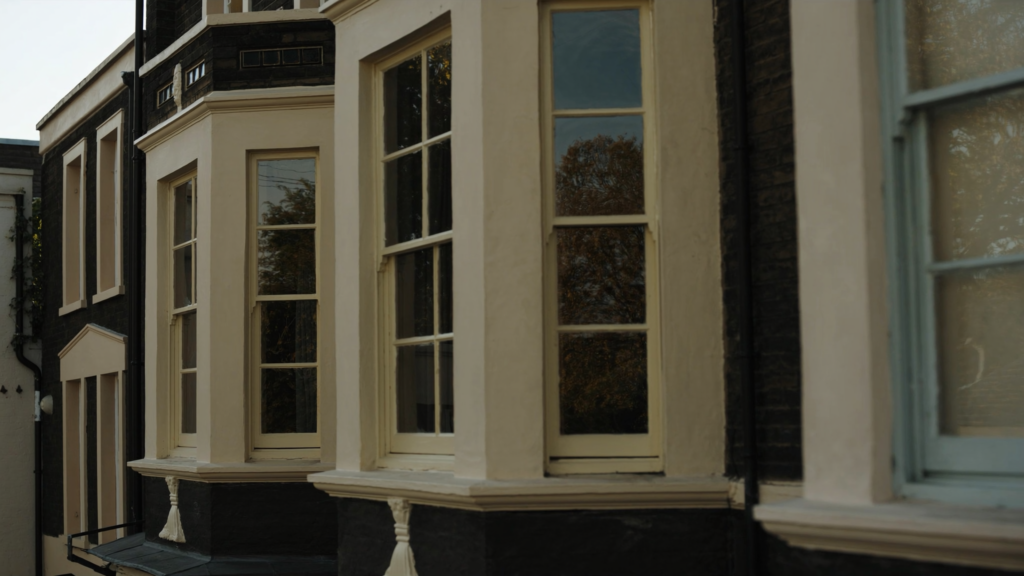
Timber or engineered timber frames with double glazed units are the right call. Flush casement windows (where the sash sits flush with the outer frame rather than proud of it) replicate the look of traditional windows far better than standard PVC-U. Specify softwood with a factory-applied microporous paint finish for durability, or engineered timber composites which are more dimensionally stable in damp conditions.
For post-war semis and estates
High-quality PVC-U in a white or woodgrain finish is perfectly appropriate and represents excellent value. Look for A-rated or A+ rated units with a whole-window U-value of 1.2 W/m²K or better. Argon-filled double glazed units with warm-edge spacer bars (the plastic or composite strip between the panes) outperform older aluminium spacer bar units for thermal performance and condensation resistance.
Glazing specifications worth asking for
- Low-e glass coating, reduces heat loss without blocking daylight. Essential on north and east-facing windows
- Argon fill between panes, standard now and should be included as a matter of course
- 28mm sealed unit, marginally better than 24mm where frames allow it
- Warm-edge spacer bars, reduces cold-edge condensation and improves edge-of-glass U-values
- Acoustic interlayer, worth considering if you’re on or near the A4 Bath Road, where traffic noise is a real nuisance
Triple glazing is worth mentioning, it’s excellent for noise reduction and peak thermal performance, but for Corsham’s relatively mild winters, the cost premium (typically 25-40% more than double) rarely delivers a proportionate return in energy savings alone. If noise from the A4 is your primary driver, triple glazing earns its keep. If it’s purely thermal, stick with high-spec double glazing.
How to Find a Trustworthy Double Glazing Installer Near Corsham
Corsham is a small town of around 13,000 people, which means you’re unlikely to find a dedicated glazing company with a showroom on the High Street. The market here is served by installers based in Chippenham (about 5km away), Trowbridge (13km), and occasionally Bath (14km) for heritage or premium work. A handful of sole traders and smaller regional companies also cover this postcode from across the wider Wiltshire area.
That’s not a problem, most good installers operate across a 15-20 mile radius, but it does mean you need to be a little more proactive about vetting them.
Certifications to look for
- FENSA registration, non-negotiable. FENSA-registered installers self-certify their work to building regulations, which means you get a certificate without needing a separate building control inspection. Without this, you’ll have problems when you come to sell
- TrustMark registration, indicates the installer has been vetted for quality, trading practices, and insurance
- Which? Trusted Trader or Checkatrade profile, useful secondary verification, especially for smaller sole traders
- Manufacturer accreditation, being an approved installer for brands like Rehau, Synseal, or Deceuninck means they’ve been trained on those specific systems
Questions worth asking before you sign anything
- Are you FENSA-registered and will the certificate be in my name
- What’s the U-value of the whole window unit you’re quoting
- Is frame disposal included
- What’s your lead time from order to installation
- Do you carry public liability insurance above £2 million
- Can you provide references from jobs in Corsham or nearby Chippenham
Red flags to watch for, pressure to sign on the day, unusually low quotes that don’t specify glass ratings, no fixed address on their quote document, and any suggestion that you don’t need FENSA certification. Walk away from all of these.
Lead times across the South West in 2026 are running at approximately 4-6 weeks from order to installation for most standard jobs, occasionally longer for bespoke heritage frames.
Grants and Funding That Could Reduce Your Costs in 2026
This is where things get genuinely useful, and where a lot of homeowners miss out simply because they don’t know what to ask for.
ECO4 Scheme
The Energy Company Obligation (ECO4) can fund window upgrades as part of a broader home insulation package for eligible households. In Corsham, this applies to homeowners and private renters who receive means-tested benefits (including Universal Credit, Pension Credit, or income-related ESA) and whose property is rated EPC Band D or below, which describes the majority of the town’s housing stock. Application is through your energy supplier, not the council. Funding can cover the full cost of windows in the right circumstances.
Great British Insulation Scheme (GBIS)
The Great British Insulation Scheme closed on 31 March 2026. It funded insulation measures only and never covered windows or glazing. Corsham properties in these bands may be eligible for partially subsidised glazing as part of a wider insulation measure. The Great British Insulation Scheme closed on 31 March 2026. It funded insulation measures only and never covered windows or glazing.
Wiltshire Council Support
Wiltshire Council periodically administers retrofit support through the Warm Homes scheme and has participated in the South West Net Zero Hub’s area-based retrofit programmes. These are worth checking directly with the council, programmes open and close through the year, and a phone call to their housing team often surfaces options that aren’t prominently advertised online.
VAT
Glazing is standard-rated for VAT at 20%. The zero rate for energy-saving materials covers insulation, heat pumps and solar panels; HMRC names secondary and double glazing as excluded (VAT Notice 708/6). Glazing is standard-rated for VAT at 20%, so a quote showing 20% VAT is correct and should not be challenged. The zero rate for energy-saving materials covers insulation, heat pumps and solar panels; HMRC names secondary and double glazing as excluded (VAT Notice 708/6).
Honest note on grants, standalone double glazing is harder to fund than whole-home retrofit packages. Your best chance of significant grant support is if you’re combining windows with loft insulation, wall insulation, or a heat pump under a coordinated scheme. If you’re considering multiple improvements, package them together and approach funding schemes with the full picture.
Planning Permission and Regulations in Corsham
For most Corsham homeowners, double glazing falls under permitted development rights, meaning you don’t need to apply for planning permission. This applies to houses (not flats) where you’re replacing like-for-like in terms of style and frame colour, and where the property isn’t in a conservation area or listed.
However, Corsham has a designated Conservation Area covering much of the historic town centre, and this changes the rules. The Corsham