Belfast’s Housing Story and Why Eco Upgrades Matter More Here Than You’d Think
Belfast is one of the UK’s most architecturally fascinating cities, and its housing tells that story clearly. Much of the city’s residential fabric dates from the Victorian and Edwardian era, think the long red-brick terrace rows of the Lower Falls, Shankill, and Ballymacarrett that were built to house shipyard and linen mill workers from the 1860s onwards. Add in the post-war semi-detached estates of Andersonstown, Castlereagh, and Finaghy, plus newer suburban developments around Newtownbreda and Dunmurry, and you’ve got an enormous range of property ages sitting side by side.
What ties most of these homes together is this, they were built before energy efficiency was even a consideration. Solid brick walls, single-glazed sash windows, draughty suspended timber floors, and little or no roof insulation were simply standard. And because a significant portion of Belfast sits in a natural bowl formed by the surrounding hills of Black Mountain, Divis, and the Castlereagh Hills, cold air pooling and damp westerly winds make heating these properties a genuine challenge every winter.
The good news? Belfast City Council’s Belfast Climate and City Resilience Strategy has earmarked significant attention to residential retrofit, and Northern Ireland’s separate regulatory framework means there are funding routes here that aren’t available in England or Wales. If you own a home in Belfast, 2026 is genuinely one of the better years to start making improvements.
How Energy-Efficient Are Belfast Homes in Reality
Belfast’s average EPC rating sits at Band D, which puts it broadly in line with the Northern Ireland average and the UK as a whole. But averages can be misleading. In streets like those off the Ormeau Road, Newtonards Road, or the dense Victorian terraces of north Belfast, Band E and F ratings are common, particularly in unimproved pre-1919 properties.
What does Band D actually feel like to live in? It typically means your home is losing heat faster than it should, your boiler (or oil burner, more on that below) is working overtime from October to April, and your energy bills are noticeably higher than they need to be. With Belfast’s average gas usage running at around 13,000 kWh per year and electricity at 3,300 kWh per year, here’s what that looks like in pounds:
| Energy Type | Annual Usage | Estimated Annual Cost (2026) |
|---|---|---|
| Gas (where available) | 13,000 kWh | £910 – £1,040 |
| Electricity | 3,300 kWh | £660 – £760 |
| Heating oil (very common in Belfast) | Equiv. 13,000 kWh | £1,050 – £1,300 |
That a large number of Belfast homes are off the gas grid and rely on heating oil, particularly in the outer suburbs and hillside areas near Hannahstown and Upper Andersonstown. Oil prices in Northern Ireland have historically been more volatile than mains gas, making the case for switching to a heat pump or improving insulation even stronger.
Improving a typical Band D Belfast terrace to Band C could realistically save you £300 – £600 per year depending on your current heating fuel and the improvements you make. That’s real money, and it compounds over the years.
Solar Panels in Belfast, More Worthwhile Than People Expect
Yes, Belfast is rainy. Yes, it sits at around 54.5 degrees north. But solar panels don’t need blazing sunshine, they need daylight, and Belfast gets a meaningful amount of that, particularly in summer when days are long. The city averages around 850 – 1,000 sunshine hours per year, and modern panels are significantly more efficient than those installed even five years ago.
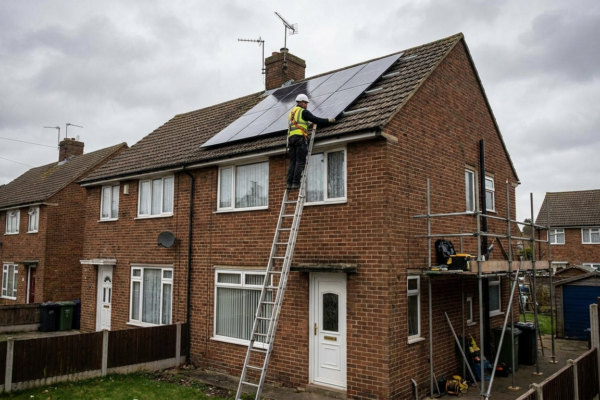
South-facing roofs on the terraced streets of Stranmillis, the Malone Road area, or semi-detached homes in Dundonald and Carryduff can perform well. The main local factor to be aware of is Belfast’s coastal proximity, salt air from Belfast Lough accelerates corrosion on cheaper aluminium frames and fixings, so marine-grade mounting hardware is essential and worth specifically asking about when getting quotes.
The other thing to flag is rainfall. With Belfast receiving well over 1,000mm of rain per year, panels do get a natural rinse more often than in drier parts of the UK, but grime from urban air still builds up, so a clean every 12 months or so helps maintain output.
| System Size | Typical Install Cost (2026) | Annual Generation (Belfast) | Annual Bill Saving | Payback Period |
|---|---|---|---|---|
| 3kW system | £5,500 – £6,500 | ~2,200 kWh | £380 – £460 | 13 – 16 years |
| 4kW system | £6,500 – £8,000 | ~2,900 kWh | £490 – £600 | 12 – 15 years |
| 6kW system | £8,500 – £10,500 | ~4,300 kWh | £700 – £850 | 11 – 14 years |
Adding a battery storage unit (typically £2,500 – £4,000 extra) makes a lot of sense in Belfast because self-consumption rates are lower in winter, a battery lets you store summer and lunchtime generation for evenings. If you’re on a time-of-use electricity tariff with Power NI or SSE Airtricity, the savings stack up further.
Note that in parts of Belfast with conservation area status, such as the Stranmillis Conservation Area or streets within the Queen’s Quarter, you may need planning permission for solar panels. Belfast City Council planning department handles all applications, and it’s worth a quick call to confirm before you commit.
Heating Choices That Actually Suit Belfast’s Climate and Housing Stock
Heating is the big one for most Belfast homeowners. Cold winters with a typical 1,800 – 2,200 heating degree days per year, combined with draughty older housing stock, means your heating system choice makes a significant difference to both comfort and bills.
Gas Boilers
If you’re on the gas grid, which covers much of inner Belfast including the north, south, and east of the city, a modern condensing combi boiler is still a cost-effective option in 2026, particularly if you’re planning to sell within five years and don’t want the capital outlay of a heat pump. A quality replacement boiler runs £2,000 – £3,500 installed and can cut gas consumption by 15 – 20% if you’re replacing a system that’s over 15 years old.
Air Source Heat Pumps
Air source heat pumps (ASHPs) are increasingly popular in Belfast, particularly for off-grid oil-heated homes in suburbs like Castlereagh and Newtownbreda. They work by extracting heat from outside air even at temperatures as low as -15°C, which is well within Belfast’s range. Running costs depend heavily on your electricity tariff, but a well-installed ASHP in a properly insulated Belfast semi-detached should cost around £900 – £1,300 per year to run, compared to £1,100 – £1,400 for oil heating.
The important caveat, heat pumps work best in well-insulated homes. If your walls and loft aren’t up to scratch, sort the insulation first. Trying to run an ASHP in a draughty Victorian terrace on the Shankill Road is like filling a bath with the plug out.
Ground Source Heat Pumps
Ground source heat pumps are less common in Belfast’s dense urban terraces simply because they need outdoor ground space for collectors. They’re more viable for detached homes on larger plots in areas like Malone, Newtownbreda, or out towards the Castlereagh Hills. Install costs run £15,000 – £25,000, but efficiency is higher than air source, making them attractive for larger properties with high heating demand.
| Heating System | Install Cost | Est. Annual Running Cost | Best Suited To |
|---|---|---|---|
| Gas combi boiler (replacement) | £2,000 – £3,500 | £900 – £1,100 | Gas-connected terraces and semis |
| Air source heat pump | £8,000 – £14,000 | £900 – £1,300 | Insulated semis, off-grid homes |
| Ground source heat pump | £15,000 – £25,000 | £700 – £1,000 | Larger detached homes with garden |
| Oil boiler (replacement only) | £2,500 – £4,500 | £1,050 – £1,300 | Short-term fix for off-grid homes |
Where to Start With Insulation in a Belfast Home
Insulation is almost always the smartest starting point before any heating upgrade, and for Belfast’s older housing stock, the potential savings are substantial. Here’s a practical priority order for the typical terrace or semi-detached home here.
Loft Insulation, Do This First
Up to 25% of a home’s heat is lost through the roof. If your loft has less than 270mm of mineral wool insulation (or none at all, which is not unusual in pre-war terraces), topping it up is the cheapest efficiency improvement you can make. Cost: £300 – £600. Annual saving: £150 – £250. Most installers serving Belfast will cover the surrounding area including Lisburn, Carrickfergus, and Newtownards, so you’re well-served for choice.
Cavity Wall Insulation
Many of Belfast’s post-1930s semi-detached homes, including a huge swathe of the estates built in Finaghy, Dunmurry, and Taughmonagh, have unfilled cavity walls. This is a relatively quick fix. Cost: £500 – £1,000. Annual saving: £150 – £300.
Solid Wall Insulation
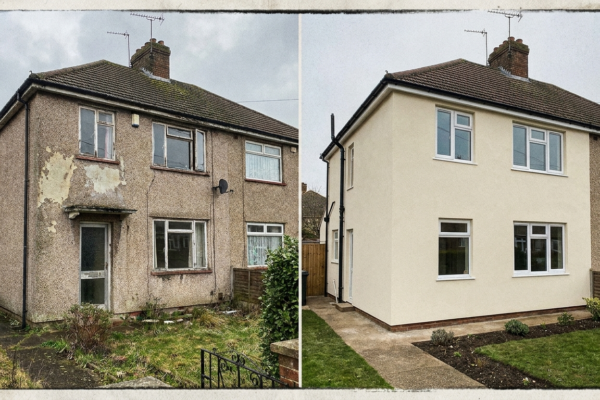
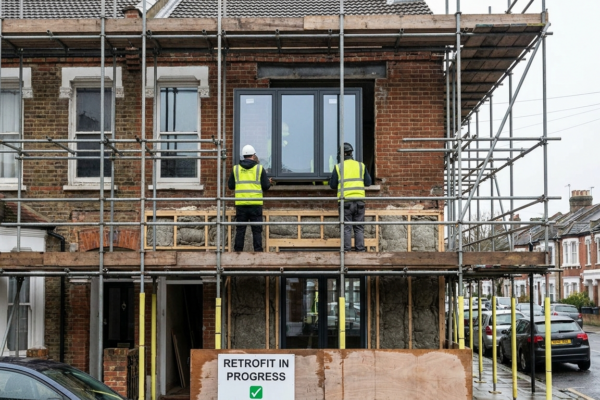
The Victorian and Edwardian terraces in north and west Belfast have solid brick walls, no cavity to fill. Your options are internal wall insulation (which reduces room size slightly but avoids exterior work) or external wall insulation (EWI). Given Belfast’s high rainfall and prevailing westerly winds, EWI render must be specified for driving rain exposure, a good installer will use a BS EN 13914-compliant render system rated for high-exposure zones. EWI cost: £8,000 – £18,000 for a full terrace. Annual saving: £300 – £500. Internal insulation runs £4,000 – £8,000.
Floor Insulation
Suspended timber ground floors, common in older Belfast properties, can lose a surprising amount of heat. Insulating beneath the floorboards costs £800 – £1,500 and saves around £50 – £100 per year. It’s not the most dramatic saving, but it makes a real difference to comfort on cold winter mornings.
Double or Triple Glazing
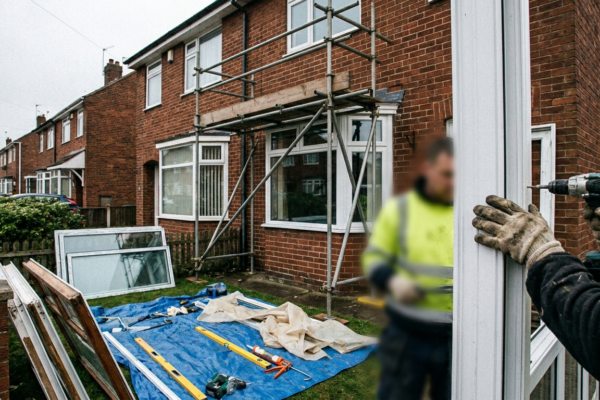
If you still have single-glazed sash windows, and many homes in the Ormeau, Botanic, and university areas do, replacing them with high-performance double glazing saves around £100 – £150 per year and dramatically improves comfort. In conservation areas, you’ll need to use sympathetic timber-framed or heritage-style units to meet planning requirements from Belfast City Council.
Grants and Funding Available to Belfast Homeowners in 2026
Northern Ireland has its own energy funding landscape, which is both an advantage and a source of confusion. Here’s a plain-English breakdown of what’s actually available.
The NI Sustainable Energy Programme (NISEP)
NISEP is funded by a levy on electricity bills and administered through energy suppliers including SSE Airtricity and Power NI. It funds insulation measures and heating upgrades for eligible households, typically those on low incomes or receiving qualifying benefits. If you qualify, you may receive free or heavily subsidised insulation and boiler replacement. Contact your electricity supplier directly to check eligibility and ask for a home energy assessment.
The Affordable Warmth Scheme
Run by the Northern Ireland Housing Executive (NIHE), the Affordable Warmth Scheme provides grants of up to £10,000 for energy efficiency measures including insulation, heating system replacement, and draught-proofing. It’s means-tested and targeted at homeowners and private tenants on low incomes. Apply through your local district office or directly via the NIHE website. Given Belfast’s higher-than-average fuel poverty rate, particularly in north and west Belfast, this scheme is well worth checking even if you’re not certain you’ll qualify.
The Great British Insulation Scheme and ECO4 (NI Equivalent)
Northern Ireland does not directly participate in the GB-based ECO4 or GBIS schemes. However, equivalent support is channelled through NISEP and the Affordable Warmth Scheme above. Don’t assume GB scheme eligibility translates here, always verify through a Northern Ireland-registered energy advice service.
The Boiler Upgrade Scheme, Heat Pumps
The Boiler Upgrade Scheme is available in England and Wales only, so it is not open to Northern Ireland households. This is administered through Ofgem and is available in Northern