Carrickfergus, A Castle Town With a Very Familiar Energy Problem
Carrickfergus is one of those towns that tends to surprise people. The Norman castle sitting right on the shores of Belfast Lough is genuinely one of the best-preserved medieval fortresses in Ireland, and the town itself has a character that’s quite distinct from the suburban sprawl of nearby Belfast, just 15 kilometres down the A2. With around 28,000 residents and a mix of tight-knit older streets near the waterfront and larger post-war and 1980s estates spreading up the hillside towards Knockagh Monument, it’s a proper community with a real range of housing stock.
That range of housing is actually at the heart of why eco improvements matter so much here. Many of the semi-detached and terraced homes on estates like Sunnylands, Taylor’s Avenue, and the Woodburn area were built during the 1950s through 1980s with very little thought for insulation. Meanwhile, the seafront and older town streets contain Victorian and Edwardian terraces that lose heat through solid walls, single-glazed windows, and draughty original floors. Add in the salt-laden westerly winds rolling off Belfast Lough and some genuinely cold winters, and you’ve got a town where energy bills can feel punishing, and where smart upgrades can make a real difference.
Planning and building regulations here are handled by Mid and East Antrim Borough Council, which is important to know before you start any external work. For the wider picture on eco homes across the county, take a look at our eco homes in Antrim overview.
What Does Band D Actually Mean for Your Carrickfergus Energy Bills?
The average home in Carrickfergus sits at EPC Band D, which sounds middling, and honestly, that’s about right. It means your home is losing more heat than it should, but it’s not a lost cause. Band D homes typically have some insulation somewhere (maybe loft insulation that’s thinned over time, or double glazing that was fitted in the 1990s) but they’re missing the joined-up efficiency that cuts bills significantly.
In practical terms, a Band D semi-detached home in Carrickfergus using 12,500 kWh of heating per year, right around the local average, is likely spending somewhere between £1,450 and £1,750 annually on heating alone, depending on whether it’s on oil (very common here, as many Carrickfergus streets are off the gas network) or using electricity. Oil prices in Northern Ireland fluctuate, but the average household heating oil cost in 2026 sits around £1,100 to £1,400 per year for a typical semi-detached home.
Northern Ireland as a whole tends to trail behind England in average EPC ratings, partly because of the high proportion of older housing stock and the widespread use of oil boilers, which score less favourably than modern gas condensing boilers. A Band D rating here isn’t unusual, but it does mean there’s meaningful money to be saved. Moving to Band C, which is achievable for most Carrickfergus semis with a focused set of improvements, could cut your heating bill by £350 to £600 per year.
Solar Panels in Carrickfergus, More Viable Than You Might Think
People often assume that Northern Ireland’s reputation for cloud and rain rules out solar panels. It doesn’t. Carrickfergus gets around 850 to 950 sunshine hours per year, not Cornwall, certainly, but enough to make solar genuinely worthwhile, especially given rising electricity prices. The town’s coastal position means panels need more frequent cleaning (salt deposits reduce output) and marine-grade mounting hardware is essential to resist corrosion from the salt air off Belfast Lough.
Most homes on estates like Antiville and Sunnylands have pitched roofs with reasonable south or south-west facing aspects, the south-west tilt is actually helpful here as it catches the afternoon sun that tends to break through more reliably. Homes on the steeper ground above the town, towards the Knockagh ridge, may benefit from slightly better exposure but also face stronger wind loads, so fixings need to be solid.
| System Size | Typical Install Cost (2026) | Estimated Annual Generation | Annual Bill Saving | Payback Period |
|---|---|---|---|---|
| 3kW system | £5,500 – £6,500 | 2,300 – 2,600 kWh | £380 – £460 | 13 – 16 years |
| 4kW system | £6,800 – £8,000 | 3,000 – 3,500 kWh | £490 – £580 | 12 – 15 years |
| 6kW system | £9,500 – £11,500 | 4,400 – 5,000 kWh | £700 – £820 | 12 – 14 years |
Adding a battery storage system (typically £2,500 to £4,000 extra) makes more sense in Carrickfergus than in many UK towns, because you can bank daytime generation and use it in the evening rather than exporting it at low rates. If you’re on an economy tariff through Power NI or SSE Airtricity, a well-sized battery can shave another £150 to £200 off your annual bill.
One thing worth knowing, if your home is in or near the Carrickfergus Conservation Area (the older streets around the castle and seafront), you’ll need to check permitted development rules with Mid and East Antrim Borough Council before installing panels. Listed building consent may be required for older properties in those streets.
Heating Systems That Suit Carrickfergus Homes and Its Climate
This is where Carrickfergus gets genuinely interesting compared to many English towns, oil heating is the dominant fuel here, not mains gas. A large proportion of homes in Carrickfergus, particularly on older estates and in the rural fringes beyond Woodburn, rely on oil boilers. That changes the maths on upgrades considerably.
Here’s how the main options compare for a typical 3-bedroom semi in Carrickfergus:
- Modern condensing oil boiler (replacement), costs £2,500 to £3,500 to install. Annual running costs around £1,100 to £1,400. A sensible short-term option if your current boiler is elderly, but oil prices remain volatile and this isn’t a long-term solution.
- Air source heat pump (ASHP), costs £8,000 to £14,000 installed (after grant support this can drop significantly, see the grants section). Annual running costs for a well-insulated Carrickfergus semi would be approximately £800 to £1,100 using electricity. Works well here because modern ASHPs operate efficiently even in the cold winters typical of this part of the Antrim coast.
- Ground source heat pump (GSHP), costs £18,000 to £28,000 and needs garden space for ground loops. Better suited to detached homes with larger plots on the outskirts of town. The ground temperature around Carrickfergus stays consistent enough to make GSHPs highly efficient, but the upfront cost is significant even with grants.
For most Carrickfergus terraced homes and semi-detacheds, an air source heat pump combined with improved insulation is the strongest long-term move. The key is getting the insulation right first, a heat pump in a poorly insulated 1970s terrace will struggle and cost more to run.
Starting With Insulation, What Makes the Biggest Difference Here
Given the cold winters and the driving westerly rain that hits Carrickfergus off the lough, insulation saves money and improves comfort. Here’s where to focus, in order of impact for the typical Carrickfergus semi or terrace:
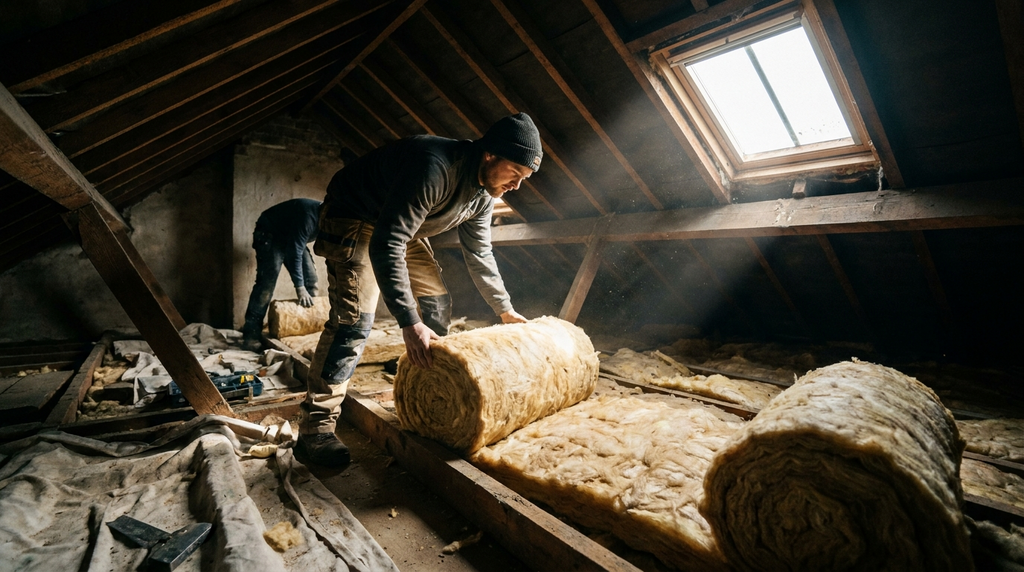
- Loft insulation, If your loft has less than 270mm of mineral wool, topping it up is your quickest win. Cost is typically £300 to £600 for a standard semi. Annual saving around £150 to £220. Payback in under 3 years.
- Cavity wall insulation, Most Carrickfergus homes built after the late 1950s will have cavity walls. Filling them costs around £600 to £1,200 and saves roughly £200 to £300 per year. One caution, given the high rainfall and driving rain exposure here, make sure your installer assesses whether your cavity is suitable. Poorly fitted cavity insulation in exposed coastal locations can cause damp. Ask for a full wall survey before agreeing to anything.
- Floor insulation, Older terraces near the town centre often have suspended timber floors that let cold air pour in underneath. Insulating these costs £800 to £1,500 and can save £50 to £100 per year. Not the biggest financial win, but the comfort improvement is remarkable.
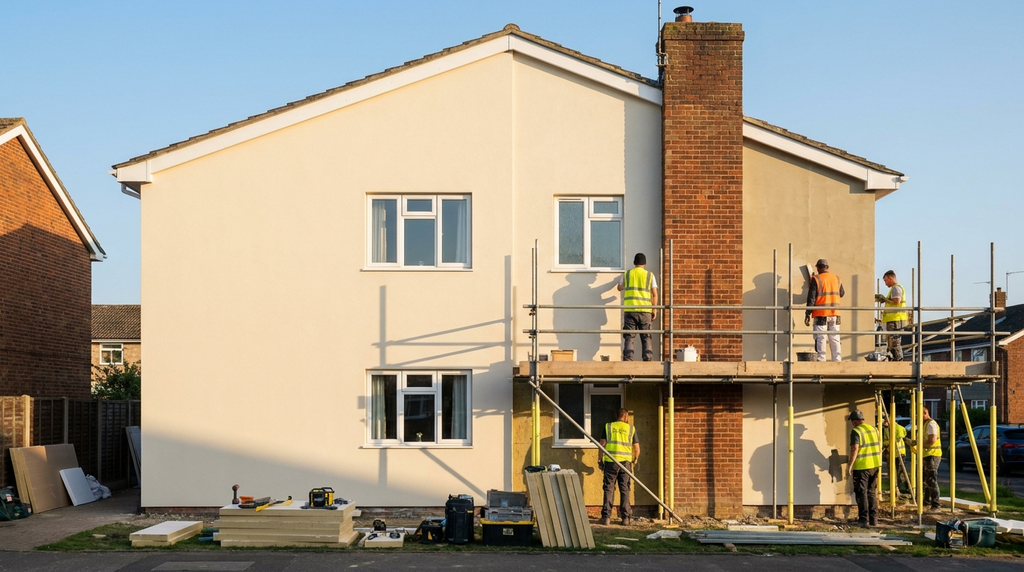
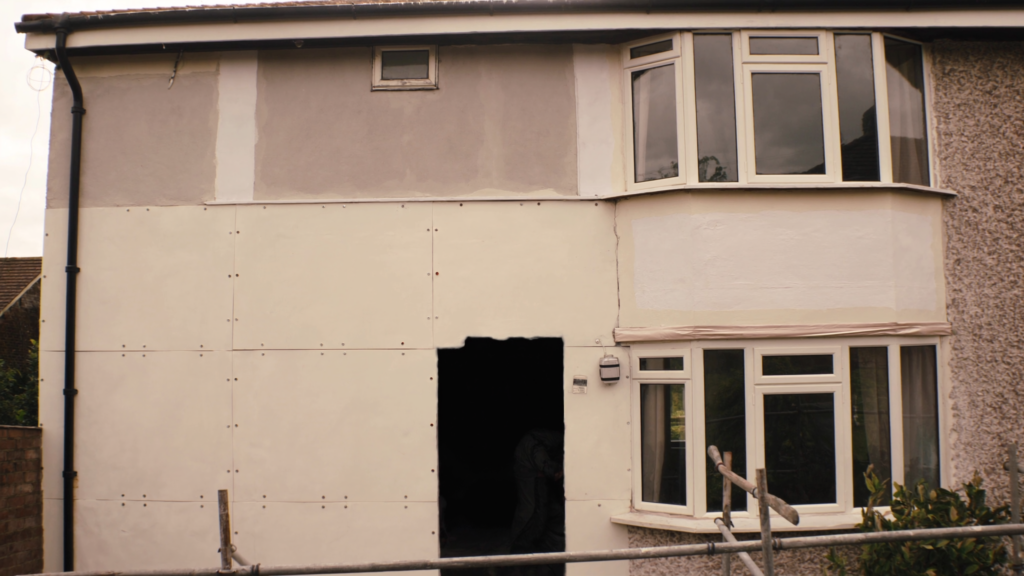
- External wall insulation (EWI), For solid-walled Victorian terraces in older streets, EWI is the main option. Costs are significant at £8,000 to £15,000 for a typical terrace, but savings of £300 to £500 annually are realistic. Critically, in Carrickfergus’s coastal setting, you must use a render system rated for high-exposure zones, standard silicone render should be fine, but get this confirmed in writing by your installer. Mid and East Antrim Borough Council planning permission is usually needed for EWI on terraced streets due to the change in external appearance.
Grants and Funding You Can Actually Access in 2026
Northern Ireland has its own funding landscape, which is genuinely different from England and Wales. Here’s what Carrickfergus homeowners should know:
- The NI Sustainable Energy Programme (NISEP), Administered through your energy supplier (Power NI, SSE Airtricity, and others). Funds insulation, heating controls, and sometimes heat pump installations. Eligibility isn’t solely means-tested, some measures are available to any homeowner. Contact your supplier directly and ask what NISEP-funded measures you qualify for.
- The Affordable Warmth Scheme, Targeted at lower-income households. Covers insulation, boiler replacements, and heating system upgrades with grants that can reach £7,500 or more. Apply through the NI Housing Executive or check eligibility at nidirect.gov.uk. Households receiving certain benefits are likely to qualify.
- The Boiler Replacement Scheme (NI), Provides support for replacing inefficient oil boilers with modern alternatives including heat pumps. Worth checking current availability as funding rounds open periodically throughout the year.
- The Boiler Upgrade Scheme is available in England and Wales only, so it is not open to Northern Ireland households. Your installer must be MCS-certified to access this. It comes off the installation cost directly, you just pay the balance.
- VAT reduction on energy-saving materials, Installation of qualifying products including insulation, heat pumps, and solar panels attracts 0% VAT rather than the standard 20%. This is a meaningful saving on larger jobs.
A realistic example, a Carrickfergus homeowner replacing an old oil boiler with an air source heat pump could get £7,500 off through the Boiler Upgrade Scheme, pay no VAT on the installation, and potentially access additional NISEP funding through their supplier. The net cost of a heat pump installation can look very different from the headline price once grants are stacked properly.
Finding a Good Installer Around Carrickfergus
The good news is that Carrickfergus sits between Belfast (15km) and Larne (16km), which means you’re within easy reach of a decent pool of installers who regularly work across this stretch of the Antrim coast. Companies covering Belfast will generally serve Carrickfergus without a call-out premium, and Bangor-based firms (11km away) often cover this area too.
Here’s what to check before hiring anyone:
- MCS certification, Essential for solar panels and heat pumps if you want to access grants. Check the MCS installer database at mcscertified.com before you agree to anything.
- OFTEC registration, Required for any work on oil heating systems. Non-registered engineers working on oil boilers is a red flag.
- Experience with coastal properties, Ask specifically whether they’ve worked on homes near the coast and what materials they recommend for salt-air environments. A vague answer is a warning sign.
- Three quotes minimum, For any job over £2,000, get at least three written quotes. Prices vary significantly across the Belfast to Larne corridor.
- Cavity wall survey first, Any reputable cavity wall installer should survey your walls before quoting, not after. If they quote without looking, walk away.
Typical waiting times in this area run at 4 to 10 weeks for insulation work and 8 to 20 weeks for heat pump installations, depending on equipment availability. Book early, especially if you’re hoping to have heating changes done before the colder months set in.
A Practical Upgrade Roadmap for a Typical Carrickfergus Home
If you own a Band D semi-detached or terraced home in Carrickfergus and you’re wondering where to start, here’s a sensible order of play:
- Get a proper EPC assessment done, Not just the certificate, but the full recommendations report. A qualified assessor will tell you exactly what your home needs. Cost is around £60 to £100 and worth every penny.
- Sort the loft first, Cheap, quick, and significant savings. Top up to 270mm if you haven’t already. This is often partially funded through NISEP.
- Check cavity wall suitability, Have a survey done. If your walls are suitable and your home isn’t in a high-exposure zone that would trap damp, get them filled. The savings stack up fast.
- Upgrade your heating controls, Smart thermostats and TRVs on radiators cost £150 to £400 and typically save £80 to £150 per year. Low effort, reasonable return, and makes any future heat pump installation more effective.
- Plan your heating system upgrade, If your oil boiler is more than