Luton’s Housing Story, and Why Eco Upgrades Matter So Much Here
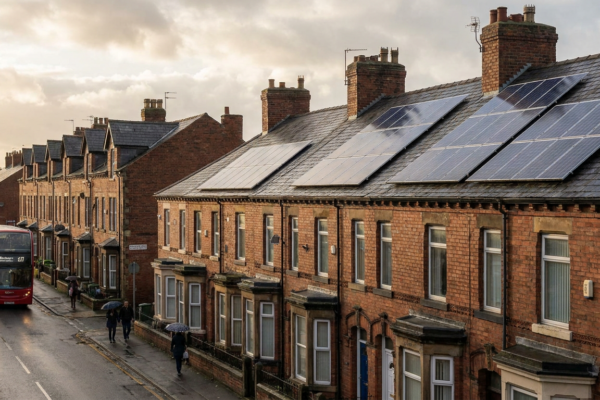
Luton is one of those towns that often gets overlooked in the eco homes conversation, which is a shame, because it’s actually one of the most interesting places in Bedfordshire for home energy upgrades. With 225,000 residents packed into a relatively compact urban area, Luton has an enormous concentration of older terraced and semi-detached homes that were built mostly between the 1890s and the 1960s to house workers from the hat-making, engineering, and car manufacturing industries.
Drive through Bury Park, High Town, or Round Green and you’ll see street after street of Victorian and Edwardian terraces, solid houses, but built long before anyone thought about insulation. Head out towards Stopsley, Limbury, or Leagrave and you’ll find more 1950s and 1960s semi-detached estates. These are the homes where eco upgrades genuinely transform comfort and bills.
The town sits in a valley carved by the River Lea, with the land rising steeply towards Warden Hill and Galley Hill to the north. That varied topography means wind exposure varies enormously depending on where you live, hilltop homes in Farley Hill or Stopsley face different challenges to those tucked into the valley around the town centre. We’ll come back to why that matters for specific upgrades.
For the bigger county picture, take a look at our eco homes in Bedfordshire guide. But for now, let’s focus on what makes Luton specifically such a good place to invest in your home’s energy performance.
How Energy Efficient Are Luton Homes, and What Does That Mean for Your Bills?
The average Luton home sits at EPC Band D, which puts it right at the national average, but that headline figure hides a lot of variation. An EPC Band D rating typically means your home scores somewhere between 55 and 68 on the energy efficiency scale. In plain English, that means your home is losing more heat than it should, and you’re paying for it every month.
With average gas usage of 11,000 kWh per year and electricity usage of 3,200 kWh per year, a typical Luton household is spending roughly £1,450–£1,700 per year on gas and around £800–£960 on electricity at 2026 tariff rates. That’s up to £2,660 a year on energy before you’ve made any improvements.
Compared to the South East regional average, Luton homes are slightly less efficient. Newer commuter towns like St Albans (15km south-west) have a higher proportion of post-1990 builds that come with better insulation as standard. Luton’s older housing stock means there’s more to do, but also more to gain. A well-executed retrofit in a High Town terrace could realistically push you from Band D to Band B, cutting your annual energy bills by £700–£1,100.
The good news? Luton’s position in the South East means property values are strong, and energy efficiency improvements here add genuine resale value, more so than in many northern towns.
Solar Panels on Luton Rooftops, Better Than You Might Think
People are often surprised to learn that Luton is one of the better places in England for solar panels. The town receives between 1,200 and 1,500 sunshine hours per year, with solar irradiance levels of around 1,100–1,200 kWh per square metre annually. That’s comfortably above the UK average, and comparable to parts of France.
The drier, clearer weather typical of eastern England works in your favour too. Luton’s relatively low rainfall (around 550–650mm per year) means panels stay cleaner for longer between washes, which keeps output higher through the summer months.
Most of Luton’s terraced streets run roughly east-west, meaning one side of the street gets a south-facing rear roof and the other gets south-facing front. South or south-west facing roofs in Stopsley, Sundon Park, and Wigmore are particularly well-suited. The steeper Victorian rooflines in High Town and Bury Park often sit at a good pitch angle (around 35–40°) that captures winter sun well.
One thing to check if you’re in or near the town centre conservation area, Luton Borough Council may require planning permission for panels visible from the street on listed or locally listed buildings. Most residential rooftops fall under permitted development, but it’s worth a quick call to the planning team before you commit.
| System Size | Typical Install Cost (2026) | Annual Generation (Luton) | Annual Bill Saving | Payback Period |
|---|---|---|---|---|
| 3 kW (6 panels) | £5,500–£6,500 | ~2,700 kWh | £520–£680 | 9–11 years |
| 4 kW (8 panels) | £6,800–£8,000 | ~3,600 kWh | £680–£860 | 9–11 years |
| 6 kW (12 panels) | £9,500–£11,500 | ~5,300 kWh | £950–£1,200 | 9–11 years |
Adding a battery storage system (typically £2,500–£4,500 for a 5–10 kWh unit) makes a big difference in Luton where many residents are out at work during peak generation hours. A battery lets you use your solar power in the evening rather than exporting it at a lower rate.
Installers who cover Luton typically also serve Hitchin, Hemel Hempstead, and Stevenage, so you can often get competitive quotes from regional companies with solid local track records. Just be aware that proximity to London means the best installers can get booked up, waiting times of 6–10 weeks are common in spring and summer.
Heating Systems That Actually Suit Luton Homes
Luton sits in the milder southern climate band, with around 1,200–1,500 heating degree days per year, meaning your heating system works less hard than it would in, say, Bradford or Aberdeen. This is genuinely good news if you’re thinking about switching to a heat pump, because heat pumps perform better when they don’t have to work at full stretch.
Here’s an honest comparison for a typical Luton semi-detached or terraced home after basic insulation improvements have been made:
| Heating System | Install Cost | Annual Running Cost (typical Luton home) | Best Suited To |
|---|---|---|---|
| Modern Gas Boiler (A-rated) | £2,500–£3,500 | £1,100–£1,400 | Any home still on gas grid |
| Air Source Heat Pump | £8,000–£14,000 (after BUS grant) | £900–£1,350 | Well-insulated semis with garden space |
| Ground Source Heat Pump | £18,000–£28,000 (after BUS grant) | £750–£1,100 | Larger detached homes with garden |
For the terraced rows of Bury Park and High Town, air source heat pumps are often the most practical option, they don’t need the large garden ground source requires, and they’re eligible for the Boiler Upgrade Scheme grant. The key is getting your insulation right first, otherwise the running costs creep up.
Ground source is harder to justify in Luton’s denser streets where gardens are small, but if you’re in one of the more spacious estates around Wigmore or Caddington, it’s worth getting a quote.
One honest note, if your home is a narrow Victorian terrace in New Town or Dallow with single-glazed windows and no wall insulation, don’t fit a heat pump yet. Get the insulation done first, then reassess. A heat pump in a poorly insulated home will cost you more to run than a decent gas boiler.
Where to Start With Insulation, Prioritised for Luton Houses
This is where most Luton homeowners will see the fastest return. Given the town’s high proportion of pre-1960s terraces and semis, insulation is almost always the most cost-effective first step. Here’s where to focus your money, in order of impact.
Loft Insulation
If your loft has less than 270mm of insulation (or none at all, surprisingly common in older Luton terraces), this is your absolute first step. Cost: £400–£800 for a typical semi. Annual saving: £180–£280. Payback in under three years. Many local installers can do this in a single morning.
Cavity Wall Insulation
Most homes built in Luton between roughly 1935 and 1985, including large swathes of Leagrave, Limbury, and Sundon Park, have cavity walls that can be filled with mineral wool or blown bead insulation. Cost: £700–£1,400. Annual saving: £200–£360. Given Luton’s drier eastern climate (lower rainfall than the west of England), cavity wall insulation carries a lower risk of moisture issues here than in, say, Wales or Cornwall.
Solid Wall Insulation (External)
Victorian terraces in High Town, Bury Park, and Round Green have solid brick walls, no cavity to fill. External wall insulation (EWI) is the main option, and Luton’s drier conditions suit it well. Cost: £8,000–£18,000 depending on property size and render finish. Annual saving: £350–£600. This is a bigger investment, but it transforms comfort and appearance. Check with Luton Borough Council’s planning team if you’re in or near a conservation area, some streets require matching render colours or materials.
Floor Insulation
Suspended timber floors (common in pre-1930s Luton terraces) lose a surprising amount of heat. Insulating from below costs £800–£1,800 and saves around £70–£130 per year, worthwhile as part of a wider package, but not the first thing to tackle alone.
Double Glazing and Draught-Proofing
If you still have single glazing, replacing it with A-rated double glazing costs £4,000–£8,000 for a typical terrace and saves £90–£160 per year. Draught-proofing doors, letterboxes, and floorboard gaps costs under £200 to DIY and saves £60–£100 per year, one of the best pound-for-pound improvements you can make.
Grants and Funding Luton Residents Can Actually Access in 2026
Let’s be practical here, grants are only useful if you actually qualify and know how to apply. Here’s what’s genuinely available to Luton homeowners right now.
The Great British Insulation Scheme (GBIS)
This national scheme offers free or heavily subsidised insulation, typically loft or cavity wall, if your home is EPC Band D or below AND your household income is under £36,000, or if you receive qualifying benefits. Luton Borough Council works with approved suppliers to deliver this locally. Start at the GOV.UK energy grants checker or contact Luton Borough Council’s housing team directly, they can point you to active local suppliers.
The ECO4 Scheme
ECO4 (Energy Company Obligation) funds deeper retrofits for households on means-tested benefits or low incomes. It can cover insulation, heat pumps, and even solar panels at no cost to you. Eligibility is benefit-linked, if you receive Universal Credit, Housing Benefit, or similar, you very likely qualify. Your energy supplier is the starting point, but Luton Borough Council also has a dedicated retrofit team who can help navigate applications.
The Boiler Upgrade Scheme (BUS)
Thinking about a heat pump? The BUS gives you £7,500 off an air source heat pump or £7,500 off a ground source heat pump. Your installer applies on your behalf, you just pay the reduced amount upfront. Available regardless of income, but your home must have at least loft and cavity (or solid) wall insulation first.
Luton Borough Council Retrofit Programmes
Luton Borough Council has a stated commitment to carbon reduction as part of its climate action framework. The council has worked with regional energy partnerships to fund upgrades in areas like Marsh Farm, Bury Park, and parts of Farley Hill where fuel poverty rates are higher. It’s worth contacting the council’s housing energy efficiency team to ask what’s currently active, schemes open and close throughout the year and aren’t always widely advertised.
VAT on Energy Saving Measures
Easy to overlook, but worth knowing, solar panels, heat pumps, insulation, and many other eco upgrades carry 0% VAT. This effectively knocks 20% off the headline price compared to a standard home improvement, and it applies automatically.
Finding Good Installers Around Luton, and Avoiding the Ones to Avoid
Luton has a reasonably strong local installer market, partly because it sits in a cluster with Hitchin, Hemel Hempstead, Stevenage, and St Albans, meaning regional companies serve all of these towns and have enough local volume to keep prices competitive.
Here’s what to look for and watch out for.
- For solar panels, look for MCS (Microgeneration Certification Scheme) accreditation. Without it, you can’t claim SEG (Smart Export Guarantee) payments and many warranty terms become void. Always ask to see the MCS certificate number before signing anything.
- For heat pumps, your installer must