Tredegar, A Town Built on Industry, Now Ready for a Greener Future
Tredegar sits high in the Sirhowy Valley, perched at around 300 metres above sea level in the centre of Blaenau Gwent. It’s a town with genuine character, birthplace of Aneurin Bevan, founder of the NHS, and home to one of Wales’s most distinctive Victorian town centres, anchored by the famous circular clock tower on The Circle. The streets radiating outward from that clock tower tell the housing story of the town: rows of stone-built and brick terraced homes climbing the valley sides, most of them put up between the 1870s and the 1930s to house ironworkers and miners.
Those same homes, solid, sturdy, and full of charm, are also cold, draughty, and expensive to heat. That’s the honest reality for a lot of Tredegar homeowners. The good news is that this means there’s enormous scope for improvement, and the savings on offer are genuinely significant. If you’re in a terraced house on Morgan Street, a semi on the Bryn Bach estate, or up in the higher streets around Sirhowy, this guide is written specifically for homes like yours.
Tredegar is also part of the wider Blaenau Gwent eco homes picture, worth reading alongside this page if you want the county-wide view.
How Energy Efficient Are Tredegar’s Homes, and What Does That Actually Cost You?
The average EPC rating in Tredegar is Band E. To put that in plain terms, most homes here are below average. The Wales national average sits at Band D, and the UK-wide average is also Band D. Being a full band lower than the average is significant, and it shows up directly in your bills.
A typical Band E terraced home in Tredegar, using around 12,500 kWh of gas and 3,400 kWh of electricity per year, is likely spending somewhere in the region of £1,800 to £2,400 annually on energy depending on tariff. A home that had been properly upgraded to Band C could realistically cut that figure by £600 to £900 a year. That’s not a small number, that’s a holiday, or several months of food shopping.
The altitude matters here too. Tredegar’s elevated position means it experiences more frost days than towns lower down the valley like Ebbw Vale (just 3km away but noticeably more sheltered) and certainly more than Merthyr Tydfil or Bargoed. Those extra heating degree days add up, and they make insulation and efficient heating systems an even higher priority for Tredegar homeowners than for some of their neighbours.
The silver lining is that Band E homes often qualify for the most generous grant support. Welsh Government and UK-wide funding schemes specifically target homes rated Band E and below, which means many Tredegar residents are in prime position to get significant help.
Solar Panels on Tredegar Rooftops, Better Than You Might Think
You might assume that Wales isn’t great for solar. Tredegar’s weather reputation doesn’t exactly scream sunshine. But the data is more encouraging than most people expect, the town receives roughly 1,200 to 1,400 sunshine hours per year, and solar irradiance levels of around 1,100 kWh per square metre annually make solar panels a genuinely worthwhile investment here.
The terraced homes on the valley sides present a specific opportunity. Many streets run roughly east-west, meaning south-facing rear roofs get excellent sun exposure throughout the day. If your back roof faces south or south-west, you’re in a strong position. The steeper roof pitches common on older Tredegar terraces (typically 35-45 degrees) are also close to the optimal angle for solar generation in this latitude.
One practical note, Tredegar town centre and parts of the older residential streets may fall within or adjacent to conservation areas managed by Blaenau Gwent County Borough Council. It’s worth a quick check before you book an installer, as permitted development rules for solar panels can be more restrictive on listed buildings or in designated areas. A quick call to the planning department at Civic Centre in Ebbw Vale will give you a definitive answer in minutes.
Solar Panel Costs and Savings for Tredegar Homes in 2026
| System Size | Typical Install Cost | Annual Generation (estimate) | Annual Bill Saving | Payback Period |
|---|---|---|---|---|
| 3kW (6 panels) | £5,500 – £6,500 | ~2,600 kWh | £480 – £580 | 10–13 years |
| 4kW (8 panels) | £6,800 – £8,000 | ~3,400 kWh | £620 – £740 | 10–12 years |
| 6kW (12 panels) | £9,000 – £11,000 | ~5,100 kWh | £880 – £1,050 | 9–11 years |
Adding a battery storage system (typically £2,500 to £4,000 extra for a 5–10kWh unit) makes a noticeable difference in a town where many households are out during the day. Storing excess generation for evening use can push your annual saving up by another £150 to £250.
Heating Systems That Actually Make Sense for Tredegar’s Housing Stock
Most homes in Tredegar are on mains gas, and a modern condensing boiler replacement is still one of the most cost-effective first steps for many households. If your boiler is more than 12 years old, replacing it with a modern A-rated unit can cut your heating costs by 15–25% almost immediately.
Even so, heat pumps are increasingly worth a serious look, especially as electricity tariffs become more favourable for heat pump users.
Heating Options Side by Side
| Heating Type | Install Cost | Annual Running Cost (typical Tredegar home) | Best Suited To |
|---|---|---|---|
| New gas boiler (A-rated) | £2,500 – £3,500 | £900 – £1,100 | Most existing homes with gas connection |
| Air source heat pump | £8,000 – £13,000 | £750 – £1,050 | Insulated semis, homes with outdoor space |
| Ground source heat pump | £18,000 – £28,000 | £650 – £950 | Larger plots, less common in Tredegar terraces |
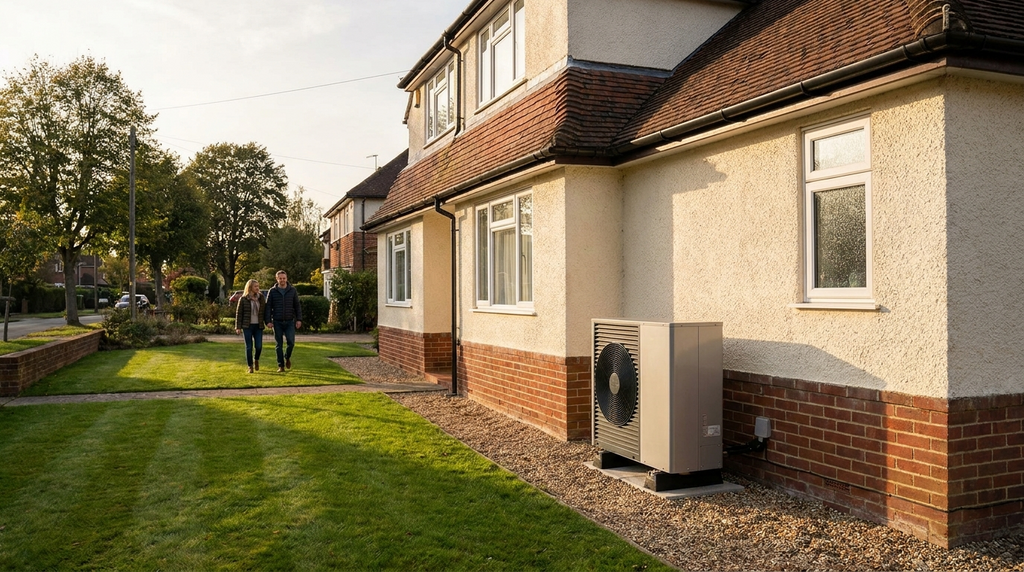
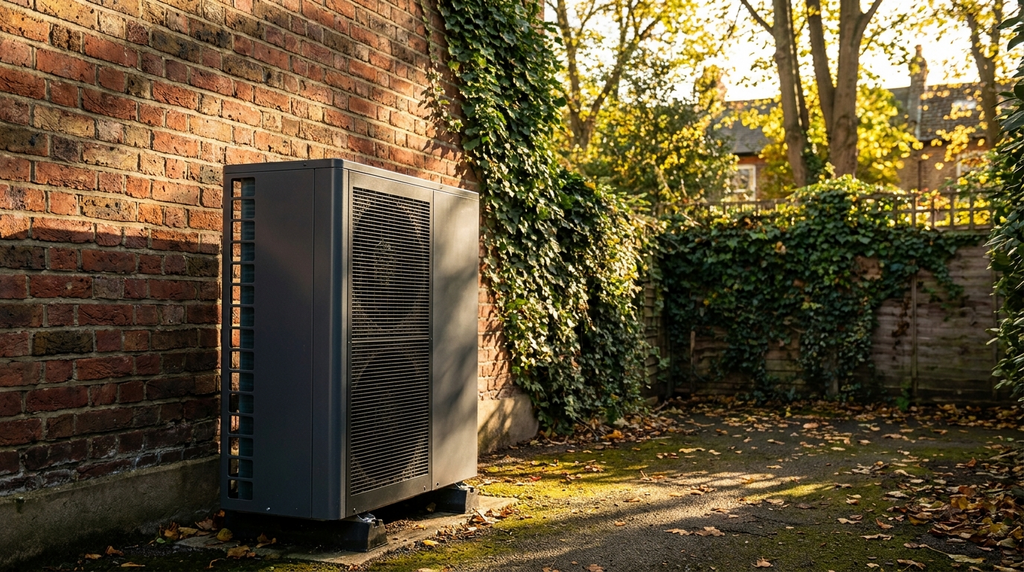
For the typical Tredegar mid-terrace with a small rear yard, an air source heat pump is the more realistic option compared to ground source. The key caveat is that heat pumps perform best in well-insulated homes, fitting one into an uninsulated Band E terrace without tackling the walls and loft first is putting the cart before the horse. Get the insulation sorted, then revisit the heat pump conversation.
Homes on the Bryn Bach and Tredegar Park estates, which include a mix of 1970s and 1980s semi-detached properties, are often better candidates for heat pumps straight away, they tend to have loft insulation already and slightly more outdoor space for the external unit.
Where to Start With Insulation in a Tredegar Home
Given that most homes here are Victorian or Edwardian terraces with solid stone or solid brick walls, insulation is where the biggest savings hide, and also where it can get complicated. Here’s how to prioritise.
Loft Insulation
If your loft has less than 270mm of insulation (or none at all), this is your very first job. It’s the cheapest, quickest win available. Cost, roughly £300 to £600 for a typical terrace. Annual saving, £150 to £250. Payback in under 3 years. Many Tredegar homes still have the original minimal insulation or none at all.
Solid Wall Insulation
This is the big one for Tredegar. Pre-1919 stone-built terraces have solid walls, there’s no cavity to fill. Your options are external wall insulation (EWI) or internal wall insulation (IWI). EWI typically costs £8,000 to £18,000 for a full terrace treatment. IWI costs £5,000 to £12,000 but reduces room size slightly. Annual savings can reach £350 to £600 depending on the home. This is also where grant funding can make a transformative difference, see the next section.
Floor Insulation
Suspended timber ground floors are common in older Tredegar terraces and are a surprisingly significant source of heat loss. Insulating beneath the floorboards costs roughly £800 to £1,500 and can save £70 to £120 per year.
Draught Proofing
Often overlooked, but genuinely effective. Professional draught proofing of doors, windows, and gaps costs £200 to £400 and can save £60 to £100 a year. A very easy starting point if budgets are tight.
Grants and Funding Tredegar Residents Can Actually Access in 2026
Wales has some of the best grant support in the UK for home energy improvements, and Tredegar’s housing profile means many residents qualify. Here’s what’s actually available.
Warm Homes Nest (Wales)
This is the Welsh Government’s flagship scheme and the one most relevant to Tredegar homeowners. If your household is on a low income or receives qualifying benefits, you may be eligible for free insulation, heating upgrades, and energy advice, fully funded. Even if you’re not on benefits, you may still qualify if your home is below Band D. Apply via the Nest website or call 0808 808 2244. It’s a free service and worth a call even if you’re not sure you qualify.
Great British Insulation Scheme (GB-wide)
Homeowners with a Band E, F, or G rated property can access funded insulation measures through this scheme. Given Tredegar’s average Band E rating, a large proportion of local homeowners are eligible. The scheme covers loft insulation, cavity wall insulation where applicable, and in some cases solid wall insulation. Your energy supplier is the first point of contact.
Boiler Upgrade Scheme
If you’re switching from a gas boiler to an air source heat pump, the Boiler Upgrade Scheme provides a £7,500 grant towards the cost. This makes an ASHP a much more financially viable proposition, bringing that £8,000–£13,000 install cost down considerably. Your MCS-certified installer handles the application on your behalf.
ECO4 (Energy Company Obligation)
Energy suppliers are obligated to fund improvements for low-income and fuel-poor households. Qualifying households can receive full or heavily subsidised insulation and heating work. Eligibility is means-tested, if you receive Universal Credit, Pension Credit, or similar, you’re likely to qualify. Check via the Simple Energy Advice Wales portal or speak to Blaenau Gwent County Borough Council’s housing team directly.
Optimised Retrofit Programme
If you’re a social housing tenant rather than an owner-occupier, this Welsh Government programme funds whole-house retrofits through housing associations. Residents of Tai Calon Community Housing (which manages a significant chunk of Tredegar’s social housing) should speak to their housing officer about works planned under this programme.
Finding a Good Installer When You’re in Tredegar
Tredegar’s size means you’re unlikely to find a full roster of local specialist eco installers based in the town itself. In practice, most reputable installers serving Tredegar come from Ebbw Vale, Merthyr Tydfil, or Bargoed, all within a comfortable service radius. Don’t let that put you off, but do allow for slightly longer waiting times than you might find in a larger city.
Here’s what to look for and watch out for.
- For solar panels, always use an MCS (Microgeneration Certification Scheme) certified installer. This is a hard requirement for any grant funding and ensures your system is installed to the required standard.
- For heat pumps, MCS certification is again essential. Check the installer is also registered with the Heat Pump Association where possible.
- For insulation, look for membership of the Insulation Assurance Authority (IAA) or NIA (National Insulation Association). For solid wall insulation specifically, ask explicitly about their experience with stone-built Welsh terraces, it requires different techniques than cavity wall work.
- Get three quotes as a minimum. Prices for the same job can vary by 20–30% between installers in this area.
- Red flags to avoid, any installer who pressures you to sign on the same day, quotes without a site survey, or can’t provide references from similar local properties.
Waiting times for popular measures like solar and heat pumps are currently running at 6 to 14 weeks in the Blaenau Gwent area. Book earlier rather than later, especially heading into autumn when demand picks up.
Your Practical Step-by-Step Plan for a Typical Tredegar Home
If you’re standing in a Band E terraced or semi-detached home in Tredegar wondering where on earth to start, here’s a sensible, prioritised roadmap.
- Get a proper EPC assessment, not just the old one from when you bought the house. A fresh assessment costs around £60 to £120 and gives you a current baseline with specific improvement recommendations for your property.
- Call Nest (0808 808 2244), before you spend a penny of your own money, find out what Welsh Government funding you’re entitled to