Bargoed’s Housing Story and Why Eco Upgrades Matter Here
Bargoed sits in the Rhymney Valley at around 300 metres above sea level, wedged between steep valley sides that have shaped both its character and its buildings. The town grew rapidly during the coal boom of the late 19th and early 20th centuries, and most of its housing stock reflects that era, long rows of solid stone and brick terraces climbing the hillsides, built quickly to house miners and their families, with little thought for insulation or energy efficiency.
That heritage is what makes Bargoed such an interesting case for eco home improvements. The bones of these properties are often excellent, thick walls, decent roof pitches facing multiple directions, but the thermal performance is, to put it kindly, not great. Walking along streets like Park Place or the terraces off Hanbury Road, you’ll see exactly the kind of homes where a few well-chosen upgrades can transform comfort and slash bills at the same time.
With around 12,000 residents and a strong community identity centred around Bargoed High Street and the surrounding valleys, this is a town where word of mouth matters. When your neighbour gets solar panels and their bills drop, everyone notices. And with most homes sitting at EPC Band E, well below where they should be, there’s real money to be saved for a lot of families here.
How Energy Efficient Are Bargoed Homes Really
The average EPC rating in Bargoed is Band E. To put that in plain terms, the national average across England and Wales sits at Band D, so Bargoed homes are, on the whole, a full band below where a typical UK property sits. That gap isn’t trivial.
A Band E home typically loses heat quickly through poorly insulated walls, draughty floors, and an uninsulated loft. In practical terms, it means your boiler is working harder than it needs to, your rooms take longer to warm up, and you’re paying for heat that’s quietly escaping through every surface.
With Bargoed’s average gas usage running at around 12,500 kWh per year and electricity consumption at roughly 3,300 kWh, a typical household is spending somewhere in the region of £1,400–£1,700 per year on gas and £900–£1,100 on electricity at current 2026 tariff rates. That’s £2,300–£2,800 annually in total energy costs for many homes.
The good news, and it’s genuinely good news, is that Band E homes have the most to gain from upgrades. Moving from Band E to Band C is achievable for most Bargoed terraces and semis, and the savings can be £600–£900 per year once the right measures are in place. Many residents also qualify for grant funding specifically because of that lower EPC rating. More on that shortly.
For comparison, neighbouring Caerphilly (13km south) and Merthyr Tydfil (12km west) have similar housing profiles, valley terraces from the same era, so you’ll find installers familiar with exactly this type of property working across the whole cluster.
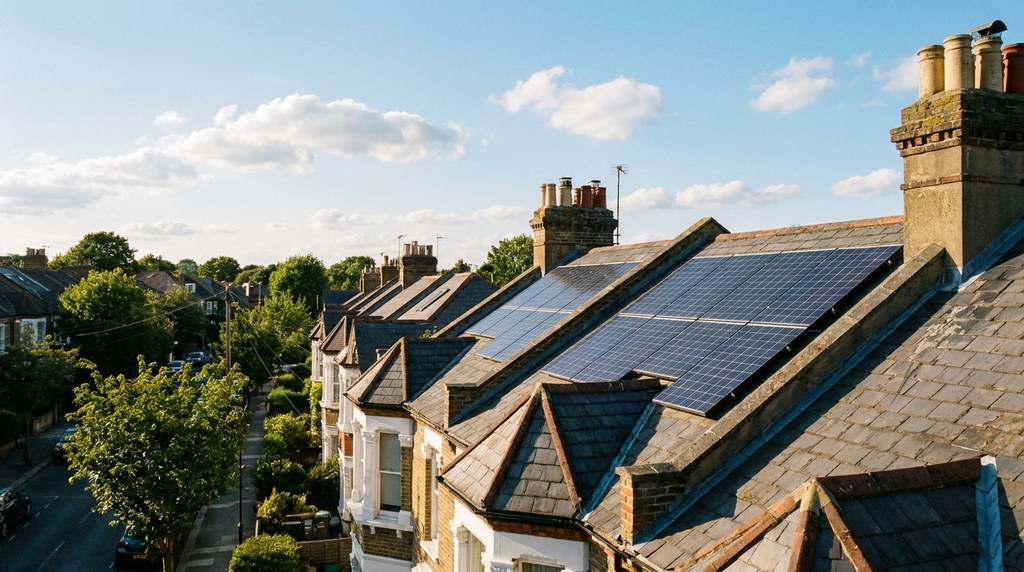
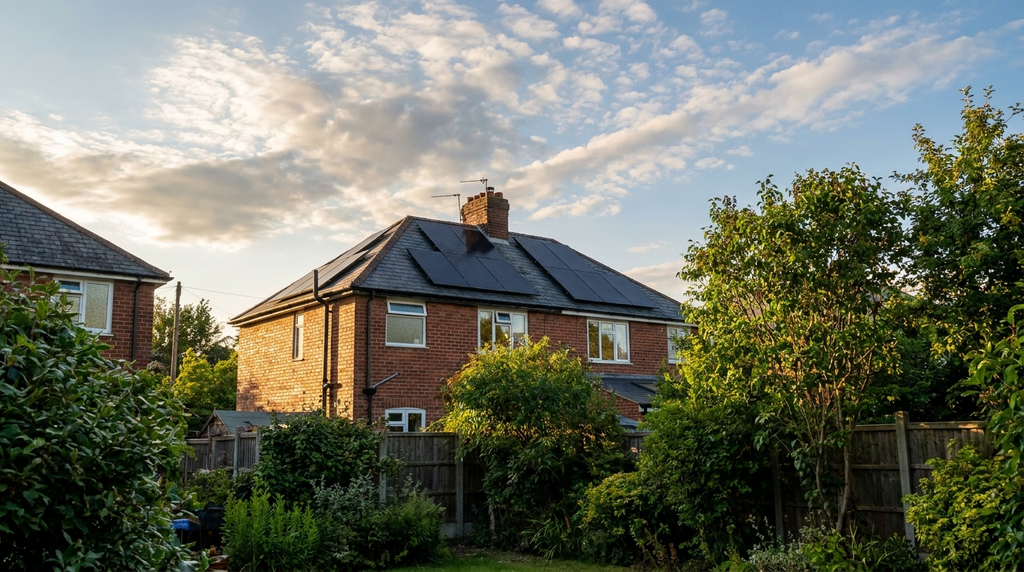
Solar Panels on Bargoed Rooftops, Better Than You Might Think
Here’s something that surprises a lot of people. Despite sitting in a Welsh valley, Bargoed actually gets reasonable solar irradiance, around 1,100–1,200 kWh per square metre per year and roughly 1,200–1,500 sunshine hours annually. That puts it in a similar bracket to parts of the Midlands, and solar panels here genuinely earn their keep.
The terraced streets on the valley sides can actually work in your favour. Many rooftops in areas like Gilfach and the upper parts of Bargoed face south or south-west, ideal for solar. Valley topography does mean some properties have shading issues from hills or nearby buildings, so it’s worth getting a proper shade assessment before committing.
Here’s how the numbers stack up for a typical Bargoed home in 2026:
| System Size | Typical Install Cost | Annual Generation (est.) | Annual Bill Saving | Simple Payback Period |
|---|---|---|---|---|
| 3kW system | £5,500–£6,500 | ~2,400 kWh | £550–£700 | 8–11 years |
| 4kW system | £6,500–£8,000 | ~3,200 kWh | £700–£900 | 8–11 years |
| 6kW system | £8,500–£10,500 | ~4,700 kWh | £950–£1,200 | 8–10 years |
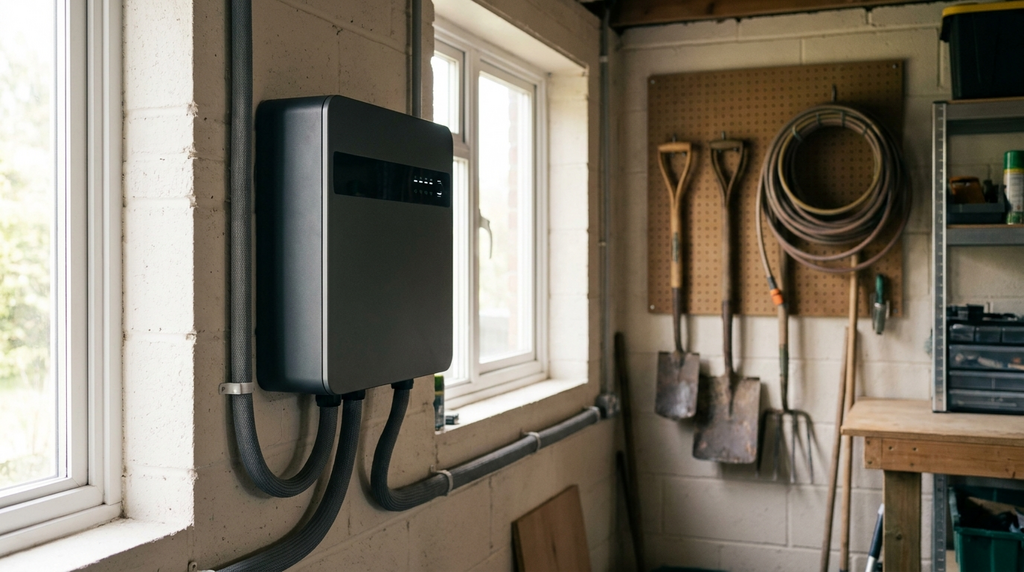
Adding a battery storage unit (typically £2,500–£4,000 extra) makes particularly good sense in Bargoed given the number of smaller terraced homes where daytime occupancy is lower, you bank the energy for evenings rather than exporting it at lower rates.
Planning permission isn’t usually needed for solar in Bargoed, but if your home is in a conservation area, parts of the town centre have heritage character worth checking, you’ll need to confirm with Caerphilly County Borough Council’s planning department before proceeding. They handle all planning applications for Bargoed and can be reached through the council’s online portal.
Heating Choices That Actually Work for Valley Terraces
Bargoed’s climate sits in an interesting middle ground. Winters are real, you’re at altitude in a Welsh valley, but the town benefits from some shelter from the worst weather thanks to the surrounding hills. Average heating degree days run around 1,200–1,500 per year, which is moderate rather than extreme.
For the typical Bargoed terrace or semi-detached, here’s an honest comparison of your main heating options:
Modern Condensing Gas Boiler
If your home is already on gas and you’re not yet well insulated, a high-efficiency condensing boiler remains a practical near-term choice. Expect to pay £2,000–£3,000 installed, with annual running costs around £1,200–£1,500 at current gas prices. It’s not the future, but it buys you time to insulate first before switching to a heat pump.
Air Source Heat Pump
This is where things get interesting for Bargoed’s older stock. Air source heat pumps work well here, the valley climate doesn’t produce the extreme cold that would reduce their efficiency dramatically. A well-insulated Bargoed terrace can run an air source heat pump for around £900–£1,200 per year, compared to £1,400+ on gas. Installation costs run £8,000–£14,000, but the Boiler Upgrade Scheme grant of £7,500 brings this down significantly. The key caveat is insulation, heat pumps work best in well-insulated homes, so this should come later in your upgrade journey, not first.
Ground Source Heat Pump
For most Bargoed terraces, ground source pumps are impractical, gardens are typically small and the installation cost (£15,000–£30,000) is hard to justify. Better suited to larger detached properties on the valley outskirts. Stick to air source for the vast majority of homes here.
Where to Start With Insulation in Bargoed
For the stone-built and early brick terraces that dominate streets across Bargoed, from the Gelligaer Road area down through the town centre, insulation is almost always the single best investment. Here’s what to tackle first, in order of impact:
Loft Insulation
If your loft has less than 270mm of insulation (or none at all, which is common in pre-1940s Bargoed homes), this is your starting point. Cost to install: £300–£600 for a standard terrace. Annual saving: £150–£250. Payback in under three years. Simple, quick, and often funded through grants, see the section below.
Cavity Wall Insulation
Post-war semis in areas like Aberbargoed and some of the 1950s–70s council-built stock around Bargoed may have unfilled cavity walls. Getting these filled costs around £500–£800 and saves £200–£300 per year. A surveyor can confirm whether your walls are suitable, not all are.
Solid Wall Insulation
This is the big one for the older stone terraces. Solid walls lose heat at roughly twice the rate of insulated cavity walls. External wall insulation (EWI) costs £8,000–£18,000 for a typical terrace but saves £300–£500 annually and transforms comfort. Internal wall insulation (IWI) is cheaper at £4,000–£8,000 but reduces room size slightly. For mid-terrace properties with shared walls, external insulation is often more practical.
Floor Insulation
Older suspended timber floors in Victorian-era Bargoed terraces can be a major source of draughts. Insulating beneath them costs £800–£1,500 and saves £70–£150 per year. Less dramatic than wall insulation, but worth doing once the big items are tackled.
Draught Proofing
Don’t overlook the basics. Draught-proofing windows, doors, and letterboxes on a typical Bargoed terrace costs as little as £100–£300 DIY and can save £60–£120 annually. Small effort, real returns.
Grants and Funding Bargoed Residents Can Actually Get in 2026
Wales has some distinct advantages over England for eco home funding, and Bargoed residents should absolutely be making use of them.
Warm Homes Nest Scheme (Wales)
This is the flagship Welsh Government scheme and genuinely worth knowing about. Nest provides free insulation, heating improvements, and energy advice to households in or at risk of fuel poverty. If your household income is below roughly £31,000 or you receive certain benefits, you may qualify for fully funded measures including loft insulation, wall insulation, and boiler replacement. Apply directly through the Nest website or call 0808 808 2244, it’s a freephone number and the advisors are genuinely helpful.
Great British Insulation Scheme
Available across Wales, this UK-wide scheme targets homes in EPC Bands D to G, which covers almost every home in Bargoed. You can get partially or fully funded insulation measures depending on your income. Even owner-occupiers who aren’t on benefits can qualify through the “general group” route. Apply through the government’s website or an approved installer.
ECO4 Scheme
Energy suppliers are obligated to fund home improvements under ECO4 for lower-income households. A Band E home where the occupant receives qualifying benefits can access thousands of pounds of funded upgrades including insulation, heat pumps, and heating controls. Contact your energy supplier or a registered ECO4 installer to check eligibility.
Boiler Upgrade Scheme
If you’re ready to switch to a heat pump, the £7,500 grant towards an air source heat pump is available in Wales. You’ll need to use an MCS-certified installer. Given installation costs of £8,000–£14,000, this grant can make the switch genuinely affordable, especially once your insulation is sorted.
Caerphilly County Borough Council
Caerphilly CBC administers local energy efficiency grants and occasionally runs additional top-up funding alongside national schemes. It’s worth checking their housing improvement pages directly, as smaller area-specific programmes do appear. The council’s housing team can also point you toward any Rhymney Valley-specific initiatives that may be running.
Finding Good Installers Around Bargoed
Bargoed is a small town, and most specialist eco home installers will travel from nearby larger centres, Caerphilly, Merthyr Tydfil, Ebbw Vale, and Tredegar all have companies that regularly work across this cluster of valley towns. Don’t be put off by this, experienced installers from these areas will know Bargoed’s housing stock well.
Here’s what to look for and watch out for:
- MCS certification, essential for any solar or heat pump installer if you want to claim grants or export tariffs. Check the MCS database at mcscertified.com before booking anyone
- The Great British Insulation Scheme closed on 31 March 2026. It funded insulation measures only and never covered windows or glazing.
- Get at least three quotes, prices vary significantly even within the Caerphilly area, and a quote from an Ebbw Vale company might beat one from Caerphilly town by hundreds of pounds
- Ask for local references, a good installer will happily point you to similar valley terraces they’ve worked on nearby
- Be wary of cold callers, Bargoed occasionally sees doorstep energy companies making inflated claims about free measures. Always verify independently before signing anything
Waiting times in this part of Wales currently run around four to eight weeks for solar installations and up to three months for heat pump work. Plan ahead, especially if you’re hoping to benefit from summer sunshine for new panels.
Your Step-by-Step Upgrade Plan for a Bargoed Band E Home
If you’re standing in a typical Bargoed terrace or semi wondering where on earth to begin, here’s the order that makes the most financial sense:
- Get a free energy assessment first, Contact Nest Wales on 0808 808 2244. They’ll tell you exactly what your home needs and what you might get funded. This costs you nothing and could save you thousands by pointing you toward grants before you spend your own money
- Draught-proof your home, Cheap, quick, and immediate impact. Do it yourself or pay a handyperson £150–£200 to sort windows, doors, and letterboxes properly
- Insulate the loft to 270mm, Your highest-return investment. The Great British Insulation Scheme closed on 31 March 2026. It funded insulation measures only and never covered windows or glazing. Prioritise this above everything else
- Tackle wall insulation, Whether cavity fill for post-war properties or solid wall insulation for the older terraces, this is your biggest comfort upgrade. Apply for ECO4 or GBIS funding here
- Upgrade your heating controls, Smart thermostats and thermostatic radiator valves cost £150–£400