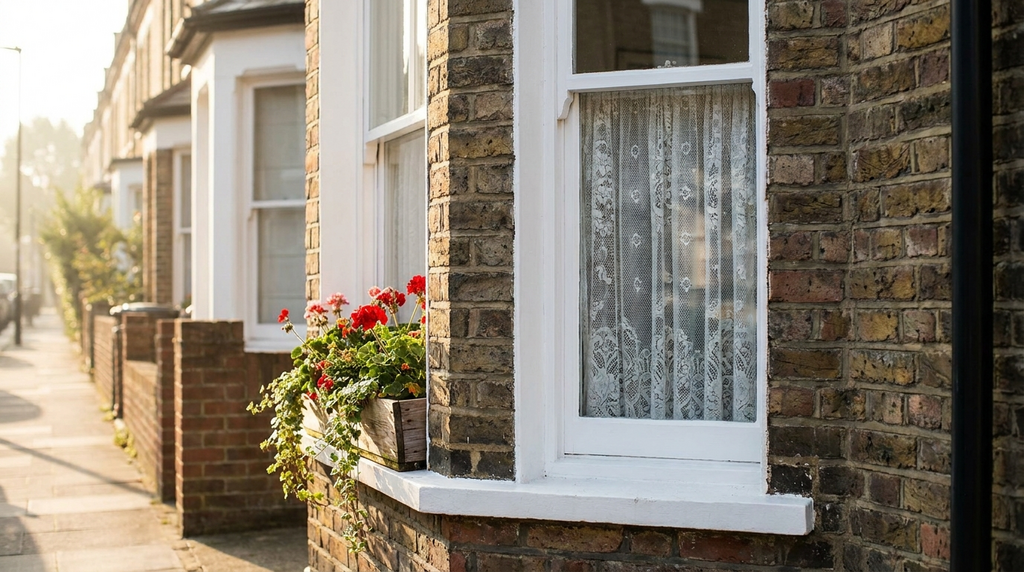
Edwardian windows guide for UK heritage homes
If you own an Edwardian property, the original timber sliding sash windows are a defining feature, but they are also a major source of heat loss. Replacing or upgrading them involves navigating a specific set of rules and costs that are different from modern homes.
Edwardian window replacement costs start at £800 per window, with timber sash units ranging up to £1,800. ECO4 grants cap at £250 per window and only cover draught-proofing, not full replacement, unless your home is listed or in a conservation area. Compare costs and grants before committing.
- Timber sash replacement costs £800 to £1,800 per window (Checkatrade 2026).
- ECO4 grants cap at £250 per window for draught-proofing only.
- Secondary glazing costs £200 to £600 per window (Historic England).
- Full replacement grants only for listed buildings or conservation areas.
- Unlisted Edwardian homes pay most costs themselves, aside from £250 per window.
- Edwardian windows guide for UK heritage homes
- Edwardian window replacement costs start at £800 per window, here is what the grants cover
- Quick numbers Edwardian window grant eligibility by property type
- Who qualifies for Edwardian window grants, the three eligibility tests
- How to confirm your Edwardian windows are grant-eligible in 2026
- The one number that decides your grant amount the window's U-value
- How to verify your Edwardian window installer is certified for grant work
- The plain-English answer Edwardian window grants cover draught-proofing, not replacement, unless your home is listed or in a conservation area
The short answer is that Edwardian window replacement costs start at around £800 per window, and government grants under the ECO4 scheme typically cover draught-proofing and secondary glazing, not full replacement, unless your home is listed or in a conservation area. The maximum grant contribution per window is £250, which means most homeowners will pay the majority of the cost themselves.
Edwardian window replacement costs start at £800 per window, here is what the grants cover
The average cost for a timber sliding sash replacement in an Edwardian property ranges from £800 to £1,800 per window, according to the Checkatrade 2026 cost guide (Checkatrade, 2026). This price covers a like-for-like timber sash window, including installation and disposal of the old unit. For homeowners looking for a cheaper option, secondary glazing costs between £200 and £600 per window, as advised by English Heritage retrofit guidance (Historic England, 2026).
Grants under the ECO4 scheme do not usually cover full replacement. Instead, they fund draught-proofing and secondary glazing, with a maximum contribution of £250 per window (Ofgem ECO4 guidance, DESNZ 2026). Full replacement costs must be paid by the homeowner unless the property qualifies for a specific exemption, such as being a listed building or located in a conservation area. For unlisted Edwardian homes outside conservation areas, the £250 grant is only for draught-proofing measures, not new windows.
Quick numbers Edwardian window grant eligibility by property type
| Property type | Grant-eligible measures | Maximum grant per window | Typical homeowner co-pay |
|---|---|---|---|
| Listed building | Draught-proofing, secondary glazing | £250 | £0–£200 |
| Conservation area | Draught-proofing, secondary glazing, like-for-like replacement | £250 | £200–£600 |
| Non-designated pre-1919 home | Full replacement or secondary glazing | £250 | £550–£1,550 |
| Modern home (post-1919) | Not eligible for Edwardian-specific grants | £0 | Full cost |
Source: Ofgem ECO4 eligibility criteria (Ofgem, 2026), Historic England guidance (Historic England, 2026), DESNZ grant framework (DESNZ, 2026).
Who qualifies for Edwardian window grants, the three eligibility tests
There are three tests you must pass to qualify for Edwardian window grants under ECO4. First, your property must have been built before 1919, as only pre-1919 homes are eligible for heritage window grants (GOV.UK ECO4 eligibility page). Second, if you want a grant for full replacement, your home must be a listed building or in a conservation area. Grants for like-for-like replacement are only available if the property has a statutory designation (Historic England listed building consent guidance).
Third, you must meet the household income test. All ECO4 grants require the homeowner to receive a qualifying benefit or have a household income below £31,000 (Ofgem ECO4 scheme rules). If you fail any of these three tests, you pay full cost with no exceptions.
How to confirm your Edwardian windows are grant-eligible in 2026
Start by checking your property’s designation on the National Heritage List for England (Historic England online register). If your home is listed, you will see its entry number and grade. Next, verify your conservation area status via your local council’s planning portal (GOV.UK conservation area search).
Then confirm your household income or benefit status matches ECO4 criteria. The qualifying benefits list includes Pension Credit, Universal Credit, and Income Support, among others (Ofgem ECO4 qualifying benefits list). Finally, request a free home energy assessment from your local authority’s ECO4 scheme administrator (DESNZ ECO4 delivery guidance). This assessment will confirm your eligibility and the specific measures you can claim for.
how to get a free home energy assessment in 2026
The one number that decides your grant amount the window’s U-value
Grant eligibility also depends on your existing windows’ U-value, which measures how much heat escapes through them. The requirement is that your current windows must have a U-value above 3.0 W/m²K (Building Regulations Part L 2026, DESNZ technical note). Edwardian single-glazed sash windows typically have a U-value of 4.8 to 5.0 W/m²K, so they easily meet this threshold (Historic England window performance data).
Secondary glazing improves the U-value to between 2.0 and 2.5 W/m²K, which qualifies for the £250 grant (Energy Saving Trust secondary glazing test data). Full replacement with double-glazed sashes achieves a U-value of 1.2 to 1.6 W/m²K, but grants only apply if the property is in a conservation area or is listed. For unlisted homes, the grant covers only draught-proofing, not the double glazing itself.
How to verify your Edwardian window installer is certified for grant work
All grant-funded work must be installed by an MCS-certified contractor (MCS register, Ofgem ECO4 installer requirements). For listed buildings, the installer must hold TrustMark accreditation and a relevant heritage qualification (Historic England contractor standards). Check the installer’s Gas Safe registration if secondary glazing involves any gas supply changes, though this is not common for windows (Gas Safe Register).
Use the MCS online installer search tool to confirm certification before signing any contract (MCS installer database). Never accept a quote from an installer who cannot provide valid MCS or TrustMark certificates, as grants will be voided if the work is not done by an approved contractor.
how to find a certified heritage window installer
Edwardian window grants cover draught-proofing, not replacement, unless your home is listed or in a conservation area
The core grant of £250 per window pays for draught-proofing strips, secondary glazing, or sash window repairs, not full replacement (Ofgem ECO4 measure list). Full replacement grants only apply to properties with statutory heritage protection, such as listed buildings or conservation areas, and require like-for-like timber sash windows (Historic England grant guidance).
If your Edwardian home is unlisted and outside a conservation area, you pay full replacement costs yourself. The £250 grant covers only draught-proofing measures. The total annual grant cap per property is £2,500 under ECO4, meaning you can claim for up to 10 windows (Ofgem ECO4 scheme rules).
What happens if you install Edwardian windows without checking eligibility first
Installing new windows without consent in a listed building is a criminal offence with fines up to £20,000 (Planning (Listed Buildings and Conservation Areas) Act 1990). Conservation area installations that are not like-for-like can be enforced by the council to be reversed at your cost (GOV.UK enforcement notice guidance). Claiming a grant for work done by an uncertified installer results in full grant repayment plus a penalty (Ofgem ECO4 compliance procedures).
Always obtain written confirmation of eligibility from your local authority or ECO4 scheme administrator before starting any work. This written confirmation protects you from unexpected costs and legal action, and it is a requirement for any grant-funded installation.
Frequently Asked Questions
Replacement costs start at £800 per window and range up to £1,800 for timber sliding sash units, according to the Checkatrade 2026 cost guide. This includes installation and disposal of the old window.
No, the ECO4 scheme does not cover full replacement for most Edwardian homes. It funds draught-proofing and secondary glazing only, with a maximum grant of £250 per window, as per Ofgem ECO4 guidance (DESNZ 2026).
Yes, if your Edwardian home is in a conservation area, you may be eligible for grants covering draught-proofing and secondary glazing. Full replacement grants are typically only available for listed buildings, as per English Heritage retrofit guidance.
Secondary glazing is the cheapest upgrade, costing £200 to £600 per window according to Historic England. Draught-proofing is also grant-eligible under ECO4, with a maximum contribution of £250 per window.
Repairing original timber sash windows is often more cost-effective and retains heritage value. Full replacement costs £800 to £1,800 per window, while grants only cover draught-proofing for unlisted homes, so repair is recommended unless the window is beyond repair.