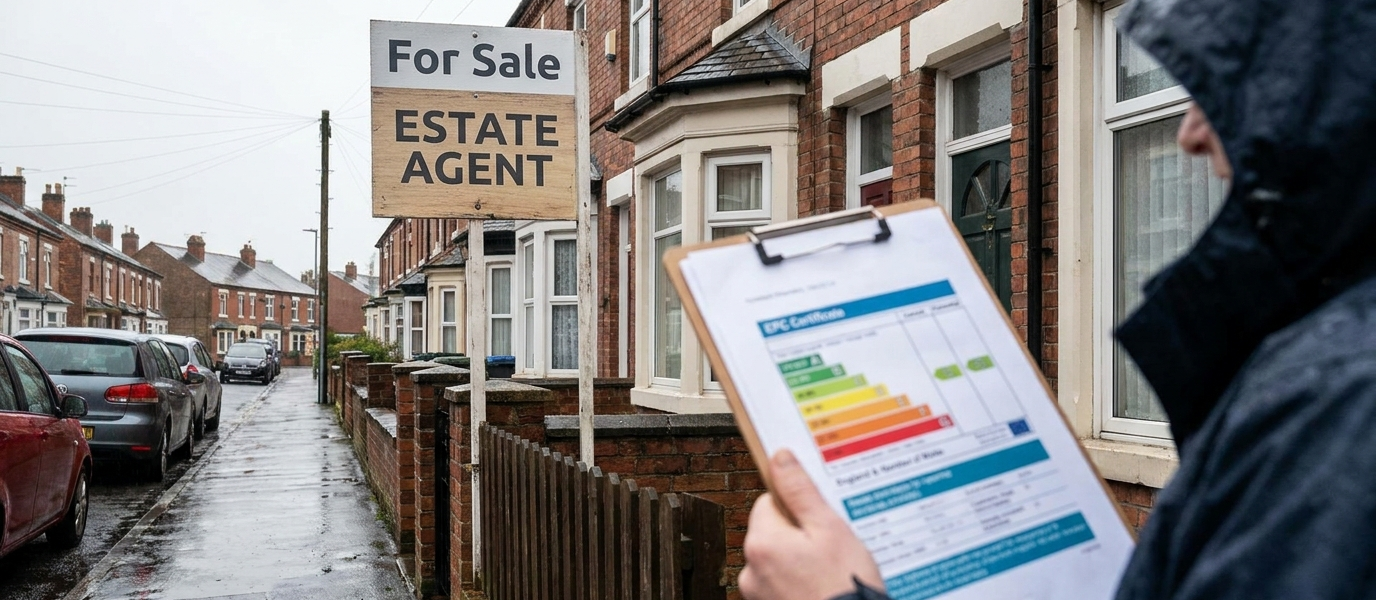
EPC ratings are no longer a footnote on a home report, they are becoming a deal-breaker. The Telegraph reports that Britain’s net zero crusade is making it harder to sell your home, citing estate agents who say properties with poor energy performance sit on the market longer or sell for less. As reported by The Telegraph, the tension between government targets and household reality is now visible in the housing market.
How EPC rules are changing the market
From 2025, landlords in England and Wales will need a minimum EPC C for new tenancies, and the government has signalled it wants owner-occupied homes to follow by 2030. While no law yet forces private sellers to upgrade, lenders are moving first. Several major banks now cap mortgage offers at 90% loan-to-value for homes rated D or below, or require higher deposits. The result: a D-rated semi in Manchester or Bristol may attract fewer bidders than an identical C-rated house next door. The price gap varies by region, but estate agents report discounts of 5–10% on homes with poor ratings.
What it costs to move from D to C
The Energy Saving Trust estimates that upgrading a typical 3-bed semi from EPC D to C costs between £5,000 and £15,000. The biggest single outlay is usually heating: replacing a gas boiler with an air-source heat pump runs £7,000–£13,000 after the Boiler Upgrade Scheme grant of £7,500. Cavity wall insulation (£700–£1,500), loft insulation (£300–£600), and double glazing (£3,000–£6,000 for a semi) can close the gap for less. The Great British Insulation Scheme closed on 31 March 2026. It funded insulation measures only and never covered windows or glazing.
Who pays, and who gets help
The government’s own impact assessment, seen by The Guardian last year, admitted that upfront costs of £10,000–£20,000 per home could deter millions of households. Grants exist but are means-tested or property-specific. The Boiler Upgrade Scheme is open to all owner-occupiers, but only until March 2028. The Great British Insulation Scheme targets low-income households and those in council tax bands A–D. For a family in a 1970s semi on the outskirts of Leeds, the choice may be: spend £8,000 now or risk a £15,000 drop in sale price later. Officials have not confirmed when the next round of funding opens.
What homeowners should do now
If you plan to sell within three years, get an EPC assessment now, it costs £60–£120 and gives you a clear upgrade roadmap. Prioritise measures that deliver the biggest rating jump per pound: loft insulation (usually pays back in two years) and cavity wall insulation. If you need a heat pump, apply for the Boiler Upgrade Scheme before March 2027, when the current budget runs out. For those not selling soon, monitor the government’s consultation on minimum EPC standards for owner-occupied homes, due to report in late 2025. The market is moving. The question is whether you move with it or get left behind.
Frequently Asked Questions
There is currently no minimum EPC rating required to sell a house in England and Wales, but the government has signalled plans to introduce a minimum EPC C for owner-occupied homes by 2030. However, from 2025, landlords in England and Wales will need a minimum EPC C for new tenancies, and lenders are already capping mortgages at 90% loan-to-value for homes rated D or below, making poor ratings a practical barrier to selling.
Upgrading a typical 3-bed semi-detached house from EPC D to C costs between £5,000 and £15,000, according to the Energy Saving Trust. Key costs include £7,000–£13,000 for an air-source heat pump after the £7,500 Boiler Upgrade Scheme grant, £700–£1,500 for cavity wall insulation, and £3,000–£6,000 for double glazing.
Yes, but it's becoming harder. Several major UK banks now cap mortgage offers at 90% loan-to-value for homes rated EPC D or below, or require higher deposits. This means you may need a larger deposit or face higher interest rates, and estate agents report that D-rated homes can sell for 5–10% less than identical C-rated properties.
The government's own impact assessment admits upfront costs of £10,000–£20,000 per home can deter many, so these grants are important but limited in funding per financial year.
Yes, if you plan to sell within three years, get an EPC assessment costing £60–£120. It provides a clear upgrade roadmap. This allows you to prioritise measures like loft insulation (payback in two years) and cavity wall insulation. This can prevent a potential 5–10% drop in sale price for poor ratings, as reported by estate agents.





