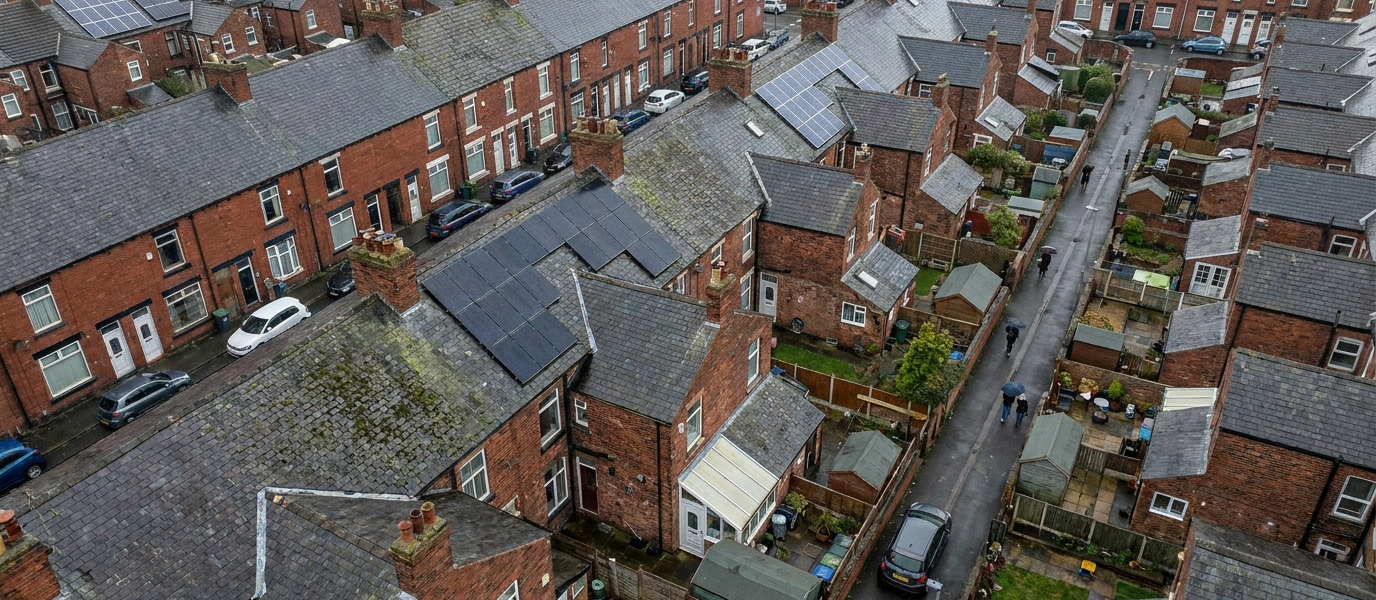
The average EPC rating in England and Wales has barely budged in two years. The latest data from the Ministry of Housing, Communities and Local Government, covering October to December 2025, shows 42% of homes now rated Band C or above, up just 2 percentage points from the same period in 2023. More than half of all homes remain stuck at Band D or lower, according to the statistical release published on GOV.UK as reported by GOV.UK. That stagnation matters because every band below C costs money.
What a single band costs a typical home
Energy Saving Trust figures show a typical 3-bed semi in England and Wales using 12,000 kWh of gas and 3,000 kWh of electricity per year pays roughly £1,800 annually on standard variable tariffs. Moving from Band D to Band C cuts that bill by about £300, a 17% reduction. The gap between Band F and Band C is closer to £700 a year. Yet the new data suggests most homeowners are not making those upgrades. The reasons are predictable: upfront cost, confusion about grants, and a lack of trust in installers.
Who qualifies, and who doesn’t
The Great British Insulation Scheme closed on 31 March 2026. It funded insulation measures only and never covered windows or glazing. But uptake has been slow. Ofgem’s latest figures show only 45,000 homes treated by mid-2025, far short of the 300,000 target. The Boiler Upgrade Scheme, which provides £7,500 towards an air-source heat pump, has seen higher demand but still reaches fewer than 10,000 homes per quarter. The catch is that both schemes require the homeowner to use an MCS-certified installer, and many rural areas have waiting lists of three months or more.
What this misses
The EPC data also hides a regional split. Homes in London and the South East average Band C, while those in the North East and Wales still sit at Band D. That gap reflects not just housing stock age but also income: wealthier areas can afford upgrades. But it also means the government’s net-zero target, all homes to reach Band C by 2035, is slipping. The Climate Change Committee warned in its 2025 progress report that the UK is on track to miss that deadline by at least five years without a major expansion of grant funding.
What to do and by when
Homeowners in England and Wales should check their EPC on the gov.uk register. If it’s below Band C, the first step is insulation, typically the cheapest and most effective upgrade. Loft insulation costs around £500 for a professional install and pays for itself in two years. The Great British Insulation Scheme closed on 31 March 2026. It funded insulation measures only and never covered windows or glazing. For those with solid walls, external insulation is more expensive (£10,000-£15,000) but the Energy Company Obligation (ECO4) scheme covers most costs for low-income households. The Boiler Upgrade Scheme remains open until 2027, but installers are already booking into mid-2026. Apply through gov.uk now.
Frequently Asked Questions
Improving from an EPC Band D to C typically costs between £1,700 and £2,500 for a typical 3-bed semi in England and Wales, primarily through loft insulation (around £500) and cavity wall insulation (£1,200-£2,000). This can save you roughly £300 per year on energy bills, so the investment pays back in 5-8 years.
For low-income households, the ECO4 scheme covers most costs for solid wall insulation (typically £10,000-£15,000). The Boiler Upgrade Scheme provides £7,500 towards an air-source heat pump, but requires an MCS-certified installer.
You can check your EPC rating for free on the gov.uk EPC register by entering your postcode. The register shows your current band (A to G), estimated energy costs, and recommended improvements. If your home is below Band C, insulation is typically the cheapest first step to improve your rating.
EPC ratings have stagnated because only 42% of homes in England and Wales are Band C or above, up just 2% in two years. The main reasons are upfront costs, confusion about grants, and long waiting lists for MCS-certified installers, often three months or more in rural areas. The Great British Insulation Scheme has treated only 45,000 homes against a 300,000 target.
The UK government's target is for all homes to reach EPC Band C by 2035, but the Climate Change Committee warns this deadline will be missed by at least five years without major grant funding expansion. Homes in London and the South East average Band C, while those in the North East and Wales still sit at Band D. This reflects regional income and housing stock differences.





