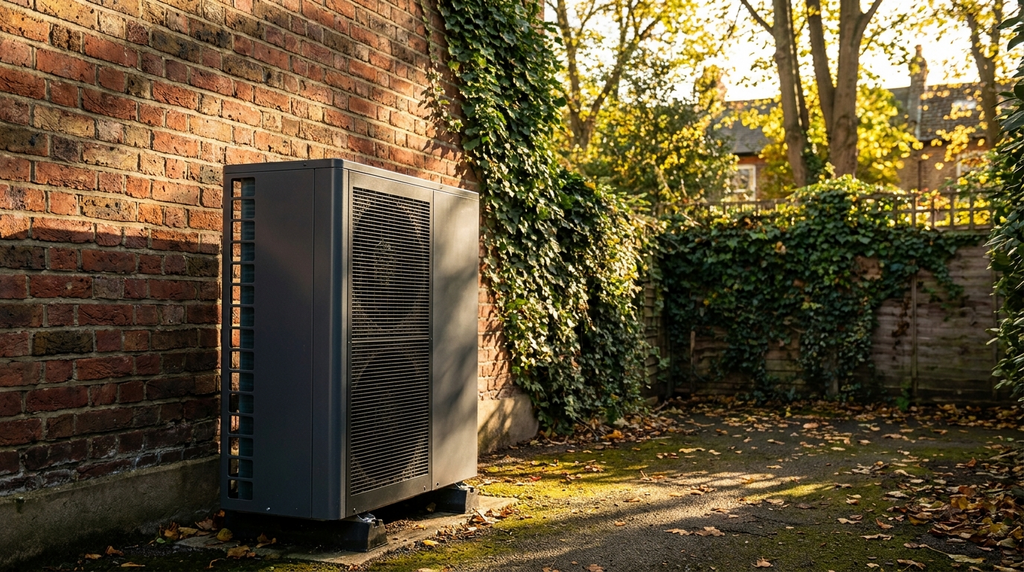
A £7,500 heat pump grant can cut your installation cost by more than half compared to an unsubsidised gas boiler swap
The main question for most homeowners is whether a heat pump is affordable. The answer depends heavily on the upfront cost, but a government grant now makes it significantly cheaper than it was just a few years ago. The Boiler Upgrade Scheme (BUS) offers a flat £7,500 grant for both air-source and ground-source heat pumps in England and Wales (GOV.UK, 2026).
Without a grant, a typical air-source heat pump installation costs between £7,000 and £13,000, while a gas boiler replacement averages £2,500 to £4,000 (Energy Saving Trust, 2026). With the £7,500 grant, an air-source heat pump can cost as little as £500 to £5,500 after the subsidy. That makes it far more competitive with a gas boiler swap.
The £7,500 Boiler Upgrade Scheme is the main heat pump grant for most homeowners
The BUS is a government grant administered by Ofgem. It offers £7,500 towards an air-source or ground-source heat pump for homes in England and Wales (GOV.UK, 2026). This flat rate replaced the previous tiered system where air-source pumps received £5,000 and ground-source pumps received £7,500. As of 2026, all eligible applications receive the full £7,500 regardless of pump type.
The grant is deducted from your invoice by the installer, who then claims the money from Ofgem. You never handle the cash. The installer submits the application on your behalf, and Ofgem pays them directly after the installation is complete (Ofgem, 2026). This means you only pay the remaining balance to the installer, not the full upfront cost.
Quick numbers grant amounts, installation costs, and energy savings side by side
The table below compares the main options for heating system upgrades in 2026. All figures are typical ranges based on UK averages.
| Grant type | Typical installation cost (with grant) | Annual energy savings vs gas boiler | Payback period (years) |
|---|---|---|---|
| Air-source heat pump (BUS grant) | £7,000–£13,000 (cost after grant: £0–£5,500) | £300–£600 | 8–15 |
| Ground-source heat pump (BUS grant) | £14,000–£19,000 (cost after grant: £6,500–£11,500) | £400–£800 | 12–20 |
| No grant (gas boiler replacement) | £2,500–£4,000 (no grant) | £0 (baseline) | N/A |
The annual savings are estimates from the Energy Saving Trust and assume a typical gas boiler running at 90% efficiency and a heat pump with a Seasonal Coefficient of Performance (SCOP) of 3.0 (Energy Saving Trust, 2026). Payback periods vary widely depending on your home’s insulation, heating patterns, and energy tariff.
You qualify for the heat pump grant if you meet these property and ownership rules
Eligibility for the BUS grant depends on several conditions. Your home must have a valid Energy Performance Certificate (EPC) with no outstanding recommendations for loft or cavity wall insulation. As of 2026, this rule is suspended for some applications, but you should check the latest guidance on the GOV.UK page before applying (GOV.UK, 2026).
You must own the property or have written permission from your landlord. The property must be in England or Wales. Scotland and Northern Ireland have separate schemes. You also need an MCS-certified installer to carry out the work and submit the grant claim on your behalf (Ofgem, 2026).
There is no income cap or means test for the BUS grant. It is available to all eligible homeowners regardless of income.
How to apply for the heat pump grant in 2026 a step-by-step process
The application process is straightforward, but you need to follow it in the correct order. Step one is to get quotes from at least two MCS-certified installers. They handle the grant application, so you do not submit anything to Ofgem yourself (MCS, 2026).
Step two: the installer checks your eligibility, gives you a quote with the £7,500 deducted, and submits the BUS application to Ofgem. Step three: Ofgem approves the grant, typically within two to four weeks. The installer completes the installation, and you pay the remaining balance (Ofgem, 2026).
You should not pay any deposit or full upfront payment until the grant is approved. Some installers may ask for a small booking fee, but the full grant deduction should be clearly stated on your quote.
MCS certification and TrustMark are the only installer credentials you need to check
MCS (Microgeneration Certification Scheme) certification is mandatory for any installer claiming the BUS grant. It proves they meet technical and quality standards for installing heat pumps (MCS, 2026). TrustMark is a government-endorsed quality scheme that covers the installation and provides consumer protection, including a complaints process (TrustMark, 2026).
Always verify an installer’s MCS number on the MCS website before signing a contract. Unaccredited installers cannot claim the grant, and you would lose the £7,500 subsidy. You can search the MCS installer directory by postcode or company name.
Both credentials are free for you to check and give you basic consumer protection if something goes wrong during or after the installation.
The heat pump grant covers the full installation, but not extras like radiators or insulation
The £7,500 grant covers the heat pump unit, labour, and basic system components such as pipework, controls, and a hot water cylinder if needed. It does not cover upgrades like new radiators, underfloor heating, or additional insulation (GOV.UK, 2026).
Typical extra costs you may need to budget for include radiator upgrades at £1,000 to £3,000 and insulation work at £500 to £2,000 if your EPC requires it (Energy Saving Trust, 2026). These extras are not covered by the BUS grant and must be paid separately.
If your home has poor insulation, the heat pump will be less efficient and your running costs will be higher. It is worth getting an insulation assessment before you commit to the installation.
Compare heat pump running costs with gas boiler running costs
Alternatives to the BUS grant Scotland, Northern Ireland, and zero-VAT relief
If you live in Scotland, the Home Energy Scotland (HES) loan and grant scheme offers up to £7,500 for heat pumps, plus a loan for the remaining cost up to £17,500 total (Home Energy Scotland, 2026). This is separate from the BUS and has its own eligibility criteria.
Northern Ireland does not have a direct equivalent to the BUS. Instead, it offers the Affordable Warmth Scheme and the Northern Ireland Renewable Heat Incentive (RHI) for heat pumps (NI Department for the Economy, 2026). The RHI provides ongoing payments for renewable heat generation rather than a one-off grant.
All UK heat pumps benefit from zero VAT on installation. The reduced 5% rate ended in 2022, and the current 0% rate applies until 2027 (GOV.UK, 2026). This applies to the full installation cost, including any extras like radiators or insulation if installed at the same time.
Check if your home is suitable for a heat pump