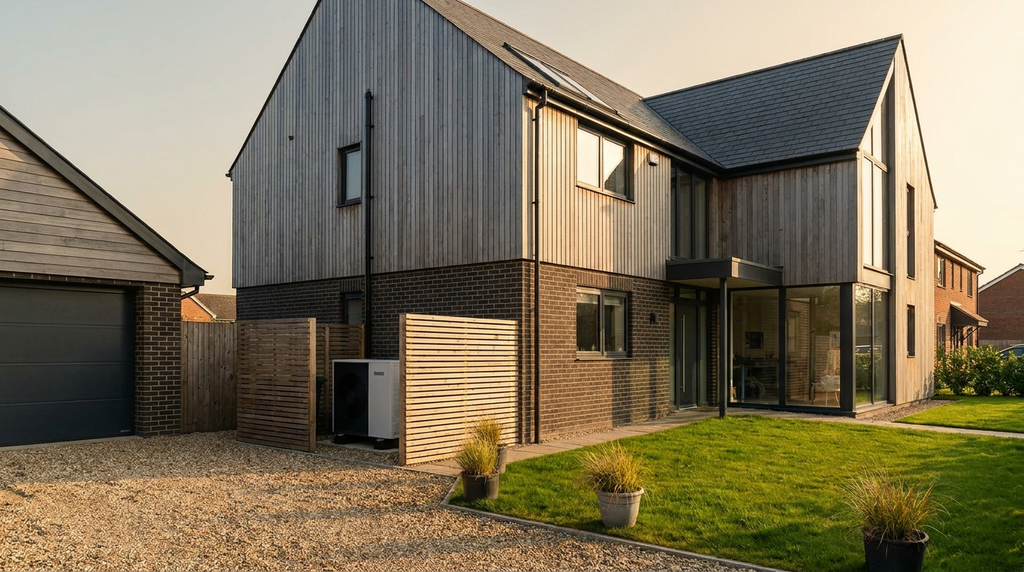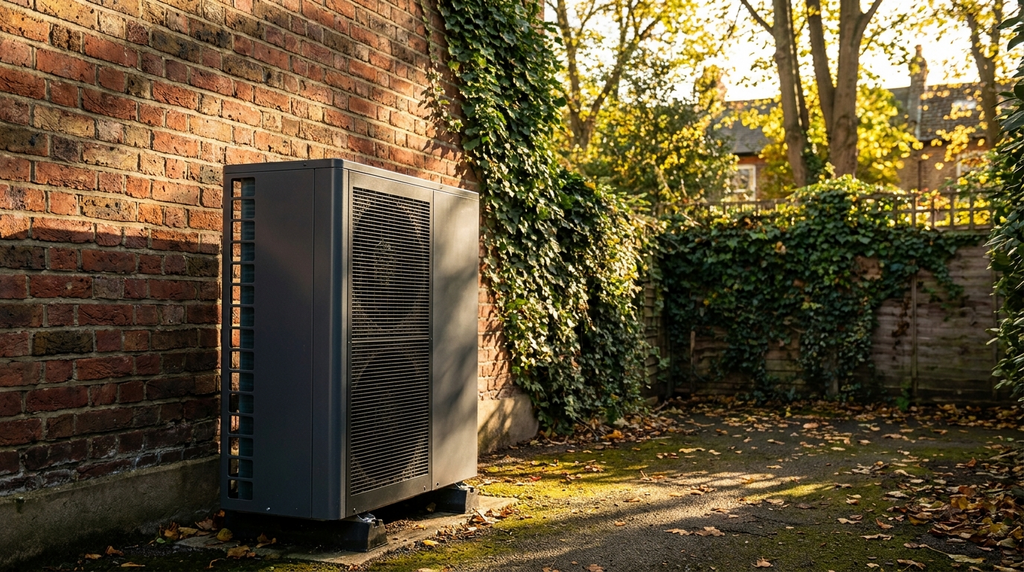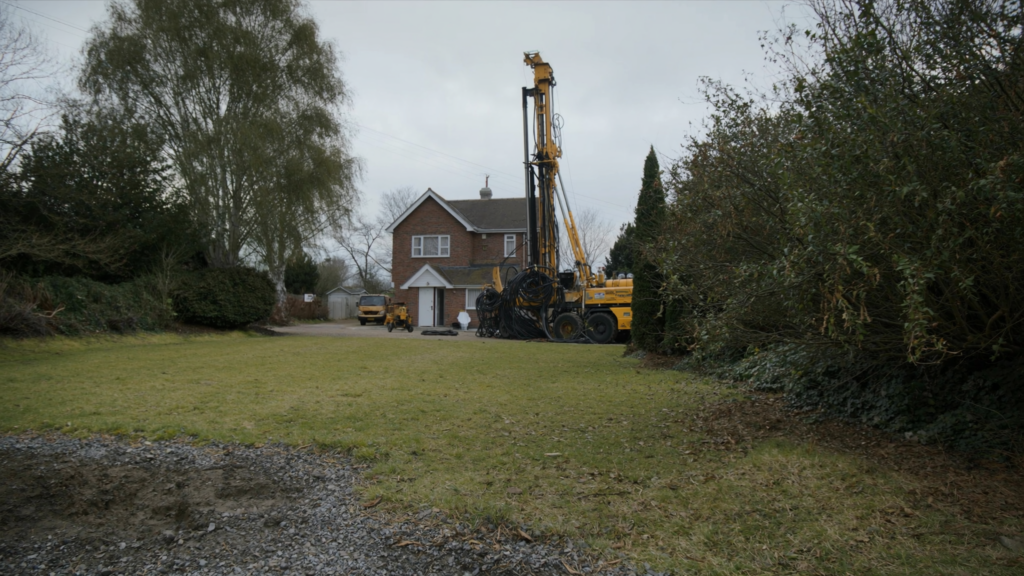
The UK applies 0% VAT to the supply and installation of heat pumps, solar panels, batteries and a range of insulation products. The exemption runs until 31 March 2027 and is then expected to revert to the standard 20% rate. On a £14,000 heat pump installation, that exemption is worth around £2,800. Most homeowners considering a heat pump are unaware of the deadline.
What 0% VAT actually covers
HMRC’s Notice 708/6 covers “energy-saving materials” installed in residential property in the UK. The list includes:
- Air-source and ground-source heat pumps (including all installation labour and ancillaries).
- Solar photovoltaic panels.
- Battery storage when installed with or after solar.
- Wind turbines.
- Water source heat pumps.
- Loft, cavity wall, internal wall and external wall insulation.
- Insulation around hot water pipes and tanks.
- Solar thermal hot water systems.
- Draught proofing.
- Controls for central heating and hot water systems.
- Smart diverters and smart meters when installed alongside qualifying products.
The 0% rate applies to the cost of the equipment and the labour to install it. It does not apply to general building works that happen to be near an energy upgrade, replacing a roof, for example, is at standard VAT even if you install solar on top of it at the same time.
How much it saves you
The saving depends on the installation size:
| Installation | Typical cost | Saving at 0% VAT |
|---|---|---|
| 4 kW solar PV system | £6,500 | £1,300 |
| 4 kW solar + 5 kWh battery | £9,500 | £1,900 |
| 7 kW air-source heat pump (3-bed) | £11,000 | £2,200 |
| 11 kW air-source heat pump (4-bed) | £14,000 | £2,800 |
| Ground-source heat pump (4-bed) | £26,000 | £5,200 |
| Cavity wall + loft insulation package | £1,800 | £360 |
These figures assume that without the exemption the standard 20% rate would apply. The previous rate before April 2022 was 5%, so the genuine policy benefit relative to that historic baseline is smaller. For practical homeowner planning, the comparison that matters is “what I pay now” versus “what I pay after April 2027,” which is the full 20% gap.
Stack it with the BUS grant
The Boiler Upgrade Scheme grant and the 0% VAT exemption are completely separate. You get both. For an off-grid household installing a heat pump after July 2026, the combination is:
- Gross cost of installation
- Minus £9,000 BUS grant
- 0% VAT applied to the gross figure (i.e. no VAT added)
On a £14,000 ground-source quote for an off-grid four-bedroom home, the maths is:
| Component | Amount |
|---|---|
| Gross installation | £14,000 |
| BUS grant (from July 2026) | −£9,000 |
| VAT (0%) | £0 |
| Net cost to homeowner | £5,000 |
After April 2027 (assuming the same prices and grant amount):
| Component | Amount |
|---|---|
| Gross installation | £14,000 |
| VAT (20% added) | +£2,800 |
| BUS grant | −£9,000 |
| Net cost to homeowner | £7,800 |
The window before April 2027 is the cheapest the heat pump market has been or is likely to be.
What happens in April 2027
The current policy direction is that 0% VAT ends on 31 March 2027 and the standard 20% rate returns from 1 April 2027. There is a possibility of an extension, energy efficiency is a stated policy priority, but no extension has been announced as of May 2026.
If you are planning a heat pump or solar installation, treat the deadline as real. Government tax-relief expiries have historically not been extended at the last minute; the Green Homes Grant, for example, closed early in 2021 with no successor for over a year.
Lead times matter
The 0% VAT applies on the date the installation is completed and invoiced, not the date you sign the contract. For heat pumps, the typical timeline is:
- Initial enquiry: week 0
- Survey and quote: week 1–3
- Sign contract and pay deposit: week 4–6
- Equipment ordered, install scheduled: week 6–12
- Installation: week 12–16
- Commissioning and invoice: week 14–18
A typical air-source installation is three to four months from enquiry to invoice. To be safely inside the 0% VAT window, an enquiry in October 2026 is the latest most homeowners should leave it. December 2026 is cutting it fine. January 2027 enquiries are likely to miss the deadline.
How to make sure you actually get it
The exemption is applied automatically by your installer, they invoice you at 0% VAT and do not charge it. Three things to check:
- Your quote line items show 0% VAT. If a quote shows VAT at 5% or 20%, query it. Some installers still default to old rates.
- The work is completed and invoiced before 1 April 2027. If commissioning slips into April 2027 your installer is technically required to charge the new rate.
- The installer is VAT-registered. Some smaller traders are not, in which case VAT is not chargeable anyway. Make sure they are not adding “their” 20% margin disguised as VAT.
HMRC has confirmed the exemption applies to homeowner-occupied properties and most rental properties. Pure commercial installations are not covered.
Sources
- Energy-saving materials and heating equipment (VAT Notice 708/6), gov.uk
- Boiler Upgrade Scheme explained, Energy Saving Trust
- Boiler Upgrade Scheme (BUS), Ofgem
Frequently Asked Questions
No extension has been announced as of May 2026. While the policy direction supports energy efficiency, planning your installation around a potential extension is risky. Aim to be invoiced before 1 April 2027.
Yes. Since February 2024 HMRC has confirmed that batteries qualify whether installed alongside solar or retrofitted later. Standalone battery installs also qualify.
Yes for second homes and most residential rental properties. Pure short-term holiday lets and commercial properties are excluded.
No. The current rate on qualifying energy-saving materials is 0%, not 5%. Some quoting software still defaults to the old rate. Ask the installer to reissue at 0%.