Thousands of eligible UK homeowners are leaving free insulation on the table right now, simply because they assume they won’t qualify. The schemes running in 2026 are broader than most people realise, and the gap between a well-insulated home and a draughty one can amount to more than £600 a year on energy bills, according to Energy Saving Trust figures. For households that do qualify, closing that gap costs nothing at all.
ECO4 and GBIS are the two main free insulation schemes available to UK homeowners in 2026. Eligibility is based on benefits, income, or your home's EPC rating. Qualifying households can save over £600 a year on energy bills at no cost, contact a TrustMark-certified installer to check your eligibility and apply.
- Free insulation in 2026 is funded through two main schemes, ECO4 and GBIS, and you do not need to be a customer of any specific energy supplier to apply.
- Eligibility is either means-tested (benefits or low income) or property-tested (based on your home's EPC rating), so check both routes before assuming you don't qualify.
- A well-insulated home can save you over £600 a year on energy bills, qualifying households get this improvement at zero cost.
- You never apply directly to the government, find an Ofgem-approved installer who handles the grant paperwork on your behalf.
- Get at least two or three quotes from TrustMark or PAS 2030-certified installers before agreeing to any work, even if it's free.
- Check your home's current EPC rating on the GOV.UK register before contacting installers, knowing your rating speeds up the eligibility assessment.
- If you've been told you don't qualify previously, recheck in 2026, scheme criteria have broadened and your circumstances or EPC rating may now meet the threshold.
- What "Free Insulation" Actually Means in 2026, and What It Doesn't
- The Two Schemes Running in 2026, ECO4 and GBIS Side by Side
- Do You Qualify, The Honest Eligibility Checklist
- What Insulation Is Actually Covered, and What Gets Refused
- The Real Costs, Savings, and Payback, Numbers That Actually Matter
- How to Apply, A Step-by-Step Process
- What Installers Don't Always Tell You, Lessons From Real Homes
- Making the Most of Your Application, Practical Steps Before the Survey
Free insulation in the UK is funded through two primary government-backed obligation schemes, ECO4 (Energy Company Obligation 4) and GBIS (Great British Insulation Scheme). Eligibility is either means-tested or property-tested, meaning your income, benefits status, or your home’s energy efficiency rating determines whether you qualify. This article explains exactly how both schemes work, who qualifies under each route, what insulation types are covered, and how to apply without wasting time on dead ends.
What “Free Insulation” Actually Means in 2026, and What It Doesn’t
The single most important thing to understand before you start making calls is what “free” actually means in this context. Free insulation in the UK is not a government cheque posted to your door. Instead, it is funded by energy suppliers operating under Ofgem-regulated obligation schemes, where large energy companies are legally required to spend a set amount helping eligible households reduce their energy use. The funding flows from supplier to approved installer to your home, you never see it as cash.
Understanding this distinction matters because it stops homeowners chasing funding that simply doesn’t exist. There is no separate application form you send to a government department, and there is no central waiting list. The process runs through approved installers who handle grant paperwork on your behalf, which we will cover in detail later.
A common misconception worth clearing up immediately is that you must be a customer of a specific energy supplier to access these schemes. That is not how it works. Any Ofgem-obligated supplier must fund eligible measures, and a good installer can match your application to whichever supplier has available budget in your area at the time of application. Your current supplier is largely irrelevant.
It is also worth acknowledging that not every homeowner will qualify for fully funded work. Some households sit in what might be called the partial grant tier, they do not meet the full criteria for either ECO4 or GBIS but can still access funding that covers 50 to 75 per cent of the total cost. A cavity wall insulation job that would ordinarily cost £1,800 dropping to £450 out of pocket is still a compelling proposition, and this article covers both scenarios honestly.
guide to EPC ratings and what they mean for your home
The Two Schemes Running in 2026, ECO4 and GBIS Side by Side
ECO4 and GBIS are distinct programmes with different eligibility logic, different measures covered, and different administrative routes, and conflating them is one of the most common sources of confusion homeowners encounter.
ECO4 (Energy Company Obligation 4) is a supplier-funded scheme primarily targeting low-income and fuel-poor households. It is administered under Ofgem oversight and administered in practice through energy suppliers working with approved installers. ECO4 covers a wider range of measures than GBIS, including solid wall insulation, and tends to fund more complex or expensive work precisely because it targets the households with the greatest need. The Department for Energy Security and Net Zero (DESNZ) has signalled that ECO4 will be succeeded by a follow-on obligation, and homeowners should check the current DESNZ guidance for the latest scheme status, as any replacement programme is expected to maintain broadly similar eligibility routes.
GBIS (Great British Insulation Scheme) takes a different approach. Rather than targeting households purely by income, it targets homes with an EPC (Energy Performance Certificate) rating of D or below. This makes it accessible to a much wider group of homeowners, including working households that would not qualify under ECO4’s income-based criteria. GBIS tends to focus on single-measure installs, most commonly loft insulation or cavity wall insulation, rather than whole-house upgrades.
The table below sets out the key differences in a format you can use to make a quick assessment of which route is most relevant to your situation.
| Feature | ECO4 | GBIS |
|---|---|---|
| Primary eligibility route | Income or benefits-based | Property EPC rating (D or below) |
| Income testing required | Yes, benefits or low income threshold | Not for property route; income-linked households get priority |
| Measures covered | Loft, cavity wall, solid wall (internal and external), underfloor, park home insulation | Loft, cavity wall, primarily single-measure installs |
| Solid wall insulation included | Yes | Limited, primarily simpler measures |
| Typical homeowner contribution | Zero for fully qualifying households | Zero to partial contribution depending on property band and income |
| Owner-occupier eligible | Yes | Yes |
| Private renter eligible | Yes, with landlord consent | Yes, with landlord consent |
| Administering oversight body | Ofgem | Ofgem |
| How to apply | Via TrustMark-registered installer or energy supplier | Via TrustMark-registered installer or Simple Energy Advice service |
| Current scheme status | Check DESNZ for successor programme updates | Active, check Energy Saving Trust for current end date |
One thing neither scheme makes obvious in its marketing is the sequencing question, whether you should apply for ECO4 first if you might qualify, and use GBIS as a fallback. In practice, a competent TrustMark-registered installer should assess both routes during your initial survey and recommend whichever offers the most comprehensive funding for your circumstances. If an installer only mentions one scheme without explaining the other, treat that as a red flag.
how to find a TrustMark-registered energy installer
Do You Qualify, The Honest Eligibility Checklist
Eligibility for free insulation under UK schemes in 2026 comes through three distinct routes, and most homeowners only know about one of them.
Route One, Benefits-Based Eligibility Under ECO4
If anyone in your household receives one of the following qualifying benefits, you are very likely eligible for ECO4 measures at no cost, provided your home also has a low EPC rating or has been identified as fuel poor
- Universal Credit
- Pension Credit (Guarantee Credit or Savings Credit)
- Child Tax Credit
- Working Tax Credit
- Housing Benefit
- Income-related Employment and Support Allowance (ESA)
- Income-based Jobseeker’s Allowance (JSA)
- Income Support
- Child Benefit (subject to income cap, check current DESNZ threshold)
Pension Credit in particular is worth highlighting. A significant number of older homeowners receive Pension Credit but have never been made aware that it is a qualifying benefit for ECO4. If you or a family member receives it, this should be the first call you make.
Route Two, Property-Based Eligibility Under GBIS
If your home has an EPC rating of D, E, F, or G, it may qualify under GBIS regardless of your income. This is the route that most articles on this subject skim over, yet it catches a substantial number of working homeowners on ordinary incomes who simply live in older, less energy-efficient properties.
A typical 1930s bay-fronted semi or a 1960s solid-wall bungalow will almost certainly sit at D or below. Victorian terraces without existing wall or loft insulation often sit at E or F. If your EPC was last assessed more than ten years ago, or if you have never had one, the current rating on the register may not reflect any improvements you have made, but it also cannot disqualify you on the basis of work you have done since.
Route Three, Income Threshold Without Benefits
Some households qualify under an annual income threshold even without receiving means-tested benefits. DESNZ and the Energy Saving Trust publish updated threshold figures, and it is worth checking the Simple Energy Advice service with your household income details before assuming you earn too much. Households with modest working incomes, particularly in areas with higher fuel poverty rates, are often surprised to find they fall within the qualifying band.
Tenure and Ownership Rules
Owner-occupiers are the most straightforward case under both schemes. Private renters can also apply, but landlord consent is required in writing before any work begins, and landlords with properties below EPC E already face Minimum Energy Efficiency Standards obligations, which makes this conversation easier than it might seem. Social housing tenants are typically covered under separate supplier arrangements negotiated at a portfolio level, so the application route differs; speak directly to your housing association or local authority.
What Insulation Is Actually Covered, and What Gets Refused
Knowing that you qualify is only half the picture. The other half is whether the specific insulation measure your home needs is one the schemes will actually fund.
Loft Insulation
Loft insulation is by far the most commonly installed measure under both schemes, and for good reason, it is relatively inexpensive to install, delivers consistent savings, and suits the widest range of property types. Fully eligible households typically receive this at zero cost.
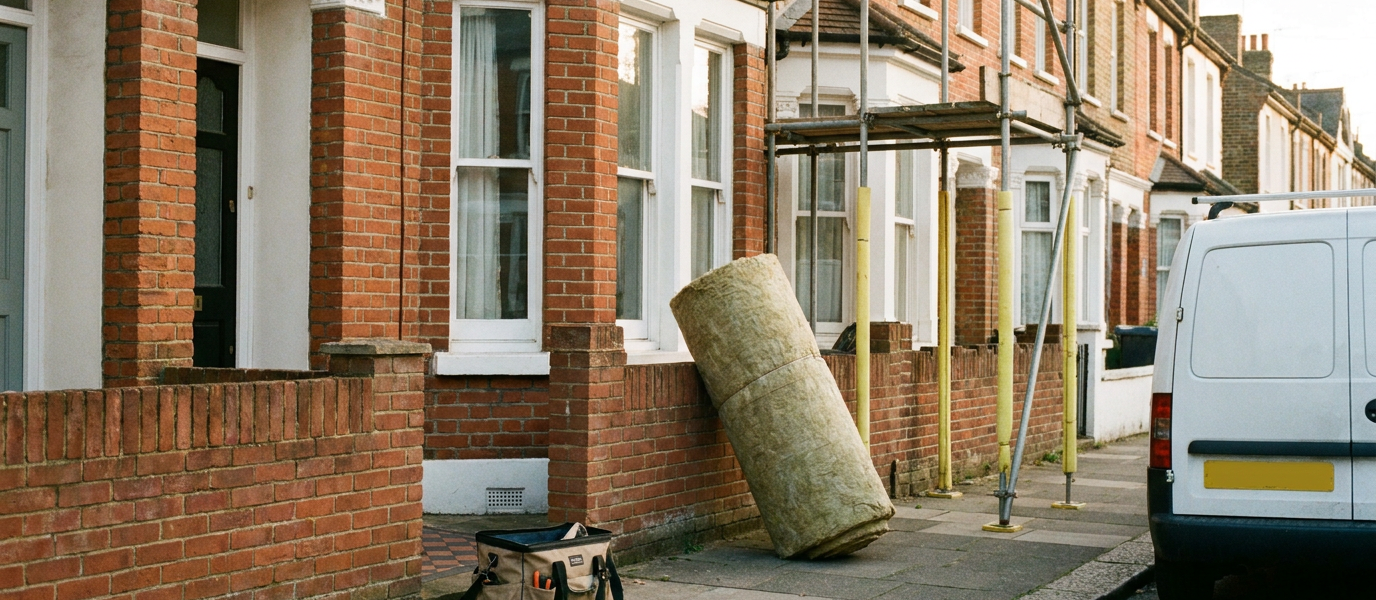
The distinction between topping up existing insulation and a full new install matters here. If your loft already has some insulation but it is below the recommended 270mm depth, a top-up is still fundable in many cases. However, boarded lofts present complications, the boarding has to be lifted or worked around, which adds labour cost that scheme funding does not always cover in full. An unboarded loft with a clear hatch and accessible joists is the easiest and fastest install an approved installer will encounter.
Cavity Wall Insulation
Cavity wall insulation is widely covered but generates the highest proportion of failed surveys of any measure on the schemes. Properties built between roughly 1920 and 1995 typically have cavity walls, but the suitability of those cavities varies considerably.
In my experience visiting homes across the north-west and the Midlands, the most common reasons for a cavity wall refusal at survey are a previous fill that has failed or settled unevenly, a cavity narrower than 50mm, or wall ties showing signs of corrosion that need addressing first. None of these problems are visible from the outside, which is why a survey is essential before you commit to any expectation of free work.
If you live in a property built before 1930 or in an area with high driving rain exposure, it is worth paying £150 to £200 for an independent cavity wall survey, sometimes called a borescope inspection, before applying through the schemes. Discovering a problem at the funded survey stage can delay the whole application while you resolve it, and a pre-survey eliminates that risk.
Solid Wall Insulation
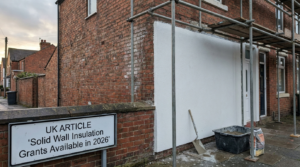
Solid wall insulation, either internally applied (dot-and-dab or frame system fixed to the inner face of external walls) or externally applied (rendered or clad system fixed to the outer face), is covered under ECO4 for fully eligible households. The value of this funding is significant. According to Energy Saving Trust 2026 guidance, solid wall insulation costs between £8,000 and £22,000 depending on property size, wall area, and the type of system used. Receiving this at no cost is one of the most financially meaningful home improvements available to any homeowner.
The honest caveat is that fewer contractors carry out this work to a high standard, and waiting times for surveyed and approved solid wall installations are longer than for loft or cavity work. In a typical 3-bed semi with 9-inch solid brick walls, the external insulation route is usually preferred where planning permission is not required, but properties in conservation areas or with certain facade features may need to use the internal route instead, which reduces usable room dimensions.
Underfloor Insulation
Suspended timber ground floors, common in Victorian terraces and pre-war properties, can be insulated from below through the existing airbricks, which is a relatively quick and disruptive-free process. This is covered under ECO4 where the property type and accessibility allow it. Solid concrete floors require screed or overlay insulation and are far less commonly funded because of the higher disruption and cost involved.
What the Schemes Will Not Cover
Insulation of outbuildings, garages used as habitual rooms, or properties that have already had a specific measure funded under a previous scheme (CERT, CESP, ECO1, ECO2, ECO3) are typically excluded from repeat funding for that same measure. You can check your property’s installation history via the TrustMark lodgement database, which holds records of all scheme-funded work going back several years. This is worth doing before you apply, because discovering a prior lodgement mid-survey wastes everyone’s time.
complete guide to cavity wall insulation for UK homes
The Real Costs, Savings, and Payback, Numbers That Actually Matter
This section is about giving you an honest set of reference figures rather than headline numbers that bear no relation to your specific home.
| Measure | Typical unfunded cost (semi-detached) | Estimated annual saving (Energy Saving Trust 2026) | Payback if fully funded | Payback with 50% contribution |
|---|---|---|---|---|
| Loft insulation (full install) | £300 – £600 | £150 – £225 | Immediate | Under 2 years |
| Cavity wall insulation | £1,500 – £2,000 | £160 – £275 | Immediate | 3 – 4 years |
| Solid wall insulation (external) | £8,000 – £22,000 | £245 – £455 | Immediate | 10 – 25 years |
| Underfloor insulation (suspended timber) | £800 – £1,800 | £70 – £130 | Immediate | 3 – 6 years |
For any fully funded measure, the payback is immediate in the most literal sense, you begin saving on your energy bills from the first month after installation without having spent a penny. For partial grants, the payback arithmetic changes significantly but remains compelling. A homeowner contributing £500 towards a £1,500 cavity wall installation that saves £220 per year breaks even in under two and a half years and then saves continuously thereafter.
One angle that most competing articles on this subject completely miss is the effect of insulation on your property’s EPC rating, and therefore on its market value. When a funded measure brings a property from EPC band E to band C or D, that improvement is recorded on the national EPC register and is visible to any future buyer or mortgage lender. Research from the Energy Saving Trust and property market data has consistently shown that EPC band improvements add measurable resale value, with band-by-band uplifts varying by region but being particularly pronounced in markets where buyers are factoring in future energy costs. Free insulation is therefore not simply a bill-reduction measure, it is an investment in your property’s long-term capital value, delivered at no cost to eligible households.
There is also a comfort dimension that savings figures do not capture. A home where heat retention is poor is typically unpleasant to live in during winter regardless of how high the thermostat is set. In a 1970s end-of-terrace with no loft insulation and failed cavity fill, the sensation of cold radiating from walls and ceilings is something insulation eliminates almost entirely, and that quality-of-life improvement has real value that never appears on a payback spreadsheet.
How to Apply, A Step-by-Step Process
The application process for free insulation under both ECO4 and GBIS is simpler than many homeowners expect, but there are specific points where it commonly goes wrong.
- Check your EPC rating first. Go to the GOV.UK EPC register and search your property’s address. Your EPC is free to view and tells you your current energy rating, what measures are recommended, and when the certificate was last updated. If your property has no EPC on record, or the existing one is more than ten years old, book a new assessment before proceeding, typically £60 to £120 depending on your area. Without an up-to-date EPC, neither scheme can assess your property-based eligibility accurately.
- Run an eligibility check before speaking to an installer. Use the Simple Energy Advice service (run by the Energy Saving Trust on behalf of DESNZ) or your energy supplier’s website to run a preliminary eligibility check. This takes around ten minutes and gives you a clear steer on which scheme you are most likely to qualify under. Doing this before contacting installers prevents you from being steered towards paid work you do not need.
- Find a TrustMark-registered installer. Under both ECO4 and GBIS, installers must be registered with TrustMark and, for relevant measures, hold MCS (Microgeneration Certification Scheme) accreditation or appropriate PAS (Publicly Available Specification) certification. You can verify registration directly on the TrustMark and MCS registers. Do not rely on a company’s word alone, look them up. The installer handles the grant application paperwork on your behalf, so choosing the right installer effectively means choosing your scheme administrator.
- Book your free home survey. A TrustMark-registered installer will visit your property at no cost to you, assess what measures are suitable for your property type, confirm your eligibility under the applicable scheme, and identify any complicating factors. In a typical Victorian terrace, this survey takes around 45 minutes and should cover the loft, external walls, floor construction, and any existing insulation already in place.
- Review the written quote and grant breakdown. Before agreeing to anything, ask for a written breakdown showing the total cost of the work, the amount covered by the scheme, any contribution required from you, and what happens if the installation survey uncovers additional complications. You should never be in a position where you have verbally agreed to work and then discover there are unexpected costs, a reputable installer provides this in writing upfront.
- Confirm installation details and get your completion certificate. All ECO4 and GBIS measures must be installed by TrustMark-registered contractors and lodged on the national TrustMark database on completion. Ask for your completion certificate and retain it. This document is your proof of installation for EPC reassessment, for any future property sale, and for any warranty claim. Without it, you have no formal record the work was done to scheme standard.
What Installers Don’t Always Tell You, Lessons From Real Homes
After fifteen years of walking through UK homes at every stage of insulation work, before, during, and after installation, there are consistent patterns that homeowners are rarely told about upfront.
The Thin-Install Problem in Loft Insulation
The current recommended depth for loft insulation is 270mm, which is the level at which the thermal benefit is fully realised. In homes I have visited where insulation was installed under earlier phases of obligation schemes, I have regularly found depths of 100mm to 150mm, significantly below standard, where installers appear to have stretched available budget across more properties by installing less per home.
This is not speculation. It is a pattern reported consistently by building surveyors working in older housing stock. The practical advice is straightforward, when your installation is complete, take a tape measure into the loft and measure the depth yourself. It takes three minutes and confirms whether you have received what you were promised. If the depth falls short of 270mm, contact your installer in writing and request a remedy before the job is signed off.
The Lead Generator Trap
A substantial proportion of insulation applications now begin with unsolicited calls or text messages from companies that position themselves as scheme administrators or “government scheme advisers.” These are typically lead generation businesses, their actual purpose is to collect your details and sell them to installers, not to find you the best funding route.
The specific risk here is that some lead generators are financially tied to particular installers or suppliers who pay the highest referral fees rather than the ones best suited to your property. The result can be applications steered toward measures that are easier to install or that attract higher scheme payments, rather than the measures your home actually needs most.
The remedy is to initiate your own application through the Simple Energy Advice service or by approaching a TrustMark-registered installer directly. If you receive an unsolicited call claiming to represent a government scheme, treat it with caution and verify any company independently before providing your details.
The Ventilation Oversight
This is perhaps the most important thing I can tell you that almost no installer will mention proactively. Adding insulation to a property that already has limited ventilation can create or worsen condensation problems if the work is not accompanied by appropriate ventilation improvements. In a tightly constructed 1970s semi where loft insulation is topped up and cavity walls are filled in the same programme of work, the net effect is a significantly tighter envelope, which is exactly what you want for heat retention, but which can lead to excess moisture building up in rooms if background ventilation is insufficient.
Current PAS 2030 and PAS 2035 standards (the specifications that all ECO4 and GBIS work must comply with) require an assessor to consider ventilation as part of the whole-house assessment. Ask your installer directly what ventilation checks are being made as part of the installation, and ask to see this reflected in their assessment report. A good installer will welcome the question.
understanding condensation and damp in insulated homes
Timing Your Application Strategically
Scheme budgets are allocated on a rolling basis, and some installers and suppliers exhaust their allocated funding earlier in the programme year than others. Applications made in the earlier part of the year typically have access to fuller funding allocations, whereas applications made towards the end of a scheme cycle may encounter longer waiting times or reduced availability for certain measures.
This does not mean you should rush into a poor decision, but it does mean that if you have been sitting on a half-formed intention to apply, the time to act is now rather than later. Checking eligibility through the Simple Energy Advice service costs you nothing and takes less than fifteen minutes.
how an EPC assessment works and what to expect on the day
Making the Most of Your Application, Practical Steps Before the Survey
There are several things you can do before your installer’s survey that meaningfully improve the outcome.
Clear the loft hatch and ensure the loft is accessible. This sounds obvious but is genuinely one of the most common causes of survey delays in older properties where loft hatches have been painted over or where access ladders have been removed. An assessor who cannot safely enter your loft cannot confirm its suitability for funded insulation.
Gather any paperwork relating to previous insulation work, including old completion certificates or energy performance certificates showing prior measures. This helps the installer confirm what has already been done and avoid duplication with earlier scheme-funded work.
If you believe your walls are solid rather than cavity, which is common in pre-1920 properties and some post-war non-traditional builds, mention this when booking the survey. It changes which measures are relevant and which scheme route applies, and it allows the installer to bring the right assessment tools to the first visit.
Finally, if you are a private renter applying with your landlord’s support, have the landlord’s written consent ready before the survey. Without it, the installer cannot progress the application regardless of how clearly you qualify under the scheme criteria.
The free insulation schemes available to UK homeowners in 2026 represent a genuinely significant opportunity, particularly for households in older housing stock where energy bills are high and insulation is poor or absent. The qualification routes are broader than most people assume, the measures covered are more substantial than most people know, and the process, handled through a reputable TrustMark-registered installer, is less complicated than it appears from the outside. The cost of not applying is paid every month, quietly and unnecessarily, on your energy bill.
Frequently Asked Questions
Under ECO4 you typically qualify if you receive means-tested benefits such as Universal Credit, Pension Credit, or Income Support, or if your household income is below £31,000 and your home has an EPC rating of D or below. GBIS uses a broader property-based route, meaning even households not on benefits may qualify if their home is poorly insulated.
Both schemes cover cavity wall insulation, loft insulation, and solid wall insulation (internal or external). ECO4 can also fund underfloor insulation and room-in-roof insulation where they are the most suitable measure for improving your home's energy performance rating.
You do not apply to a government department directly. Contact a TrustMark-registered and PAS 2030-certified installer, who will assess your eligibility and submit the grant application on your behalf. The Simple Energy Advice service at simpleenergyadvice.org.uk is a reliable starting point to find approved local installers.
ECO4 can fund insulation in privately rented properties, but the landlord must agree to the work being carried out. Some landlords are required to improve EPC ratings to meet Minimum Energy Efficiency Standards (MEES), which makes ECO4 a practical route to fund that work at no direct cost to tenants.
According to the Energy Saving Trust, a well-insulated home can save over £600 a year compared to an uninsulated one, with loft insulation alone saving around £150 to £250 annually depending on property size. Cavity wall insulation typically saves between £150 and £300 a year for a semi-detached home.