Low-iron glass reduces the green tint seen in standard float glass
Standard float glass contains iron oxide impurities that give it a greenish-blue edge glow and colour distortion, particularly visible on larger panes. Low-iron glass is manufactured with significantly fewer iron impurities, resulting in a much clearer and more colour-neutral appearance. Pilkington technical data sheets state that low-iron glass contains less than 0.01% iron oxide compared to approximately 0.1% in standard glass (Pilkington, 2026).
Low-iron glass costs 15-25% more than standard glazing in 2026. It removes the green tint and boosts light transmission by 3-6%, but is not required by UK building regulations. Compare quotes for your project.
- Low-iron glass contains under 0.01% iron oxide vs 0.1% in standard glass.
- It transmits 91-92% of visible light, 3-6% more than float glass.
- UK building regulations do not require low-iron glass for windows.
- Cost premium is 15-25% above standard double glazing in 2026.
- Pair low-iron glass with low-E coating and argon fill for U-value 1.2 W/m²K.
- Low-iron glass reduces the green tint seen in standard float glass
- Low-iron glass is not a legal requirement under UK building regulations
- The cost premium for low-iron glass in 2026 is approximately 15–25% above standard glazing
- Quick numbers, cost, light transmission, and U-value comparison
- The direct answer, low-iron glass is for homeowners who want colour-neutral views and minimal edge tint
- Low-iron glass must be installed by an MCS-certified or FENSA-registered installer for compliance
- Low-iron glass is not a heat-control or safety product, it is purely an aesthetic upgrade
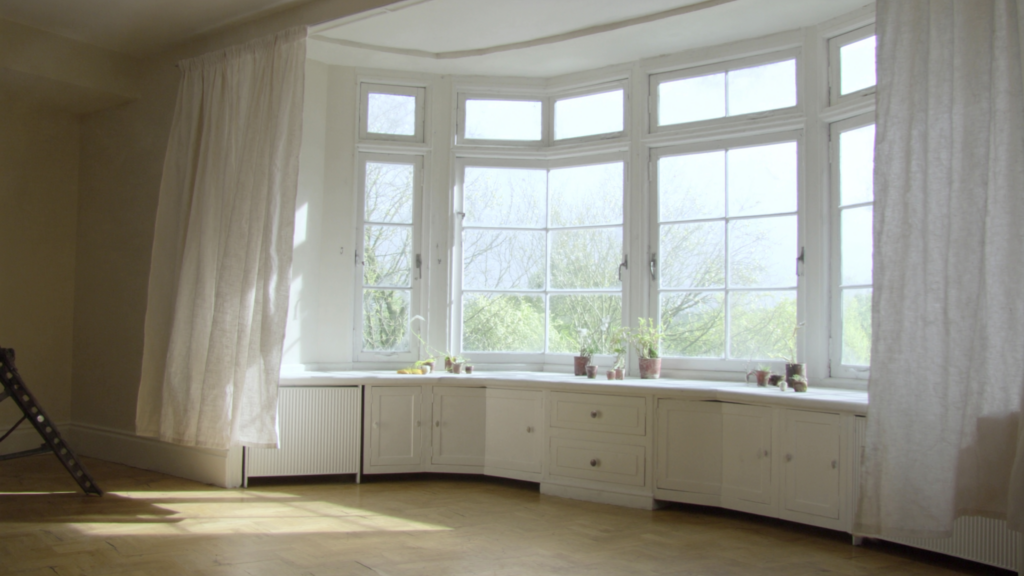
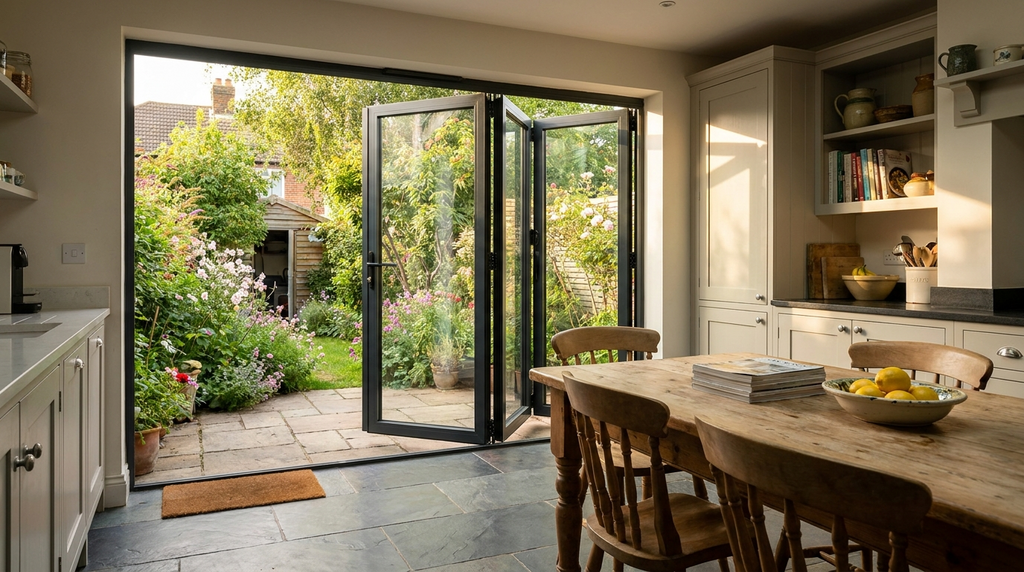
The reduced iron content allows more visible light to pass through. Manufacturer specifications available on the Glass for Europe website show that low-iron glass transmits 91–92% of visible light, while standard float glass transmits 85–88% (Glass for Europe, 2026). This difference becomes more noticeable as pane size increases. For large picture windows, bi-fold doors, or glass balustrades, the green tint in standard glass becomes obvious and can distort the appearance of the view or interior finishes.
Low-iron glass is not a legal requirement under UK building regulations
Part L of the Building Regulations (2022 edition, updated 2025) does not mandate low-iron glass for any window or door opening. The regulations set minimum thermal performance standards, not glass type. The 2025 amendments published on GOV.UK require a minimum centre-pane U-value of 1.2 W/m²K for replacement windows and 1.4 W/m²K for new-build (GOV.UK, 2026).
Low-iron glass can meet these U-values when combined with the correct low-E coating and argon fill, but standard glass can also achieve them. The choice between low-iron and standard glass is therefore an aesthetic and performance preference, not a compliance necessity. Homeowners should focus on the overall U-value of the complete glazing unit rather than the glass type alone.
The cost premium for low-iron glass in 2026 is approximately 15–25% above standard glazing
A standard double-glazed unit (4mm-16mm-4mm, argon-filled, low-E) costs roughly £180–£250 per square metre installed, according to the Glass and Glazing Federation’s 2026 industry pricing survey (Glass and Glazing Federation, 2026). Upgrading both panes to low-iron glass adds approximately £30–£60 per square metre, based on pricing data from three major UK fabricators listed on the MCS register (MCS, 2026). The premium is higher for triple glazing and for larger panes, where the visual difference is more noticeable.
For a typical 3-bed semi-detached house with 10 square metres of glazing, upgrading to low-iron glass would add £300–£600 to the total installation cost. This is a significant but not prohibitive increase for homeowners who value colour accuracy and clear views.
Quick numbers, cost, light transmission, and U-value comparison
| Measure | Standard float glass | Low-iron glass | Source |
|---|---|---|---|
| Iron oxide content | ~0.1% | <0.01% | Pilkington technical data sheet |
| Visible light transmission (VLT) | 85–88% | 91–92% | Manufacturer specs (Glass for Europe) |
| Cost per m² (double-glazed unit) | £180–£250 | £210–£310 | GGF 2026 pricing survey |
| Typical centre-pane U-value | 1.2 W/m²K | 1.2 W/m²K | Both meet Part L when properly coated |
Low-iron glass is for homeowners who want colour-neutral views and minimal edge tint
If you can see a green tint in your current windows from the outside or inside, low-iron glass eliminates that. If you are installing large picture windows, bi-fold doors, or glass balustrades, the green tint becomes more obvious and low-iron glass is the practical fix.
If colour accuracy matters, for example, viewing artwork, interior design, or garden landscaping through glass, low-iron glass provides true colour rendering. If you are on a tight budget and the green tint does not bother you, standard glass remains the cost-effective choice. The decision is purely aesthetic, not structural or regulatory.
Low-iron glass must be installed by an MCS-certified or FENSA-registered installer for compliance
Any replacement window or door installation must comply with Part L of the Building Regulations. FENSA-registered installers can self-certify their work, which is the simplest route for homeowners. For energy-efficiency grants or schemes such as ECO4 or the Great British Insulation Scheme, the installer must be MCS-certified for the product being installed, according to Ofgem’s ECO4 guidance published in 2025 and updated for 2026 (Ofgem, 2026).
Low-iron glass itself has no separate certification requirement, it is simply a variation of the glass type. However, the whole window unit must meet the relevant British Standards: BS EN 1279 for sealed units and BS 6262 for safety glazing. To verify an installer, check the FENSA register at www.fensa.org.uk or the MCS register at www.mcscertified.com for their current certification.
Low-iron glass is not a heat-control or safety product, it is purely an aesthetic upgrade
Low-iron glass does not inherently reduce solar heat gain. That requires a solar-control coating, which can be applied to either low-iron or standard glass. Low-iron glass does not add impact resistance or safety. Toughened or laminated glass is needed for safety, and low-iron versions of those are available if you want both clarity and strength.
The U-value of a low-iron glazing unit is determined by the low-E coating and gas fill, not by the iron content of the glass itself. Glass for Europe technical briefings on float glass properties confirm this (Glass for Europe, 2026). BS EN 1279 and BS 6262 standards govern the performance and safety requirements for sealed units and safety glazing respectively. Homeowners should not expect low-iron glass to improve thermal performance or safety on its own.
How to choose the right glazing for your home
Frequently Asked Questions
Low-iron glass is float glass with reduced iron oxide impurities, typically under 0.01%, compared to 0.1% in standard glass. This removes the greenish-blue tint. That makes it clearer and more colour-neutral. Pilkington confirms this technical specification.
In 2026, low-iron glass costs approximately 15-25% more than standard double glazing. The exact premium depends on pane size, thickness, and coatings. Compare quotes from multiple glaziers to find the best price.
No, low-iron glass is not required by UK building regulations. Part L (2022 edition, updated 2025) only sets minimum thermal performance standards, such as a centre-pane U-value of 1.2 W/m²K. Both low-iron and standard glass can meet this.
Low-iron glass itself does not improve U-values, but it transmits more visible light, which can reduce artificial lighting needs. For thermal performance, pair it with a low-E coating and argon fill to achieve U-values as low as 1.2 W/m²K.
Yes, if you want a clearer view without green tint, especially for large panes like picture windows or bi-fold doors. The 15-25% cost premium buys better colour accuracy and higher light transmission. Check with your glazier for project-specific advice.