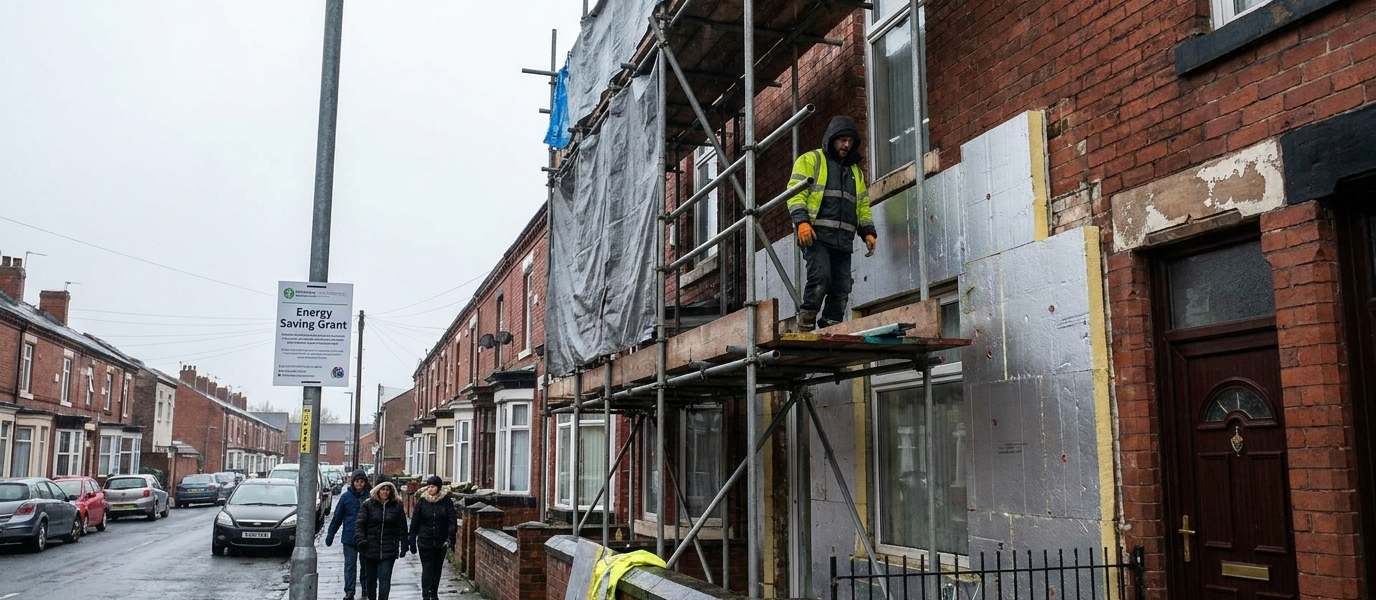
The average UK home leaks heat at a rate that would shame a colander. A typical 3-bed semi loses 25% of its warmth through the roof, 35% through the walls, and 15% through single-glazed windows, a combined waste that costs households £600–£1,200 a year in extra gas and electricity, according to Energy Saving Trust figures from 2023. This is a climate problem. It is also a cash problem, and it is about to get worse.
New research from Loughborough University, as reported by Loughborough University, argues that retrofitting UK homes to cut emissions can also reduce fuel poverty, but only if the programme is built to avoid making the poorest households pay for the transition. The catch is that current policy does not yet do that.
Who qualifies, and who doesn’t
The government’s flagship retrofit schemes, the Great British Insulation Scheme and ECO+, target low-income and fuel-poor households first. Ofgem data from July 2024 shows that 1.1 million homes have received insulation upgrades under these programmes since 2022, saving an average of £310 a year on energy bills. But the Loughborough study points out a gap: households just above the eligibility threshold, earning £31,000 to £40,000 a year, often fall into what researchers call ‘able-to-pay-but-unable-to-afford’ territory. They cannot access free grants but cannot justify spending £15,000 on external wall insulation either.
For those who do qualify, the process is straightforward. A home energy assessment, free through the Energy Saving Trust or your local authority, identifies where heat is escaping. Then a certified installer (check the TrustMark or MCS database) carries out the work. Loft insulation for a 3-bed semi costs roughly £500–£700 fully installed but is often free under ECO+. Cavity wall insulation runs £1,500–£2,000 but can be fully grant-funded for eligible households.
What it costs a typical 3-bed semi
The Loughborough researchers modelled a staged retrofit for a 1970s semi-detached house in the East Midlands. Stage one, loft insulation, cavity wall insulation, and draught-proofing, cost £2,800 and cut annual heating demand by 38%. Stage two, double glazing and upgraded floor insulation, added another £6,200 and pushed total heat savings to 62%. Stage three, an air-source heat pump and solar PV, cost £14,000 but reduced gas use to zero and cut electricity bills by £400 a year, assuming a typical 4kW system and a heat pump with a Seasonal Coefficient of Performance of 3.5.
The total bill came to £23,000. The household’s energy costs dropped from £1,820 a year to £620. The Great British Insulation Scheme closed on 31 March 2026. It funded insulation measures only and never covered windows or glazing. That is a decent return, but only if you have £23,000 upfront.
Who pays when the state steps back
Yet the Loughborough study’s most uncomfortable finding is about distribution. Households in the lowest income quintile, earning under £20,000 a year, spend 11% of their disposable income on energy, compared to 4% for the highest quintile. A retrofit that saves £1,200 a year is worth far more to the low-income household, but they are the least able to fund it. Current grants cover fabric measures for the poorest, but the heat pump subsidy is flat, £7,500 regardless of income. A family earning £18,000 still has to find the remaining £6,500 for a heat pump after the grant. That is 36% of their annual income.
The researchers propose a sliding-scale subsidy: 100% of retrofit costs for households below the fuel-poverty line, tapering to 50% for those on median incomes. The Treasury has not yet responded to the proposal, but the Climate Change Committee recommended a similar approach in its 2023 Progress Report, estimating it would cost an extra £1.2 billion a year, roughly the same as the current cost of the Energy Price Guarantee.
What you can do right now
If you own a home with an EPC rating of D or below, that is 60% of UK homes, according to the English Housing Survey, start with a free home energy check from the Energy Saving Trust. The Great British Insulation Scheme closed on 31 March 2026. It funded insulation measures only and never covered windows or glazing. If you qualify, apply before the current funding round closes on 31 March 2026. If you do not, prioritise the cheapest fabric fixes: draught-proofing (£200–£400), loft insulation top-up (£300–£500), and radiator reflector panels (£15 each). These pay back in under two years. The heat pump can wait until the Boiler Upgrade Scheme budget is replenished in April 2025, or until you have saved the £6,500 gap.
Frequently Asked Questions
A full staged retrofit for a typical 1970s 3-bed semi in the UK costs around £23,000, according to Loughborough University research. This includes loft and cavity wall insulation, draught-proofing, double glazing, floor insulation, an air-source heat pump, and solar PV. The Great British Insulation Scheme closed on 31 March 2026. It funded insulation measures only and never covered windows or glazing.
The main schemes are the Great British Insulation Scheme and ECO+, which target low-income and fuel-poor households. Since 2022, 1.1 million homes have received upgrades under these programmes, saving an average of £310 a year on bills. Eligible households can get loft insulation (typically £500–£700 fully installed) and cavity wall insulation (£1,500–£2,000) for free or heavily subsidised.
The scheme prioritises low-income households and those in fuel poverty, typically with earnings under £31,000 a year. However, households earning £31,000–£40,000 often fall into an 'able-to-pay-but-unable-to-afford' gap, meaning they don't qualify for free grants but can't justify spending £15,000 on external wall insulation. Check your eligibility via the Energy Saving Trust or your local authority.
A typical 3-bed semi loses 25% of heat through the roof, 35% through walls, and 15% through single-glazed windows, costing £600–£1,200 a year in wasted energy. After a full staged retrofit costing £23,000, annual energy costs drop from £1,820 to £620, a saving of £1,200 a year. Even partial insulation can cut heating demand by 38% and save around £310 annually.
The Boiler Upgrade Scheme offers a £7,500 grant towards the cost of an air-source heat pump in England and Wales. For a typical 3-bed semi, a heat pump and solar PV system costs around £14,000, so the grant reduces your outlay to £6,500. Combined with fabric insulation grants, this can cut your gas use to zero and reduce electricity bills by £400 a year.





