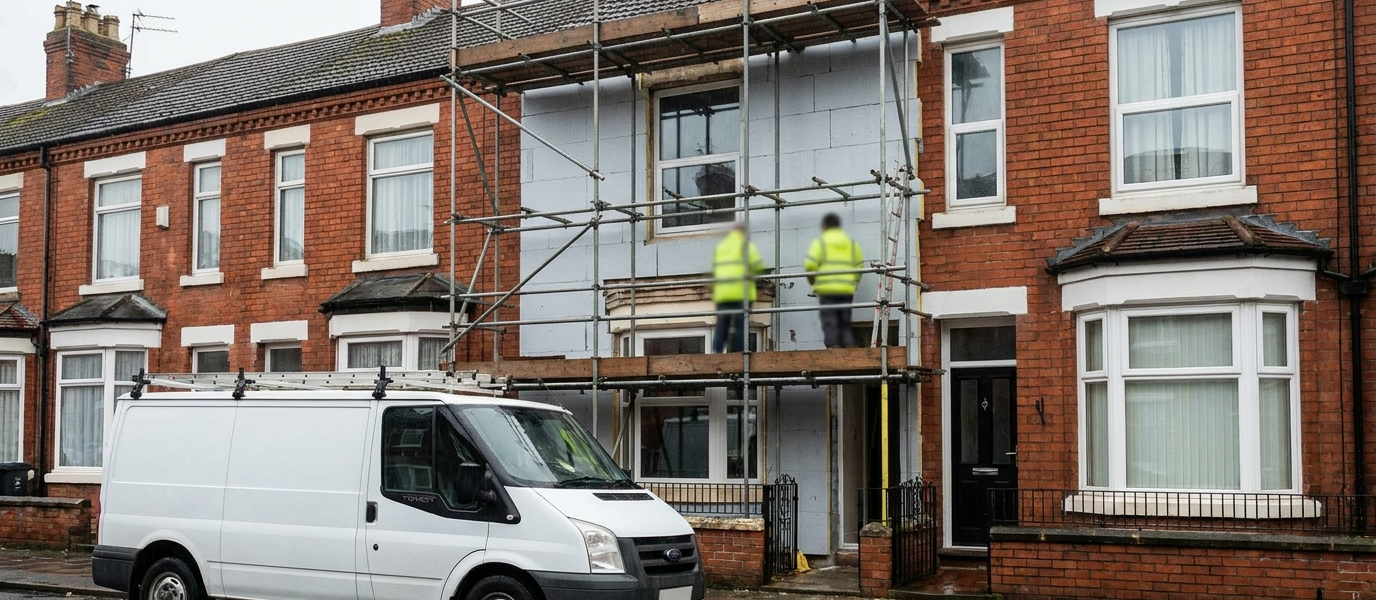
The UK Green Building Council published two reports on 24 March calling for a national retrofit mission, and the figures behind the plea are stark. The built environment accounts for roughly 25% of UK greenhouse gas emissions, and fewer than 1% of homes are upgraded each year to a decent energy standard. That is not a policy problem. It is a household bill problem.
As reported by the UK Green Building Council, the reports argue that current retrofit rates are “far too slow” and that the government must set binding annual targets for energy improvements across the housing stock. For the 19 million owner-occupied homes in England alone, this matters directly: your EPC rating, your heating bill, and the resale value of your property all hang on the pace of change.
What the UKGBC actually wants
The council is not asking for another pilot scheme. It wants a statutory national retrofit strategy with five-year carbon budgets for buildings, a single retrofit delivery body, and a long-term fiscal framework, meaning stable grant programmes that do not get cancelled every Budget. It also wants energy optimisation, draught-proofing, smart thermostats, radiator reflectors, treated as a first step, not an afterthought.
The catch is that none of this is law yet. The last government promised a Warm Homes Plan; the current government has yet to legislate it. What the UKGBC is really doing is drawing a line in the sand: stop talking about retrofit and start regulating it. For homeowners, that means the direction of travel is clear, minimum EPC band C for rental properties by 2030 is already in the pipeline, and owner-occupied homes may face similar triggers at point of sale.
What it costs a typical 3-bed semi
Energy Saving Trust figures show that a typical semi-detached home with solid walls, loft insulation, and single glazing could save around £500 a year on heating bills after a full retrofit, including cavity wall insulation, loft insulation to 270mm, draught-proofing, and an A-rated boiler or heat pump. The upfront cost, however, can run to £15,000–£30,000 depending on fabric condition. Grants such as the Boiler Upgrade Scheme cover £7,500 towards a heat pump, but the gap remains large.
The UKGBC’s emphasis on energy optimisation is therefore shrewd: low-cost measures, draught-proofing at £200–£300, smart heating controls at £150–£400, can deliver 10–20% bill reductions within weeks. Ofgem data shows that households on standard variable tariffs are paying 24.5p per kWh for electricity and 6.0p for gas from April 2025. Every kilowatt-hour saved is real money.
What a homeowner should do now
Before any new mandates arrive, the practical step is an energy assessment. The government’s Simple Energy Advice service, run through the Energy Saving Trust, offers a free online tool that generates a customised improvement plan. Local authorities in England also have access to the Home Upgrade Grant for off-gas-grid homes, and the Great British Insulation Scheme is open until March 2026.
The UKGBC reports also recommend a single digital logbook for each home, a record of all retrofit work, EPC data, and maintenance history. That does not exist yet, but homeowners can create their own: keep every invoice and EPC certificate, photograph insulation before it is covered, and note installer details. When minimum standards arrive, proof of work done will be gold.
The next six months are critical. The government is expected to publish its Warm Homes Plan response before the autumn Budget. If the UKGBC gets its way, that response will include binding targets and a funding mechanism that makes retrofit cheaper and faster. Until then, the cheapest energy is the energy you do not use, and the best time to start saving is now.
Frequently Asked Questions
For a typical 3-bed semi-detached home in the UK, a full retrofit including cavity wall insulation, loft insulation to 270mm, draught-proofing, and an A-rated boiler or heat pump can cost between £15,000 and £30,000, depending on the property's fabric condition. However, the Boiler Upgrade Scheme offers a £7,500 grant towards a heat pump to help offset some of the upfront costs.
The UK Green Building Council (UKGBC) called for a national retrofit mission with binding annual targets for energy improvements across UK homes, rather than pilot schemes. For homeowners, this means minimum EPC band C is already in the pipeline for rental properties by 2030, and owner-occupied homes may face similar requirements at point of sale, directly impacting heating bills and property resale value.
Low-cost measures like draught-proofing, which costs £200–£300, and smart heating controls at £150–£400, can reduce your energy bills by 10–20% within weeks. With Ofgem's April 2025 rates at 24.5p per kWh for electricity and 6.0p for gas, these simple upgrades deliver quick savings on a typical UK home.
According to Energy Saving Trust figures, a typical semi-detached home in the UK can save around £500 per year on heating bills after a full retrofit, which includes measures like cavity wall insulation, loft insulation, draught-proofing, and an A-rated boiler or heat pump. The savings depend on your current energy efficiency and usage.
You can access a free online tool via the Energy Saving Trust's Simple Energy Advice service to see which grants apply to your property.




