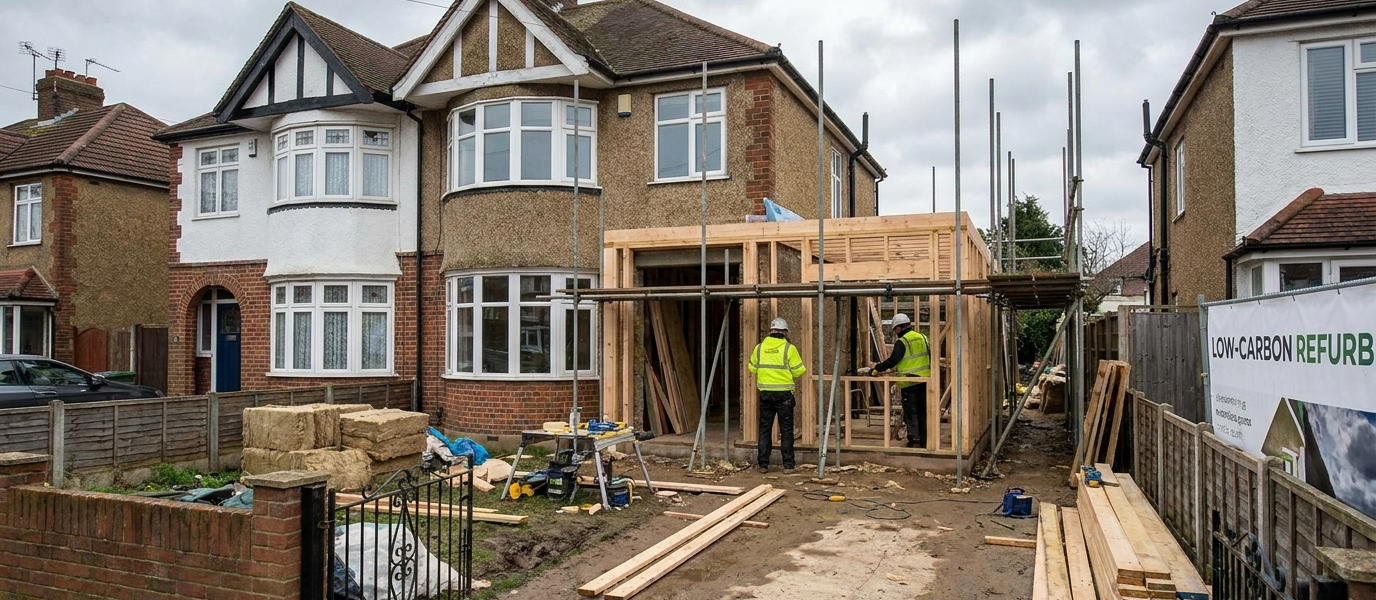
The average low carbon home takes 28% longer to complete than a conventional build. That is not a marginal delay, it is a structural bottleneck in the UK’s housing and retrofit pipeline.
As reported by the BBC, builders cite specialist materials, unfamiliar techniques, and a thin pipeline of certified installers. The result: projects that stretch budgets and test patience.
For the homeowner eyeing a heat pump or deep insulation retrofit, the same forces apply. This is not a problem that will disappear when the next grant round opens. It is the new normal.
The supply chain bottleneck
Low carbon builds rely on products that are not yet stock items in every builders’ merchant. Air source heat pumps, triple glazing, and natural insulation boards have lead times that can stretch to 12 weeks. Add a shortage of MCS-certified installers, Ofgem’s latest data shows fewer than 8,000 registered heat pump engineers in England, and the queue grows.
The government’s Boiler Upgrade Scheme offers £7,500 toward a heat pump, but demand surged 47% in early 2025. Installers are booked into autumn. Homeowners who delay booking risk losing grant slots that close on a first-come, first-served basis.
Energy Saving Trust figures suggest a full fabric-first retrofit (wall insulation, loft insulation, draught-proofing, glazing) can take 8–14 weeks on site, not counting design and assessment. That is three times longer than a gas boiler swap.
What this costs the household
Delays mean costs drift. A heat pump installation quoted at £12,000 in January may rise to £13,500 by June if labour rates tighten. The Energy Performance Certificate (EPC) uplift, typically from D to B for a full fabric and heat pump retrofit, remains the same, but the payback period extends.
On a typical 3-bed semi using 12,000 kWh of gas and 3,000 kWh of electricity, a heat pump can cut annual heating bills by £300–£500. But if the installation is delayed by six months, that is £150–£250 of savings lost. For a household on a standard variable tariff, that is real money.
The catch: rushing a retrofit can produce poor results. A heat pump fitted to an uninsulated home will struggle to maintain 20°C in January and may cost more to run than the gas boiler it replaced. The delay is often the price of doing it properly.
Who qualifies, and who doesn’t
Grants do not wait. The Boiler Upgrade Scheme closes to new applications on 31 March 2027, unless extended. The Great British Insulation Scheme closed on 31 March 2026. It funded insulation measures only and never covered windows or glazing. If your retrofit takes 12 months from survey to completion, you may find the funding window has shut.
Glazing is standard-rated for VAT at 20%. The zero rate for energy-saving materials covers insulation, heat pumps and solar panels; HMRC names secondary and double glazing as excluded (VAT Notice 708/6). But the work must be completed within the VAT period, delays can push a project into the 20% rate.
The lesson: book the installer before you apply for the grant. Confirm lead times in writing. And if the installer says six months, budget for eight.
Households on standard variable tariffs should start the process now. Check eligibility through gov.uk, get at least three quotes, and aim to have the survey done before winter. Delays are inevitable, but they are manageable if you plan for them.
Frequently Asked Questions
A full fabric-first retrofit, including wall insulation, loft insulation, draught-proofing and glazing, typically takes 8 to 14 weeks on site, not counting design and assessment. That's around three times longer than a gas boiler swap, partly due to specialist materials and a shortage of MCS-certified installers.
A heat pump installation in the UK costs around £12,000 to £13,500, but the Boiler Upgrade Scheme offers £7,500 off, reducing your outlay to roughly £4,500 to £6,000. However, demand surged 47% in early 2025, so installers are booked into autumn and grant slots are first-come, first-served.
To avoid this, book your installer before applying for grants and confirm lead times in writing, budgeting for potential delays.
For a heat pump, you'll need a well-insulated home to work efficiently, so a full fabric-first retrofit is recommended first.
On a typical 3-bed semi-detached house using 12,000 kWh of gas and 3,000 kWh of electricity, a heat pump can cut annual heating bills by £300 to £500. But if installation is delayed by six months, you lose £150 to £250 in potential savings, so booking early is key.



