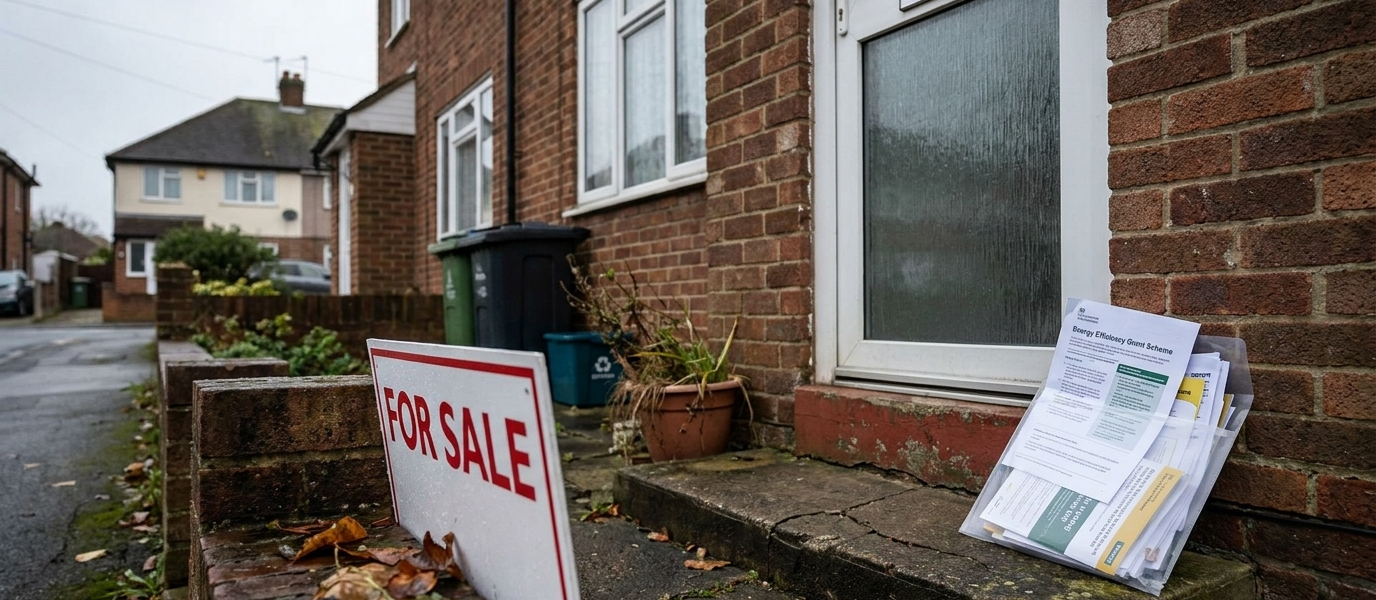
Ofgem’s latest data shows that just 22% of eligible households have taken up the Boiler Upgrade Scheme grant since April 2022. That is not a funding problem. It is an engagement problem.
As reported by Housing Digital, the real barrier in UK retrofit is not that homeowners don’t know about the grants, it’s that they don’t act on them. The publication’s analysis of the ‘engagement challenge’ chimes with what Axiom hears from readers every week: people want cheaper energy, but the path from wanting to doing is littered with obstacles.
Who qualifies, and who doesn’t
The Boiler Upgrade Scheme offers £7,500 off an air-source heat pump installation. Eligibility is straightforward: households in England and Wales with a valid EPC and no outstanding cavity-wall or loft-insulation recommendations. Yet the take-up rate sits below a quarter of those eligible. Why?
The answer is threefold. First, the upfront cost after the grant still sits at £3,000–£7,000 for a typical installation, a sum many households don’t have liquid. Second, the application process requires an MCS-certified installer to submit paperwork, and many small installers don’t offer that service. Third, trust: homeowners who’ve seen neighbours’ heat pumps struggle in poorly insulated homes are wary of the technology itself.
The catch is that delaying action costs money. The Energy Saving Trust estimates a typical 3-bed semi loses £180 a year through uninsulated walls and single glazing alone. For a household on a standard variable tariff paying £1,568 a year (Ofgem’s October 2024 price-cap figure), that’s more than 10% of their bill vanishing through the fabric of the building.
What actually works, the one-stop shop model
A handful of local authorities have cracked the engagement problem. Bristol City Council’s ‘Retrofit Hub’ and the Greater London Authority’s ‘Warmer Homes’ programme both operate a one-stop-shop model: a single phone number or web form that handles everything from initial assessment to grant application to installer vetting. Conversion rates in these pilots exceed 40%, double the national average.
The key difference is human contact. A named advisor who visits the home, explains the options in plain English, and handles the paperwork removes the two biggest psychological barriers: complexity and fear of being ripped off. As one Bristol resident told the council: ‘I wouldn’t have done it if someone hadn’t held my hand through the forms.’
Yet these programmes remain patchy. Of the 317 English local authorities, fewer than 60 offer any kind of integrated retrofit advice service. The rest rely on national websites and generic helplines, which, as the Housing Digital analysis shows, produce low conversion rates.
What this means for your home and your EPC
For homeowners reading this, the practical takeaway is straightforward. If your EPC is D or below, you are losing money every month. The cheapest first step is not a heat pump but fabric-first measures: loft insulation (costs £300–£500, saves £150 a year), cavity-wall insulation (£500–£1,500, saves £200 a year), and draught-proofing (£100–£200, saves £50 a year). These pay back in two to five years and lift your EPC by one or two bands.
Once your fabric is tight, a heat pump becomes viable, and the £7,500 grant makes it competitive with a gas boiler over a 10-year horizon. The catch is that you need an MCS installer who can handle the full process. To find one, check the Microgeneration Certification Scheme database and ask for three written quotes. Avoid any installer who offers a heat pump without first inspecting your insulation.
The government’s upcoming Warm Homes Plan, expected in late 2025, is supposed to standardise the one-stop-shop model nationally. But that is at least a year away. In the meantime, homeowners in areas without a local hub should contact their local Citizens Advice energy team, many now offer free, impartial retrofit guidance funded by the Energy Company Obligation scheme.
Do not wait for a national scheme. The £180 a year you’re losing through your walls is real money. Start with a free EPC review and a call to your local authority’s housing team. The engagement challenge is real, but it is one you can solve for your own home, starting this week.
Frequently Asked Questions
The Boiler Upgrade Scheme offers £7,500 off an air-source heat pump installation for eligible households in England and Wales. However, after the grant, the typical installation still costs between £3,000 and £7,000, which many households find difficult to cover upfront.
Despite 22% of eligible households using the Boiler Upgrade Scheme since April 2022, the main barriers are high upfront costs after the grant, a complex application process requiring MCS-certified installers, and a lack of trust due to poorly insulated homes affecting heat pump performance. These issues create an engagement problem, not a funding one.
A one-stop shop retrofit service handles everything from initial assessment to grant applications and installer vetting through a single contact point, like Bristol City Council's 'Retrofit Hub' or the GLA's 'Warmer Homes' programme. These pilots achieve conversion rates over 40%, double the national average, by providing a named advisor who visits homes and simplifies the process.
The Energy Saving Trust estimates a typical 3-bed semi-detached house loses £180 per year through uninsulated walls and single glazing. For a household on a standard variable tariff paying £1,568 annually under Ofgem's October 2024 price cap, that's over 10% of their energy bill wasted through poor fabric insulation.
The cheapest first step is fabric-first measures like loft insulation, which costs between £300 and £500 for a typical home. This is more cost-effective than a heat pump and can significantly reduce heat loss, especially if your EPC rating is D or below, where you're losing money every month.



