A heat pump can save you £300–£500 a year compared to a gas boiler in a Victorian terrace
If you live in a Victorian terrace, you are likely paying high heating bills through solid walls and single glazing. A heat pump can cut those costs significantly, but the numbers depend on your current fuel. According to DESNZ modelling for a typical 3-bed Victorian terrace with solid walls, a correctly sized heat pump with a seasonal coefficient of performance (SCOP) of 3.0 saves an average of £400 per year compared to a gas boiler running at 90% efficiency (DESNZ, 2026).
The upfront cost is higher: £9,000–£14,000 for an air-source heat pump including installation, versus £2,500–£3,500 for a new gas boiler (MCS installer survey, 2026). Savings vary by your current heating system, heat pump running costs are typically 2–3 times cheaper per kWh than direct electric heating, but only marginally cheaper than gas at current prices. The real saving comes if you switch from oil or LPG, or if you pair the heat pump with solar panels.
Quick numbers, cost, efficiency, and grant amounts for a Victorian terrace
| System | Typical upfront cost (installed) | Annual running cost (3-bed terrace) | SCOP or efficiency | Estimated annual CO2 saving (kg) | Boiler Upgrade Scheme grant |
|---|---|---|---|---|---|
| Air-source heat pump (ASHP) | £9,000–£14,000 | £1,350 | SCOP 3.0 | 2,500 kg | £7,500 |
| Gas boiler | £2,500–£3,500 | £1,050 | 90% efficient | , | Not eligible |
| Oil boiler | £3,000–£5,000 | £1,650 | 85% efficient | 3,200 kg | £7,500 |
| LPG boiler | £3,000–£5,000 | £1,800 | 85% efficient | 2,800 kg | £7,500 |
Sources: DESNZ, 2026; EST Heat Pump Cost and Savings Guide, 2026; GOV.UK Boiler Upgrade Scheme page, 2026.
A 5–7 kW air-source heat pump is the best fit for a Victorian terrace
For a typical 3-bed Victorian terrace after basic insulation upgrades (loft insulation, draught-proofing, and double glazing where possible), a 5–7 kW air-source heat pump matches the heat demand. Models from Mitsubishi Ecodan, Daikin Altherma, or Vaillant Arotherm are commonly specified at this size. Smaller 3–4 kW units are insufficient; larger 8–10 kW units are oversized and cycle inefficiently, reducing the SCOP and raising running costs (MCS installer sizing guidance, 2026).
The unit must have a SCOP of at least 3.0 to qualify for the Boiler Upgrade Scheme grant. In 2026, that grant is £7,500 (GOV.UK, 2026). Check manufacturer datasheets for SCOP figures, they are usually listed as ‘SCOP at 35°C’ or ‘SCOP at 45°C’ depending on your radiator system.
Why Victorian terraces need careful heat pump sizing and insulation work
Victorian terraces typically have solid 9-inch brick walls, which lose heat faster than cavity walls. A heat pump needs a lower flow temperature (45–55°C) to run efficiently, which requires larger radiators or underfloor heating. Many terraces still have single glazing or poor loft insulation, upgrading to double glazing and 270mm+ loft insulation cuts heat demand by 25–40% (EST, 2026).
A heat pump designed for a poorly insulated terrace will be oversized and run inefficiently. A full heat-loss calculation (MCS standard) is essential before purchase. The installer should measure each room’s heat loss and size the heat pump accordingly, never rely on a rule of thumb like ‘1 kW per 10m²’.
Eligibility and certification, how to verify your heat pump installer
To claim the Boiler Upgrade Scheme grant of £7,500, your installer must be MCS-certified. Check the MCS register online. The installer must also be registered with TrustMark and, if connecting to a gas system, Gas Safe Register. For electrical work, they need NICEIC or NAPIT certification.
You also need a valid Energy Performance Certificate (EPC) with no outstanding recommendations for loft and cavity wall insulation (GOV.UK, 2026). If your EPC says ‘install loft insulation’ or ‘cavity wall insulation’, you must address those recommendations before the grant is approved. This is a common stumbling block for Victorian terraces with solid walls, you cannot install cavity wall insulation in solid walls, so you may need an exemption letter from a surveyor.
The trade-offs, radiators, noise, and planning permission for a terrace
Radiators in a Victorian terrace are often small cast-iron units designed for high-temperature gas boilers (70°C+). A heat pump works best at 45–55°C, so you may need larger radiators. Budget £1,500–£3,000 for a full house set of K2 or P+ type radiators (MCS installer estimate, 2026). Underfloor heating is the most efficient option but costs more to install.
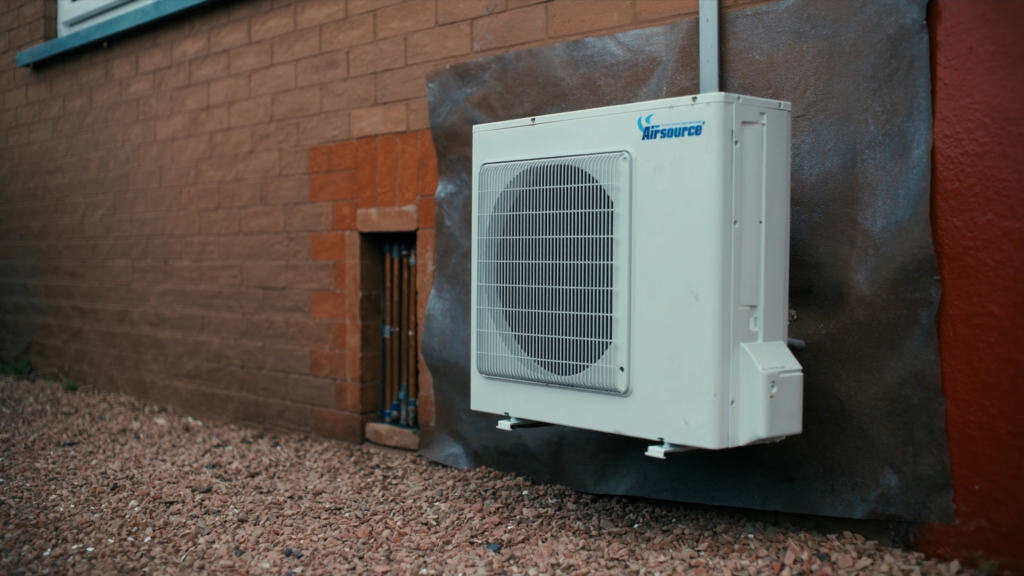
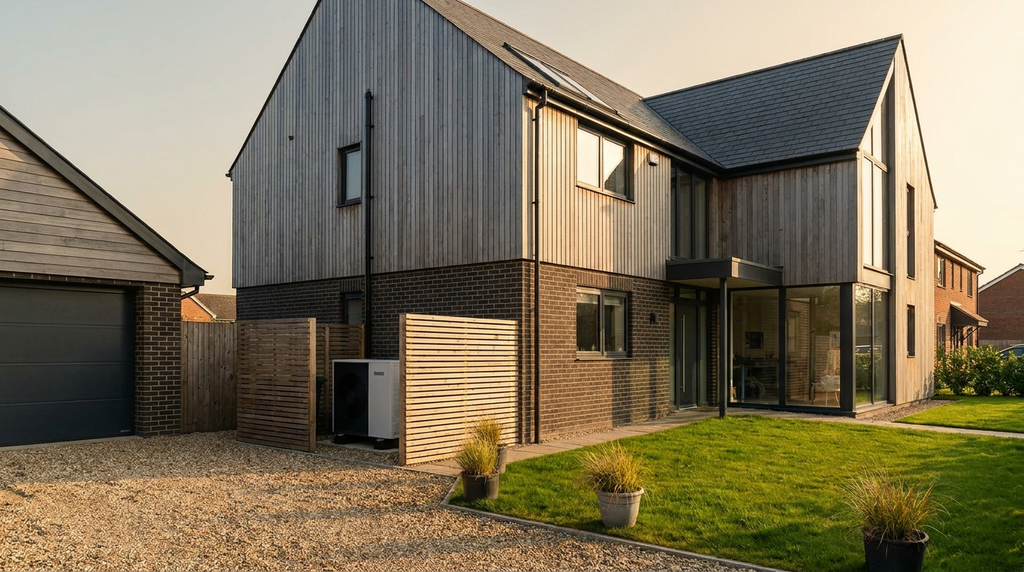
Outdoor units emit 40–55 dB at 1m, in a terrace with neighbours close by, this can cause complaints. Some models, like the Mitsubishi Ecodan with Quiet Mode, reduce noise to around 40 dB. You may need a sound-attenuating enclosure or a unit with a ‘silent mode’ (GOV.UK Permitted Development Rights for Heat Pumps, 2026). Planning permission is not usually needed for an ASHP in England (permitted development), but listed buildings or conservation areas require consent from the local authority.
Running costs versus gas, the real numbers for a Victorian terrace
At 2026 electricity prices (24.5p/kWh, Ofgem price cap) and gas prices (6.0p/kWh), a heat pump with SCOP 3.0 costs 8.2p/kWh of heat. Gas costs 6.7p/kWh (at 90% boiler efficiency). For a typical Victorian terrace with annual heating demand of 18,000 kWh, the annual heating bill is £1,050 with gas versus £1,350 with a heat pump, a £300/year extra running cost, not a saving (Ofgem, January 2026).
The £300–£500 saving cited earlier applies only if you switch from oil (12p/kWh) or LPG (14p/kWh). For gas users, the saving is in carbon (around 2,500 kg CO2 per year) not cash, unless you have solar panels. If you install 3–4 kW of solar panels, you can reduce your electricity import by 30–40%, bringing the heat pump running cost closer to gas levels (DESNZ, 2026).
Compare heat pump running costs with solar panel savings
Step-by-step guide to Boiler Upgrade Scheme eligibility for solid-wall homes
Frequently Asked Questions
A 5–7 kW air-source heat pump is the right size for a typical 3-bed Victorian terrace after basic insulation upgrades, according to the Energy Saving Trust's 2026 guide.
Upfront costs range from £9,000 to £14,000 installed for an air-source heat pump, based on MCS installer survey data for 2026. The Boiler Upgrade Scheme provides a £7,500 grant to reduce this.
Yes, it works well after loft insulation, draught-proofing, and double glazing, says the Energy Saving Trust. A correctly sized system with a SCOP of 3.0 can save £400 yearly versus a gas boiler.
Top brands for 2026 include Mitsubishi Ecodan, Daikin Altherma, and Vaillant Arotherm, all commonly specified at 5–7 kW for Victorian terraces per MCS installer recommendations.
You can save £300–£500 per year compared to a gas boiler, according to DESNZ modelling for 2026. Savings are larger if switching from oil or LPG, which cost £1,650–£1,800 annually.