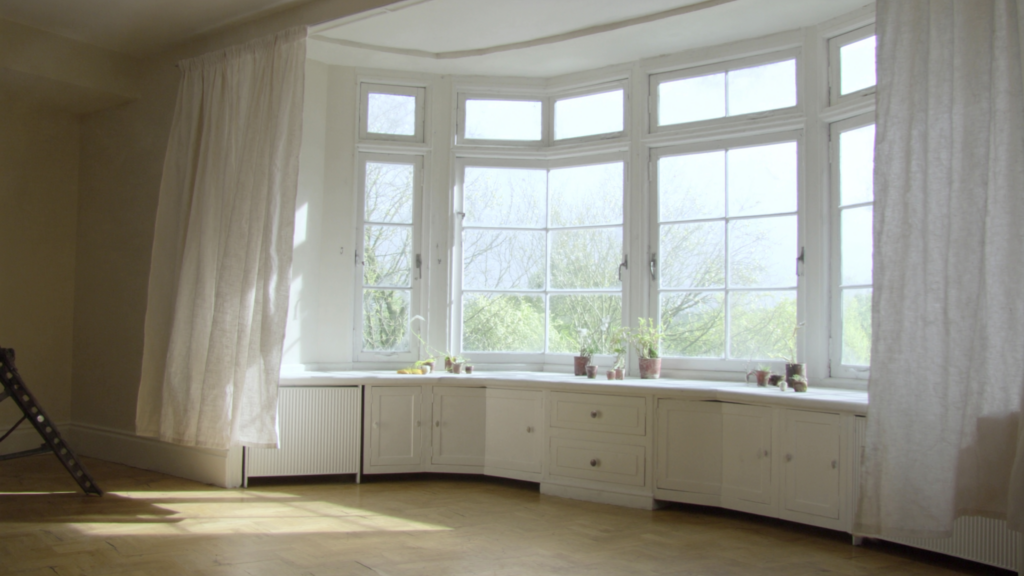
UV radiation from the sun is blocked differently by window glass than by open air
Ordinary window glass blocks almost all UVB rays, the type responsible for sunburn and direct DNA damage. UVA rays, which cause skin ageing and can contribute to skin cancer over time, pass through most standard double glazing. This means you cannot get a traditional “suntan” (which requires UVB to stimulate melanin) through a window, but you can still be exposed to UVA.
No, you cannot get a conventional suntan through a standard window in the UK because window glass blocks 95-99% of UVB rays needed for melanin production. You can still be exposed to UVA rays, which cause skin ageing and long-term damage.
- Standard window glass blocks 95-99% of UVB rays in the UK.
- UVA rays pass through glass, causing skin ageing and damage risk.
- A conventional suntan requires UVB, which glass filters out.
- UVA-only pigmentation is weaker and offers less sun protection.
- Specialised low-E or laminated glass can reduce UVA transmission.
- UV radiation from the sun is blocked differently by window glass than by open air
- What the science says about tanning through glass UVB vs UVA
- The direct answer can you get a suntan through windows in the UK?
- Quick numbers UV exposure and window glass performance
- How much UV still reaches you through a window on a sunny UK day
- The real cost what this UV exposure means for your skin and home
- How to verify an installer for UV-blocking glass or film (MCS, FENSA, TrustMark)
The UK Health Security Agency (UKHSA) states that standard glass is an effective barrier against UVB, filtering out 95–99% of these rays (UKHSA, 2026). UVA, however, passes through glass with minimal reduction unless the glass is specially treated. The British Association of Dermatologists (BAD) advises that this UVA exposure, while not causing sunburn, still contributes to long-term skin damage (BAD, 2026).
What the science says about tanning through glass UVB vs UVA
Tanning is triggered primarily by UVB radiation; window glass acts as a near-complete barrier to UVB, typically blocking 95–99% of it. UVA, which accounts for about 95% of the UV radiation reaching the Earth’s surface, penetrates standard glass easily. Only specialised low-E or laminated glass reduces UVA significantly.
You may develop a very gradual, long-term pigmentation from UVA alone, but this is not a “suntan” in the medical sense and carries skin-damaging risk. The UK Health Security Agency explains that UVA penetrates deeper into the skin than UVB, causing photoageing and contributing to skin cancer risk over decades (UKHSA, 2026). The British Association of Dermatologists confirms that the pigmentation from UVA is weaker and less protective than a UVB-induced tan (BAD, 2026).
The direct answer can you get a suntan through windows in the UK?
No, you cannot get a conventional suntan through a standard window in the UK because the UVB rays needed to trigger melanin production are blocked by the glass. You can still be exposed to UVA rays, which cause skin ageing and cumulative damage, but this does not produce the visible tan most people associate with sunbathing. Sitting behind glass does not provide the same UV exposure as being outdoors, you will not develop a tan from sunlight filtered through a window.
This is the direct answer for the keyword “suntan through windows”. For a tan to develop, UVB must reach the skin’s melanocytes; window glass prevents this. The only way to tan indoors is through artificial UV sources, such as sunbeds, which carry their own health warnings from the NHS (NHS, 2026).
Quick numbers UV exposure and window glass performance
| Glass type | UVB blocked | UVA blocked |
|---|---|---|
| Standard double glazing | 95–99% | 10–30% |
| Low-E (low-emissivity) glass | 99%+ | 70–80% |
| Laminated glass | 99%+ | 90–99% |
| Single glazing (old) | 70–85% | 5–15% |
Data from the Glass and Glazing Federation (GGF) and British Fenestration Rating Council (BFRC) shows that standard double glazing blocks only 10–30% of UVA (GGF, 2026). Low-E glass, designed for thermal efficiency, also reduces UVA transmission significantly. Laminated glass, with a plastic interlayer, offers the highest UV protection among common glazing types.
How much UV still reaches you through a window on a sunny UK day
On a clear summer day in the UK, UVA levels outdoors can reach 30–50 W/m²; inside behind standard double glazing, that drops to roughly 5–15 W/m². This is still enough to cause skin damage over time (e.g., photoageing, pigmentation changes) but insufficient for a tan.
The UK Health Security Agency publishes UV Index data showing that the outdoor UV Index in southern England on a summer day typically reaches 6–7 (UKHSA, 2026). Inside a south-facing room with large windows, the UV Index drops to roughly 1–2, which is classified as “low” on the UV Index scale. The Met Office confirms that cloud cover and window orientation further reduce indoor UV levels (Met Office, 2026).
The real cost what this UV exposure means for your skin and home
Chronic UVA exposure through windows accelerates skin ageing and increases skin cancer risk, even without tanning. Replacing standard double glazing with low-E or laminated glass can reduce UVA transmission by 70–90%, but costs £300–£600 per window (MCS / FENSA installer estimates). Alternatively, applying UV-blocking window film costs roughly £50–£150 per window and blocks 99% of UVA without replacing the glass.
The Energy Saving Trust estimates that replacement double glazing costs £300–£600 per window for a typical installation (Energy Saving Trust, 2026). UV-blocking window film, from the British Blind and Shutter Association (BBSA), costs £50–£150 per window and blocks up to 99% of UVA (BBSA, 2026). The NHS advises that protecting skin from UVA is important even indoors, particularly for people with fair skin or a history of skin cancer (NHS, 2026). how to choose the right window film for UV protection
How to verify an installer for UV-blocking glass or film (MCS, FENSA, TrustMark)
For replacement glass with UV-blocking properties, use a FENSA-registered installer (competent person scheme for building regulations compliance). For window film, TrustMark-registered installers are the recognised scheme for consumer protection in the UK. No MCS (Microgeneration Certification Scheme) certification is relevant here, MCS covers renewable energy systems, not glazing or film.
GOV.UK provides a portal for finding registered installers under the Competent Person Scheme (GOV.UK, 2026). FENSA registration ensures that replacement glazing meets building regulations. TrustMark covers window film installers and offers a dispute resolution process. Always ask for a written guarantee on UV-blocking performance, as standard glazing rarely specifies UVA reduction in its product literature. FENSA vs TrustMark what homeowners need to know
Frequently Asked Questions
No, you cannot get a conventional suntan through a window in the UK. The UK Health Security Agency confirms standard glass blocks 95-99% of UVB rays, which are needed to stimulate melanin production for a tan.
You need UVB rays to trigger a traditional suntan, but window glass blocks almost all UVB. According to the British Association of Dermatologists, UVA passes through glass and can cause gradual pigmentation but not a true tan.
No, you cannot get sunburnt through a standard window in the UK. The UK Health Security Agency states that glass filters out 95-99% of UVB rays, which are responsible for sunburn and direct DNA damage.
Standard window glass does not block UVA rays effectively. Only specialised low-E or laminated glass significantly reduces UVA transmission, as noted by the UK Health Security Agency.
Yes, UVA rays that pass through standard glass can contribute to skin cancer over time. The British Association of Dermatologists advises that UVA exposure causes photoageing and long-term skin damage, increasing skin cancer risk.