Why Bognor Regis Homeowners Are Finally Getting Serious About Double Glazing
There’s something quietly urgent happening on the residential streets of Bognor Regis right now. With energy bills still stubbornly high and the town’s housing stock sitting at an average EPC Band D, thousands of homeowners are realising that their windows, many original to builds from the 1930s through to the 1970s, are doing almost nothing to keep the warmth inside where it belongs.
Bognor Regis sits right on the West Sussex coast, and while that brings glorious sunshine (more on that shortly), it also means your windows face salt-laden air, persistent coastal breezes, and significant thermal cycling between warm sunny days and cooler nights. That combination is particularly hard on ageing single-glazed frames, and you’ll notice it most in bungalows and semi-detached homes where large side and rear elevations are fully exposed to the prevailing south-westerly winds sweeping in off the English Channel.
The local property market is another driver. South East property values are the highest in England outside London, and buyers and valuers increasingly factor EPC ratings into their assessments. On a Bognor Regis semi or bungalow, upgrading to double glazing is a comfort measure and a genuinely smart investment in your home’s value.
What Double Glazing Actually Involves for a Typical Bognor Regis Home
Most properties in Bognor Regis fall into two broad categories, the inter-war and post-war semis running through areas like Aldwick, Felpham, and the residential streets north of the town centre, and the bungalow belt that stretches particularly through Pagham and Aldwick Bay. Both property types have their own quirks for double glazing installation.
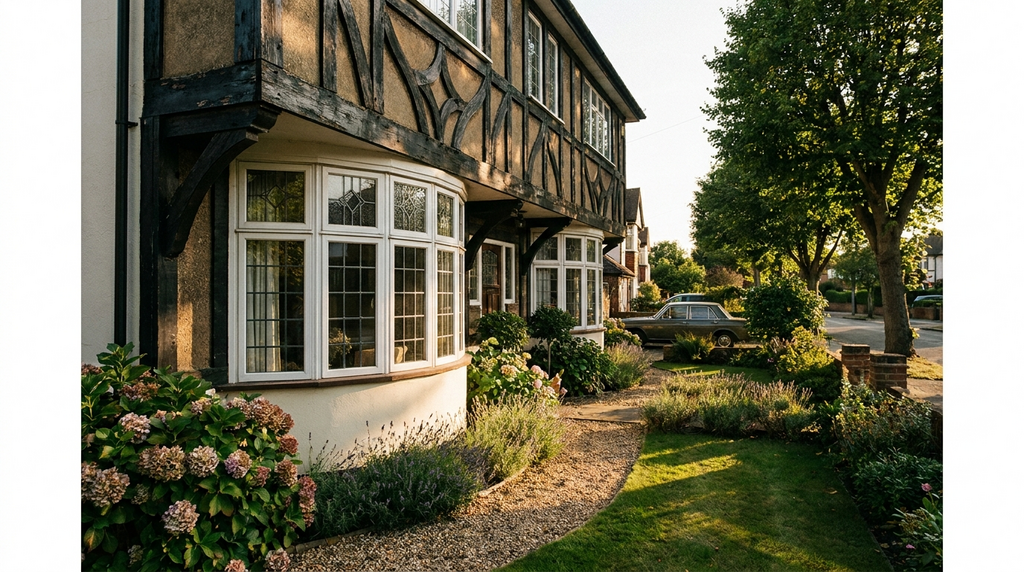
The semis built between roughly 1930 and 1960 often have larger casement windows and bay fronts on the ground floor. These bays are a particular consideration, they may need specialist bay window frames rather than standard casements, which adds both complexity and cost. Original timber frames in these properties are sometimes repairable, but more often they’re at a stage where full replacement into the existing opening is the most practical route.
Bungalows present a different set of considerations. Because everything is on one level, there’s no upper-storey scaffolding cost in most cases, that’s a genuine saving compared to a two-storey terrace in Chichester or Worthing. However, bungalow roof overhangs can sometimes complicate frame measurement, and if your bungalow has been extended (very common in Felpham and Pagham), the extension windows need to match the original aesthetic to keep any permitted development approval clean.
Post-war council-built stock, particularly around the north end of the town, often used steel-framed windows, which require a slightly different approach. These can sometimes be replaced within existing steel surrounds, but in many cases the steel frames themselves need removing, and this is a job for an experienced local installer rather than a national call-centre firm that sends whoever is available.
The good news is that most Bognor Regis properties are straightforward enough to complete within two to three days. The relatively flat terrain and good road access mean no unusual access surcharges, and you won’t face the scaffolding costs common on tall Victorian terraces further east along the coast.
How Much Double Glazing Costs in Bognor Regis and the Surrounding South East Area in 2026
Let’s talk honest numbers. Prices in the Bognor Regis area sit broadly in line with the South East average, which is around 8 to 12 percent above the national average due to higher labour costs and the ripple effect of London installer demand. Even so, competition is healthy here, with Chichester, Littlehampton, and Worthing all within easy range, meaning local installers know they need to price keenly to win your business.
| Property Type | Number of Windows | Standard uPVC Double Glazing | Enhanced uPVC (A-rated) | Aluminium Double Glazing |
|---|---|---|---|---|
| Small bungalow | 4 to 6 windows | £2,800 to £4,200 | £3,400 to £5,000 | £5,200 to £7,500 |
| Larger bungalow | 7 to 10 windows | £4,500 to £6,800 | £5,400 to £8,200 | £8,000 to £12,000 |
| Semi-detached (2-bed) | 6 to 8 windows | £3,800 to £5,500 | £4,600 to £6,700 | £7,000 to £10,000 |
| Semi-detached (3-bed) | 8 to 12 windows | £5,200 to £7,500 | £6,300 to £9,000 | £9,500 to £14,000 |
| Bay window addition | Per bay | £900 to £1,500 | £1,200 to £1,800 | £2,000 to £3,500 |
These figures include supply, installation, and disposal of old frames. They don’t include any specialist conservation area glazing, which carries a significant premium, typically 30 to 50 percent more for heritage-appropriate products.
Compared to Worthing (where slightly higher property density pushes labour costs up) and Portsmouth (where demand is high and lead times long), Bognor Regis tends to offer marginally better value. Chichester prices are similar but conservation area requirements there are more extensive, so the average job cost is higher. If you’re getting quotes, it’s absolutely worth asking local firms based in Littlehampton and Chichester, they regularly cover Bognor Regis and their pricing reflects the competitive local market.
How Bognor Regis’s Coastal Climate Should Actually Shape Your Double Glazing Choices
Here’s where living in Bognor Regis gives you a genuinely different set of priorities compared to, say, a homeowner in the Midlands or the North East. This town averages over 1,900 hours of sunshine per year, consistently among the highest in the UK, which is wonderful for solar energy but creates a specific challenge for south and west-facing windows.
Too much solar gain through south-facing glass can make a bungalow conservatory or rear living room uncomfortably warm in spring and summer. When you’re specifying your glazing, ask your installer about solar control glass for any south or west-facing elevations. A low-emissivity (low-E) coating with a moderate solar factor of around 0.35 to 0.40 gives you the thermal retention benefits in winter without turning your front room into a greenhouse between April and September.
The coastal air is the other big factor. Salt-laden moisture accelerates corrosion on anything ferrous and degrades uPVC seals faster than inland equivalents. For properties in Aldwick Bay, Pagham, and anywhere within about a kilometre of the seafront, specify marine-grade hardware, stainless steel hinges, espagnolette locks, and quality gaskets. This isn’t an upsell to ignore; it genuinely extends the lifespan of your windows by years in a coastal environment.
Rainfall in Bognor Regis runs at around 700 to 800mm annually, not extreme by UK standards, but concentrated wind-driven rain off the Channel can be relentless in autumn and winter. Ensure your installer uses quality silicone pointing around every frame, and don’t accept a rushed job on external sealant. A gap that looks tiny on installation day will allow water ingress within one winter.
The Products and Specifications That Actually Perform Well in This Town
Given everything above, here’s honest expert guidance on what to actually buy for a Bognor Regis home in 2026, not just a generic product list.
- uPVC with A-rated or A+-rated energy performance, The standard recommendation for the semis and bungalows that make up most of the town’s housing stock. Look for a whole-window U-value of 1.2 W/m²K or lower. Avoid budget units above 1.4 W/m²K, they’re not worth fitting.
- Argon-filled double glazing as a minimum, Krypton-filled triple glazing is gaining traction, but for Bognor Regis’s relatively mild winters (1,200 to 1,500 heating degree days) the payback on the premium triple-glaze cost is very long. Argon-filled double glazing hits the sweet spot here.
- Warm-edge spacer bars, These replace the old aluminium spacer between the panes and significantly reduce condensation on the inner frame edges. Non-negotiable in a coastal home, cold bridges around the frame edge are where moisture gets a foothold.
- Anthracite grey or heritage cream frames for older properties, The 1930s and 1950s semis in Aldwick and Felpham look genuinely better with a frame colour that complements the original architecture. Bright white uPVC can look incongruous on a period property, and if you ever sell, buyers notice.
- Marine-grade stainless steel hardware, As mentioned above, absolutely essential for any property within a kilometre of the coast. Budget hardware will corrode visibly within three to five years.
Finding a Trustworthy Installer Near Bognor Regis, What to Look For and What to Avoid
The South East has a busy installer market, which is mostly good news, plenty of competition, but it also attracts door-to-door sales operations that use high-pressure tactics and quote eye-watering prices before mysteriously offering a “special discount.” If anyone comes to your door unsolicited and offers to quote on the spot, show them the door (the existing single-glazed one).
For legitimate installers, here’s what to check.
- FENSA registration, This is the big one for replacement windows and doors. A FENSA-registered installer self-certifies that their work complies with Building Regulations, and you get a certificate that’s essential when you sell your home. Always verify registration on the FENSA website, not just on the installer’s van.
- TrustMark accreditation, Government-endorsed quality scheme. Look for it alongside FENSA for added confidence.
- Insurance-backed guarantees, Any reputable installer offers a 10-year guarantee, but more importantly, that guarantee should be backed by an independent insurance policy. If the company folds in year four, you want that guarantee to still be valid.
- Local references, Ask specifically for references from Bognor Regis, Felpham, or Aldwick. A good local installer will have plenty of happy customers within a few miles.
In terms of geography, installers based in Chichester, Littlehampton, and occasionally Worthing routinely cover the Bognor Regis area. A Portsmouth-based firm may quote competitively but factor in travel time, it can affect scheduling and any follow-up visit if something needs adjusting. Favour firms with a clear local base.
Lead times in the South East currently run at four to eight weeks from order to installation for most standard jobs. If you’re being quoted less than three weeks, it’s worth asking why capacity is so readily available.
Grants and Funding Available to Bognor Regis Residents in 2026
Double glazing support from government schemes is more targeted than it used to be, but there are still meaningful routes to funding if you know where to look.
ECO4 (Energy Company Obligation), If your household is on means-tested benefits or your property is EPC Band D or below (which most Bognor Regis homes are), you may qualify for fully or partially funded window upgrades under ECO4. Windows are typically funded as part of a broader retrofit package rather than standalone, so you’ll usually need to be installing insulation or heating improvements at the same time. Apply through your energy supplier or a registered ECO4 broker.
Great British Insulation Scheme (GBIS), Administered through energy suppliers, GBIS supports single measures including glazing upgrades in lower EPC-rated homes. Income eligibility thresholds apply, but the scheme covers a broader income range than ECO4. Arun District Council (the local authority for Bognor Regis) has been active in promoting GBIS to residents, so check their website and contact the housing team directly.
Arun District Council Local Retrofit Support, Arun DC has run additional retrofit support schemes beyond national programmes, typically targeting fuel poverty and older housing stock. These aren’t always widely advertised, so it’s worth a direct call to the council’s housing improvement team to ask what’s currently available. The council’s area includes significant amounts of Band D and Band E housing that qualifies for support.
Glazing is standard-rated for VAT at 20%. The zero rate for energy-saving materials covers insulation, heat pumps and solar panels; HMRC names secondary and double glazing as excluded (VAT Notice 708/6). On a £6,000 installation, that’s £1,200 you don’t pay. Make sure your quote reflects this, a reputable installer will apply it automatically, but it’s worth confirming.
Planning Permission and Building Regulations in Bognor Regis, What the Rules Actually Say
For most Bognor Regis homeowners, replacing windows in a standard semi or bungalow falls under permitted development, you don’t need planning permission as long as the replacement windows are similar in appearance to the originals. You do, however, need to comply with Building Regulations Part L (thermal performance) and Part K (safety glazing where applicable), which is where FENSA registration earns its keep.
The complication comes in conservation areas and listed buildings. Parts of Bognor Regis town centre have conservation area designations, and there are listed properties scattered across Aldwick and the older parts of Felpham. If your property sits within a conservation area, you need planning permission for window replacements in many cases, and the glazing itself must be sympathetic to the character of the area, often meaning slim-profile frames or secondary glazing rather than standard uPVC.
The planning authority here is Arun District Council. Before committing to any installation, check the Arun DC interactive map for conservation area boundaries. If your property is listed (check the Historic England register), you need Listed Building Consent regardless of what type of glazing you’re fitting. A good local installer will know this and flag it, if they don’t mention it when you describe your property, that’s a concern.
For the vast majority of standard semis and bungalows in Felpham, Aldwick, and the residential streets north of the town centre, permitted development applies and a FENSA certificate is all the paperwork you need.
What You’ll Actually Save, Honest Numbers for a Bognor Regis Home
With an average gas usage of 10,800 kWh per year across Bognor Regis homes and an average EPC of Band D, there’s real money to be saved, but it’s worth being clear-eyed about the numbers rather than believing best-case marketing figures.
A typical semi-detached home in Band