Why Fareham Homeowners Are Thinking Seriously About Double Glazing Right Now
Fareham sits in a sweet spot that makes double glazing an unusually smart investment right now. You’ve got high South East property values pushing up the return on any home improvement, a housing stock that spans everything from post-war semis in Fareham town centre to newer detached builds out towards Whiteley, and energy bills that, while not as savage as they were at the 2022-23 peak, are still high enough to make every improvement count.
There’s also something specific happening locally. Fareham Borough Council has been steadily expanding its conservation area designations, which means homeowners who’ve been putting off upgrading older single-glazed windows are finding the window to act, before any potential restrictions tighten, is narrowing. If your property sits near the older town centre streets or in one of the protected residential clusters, getting ahead of this now makes practical sense.
Then there’s the fact that Fareham already punches above its weight energy-efficiency wise. The town’s average EPC rating sits at Band C, above the national average of Band D. That’s good news, but it also means the gap between where you are and where you could be is often just one or two well-chosen upgrades. For many local homeowners, double glazing is that upgrade.
What Double Glazing Actually Involves for a Typical Fareham Home
Most Fareham homes fall into two broad eras that behave quite differently for glazing. The post-war semis built between the late 1940s and early 1970s, common throughout Fareham town itself, and in areas like Catisfield and Titchfield, often have larger window openings with older timber frames. These are prime candidates for upgrade, and the good news is that standard replacement double glazing fits these openings well.
Then there are the detached and larger semi-detached properties built from the 1980s onwards, especially in and around Portchester Road corridors and newer developments near Fareham Shopping Centre. These sometimes already have an older generation of double glazing installed, the kind that looked modern in 1995 but is now well past its thermal performance best. Replacing aged double glazing with modern units makes a genuine difference you’ll feel immediately.
A few practical realities worth knowing before you start getting quotes:
- Access and parking, Many Fareham residential streets are narrow, particularly around the older town streets and parts of Portchester. Installers will need to bring frame and glass deliveries close to your home, and tight access can add time and occasionally cost to a job.
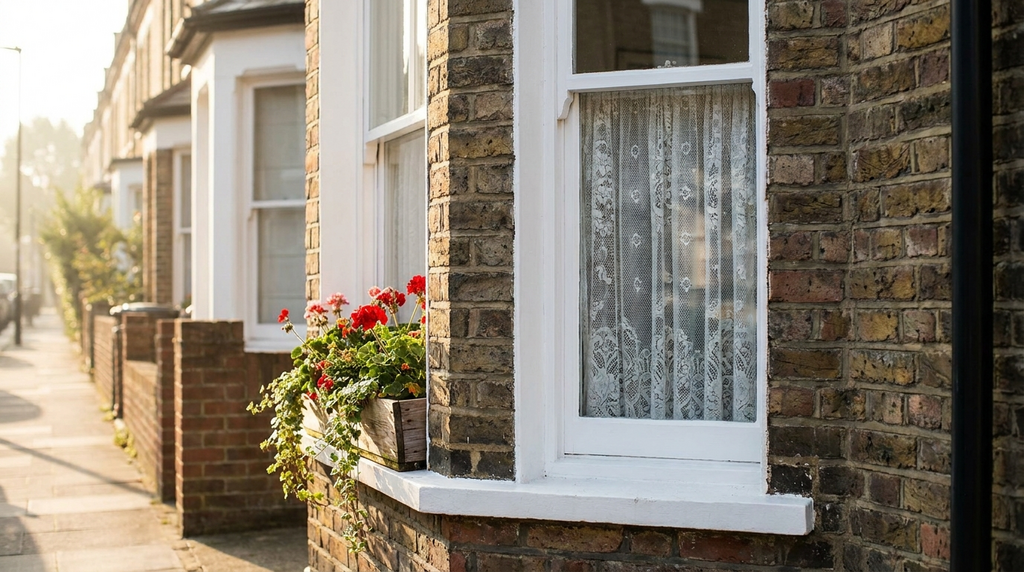
- Bay windows, Common on 1930s and post-war semis across the area. These cost more to re-glaze than standard casements and need careful measuring. Don’t accept a quote that treats every window the same.
- Cavity wall interaction, If you’ve already had cavity wall insulation (common in the local housing stock), your thermal envelope is already decent. Double glazing complements this rather than replacing it, so the combined effect is better than either alone.
- Timber versus uPVC, Some older homes, particularly those in conservation-adjacent streets near Fareham town centre, may need to retain a timber-style finish. Modern flush-casement uPVC replicates this well, but it costs more than standard uPVC.
One insider tip, always check whether your lintels above windows are adequate before proceeding. On homes built before 1965 in this area, some lintels were installed to minimal specifications. A good local installer will flag this; a rushed national firm might not.
How Much Double Glazing Costs in Fareham and the South East in 2026
Fareham sits in a mid-range pricing zone for the South East. You’re not paying London rates, but installer costs here are higher than the Midlands or North due to higher local wages, fuel costs, and demand from Portsmouth and Southampton pulling on the same pool of qualified fitters. Expect to pay roughly 8-12% above the national average for equivalent work.
| Property Type | Number of Windows | Standard uPVC Double Glazing | Premium uPVC or Aluminium | Flush Casement (Heritage Style) |
|---|---|---|---|---|
| 2-bed semi-detached | 6-8 windows | £3,800 – £5,200 | £5,500 – £7,500 | £6,000 – £8,500 |
| 3-bed semi-detached | 8-10 windows | £4,800 – £6,500 | £6,500 – £9,000 | £7,500 – £11,000 |
| 3-4 bed detached | 10-14 windows | £6,000 – £9,000 | £9,000 – £13,500 | £10,500 – £15,000 |
| 4-5 bed larger detached | 14-18 windows | £8,500 – £13,000 | £13,000 – £19,000 | £14,500 – £22,000 |
These figures include supply, fitting, and removal of your old frames. They do not include decorating or making good any plasterwork around window reveals, budget an additional £50-£100 per window if you need this done.
Compared to Portsmouth (7km away), prices in Fareham are broadly similar. Southampton installers (17km) often quote competitively to win Fareham work, so it’s worth getting quotes from both directions. Petersfield and Winchester-based firms (24-25km) tend to price slightly higher owing to their more rural overhead structures.
As a rule, always get three quotes. The range between the cheapest and most expensive for identical work in this area can be £2,000 or more on a full-house job.
How Fareham’s Weather and Location Shape Your Double Glazing Choices
Fareham’s climate is genuinely one of the more benign in England. You’re getting 1,200-1,500 sunshine hours per year and relatively mild winters, the kind of place where heating degree days (a measure of how hard your boiler works) sit at 1,200-1,500 rather than the 2,200+ you’d see in northern England. What that means practically is that double glazing here is less about keeping brutal cold out and more about managing solar gain intelligently.
South and west-facing windows in Fareham homes can actually overheat rooms in summer if you choose the wrong glass specification. With solar irradiance hitting 1,100-1,200 kWh per square metre annually, the best in the UK, standard clear double glazing on a south-facing lounge window can make a room uncomfortably warm from April through September. Ask your installer specifically about solar control glass coatings for these elevations.
On the wind and moisture side, Fareham is relatively well-sheltered compared to coastal properties just a few miles south. You’re not facing the direct coastal blast that properties on the Portsmouth seafront contend with, so standard sealing specifications work perfectly well. Rainfall is moderate at 700-1,000mm per year, enough to matter for frame drainage but not the demanding exposure that, say, a west-facing Cornish property faces.
The practical upshot for Fareham homeowners is this, prioritise thermally efficient glass on north-facing elevations, consider solar control coatings on south and south-west facing windows, and don’t over-specify for wind resistance unless your property is in an unusually exposed position on higher ground north of town.
The Products and Options That Work Best for Fareham Homes
Given the local climate and housing stock, here’s an honest expert view on what actually performs well here rather than just what sounds impressive on a brochure.
For most Fareham semis and detached homes, a quality uPVC double or triple glazed unit with a warm-edge spacer bar and low-emissivity (low-E) coating is the sensible choice. Look for a U-value of 1.2 W/m²K or better for the whole window unit, not just the glass. Many cheaper quotes will show you impressive glass U-values but the frame brings the overall figure up considerably.
Triple glazing is worth considering in Fareham, though with a caveat. In Scotland or northern England, the payback is clear-cut. In Fareham’s milder climate, the additional cost of triple over quality double glazing takes longer to recoup through energy savings. Where triple glazing earns its keep here is on north-facing bedrooms and on homes where noise reduction matters, proximity to the A27 or the busier roads around the shopping centre, for instance.
Frame materials worth considering for Fareham homes:
- uPVC, best value, lowest maintenance, suits most post-war housing. Modern systems are far better quality than the yellowing originals from 20 years ago.
- Aluminium with thermal break, excellent for contemporary styling on 1980s-2000s detached homes, very durable in the South East’s damp air, slightly higher cost but excellent longevity.
- Composite (timber-aluminium), ideal if you’re in a conservation-adjacent street and want authenticity with low maintenance. Premium cost but worth it for the right property.
- Timber, genuinely best for listed buildings or within conservation areas where the council requires it. Needs more maintenance but has real character.
Glass specification to ask for: Argon-filled units (standard now but worth confirming), warm-edge spacer bar rather than aluminium spacer, and a solar control coating (g-value around 0.4-0.5) on south and west-facing windows. For rooms facing north, prioritise the highest thermal performance you can get.
How to Find a Trustworthy Double Glazing Installer Near Fareham
The South East has no shortage of double glazing companies, but quality varies enormously. The good news for Fareham residents is that the local installer market is genuinely competitive, you have access to regional firms operating out of Portsmouth and Southampton as well as smaller local outfits based in Fareham itself, and they’re all chasing the same work.
The certifications that actually matter for double glazing are straightforward. FENSA registration is the key one, FENSA-registered installers self-certify that their work complies with Building Regulations, which saves you having to apply for a separate Building Regulations application. Always ask for a FENSA certificate on completion. TrustMark registration adds another layer of quality assurance and the government backs it. Both are worth verifying on the relevant websites before signing anything.
Questions worth asking any Fareham installer before you commit:
- Are you FENSA registered and will you provide a certificate on completion?
- What U-value will the completed window unit achieve, not just the glass?
- Who manufactures your frames and where are they made?
- What is your lead time currently and how long will the installation take?
- Do you carry public liability insurance and what is the excess?
- How do you handle any discovered lintel or reveal issues found during installation?
Red flags to watch for: high-pressure same-day discounts, quotes given without measuring every window individually, installers who can’t show you a recent local reference, and anyone offering dramatically lower prices without clear explanation of why.
Lead times in the South East currently run at 4-10 weeks for most installations. Be wary of anyone who can come next week, that’s either because they’re quiet for a reason, or they’re a fly-by-night operation. Reputable local firms serving the Portsmouth, Fareham, and Southampton triangle are typically booking 6-8 weeks ahead.
Grants and Funding That Could Reduce Your Costs in Fareham in 2026
The honest picture on grants for double glazing is that standalone grants for glazing alone are limited, most funding schemes require glazing to be part of a wider retrofit package. Even so, there are genuine routes to financial support worth exploring.
ECO4 (Energy Company Obligation), This government scheme requires energy suppliers to fund energy efficiency improvements for lower-income households. If your household income is below approximately £31,000 or you receive qualifying benefits, and your home is EPC Band D or below, you may qualify for fully funded or heavily subsidised glazing as part of a whole-house retrofit. Contact Fareham Borough Council or check the government’s ECO4 portal directly.
The Great British Insulation Scheme closed on 31 March 2026. It funded insulation measures only and never covered windows or glazing. Worth applying if your EPC is Band D or below, though with Fareham’s above-average Band C rating, many local homeowners won’t qualify on this basis.
Fareham Borough Council local schemes, The council has participated in Hampshire-wide retrofit partnership initiatives. It’s worth contacting Fareham Borough Council’s housing team directly to ask about any current local top-up schemes or referral pathways, as these change year to year and aren’t always well-publicised.
Glazing is standard-rated for VAT at 20%. The zero rate for energy-saving materials covers insulation, heat pumps and solar panels; HMRC names secondary and double glazing as excluded (VAT Notice 708/6). This is a significant saving, on a £7,000 installation, that’s £1,400 back in your pocket compared to a standard-rated purchase. Make sure your installer is applying this correctly.
If you’re a landlord with rental properties in Fareham, the Minimum Energy Efficiency Standards (MEES) requirements are tightening. Glazing upgrades that improve your EPC rating are increasingly becoming a compliance necessity rather than an optional extra.
Planning Permission and Building Regulations in Fareham
For most Fareham homeowners with semi-detached or detached properties, replacing like-for-like windows, same style, similar materials, same opening positions, falls under permitted development rights. You don’t need planning permission, but your installer must comply with Building Regulations, which is where FENSA certification comes in.
The picture changes if your property falls within one of Fareham’s designated conservation areas. The older streets around Fareham town centre, parts of Titchfield village, and some of the historic residential areas near the waterfront are subject to conservation area restrictions. In these areas, any change to the external appearance of your windows, including material changes from timber to uPVC, typically requires a planning application even for like-for-like replacements.
If you’re in a conservation area, contact Fareham Borough Council’s planning department before instructing any installer. The council’s pre-application advice service can save you significant time and money. Installing without permission where it’s required can result in an enforcement notice requiring you to reinstate original windows at your own cost, a painful and expensive outcome.
Listed buildings are a separate category with stricter controls again. If your property is listed, even replacing a single window pane may require listed building consent. There are specialist glazing solutions built to meet heritage requirements, secondary glazing in particular is frequently approved where new double glazed units would not be.
What You Will Actually Save, Realistic Numbers for Fareham Households
Let’s work with real local figures rather than the optimistic best-case scenarios you’ll see on some installers’ websites