Why Bromley Homeowners Are Taking Double Glazing Seriously Right Now
Bromley sits in an interesting position. It’s a London borough with a suburban heart, all those lovely semi-detached and detached homes in Bickley, Chislehurst, Shortlands, and Petts Wood that were built between the wars or in the post-war boom. A huge proportion of them still have windows that are decades old, some even original single-glazed frames that rattle when the easterly winds come rolling in across Kent in January.
With the average Bromley home sitting on EPC Band D and gas bills still biting hard, window upgrades have jumped up the priority list. Many homeowners are also discovering that ageing frames, especially the uPVC units fitted in the 1990s, are approaching end of life, making now a natural moment to upgrade rather than repair.
There’s also the noise factor. Bromley is quieter than inner London, but living near the A21, A232, or under flight paths into City Airport affects far more households than people realise. Good double or triple glazing makes a remarkable difference to everyday comfort, not just your heating bill.
What Double Glazing Actually Involves for a Typical Bromley Home
Most Bromley homes fall into two broad camps, the interwar semi-detacheds (think 1930s bay-fronted houses you’ll find all over Beckenham, Bromley Common, and West Wickham) and the larger detached homes of Chislehurst and Bickley, many of which are genuinely Victorian or Edwardian. Each type comes with its own quirks.
The 1930s semis often have wide bay windows at the front and timber frames that have been painted over repeatedly. Replacing these requires careful measurement and sometimes bespoke sizing, standard off-the-shelf units rarely fit perfectly. The good news is that the brickwork is generally solid and installation is straightforward once the old frames are out.
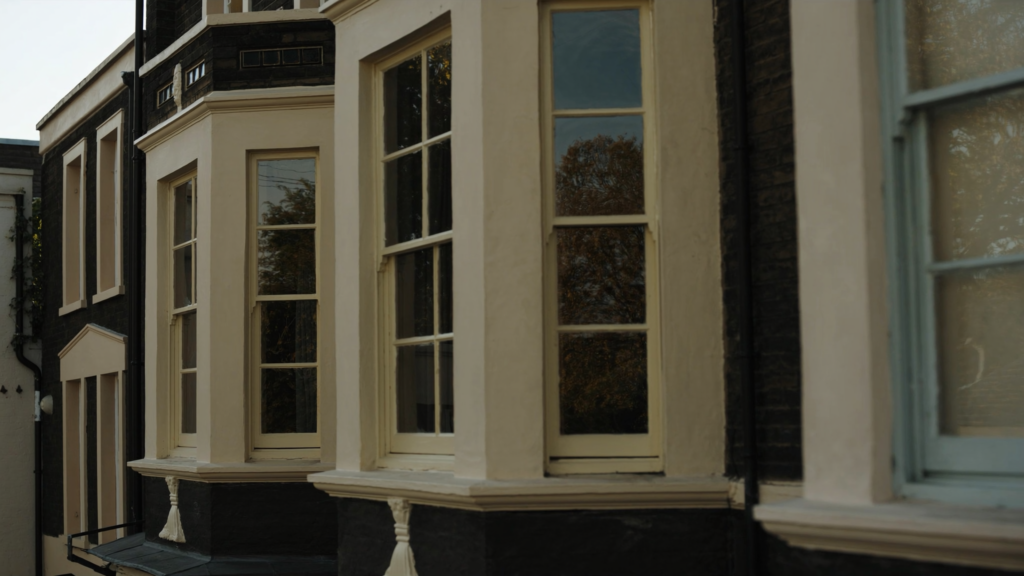
Victorian and Edwardian properties in areas like Chislehurst or around the Norman Park estate require more care. Sash windows are common, and if your home is in or near a conservation area, which a significant number of Bromley’s older properties are, you’ll need to think carefully about frame style, glass type, and finish to satisfy planning requirements. We’ll cover that in detail later.
- Typical installation time, a full house (8–12 windows) usually takes two to three days for a professional crew
- Disruption level, moderate; rooms are temporarily exposed to outside air as frames are removed and fitted
- Access considerations, many Bromley streets have limited parking, which can slow delivery of frames and add a small cost premium
- Older properties, lintels and reveals may need minor repair work when old frames come out, adding to overall cost
One thing that catches Bromley homeowners off guard is the reveal depth. Older homes often have thick walls with deep reveals, which means you’ll need frames specified to the correct depth, or you’ll end up with a visible gap that looks shoddy and loses heat. Always insist on an in-person survey, not just a phone quote.
How Much Double Glazing Costs in Bromley and the London Area in 2026
Let’s be direct about this, double glazing in Bromley costs more than the national average, and significantly more than you’d pay in, say, Leeds or Nottingham. London labour rates run 15–25% above the national benchmark, and that flows straight through to your quote. Parking, ULEZ compliance costs for installer vans, and longer travel times all add a little more.
Even so, Bromley benefits from being a competitive market. You’re within easy reach of installers based across South East London, including those covering Lewisham, Croydon, Bexley, and Greenwich, so you have genuine choice, which keeps prices honest.
| Property Type / Scope | Standard uPVC Double Glazing | Premium uPVC or Composite | Triple Glazing |
|---|---|---|---|
| Single window replacement | £400 – £650 | £600 – £950 | £700 – £1,100 |
| 3-bed semi-detached (8 windows) | £3,800 – £5,500 | £5,200 – £7,800 | £6,500 – £9,500 |
| 4-bed detached (10–12 windows) | £5,200 – £7,500 | £7,000 – £11,000 | £8,500 – £13,500 |
| Bay window (front of semi) | £900 – £1,500 | £1,400 – £2,200 | £1,800 – £2,800 |
| Sliding patio doors | £1,200 – £1,800 | £1,800 – £3,000 | £2,400 – £4,000 |
How does this compare nearby? Croydon (9km away) tends to come in roughly 5–8% cheaper due to slightly easier access and more installer competition. Bexley and Greenwich are broadly similar to Bromley pricing. The national average for a 3-bed semi sits around £3,200–£4,800, meaning Bromley homeowners typically pay around 15–20% more.
Always get three quotes. Prices in this market vary enormously, not always because of quality differences, but simply because of different overhead structures and current workloads.
How Bromley’s Weather and Location Shape Your Window Choices
Bromley’s position on the south-eastern edge of London gives it a genuinely distinctive climate, and it matters more than you’d think when choosing glazing. The borough gets more sunshine than almost anywhere else in Greater London, over 1,200 hours per year, but it also catches cold easterly winds straight off the North Sea and across the Kent Weald in winter. Those sharp January and February easterlies hit hard against any east-facing windows, and Bromley has plenty of east-facing properties.
What this means practically is that your window specification should prioritise two things above most others, a low U-value (heat retention) and a decent solar heat gain coefficient (SHGC). Because you get good solar irradiance, you can genuinely harvest free warmth through south and west-facing windows in winter if you choose glass with a moderate-to-high SHGC. This is a real advantage that homeowners in cloudier northern towns don’t have to the same degree.
Rainfall in Bromley is relatively low (550–680mm per year), which is good news, it means timber frames, if you choose them for aesthetic reasons in a conservation area, face less weathering pressure than equivalent homes in Wales or the North West. External seals and drainage channels in uPVC frames will still need periodic checking, but longevity is generally good here.
The easterly wind exposure is the factor most installers forget to mention. Make sure your installer specifies frames and glazing with good edge-seal quality and check that the weather stripping is rated for exposed conditions. Cheap frames with poor edge seals will develop condensation between the panes faster in Bromley than in more sheltered locations.
The Products That Actually Perform Well in Bromley Homes
Given everything above, here’s honest guidance on what works and what doesn’t for Bromley’s specific housing stock.
For 1930s Semis in Beckenham, West Wickham, and Bromley Common
A high-quality uPVC frame in white or grey (many 1930s semis suit the modern grey-on-white look) with A-rated double glazing is your sweet spot. Look for units with a U-value of 1.2 W/m²K or better, anything above 1.6 is underperforming by current standards. Argon-filled units with warm-edge spacer bars are worth paying for; they dramatically reduce the cold bridging effect at the edge of the glass that causes that miserable condensation strip along the bottom of your windows in winter.
For Victorian and Edwardian Properties in Chislehurst and Bickley
Here, aesthetics matter alongside performance. Slim-profile double glazing, sometimes called “slimline” or “heritage” glazing, can fit within original sash window boxes and satisfy conservation area requirements while still achieving U-values around 1.4–1.6 W/m²K. It’s a compromise on raw thermal performance versus standard double glazing, but it’s significantly better than single glazing and keeps your property looking right. Timber frames are worth considering here, especially for listed buildings or where the conservation area officer has strong views.
Is Triple Glazing Worth It in Bromley
Triple glazing is genuinely worth considering for north-facing and east-facing rooms in Bromley given those cold easterly winters. The jump from a U-value of 1.2 to around 0.7–0.8 (triple glazing) is meaningful on exposed elevations. However, on south and west-facing windows, the additional cost rarely delivers proportional returns in Bromley’s relatively mild winters, standard high-spec double glazing performs excellently there. A mixed approach (triple on exposed sides, premium double elsewhere) often hits the best balance of cost and comfort.
- Recommended minimum U-value, 1.2 W/m²K for double glazing in Bromley
- Gas fill, argon as standard, krypton for triple glazing units
- Spacer bars, warm-edge (foam or hybrid) rather than aluminium
- Energy rating, BFRC Window Energy Rating of A or A+ for south/west facing; consider triple (A++) for north/east
- Frame colour, grey or anthracite finishes suit Bromley’s mix of brick styles well and don’t require extra maintenance
How to Find a Trustworthy Double Glazing Installer Near Bromley
The South East London installer market is busy and, frankly, mixed in quality. The good news is there are genuinely excellent companies operating across the Bromley, Lewisham, Croydon, and Bexley patch, you just need to know how to identify them.
The non-negotiable certification for double glazing installers is FENSA registration (Fenestration Self-Assessment Scheme). A FENSA-registered installer can self-certify their work meets Building Regulations without you needing to apply for a separate certificate, important when you come to sell your home. Always ask for the FENSA number and check it on the FENSA website before signing anything.
TrustMark registration is a strong additional indicator of quality and means the installer has been vetted against government-endorsed standards. For any work connected to an energy improvement grant, TrustMark registration is mandatory.
Questions Worth Asking Every Installer
- Are you FENSA registered and will you provide a FENSA certificate on completion
- What U-value will the installed units achieve, get this in writing
- Who manufactures your frames and glass units, reputable brands matter for longevity
- What is your guarantee period and is it backed by a deposit protection scheme
- Can you provide references from jobs in Bromley or nearby boroughs in the last 12 months
- How do you handle the Building Regulations notification
Red Flags to Walk Away From
- Pressure to sign on the day with a “today only” discount
- No physical business address or only a mobile phone number
- Reluctance to provide a written, itemised quote
- No mention of FENSA or Building Regulations compliance
- Vague answers about the U-value or energy rating of the units
Lead times in the South East London area currently run at four to eight weeks from survey to installation for most reputable installers. Be wary of anyone promising installation within two weeks, it often means they’re using stock that doesn’t fit your measurements precisely.
Grants and Funding Available to Bromley Residents in 2026
Double glazing sits in an awkward spot with grants, it’s less generously subsidised than insulation or heat pumps, but it’s not without options, particularly when it forms part of a wider retrofit package.
ECO4 (Energy Company Obligation)
ECO4 can cover double glazing as part of a broader energy efficiency package for households on qualifying benefits or with low incomes. To be eligible, you typically need to receive means-tested benefits (Universal Credit, Pension Credit, or similar) and your home needs to be EPC Band D or below, which, given Bromley’s average, covers a large proportion of the borough. The work must be delivered by a TrustMark-registered installer. Contact your energy supplier or the national ECO4 helpline to check eligibility and find a local installer.
Great British Insulation Scheme (GBIS)
GBIS primarily targets insulation but can support glazing improvements in certain circumstances, particularly where windows are a significant source of heat loss in lower EPC-rated properties. Eligibility overlaps with ECO4 in terms of income criteria, but there is also a broader “general group” for homes in EPC bands D–G regardless of income. Worth checking if your home qualifies.
London-Specific Support
The Mayor of London’s Warmer Homes programme and associated borough-level schemes have periodically offered grant or low-interest loan support for window upgrades in Bromley. Bromley Council’s housing team and the GLA’s Retrofit Accelerator programme are the best starting points, the GLA has published borough-level retrofit guidance specifically for Bromley that lists current funding streams. Check the GLA website directly, as this funding moves quickly and availability changes.
Honest Assessment of What to Expect
If you’re a working homeowner without qualifying benefits, a full grant for double glazing is unlikely in isolation. However, if you’re bundling double glazing with insulation or a heat pump upgrade, the overall package becomes far more fundable. Consider your window upgrade as part of a phased retrofit plan, your chances of accessing meaningful support increase substantially when windows are part of a broader energy improvement project.
Planning Permission and Bromley Council Requirements
Here’s the practical reality for most Bromley homeowners, standard double glazing replacement on a semi-detached or detached home falls under permitted development rights and does not require planning permission, provided the new windows are similar in appearance to the originals. You don’t need to apply to Bromley Council, and your installer handles Building Regulations compliance via FENSA self-certification.
However, Bromley has a significant number of conservation areas and listed buildings, and the rules change meaningfully in these zones.
Conservation Areas in Bromley
Bromley has over 30 designated conservation areas, including significant parts of Chislehurst, Bromley Town Centre, and Beckenham. If your home is within a conservation area, permitted development rights for windows are restricted. You will likely need to apply for