Why Dartmouth Homeowners Are Looking at Double Glazing Right Now
There’s something quietly urgent happening in Dartmouth’s housing market. With average EPC ratings sitting at Band D across the town, and energy bills that still sting despite the milder Devon winters, more and more residents are asking the same question, what’s actually worth doing to this house?
Double glazing keeps coming out near the top of that list, and for good reason. Dartmouth’s position on the Dart estuary means you’re dealing with salt-laden westerly winds, driving rain that can push through tired window seals, and a damp coastal atmosphere that makes draughty old frames feel even worse. A cold snap in January on Higher Street or Townstal Road hits differently when your single-glazed sashes are rattling.
There’s also the heritage factor. A significant portion of Dartmouth’s homes date back to the Victorian era or earlier, stone-built, character-rich, and often energy-hungry. The town’s tight streets and conservation zone status mean you can’t always just rip and replace. But that doesn’t mean doing nothing. In 2026, there are more sympathetic, high-performance glazing options than ever before, designed precisely for towns like this one.
And with South West-specific retrofit programmes running alongside national funding schemes, the timing genuinely is good. Let’s walk through everything a Dartmouth homeowner needs to know.
What Double Glazing Actually Involves for a Typical Dartmouth Home
Dartmouth’s housing stock splits fairly cleanly into two camps, the terraced properties that line the town’s historic core, and the detached homes that spread up into Townstal and across the hillsides above the estuary. Both present distinct challenges for glazing work.
Terraced Homes in the Town Centre
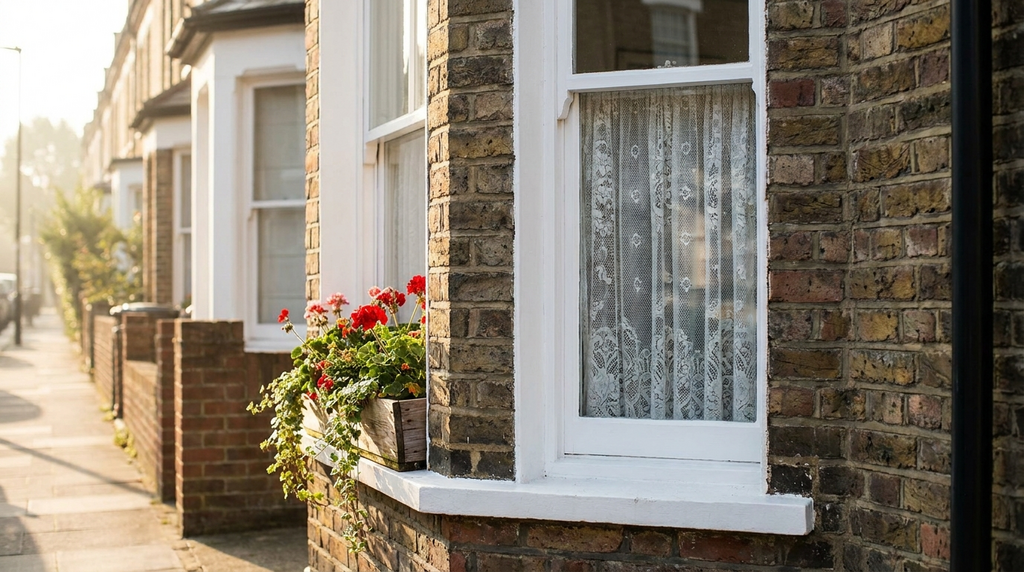
The terraced houses clustered around the Butterwalk, Foss Street, and the lower town streets are often Georgian or Victorian in origin. Many have sash windows, some original, some later replacements, set into thick stone or rendered rubble walls. Access for installers can be genuinely tricky here. Narrow pavements, restricted parking, and shared front elevations mean jobs take longer and sometimes require smaller specialist teams rather than a large national crew.
If your terrace falls within the Dartmouth Conservation Area (and many do), you’ll need to think carefully about frame profiles, colour, and glazing bar patterns. The good news is that slim-profile double glazed units and heritage-style sash replacements have become genuinely convincing in recent years, a qualified installer will know what South Hams District Council expects.
Detached Homes on the Outskirts
Detached properties in Townstal and the newer estates tend to be post-war or 1970s–1990s builds. Many already have some form of double glazing, but older units from the late 1990s or early 2000s are now well past their performance peak. Seals fail, argon gas escapes, and condensation between panes is a tell-tale sign it’s time for an upgrade rather than a repair.
These homes are generally easier to work on, better access, wider windows, and no conservation constraints, but the coastal exposure means frame material choice matters enormously (more on that shortly).
How Much Double Glazing Costs in Dartmouth and the South West Area in 2026
Let’s be straight with you, double glazing in Dartmouth tends to run slightly above the South West average, and meaningfully above the national average. Distance from major supply depots, limited local installer competition (most glazing companies serving Dartmouth are based in Totnes, Torquay, or Plymouth), and the access difficulties of the town centre all add to costs. That’s not a reason to delay, it’s a reason to budget accurately.
| Property Type | Number of Windows | Standard uPVC (A-rated) | Timber or Heritage-Style | Marine-Grade Aluminium |
|---|---|---|---|---|
| Small terraced (2-bed) | 4–6 | £2,800–£4,200 | £4,500–£6,800 | £5,200–£7,500 |
| Mid terraced (3-bed) | 6–8 | £3,800–£5,500 | £6,000–£8,500 | £6,800–£9,500 |
| Detached (3-bed) | 8–12 | £5,200–£7,800 | £8,500–£13,000 | £9,500–£14,000 |
| Larger detached (4-5 bed) | 12–16 | £7,500–£11,000 | £12,000–£18,000 | £13,500–£20,000 |
These figures include supply, installation, and removal of old frames. They reflect 2026 installer quotes from companies serving the Dartmouth–Totnes–Torquay corridor. The national average for a typical 3-bed is around £4,500–£6,500, so yes, you’re paying a premium for being here, but it’s not dramatic.
What pushes costs up in Dartmouth specifically
- Conservation area work requiring heritage profiles or planning approval
- Steep or restricted access to upper floors of hillside properties
- Marine-grade material uplifts (essential near the estuary and harbour)
- Call-out charges from Totnes, Torquay or Plymouth-based installers
- Scaffolding requirements for some of the taller terraced properties
How Dartmouth’s Weather and Location Affect Your Double Glazing Choices
This is where local context genuinely changes the advice you should be getting. Dartmouth is in Devon, but the estuary setting creates its own microclimate, and the prevailing south-westerly winds mean windows on the western and southern elevations take a real battering.
Rainfall here regularly exceeds 1,000mm per year, and driving rain is the norm rather than the exception during winter. That matters for window installation because poor sealing or substandard frame materials will fail faster here than they would in, say, somewhere on the drier eastern side of the country. Any installer worth their salt (and there’s plenty of actual salt in the air here) will use high-grade silicone and weather-bar detailing at every junction.
The coastal salt air is the single biggest material consideration. Metal window furniture, hinges, and locking mechanisms corrode far faster within a kilometre or two of the Dart estuary and the sea at Blackpool Sands. Standard galvanised steel hardware simply isn’t good enough, you want stainless steel or marine-grade zinc-coated hardware as standard. Always check this is included in quotes.
On the upside, Dartmouth benefits from some of the best solar irradiance in the UK, around 1,100–1,200 kWh per square metre per year. That means south-facing rooms can gain real passive solar heat through well-specified glazing. If you’re replacing windows on a south-facing elevation, ask your installer about high solar-gain low-E glass, which lets in more of that winter sun while still preventing summer overheating.
The Products and Options That Work Best Here
Based on Dartmouth’s specific conditions, coastal salt exposure, high rainfall, older housing stock, and conservation area constraints, here’s what genuinely works well, rather than what’s just easiest to sell.
Frame Materials
uPVC remains the most cost-effective choice for properties without conservation restrictions. Look for reinforced steel inserts that are hot-dipped galvanised or stainless steel to resist corrosion. Standard uPVC performs well on the newer Townstal estates and post-war detached homes. Avoid cheap imports with thin-walled profiles, they won’t handle the wind loading on exposed hillside positions.
Aluminium with a marine-grade powder coat is the premium choice for harbour-facing or estuary-side properties. Properly specified, it outlasts uPVC in coastal conditions and the slim sightlines suit both modern extensions and sympathetically designed conservation replacements. Budget for the uplift, it’s worth it.
Engineered timber is the right call for conservation area properties where you need to match the character of the original frames. Modern factory-finished timber with a 10-year guarantee performs far better than the older painted softwood it replaces. It needs repainting every 8–10 years, but it looks genuinely authentic and South Hams planners tend to approve it.
Glass Specifications
- A-rated double glazed units as a minimum, the U-value should be 1.4 W/m²K or better
- Argon-filled units, standard on quality installations, improves thermal performance by around 15% over air-filled
- Warm-edge spacer bars, reduces cold-edge condensation, particularly relevant in Dartmouth’s damp winters
- Laminated inner pane on ground floor windows, security and safety benefit for town-centre terraced homes
- Solar control glass on south-west facing elevations, Dartmouth gets good sun, and without it top-floor rooms can overheat in summer
How to Find a Trustworthy Double Glazing Installer Near Dartmouth
Here’s an honest reality of living in a town of 5,500 people, there is no large dedicated glazing company based in Dartmouth itself. You’re reliant on installers who travel in from Totnes (about 12km away), Torquay (13km), and sometimes from as far as Plymouth (40km). That’s not a problem if you choose well, but it does mean you need to be a little more rigorous about vetting.
Certifications to look for
- FENSA registration, this is the key one for window and door replacement. A FENSA-registered installer self-certifies compliance with Building Regulations, which means you get a certificate on completion that you’ll need when you sell the property.
- TrustMark accreditation, the government-endorsed quality scheme. Particularly relevant if you’re using any grant funding.
- CERTASS membership, an alternative to FENSA with similar standing
- Which? Trusted Trader or similar review platforms, check for local reviews specifically from Dartmouth, Totnes, or Kingsbridge jobs
Questions worth asking any installer
- Have you worked on properties in Dartmouth’s conservation area before?
- What marine-grade hardware do you use as standard?
- Do you use warm-edge spacer bars on all units?
- What’s your lead time from survey to installation right now?
- Is your survey free, and is the quote written and itemised?
Lead times from South West installers currently run at 6–12 weeks from survey to installation for a standard job, longer for conservation area work requiring planning consent. Get at least three written quotes, prices vary considerably across the Totnes–Torquay–Plymouth installer network.
Red flags to watch for, pressure to sign on the day, no written specification of glass U-values and frame details, no mention of Building Regulations compliance, or unusually low quotes that don’t specify marine-grade hardware.
Grants and Funding That Could Reduce Your Costs in 2026
Double glazing doesn’t attract as many grants as insulation or heat pumps, but there are still meaningful routes to funding, especially if you’re combining window upgrades with broader energy improvements.
ECO4 (Energy Company Obligation)
If your household income is below around £31,000, or you receive qualifying benefits, and your home is EPC Band D or below (which most Dartmouth properties are), you may qualify for ECO4 support. Windows can be included as part of a wider package of measures. Contact your energy supplier directly or use the government’s ECO4 referral page. Dartmouth properties on the Townstal estate, predominantly post-war social housing stock, are often well-suited candidates.
Great British Insulation Scheme (GBIS)
GBIS focuses on single insulation measures for properties in Council Tax bands A–D. Windows are occasionally included where they’re identified as a priority measure. Worth checking eligibility, South Hams District Council can advise on local referral routes.
Devon Home Retrofit Scheme
Devon County Council has operated its own retrofit support programme, which has historically offered interest-free or low-interest loans for energy improvements, including glazing upgrades. Check with Devon County Council’s energy team for the current 2026 offer, the scheme has evolved since its pilot phase and now covers more property types.
VAT
Glazing is standard-rated for VAT at 20%. The zero rate for energy-saving materials covers insulation, heat pumps and solar panels; HMRC names secondary and double glazing as excluded (VAT Notice 708/6). Make sure your installer’s quote specifies this clearly and isn’t hiding VAT in the total.
Planning Permission and Regulations in Dartmouth
Whether you need planning permission for double glazing in Dartmouth depends almost entirely on one question, is your property in the conservation area?
Dartmouth’s Conservation Area covers a substantial portion of the town centre, including much of the historic quayside, Foss Street, Higher Street, and Duke Street. If your property falls within this boundary, you’ll need to check with South Hams District Council before replacing windows, even under what might normally be permitted development rights.
Within the conservation area, the council’s general expectation is that replacement windows should match the appearance, material, and detailing of the originals. That usually means timber-effect profiles or genuine timber, accurate glazing bar positions, and appropriate colours. The council’s planning team is genuinely helpful here, a pre-application enquiry costs nothing and can save you from ordering the wrong product.
Outside the conservation area, most window replacements on terraced and detached homes proceed under permitted development, no planning application needed, provided the work is like-for-like in appearance. You’ll still need to comply with Building Regulations (Part L for energy performance, Part K for safety glazing), which your FENSA-registered installer handles automatically.
Listed buildings are a separate matter entirely, if you own a listed property anywhere in Dartmouth, you’ll need Listed Building Consent before replacing any windows. Call South Hams District Council’s heritage team before doing anything else.
What You Will Actually Save, Honest Numbers for Dartmouth Homes
Let’s ground this in Dartmouth’s actual energy data. The average home here uses 13,000 kWh of gas per year, very close to the national median. With EPC Band D as the baseline, upgrading from draughty single glazing or failed old double glazing to modern A-rated units typically delivers the following.
For a mid-terraced 3-bed home replacing single glazing with A-rated double glazing
- Annual heating energy saving: approximately 950