Why Deal Homeowners Are Waking Up to Double Glazing Right Now
Stand on Deal seafront on a January morning and you’ll understand immediately. Those biting easterly winds rolling in off the North Sea don’t just sting your face, they push straight through ageing single-glazed windows and drive up your heating bills faster than almost anywhere else in Kent. Deal’s coastal position makes it one of the most wind-exposed towns in the South East, and for the thousands of residents in the town’s older Victorian and Edwardian terraces, that exposure is felt most sharply through rattling, draughty window frames.
There’s also been a noticeable shift in how people here think about home improvement since energy costs stabilised at their new, higher baseline. With the average Deal home sitting at EPC Band D and gas usage around 10,800 kWh per year, most households are spending more on heating than they need to. Double glazing is one of the most accessible upgrades that genuinely moves the needle, and local installers are reporting longer enquiry queues than they’ve seen in years.
The South East property market adds another layer of motivation. High property values in this area mean that improvements like double glazing don’t just save energy, they add tangible resale value. An EPC uplift from Band D to Band C can make a meaningful difference on a Deal property valuation, which matters in a town where the housing stock is increasingly sought after by buyers relocating from Canterbury, Dover, and even London.
What Double Glazing Actually Involves for a Typical Deal Home
Most homes in Deal were built between 1870 and 1940, Victorian and Edwardian terraces dominate the streets around Middle Street, South Street, and the roads running back from the seafront. These are characterful properties, and that character comes with some very specific installation challenges.
The window openings in these older builds are rarely standard sizes. Original timber frames are often non-uniform, meaning your installer will need to measure each opening individually and have frames made to order. Don’t let anyone quote you a job on Deal’s Victorian terraces without measuring up in person first, it’s a red flag if they do.
Typical considerations for Deal’s housing stock include
- Narrow street access, Many of the older terraces near the town centre have no front garden buffer, meaning installers are working directly from the pavement. This affects how waste is removed and how replacement units are brought in, sometimes adding a small premium to labour costs
- Original timber frames, In properties built before 1920, the frames themselves are often in poor condition. You may face the choice between repairing existing frames (more expensive) or replacing entirely with uPVC or aluminium (easier but changes the character of the property)
- Solid brick construction, Deal’s older terraces are typically solid brick, not cavity wall. This actually makes window replacement simpler from a structural standpoint, as there’s no cavity bridging to worry about
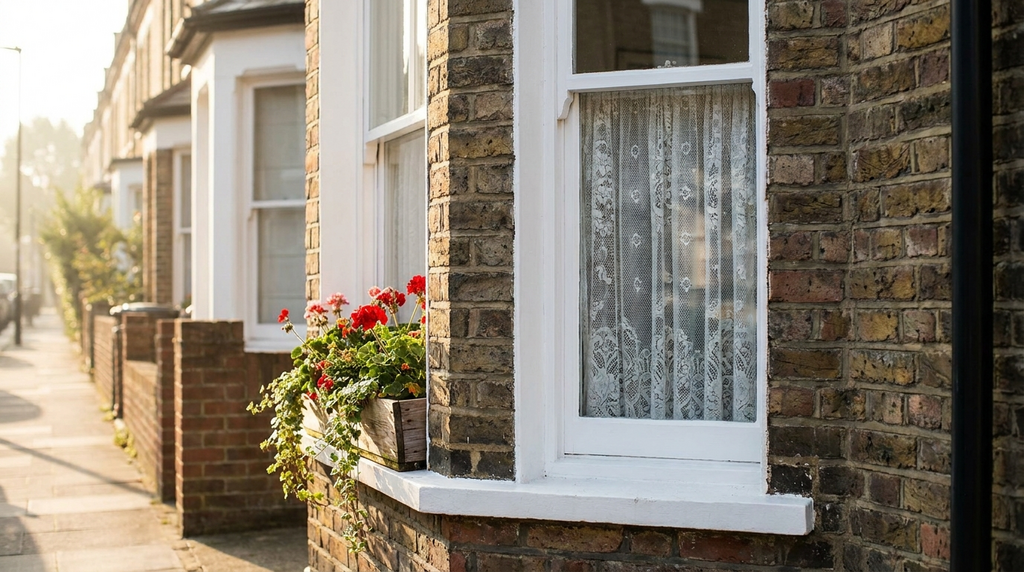
- Period sash windows, A significant proportion of homes near the conservation area still have original sash windows. Sash-compatible double glazing exists and performs well, but it costs more than standard casement replacements
For the semi-detached homes built from the 1930s through to the 1970s, particularly in areas like Mill Hill and the roads off London Road, the situation is more straightforward. Standard casement windows in these properties are usually easier to replace and often don’t require bespoke sizing. If your home is in this era, installation is typically quicker and slightly cheaper than the Victorian terraces closer to the seafront.
How Much Double Glazing Costs in Deal and the South East in 2026
Let’s get specific. Costs in Deal sit broadly in line with the South East average, which runs 10–15% above the national UK median. You’re not paying London prices, but you’re not getting Midlands rates either. Here’s a realistic breakdown for the most common scenarios.
| Property Type and Scope | Deal Estimate | South East Average | UK National Average |
|---|---|---|---|
| 2-bed terrace, full replacement (6–8 windows) | £4,200 – £6,500 | £4,000 – £6,200 | £3,500 – £5,500 |
| 3-bed semi-detached, full replacement (8–10 windows) | £5,500 – £8,500 | £5,200 – £8,000 | £4,500 – £7,000 |
| Victorian terrace, sash-style double glazing (6 windows) | £6,500 – £10,000 | £6,200 – £9,500 | £5,500 – £8,500 |
| Single large bay window replacement | £900 – £1,600 | £850 – £1,500 | £750 – £1,300 |
| Standard casement window (per unit) | £400 – £700 | £380 – £650 | £300 – £550 |
| A-rated triple glazing upgrade (per window) | £550 – £950 | £520 – £900 | £450 – £800 |
Why does Deal sometimes sit at the higher end of South East pricing? A few factors play a role. Installer travel time matters, many of the better-rated glazing companies in this area are based in Dover, Canterbury, or Folkestone, and they’re factoring in travel to Deal on top of their standard rates. Parking restrictions near the seafront and town centre also add minor complications for larger vans carrying window units. And as mentioned, bespoke sizing for older properties adds to material costs.
Insider tip, get at least three quotes and ask each installer whether they measure and manufacture locally or use a third-party fabricator. Locally fabricated frames often mean faster turnaround and easier remedy if anything doesn’t fit perfectly on installation day.
How Deal’s Weather and Location Shape Your Double Glazing Choices
Deal’s climate is genuinely unusual for the UK, and it should directly influence what you buy. The town sits on the eastern coast of Kent, exposed to winds sweeping across from continental Europe, there’s no natural land barrier between Deal and the Netherlands. In practical terms, this means cold easterly winds in January and February that drive heat out of your home far more efficiently than still, damp conditions would.
Wind-driven rain is also a more specific concern here than in inland towns. Even with Deal’s relatively low annual rainfall of around 550–650mm, the horizontal nature of coastal rain means water ingress around window frames is a real risk with ageing or poorly installed glazing. Any double glazing you choose should have a good weathertight rating, look for a British Standards air permeability rating and ask installers about their drainage and sealing approach for coastal installations.
On the positive side, Deal enjoys some of the best solar irradiance in the entire UK, over 1,100 kWh per square metre per year. South and west-facing windows in Deal receive genuinely meaningful solar gain, which can offset heating requirements in winter. This means you probably don’t want to go overboard with high solar-control coatings on south-facing windows. Those coatings are built to reduce heat gain in summer, which is useful in some climates, but in Deal, that free winter warmth from the sun is worth keeping.
The combination of cold easterlies and good solar potential points to one clear recommendation, prioritise low-emissivity (low-e) coatings on north and east-facing windows to retain heat, and choose glazing with a moderate solar heat gain coefficient (SHGC around 0.4–0.6) for your south-facing rooms. It’s a small distinction that a knowledgeable installer will understand immediately and that makes a real difference over time.
The Products and Options That Actually Perform Well Here
Not all double glazing is created equal, and what works brilliantly in a sheltered suburb of Birmingham isn’t necessarily optimal for a seafront terrace in Deal. Here’s an honest assessment of what performs best in this specific environment.
Frame Material
uPVC remains the most practical choice for the majority of Deal homes. It handles coastal moisture well, requires minimal maintenance, and the modern versions with chamfered or sculpted profiles look considerably better than the clunky white frames of the 1990s. For Victorian terraces in or near the conservation area, heritage-style uPVC with slim sightlines is available and looks genuinely good, it’s worth paying the premium if the aesthetics matter to you.
Aluminium frames are an excellent choice for the 1930s–1970s semi-detached homes where a more modern look suits the property. They’re slim, strong, and perform well in coastal conditions. They do cost around 20–30% more than equivalent uPVC, but the longevity in a salt-air environment is genuinely better.
Timber frames are beautiful in older Deal properties, but coastal conditions accelerate weathering and maintenance requirements. If you choose timber, budget for repainting every 5–7 years and ensure the wood is sustainably sourced hardwood or engineered timber, not softwood.
Glazing Specification
- A-rated double glazing, the sweet spot for most Deal homes. Look for a U-value of 1.2 W/m²K or better and argon gas fill between the panes as standard
- Triple glazing, genuinely worth considering for north and east-facing windows given the exposed coastal position. U-values of 0.8–1.0 W/m²K are achievable, and the noise reduction is a genuine bonus for homes near the high street or seafront
- Low-e coating, non-negotiable in this climate. Ensure it’s included as standard, not an optional add-on
- Warm-edge spacer bars, these reduce condensation at the edges of the pane and improve thermal performance. Any quality installer should fit these as standard in 2026
How to Find a Trustworthy Double Glazing Installer Near Deal
The installer market serving Deal draws from a cluster of towns, Dover (12km away), Folkestone (23km), Canterbury (23km), and Margate (18km). Most established glazing companies in this area operate across all of these towns, which means there’s a reasonable pool of installers to choose from, but it also means availability can be stretched during busy periods.
The certifications that matter most for double glazing are
- FENSA registration, this is the most important one. FENSA-registered installers self-certify that your new windows comply with Building Regulations, which means you don’t need a separate building control application. Always ask for the FENSA certificate on completion, you’ll need it when you sell the property
- TrustMark accreditation, indicates the company has been vetted to government-endorsed standards for quality and trading practices
- Which? Trusted Trader or similar consumer protection scheme, useful for reading verified reviews from local customers
Questions worth asking every installer before you commit
- Are you FENSA registered and will you provide a certificate on completion
- Do you manufacture your own frames or use a third-party fabricator
- What is your experience with Victorian terraces and sash window replacements in Deal specifically
- What warranty do you offer on frames, glass units, and hardware separately
- How do you handle failed sealed units, what’s the process and typical response time
Red flags to watch for, any company that quotes without measuring, any quote with a very short “today-only” expiry period (a classic high-pressure sales tactic the industry still uses), and any company that can’t provide local references from similar properties. Lead times in the South East are typically 4–8 weeks for standard installations in 2026.
Grants and Funding That Could Cut Your Costs in 2026
This is where it pays to do your homework, because the funding landscape has real money available, but eligibility requirements are specific.
ECO4 (Energy Company Obligation)
ECO4 is the UK government’s main scheme for lower-income households and can cover the full cost of double glazing as part of a wider retrofit package. To qualify in Deal, your household typically needs to receive a means-tested benefit (such as Universal Credit, Pension Credit, or Child Tax Credit) and your property should currently have single glazing or failed units. Dover District Council, which covers Deal, can refer households through the Local Authority Flex route, this is worth exploring even if you’re not on benefits, as councils can designate some funding for households in fuel poverty based on income and EPC rating alone.
Great British Insulation Scheme (GBIS)
The Great British Insulation Scheme closed on 31 March 2026. It funded insulation measures only and never covered windows or glazing. The eligibility criteria are slightly broader than ECO4, covering homes with an EPC of Band D or below (which covers most Deal properties) and households meeting income thresholds. This scheme is delivered through energy suppliers, so contact your energy supplier directly to check eligibility.
Dover District Council Local Schemes
Dover District Council has participated in various retrofit and warm homes initiatives, and it’s worth contacting their housing or environmental team directly to ask what’s currently available. Local authority schemes often have small but meaningful grant pots that don’t get widely advertised, sometimes £500–£1,500 toward glazing costs for eligible households.
VAT on Energy-Saving Products
Since April 2022, VAT on energy-saving materials including energy-efficient glazing has been 0% for residential properties. This is automatically applied by your installer and is a saving of around £400–£700 on a typical full-house replacement, make sure any quote you receive reflects this and doesn’t include VAT on the glazing materials themselves.
Planning Permission and Regulations in Deal
For most Deal homeowners, double glazing replacement falls under permitted development rights, meaning no planning application is required. However, there are important exceptions specific to this town that you need to know about.
Deal has a defined Conservation Area covering much of the historic town centre and seafront, particularly around the streets close to Deal Castle and along the seafront itself. If your property is within the Deal Conservation Area, permitted development rights for window replacement are restricted. You will need to apply for planning permission if you’re proposing windows that differ in appearance from the originals, and Dover District Council’s planning team can be particular about maintaining the character of the area. This doesn’t mean you can’t have double glazing, but it often means using heritage-style frames and potentially requiring heritage double glazing with slimmer sightlines that mimic single glazing from a distance.
Listed buildings are a separate category entirely. Deal has a number of listed properties, particularly in the older parts of the town. If your home is listed, you will need Listed Building Consent in addition to planning permission for any window replacement, and in many cases, double glazing is not permitted in listed buildings unless you can demonstrate it won’t harm the historic character. Secondary glazing is often the recommended alternative for listed properties